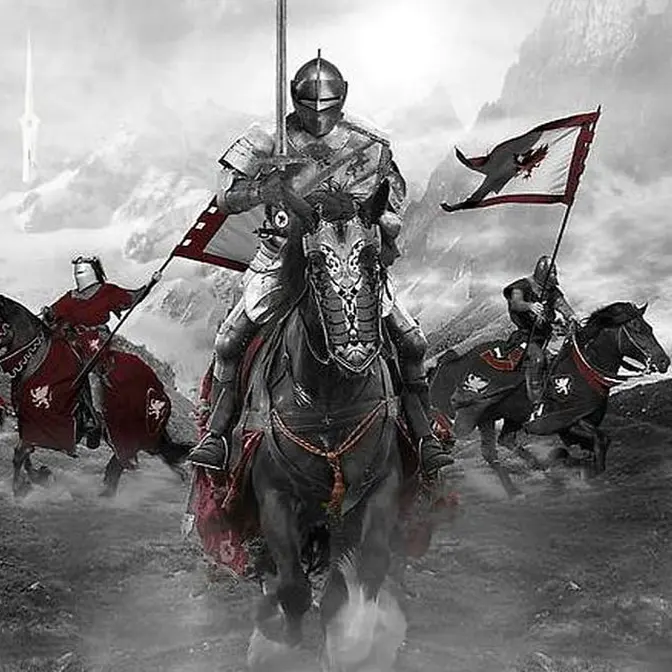
Step into the wild past of Hay Castle, where the Welsh marches witnessed brutal battles and legends were born. Discover the secrets behind this ancient fortress's turbulent history.
In this deep dive, we journey through the lawless borderlands between England and Wales, exploring how Hay Castle stood as a symbol of power, conflict, and survival for over 900 years. Learn about the castle's Norman origins, the infamous de Brieuys family, and the violent clashes that shaped the region. Uncover stories of fire, restoration, and remarkable discoveries like centuries-old doors and a trebuchet ball that testify to Hay’s stormy past.
We’ll meet Mary Ford, the Learning and Activities Manager, who shares fascinating details unearthed during the castle’s restoration - from architectural evolutions to dramatic tales of betrayal, starvation, and rebellion. Hear how marcher lords carved out their fortunes in this medieval "Wild West," the legends that linger in local lore, and how the castle’s history may have even influenced the Magna Carta.
Whether you're a history enthusiast, a fan of medieval castles, or curious about the real-life Game of Thrones on the Welsh border, this video uncovers the hidden drama and enduring legacy of Hay Castle. Dive in to see how centuries of conflict shaped the tranquil town of Hay-on-Wye and why its fortress remains a powerful reminder of the past.
AI Generated·May contain errors
Video Summary
AI Generated
This video examines the violent history of Hay Castle and the Welsh Marches, a lawless frontier between England and Wales. It details the Norman expansion, the architectural evolution of the castle, and the brutal reign of the de Brieus family. The narrative connects the tyranny of King John to the creation of the Magna Carta and highlights archaeological finds that prove the site's history of siege.
This is an ancient borderland. For centuries it was ruled by hard men. Violence was a way of life.
The scars left by the brutal conflicts played out here are never very far away. In these green hills
along these gentle rivers, men and their fortunes could be made and broken. Hay Castle once stood
as a testament to the friction never far below the surface in this bitterly disputed region.
A staging post for English expansion, it was also a target for Welsh assaults. I've always been
fascinated by the rugged and tough landscape of the Welsh marches. I've come here today to
discover more about this castle's bloody past on a frontier between nations and to explore some of
the stories of the men and women who sought their fortunes here. Today Hay-on-Wye is a small,
quiet, rural town in southern Wales, surrounded by green hills and rivers. But all of this peace
and tranquility hides a brutal past. This was once part of the Welsh marches, a lawless region
between England and Wales, infamous for its brutality and frequent violent unrest.
This turbulent reputation dates back more than a millennium. In the 8th century, Offa, the
Anglo-Saxon king of Mercia, would build a giant earthwork to mark the border of his authority
and it runs right through Hay. Offa's dyke symbolically cut Wales off from the Anglo-Saxon kingdoms.
And there's evidence of that rough frontier right here with Hay Castle. When William the Conqueror
took the crown of England in 1066, he found he could push his authority no further west than the
old Offa's dyke. The Welsh weren't to be conquered so easily. That put Hay right on the new frontier
between Normans and Welsh. It's the reason we have Hay Castle here and the whole string of castles
all along the Welsh marches. It's all about the Normans trying to maintain and then push
forward their frontier as the Welsh defended theirs. In private hands for 900 years, no one's
had the chance to study this castle and see what it can reveal about its turbulent origins.
But in 2011, the castle was bought by a local charity. The new owners were intent on preserving
it and opening it to the public for the first time in its long history. Now with the restoration
complete, what new evidence can it reveal about life in these troubled borderlands? I'm meeting
Mary Ford, the learning and activities manager here, who's been involved in the preservation and
restoration of Hay Castle and who knows all of its secrets. What's it been like trying to restore a
decade? It's been an amazing privilege to be involved in it actually. It all started back in
2011 when Richard Booth put the place on the market and a trust was formed to purchase it
and keep it as a charity so that it could be open to the public. But it's been a long process, all
that time finding the funding, going through the planning, getting the builders in, everything like
that. It takes a long time. Was there a lot of restoration work to be done to the structure
because people had been living in it? A huge amount actually because this poor building has
suffered two fires. So we had one in 1939 that destroyed the east section here and then another
fire in 1977 that took hold of the west mansion over there. And what's it like being in a castle
like this that's not been open to the public before? What have you been able to discover
and uncover restoring this place? It's been amazing actually because we found out all kinds
of things that we didn't know before. We found artifacts, we discovered dates that we didn't know
when parts of it were built, all kinds of things that have just we never knew before so it's been
brilliant. So what can you tell us about the buildings that surround us here at Hay Castle?
So we're standing in good position here actually because we can travel back through time. So we
start there in about 1830 with the coach house that goes along to a little drainpipe and there's
a service wing from 1700. Then we've got the big Jacobean mansion dated to about 1640.
Then here we've got a little secret Tudor mansion and then our main Norman section which is this
tower, the gate and the curtain wall. So what do we know about this oldest part of the castle? When
does that date from? Well we think this tower dates to about 1160, 1170 and what we've discovered
through this project is that it was probably actually a gateway tower to begin with. So there
was a gate going through there and then they've added this gateway a little bit later. We're not
sure why, whether it was aesthetics or whether it was attacked and they needed something more
defensive and even this gate has different eras represented in it. See the lower flatter arch and
then a much pointer arch. Yeah and you can see the development in that archway there can't you?
There's what is there one, two, three, four different arches over there. Does that show
us developing architecture, taste or a need to defend the castle again? I think once again it's
both and I think that what's happened is there's been original arches built and then they've had
a design change and then they've had to alter it. So that's why we see the slightly pointier arch
there and that is a later edition which was the portcullis and I think that originally it didn't
have a portcullis on it and then they realised that they needed it. So they've added it on
and it's actually quite a separate construction on the front of the gatehouse. So the big iron
slamming the gate shut is going to be about defending the castle. So I mean these steps
that go up to the wall I guess are additional defences you can get right above the gates
and attack anybody who's threatening your gates? Yeah and I think it's that really interesting
thing between it being both a domestic setting and also a very defensive setting as well because this
was an area of huge amounts of fighting and battles and they were trying to make inroads
into Wales and the Welsh princes were fighting back so yeah we saw a lot going on around here.
Defending the border was easier said than done. William I handed the job to three of his most
trusted men. Hugh d'Avranches became Earl of Chester in the north, Roger de Montgomery was
made Earl of Shrewsbury in the centre and William FitzOsborne was created Earl of Hereford to
control the southern borders. Their job was to keep the Welsh out and drive Norman influence west.
Both tasks would prove more than a little tricky. In a change of tactics, Normans were offered
smaller lordships in the border region. These parcels of land promised wealth, influence,
freedom and power. All they had to do was go and win them. The promise of land and the
transformation of a family's fortunes meant there was no shortage of enthusiastic and brutal knights
swarming into the Welsh marches at places like Hay. They probably found more than they bargained
for here. Even if they managed to snatch some land, the real question was whether they could
hold on to it. So we're down here at the gates, do they give us any hint of the kind of attacks
that the castle might have suffered over time? Yeah they do, we've got little bits of lead shot
so you can find them in here and when the kind of restoration work was done on them they found
huge amounts of it so it's absolutely littered with bits of lead shot. Fascinating, you see odd
bits of it peppering the door all the way through. So do we know when those lead shots date from or
do we know when this door dates from? Well this side we did dendrochronology on and the date that
came back for this was 1640 but the dendrochronology didn't give us any dates for that side
so then we did carbon dating and the carbon dating for that side came back as around about 1340
so that side is much older than this side. Another three centuries worth of door here just
touching a 700 year old door over this side but they look very similar on the front. I know it's
really interesting they've made them look the same on the front from the town side but when you come
around the back the back of this one looks very different to that one. As you can see there's this
lattice work. It's amazing, so fascinating to see a 700 year old door still here someone was carving
all of this into this fascinating lattice work but incredible to think a 700 year old door on
an 800 year old gatehouse which suggests that there was another door here at least one door
100 years before that so the fact that that could have been destroyed and that this was built to
replace it in the 1340s speaks again to the turbulent past of this whole area in the Welsh
marches that there was constant churning warfare all the time there was always the threat of attack.
The violent lifestyles and constant state of war guaranteed that these jobs attracted a certain
kind of man. They could have more freedom from the crown than others in England but they'd have
to be ready to fight to the death to defend the land they'd taken at a moment's notice. Part of
the attraction of marcher life for those marcher lords was the freedom that it gave them from royal
control. They were still subjects of the English crown but the royal writ never really ran in the
marches. Lords here were free to set taxation and levy justice as they saw fit. That was the payoff
for a lifetime on a brutal frontier. Here around Hay was England's medieval wild west.
There was a castle in Hay by the end of the 11th century. William I and his sons William II
and Henry I continued to try to push their authority west. During the anarchy when King
Stephen and Empress Matilda fought for the crown, Hay belonged to Miles of Gloucester, one of
Empress Matilda's leading supporters. When the Empress's son became King Henry II, Wales remained
a focus for expansion. Under his sons Richard I and then King John, the de Brieus family came to
control Hay and rose in power locally and nationally. If marcher lords had to be brutal,
ruthless men, William de Brieus, who was head of the family by the late 12th century,
fitted the bill perfectly. The oldest remaining parts of Hay castle date from the time of the
de Brieus family. They were Normans who came over and made their home here on this rough Welsh
frontier land on the marches. By the end of the 12th century the head of the family was William
de Brieus. He'd been present in France with Richard I when the king had been killed and he
became a close servant of King John too. William also had a nickname, he was known as the Ogre of
Abergavenny. He also owned Abergavenny Castle which is about 20 miles south of Hay and at Christmas
William invited barons and princes from across Gwent to come to a reconciliation feast. Once he
got them all inside the Great Hall, not unlike this one here at Hay, he closed the doors and
had them all slaughtered to a man. He claimed it was in vengeance for a murdered uncle. Marcher
hospitality had a sharp edge. There's no artefacts that belonged to the de Brieus family remaining
here but William's wife Matilda is steeped in legend connected to the castle. This is a modern
depiction of Matilda de Brieus and this begins her connection with Hay Castle when she becomes
the Lady of Hay and it plays into an old Welsh law called Tai Unos which said that if you could
build a house in one day on common land it was yours. The freehold was yours and you could keep
the house and so a legend sprang up that Matilda was part giantess and that she built all of Hay
Castle in one night carrying the stones here in her apron. One part of the legend tells that she
dropped a boulder on her foot and was so annoyed that she threw it miles away to the local church.
It's almost certain that Matilda didn't build Hay Castle in a night but the message to the
lands who could see this castle would have been loud and clear. The de Brieuses were here and they
were here to stay. They were using Welsh law to take Welsh land. But the family's luck would soon
turn and they would get a taste of their own bitter medicine. John and William fell out for reasons
that remain frustratingly unclear. John called in vast debts he claimed the family owed him
and demanded they hand over their sons as hostages. When Matilda refused the king flew into a rage.
He confiscated lands and titles and pursued them as they fled to Ireland. William escaped to France
but Matilda and their oldest son also called William were captured. William managed to escape
and lived as an exile in France until his death a couple of years later but Matilda and their
oldest son William tried to flee to France but were captured on the way. John imprisoned them in
a tower. He set their ransom at an exorbitant 40,000 marks which they either couldn't or wouldn't pay
and so John ordered mother and son to be starved to death. On the 11th day the mother was found
dead between her son's legs still upright but leaning back against her son's chest as a dead
woman. The son who was also dead sat upright leaning against the wall as a dead man. So desperate
was the mother that she had eaten her son's cheeks. When William de Bruys who was in Paris heard this
news he died soon afterwards many asserting that it was through grief. So that's the account that
the anonymous of Bethune has left for us. How true it is we maybe don't know but it's certainly the
sort of thing that people believed King John was capable of and the reason that people were
turning against him in their droves. Matilda must have outlived her son and been driven by desperate
hunger to try to eat parts of his face to stay alive. William died in Paris shortly afterwards
devastated by the news of the fate shared by his wife and oldest son. There's even a chance that
Matilda and her son's sorry fate played into some of the clauses in Magna Carta the great
charter that was imposed on King John in 1215. Clause 39 sought to ensure no man shall be taken
imprisoned outlawed banished or in any way destroyed nor will we proceed against or prosecute
him except by the lawful judgment of his peers or by the law of the land. Clause 40 added to no
one will we sell to no one will we deny or delay right or justice. And those were the very things
that John had done to Matilda de Bruys and her son William. The de Bruys family were restored by John
in 1216 and kept control of Hay Castle. One new find and covered as part of the work to restore
the castle speaks to the problems William and Matilda's descendants would face just a couple
of generations later. We've got a very special item in here up there we've got a trebuchet ball.
Wow that was thrown at this castle? We believe so yeah. Do we know when the trebuchet ball is
likely to originate from? We have an idea that it was associated with Simon de Montfort so that
would be around about 1260. There's another castle just down further into Wales in West Wales,
Drisloyne and they found very similar size and weight trebuchet balls there. I think they have
about seven of them. So we weighed it compared it so we think it might have been from the same
trebuchet engineers that were traveling down through Wales. So this is probably thrown as
part of maybe the second baron's war in the 1260s when Simon de Montfort is rebelling against Henry
III and potentially trying to jostle for castles along the Welsh marches to gain the upper hand in
this region and someone one side or the other has attacked Hay Castle during this period. It would
be amazing to find out more about it this is the only little artifact that we have from that time
and the only indication that it was attacked in this way so it was very exciting when we found it.
Was it found here in the Matilda Tower? No it wasn't found in this tower it was actually found
in the Great Hall just through there. The archaeologists were doing some excavations
underneath where the stairs are now and they were excavating the walls of the Tudor house
that they discovered and then under the foundations of that they found this trebuchet ball and it was
just lying there it looked like it had just been discovered where it had fallen and had just
lain there for so many hundreds of years. It was quite an amazing find. It's a real tangible
testament to Hay's violent past I guess isn't it? Yeah absolutely.
Visiting Hay today it's hard to reconcile this tranquil riverside town in the rolling Welsh
hills with its history of violence with men like William de Brugues the ogre of Abergavenny
yet the castle still stands here as a testament to that brutal past. It's so incredible that this
castle is now open to the public after 900 years and it's teaching us new lessons about all kinds
of periods on the lawless Welsh marches. The marches would remain a pretty lawless frontier
until the middle of the 16th century really when Wales was properly incorporated
into England. It's a place where Normans would come to seek their fortune to push the border
ever west to grab land for themselves but the Welsh weren't to be conquered so easily and they
found life every bit as tough, brutal and unfair trying to protect their land from the Norman
invaders. Hay castle stands here today as a testament to those centuries of turbulent frontier
life on England's medieval wild west.