
Why No one Can Hook Vitaly Laletin!?
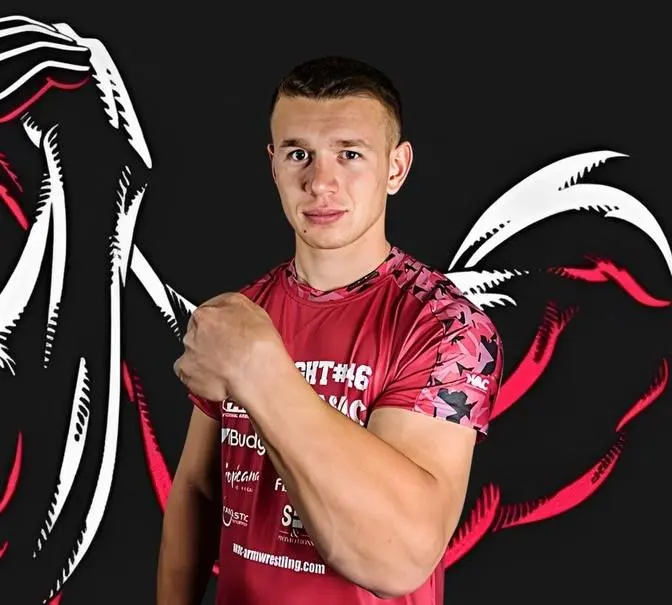
Hey guys, welcome back to TableTorque.
What makes Vitaly Laletin almost unhookable?
Is it his technique, his strength, or something that no one has been able to crack?
Today, we're breaking down the secret behind his unstoppable outside game.
Being a strong top roller doesn't always mean you're unhookable.
The chance of getting Lavon into a hook is higher than getting Vitaly into one,
even though Lavon has a deadly top roll.
So what truly makes someone unhookable?
What is Vitaly Laletin doing?
Even in his early days, when he wasn't the giant we see now,
only the best hook specialists could hook him.
We've seen Matyushenko hooking Vitaly.
If Vitaly is unhookable, then Matyushenko is un-toprollable.
Yet even though Matyushenko managed to hook him,
and Vitaly still top rolled him in the same fight,
if you ask someone what the best counter for a hook is,
they might say the low hand top roll.
And yes, the low hand top roll is one of the best techniques to use against hook pullers.
But is there anything better?
Well, there is.
It's the high hook.
I don't know if people connect it,
but the high hook is another great counter against a traditional hook puller,
especially the supinated type.
How does it work?
What do we need to execute a perfect high hook?
The key elements are a fully cupped wrist and strong pronated back pressure.
A traditional hook puller gives up their pronation,
which means if you're playing for a high hook,
you don't necessarily need to fight for the cup.
Instead, once you establish your position,
you hit back with maximum back pressure.
This is highly effective against hook pullers.
If you're a long arm top roller,
it becomes twice as effective.
Let me explain.
We've seen Devin Larratt use this technique against Sandris in their right hand match.
Devin hits back with a cupped wrist with a lot of pronation.
If you look at his elbow,
he is positioned at the back of the pad,
showing that he is controlling the match.
Here, Sandris is holding on to Devin,
and his elbow is at the front of the pad,
but not at the tip.
Since Sandris has long arms, this doesn't affect him much.
But if this were against someone with a short forearm like Sasho or Alijan,
their elbow would likely be at the very front of the pad,
struggling to maintain position without fouling.
And the best part is majority of hook pullers have short arms,
making this technique even more effective against them.
If you check Vitaly's right hand match against Mirozov,
you'll see something similar to this.
It looks like a low hand top roll,
but to me, it resembles a high hook.
He finished the match with a low hand surge,
but he initiated it with a high hook.
I mean, technically it's a low hand,
but when Vitaly usually applies a low hand top roll against a top roller,
he has to fight the opponent's pronator as well.
However, in this case, Mirozov gave up his pronation and went for supination.
That's why Vitaly's low hand appears more like a high hook initiation.
Typically, a high hook finishes with a straight sideways hit using the high hand.
But when Vitaly surges, he pronates,
making the finish look more like a low hand top roll.
In the third round, what Vitaly does is even more impressive.
He executes it outside the strap.
Mirozov is currently the best hook puller in the super heavyweight division,
and yet Vitaly flash pinned him.
That alone says a lot.
I also believe that if the match goes into a hook,
Mirozov could beat the current Gennady as well.
The form Mirozov brought for his match against Kamil was scary.
If you want to hook Vitaly, you need to control his pronator,
just like Matyshenko managed to do with his supinated twist
and a lot of defensive bicep power.
But the problem is Vitaly's back pressure won't allow that.
His speed makes it even harder to gain that control.
Vitaly's top roll is different.
Normally, when a top roller faces a hook puller,
they crack their opponent's wrist at the center with a low hand
and then go for a side pressure surge.
But Vitaly doesn't crack your wrist from the center.
Instead, he gives you exactly what you want,
a fully supinated cup.
Then he rips through your bicep.
Mirozov has an incredibly strong defensive bicep.
He has stopped multiple rounds of side pressure surges from Dave and Ravaz,
both of whom have given Vitaly real trouble.
Yet, even if you curl against Vitaly's pronator,
his back pressure and explosiveness make it nearly impossible to stop him.
If you ask any coach how to avoid getting hooked,
they'll tell you never to let your opponent supinate,
but Vitaly does the exact opposite.
He allows you to supinate,
then accesses your bicep and tears through it
using strong back pressure and pronation.
One key thing to mention is Vitaly's tremendous side pressure.
After his first match against Dave Chaffee,
we saw a completely different version of him.
His side pressure increased significantly.
He actually trained side pressure with the vector perpendicular to his body.
This training method dramatically improves side pressure.
I've seen people train side pressure at an acute angle to their body,
which is effective,
but in my opinion, the perpendicular vector method is the best.
However, training both angles will give the best results.
One of the advantages Vitaly has, which we've already discussed,
is his arm length.
If he high hooks you,
you'll never be able to keep your elbow on the pad.
If you try to protect your cup by moving to the front side of the pad,
he'll pull you off the pad.
If you try to pull back while cupping,
he'll take your wrist and tear through your bicep.
Another key advantage is his long fingers,
which don't have to work as hard compared to when he faces top rollers.
One of Vitaly's favorite exercises is a gravity-based method
for training pronation.
His pronation is incredibly strong.
A highly developed pronator teres muscle
allows someone to maintain an outward rotational force,
preventing opponents from achieving the inward rotation
necessary to set a hook.
To put this into perspective,
Vitaly blocked LaVon's cup,
which is considered the strongest in the world
for 10 seconds in multiple rounds.
He also took Ermi's hand multiple times in their encounter.
Without a high-level pronation,
you simply cannot block a hook.
It's important to note that you don't always need to pronate
through the wrist if you apply pronation the way Vitaly does.
If you have strong back pressure,
you can sustain pronation effectively
without needing excessive wrist movement.
So, in conclusion, being unhookable in arm wrestling
is not just about hand and wrist adjustments,
but also involves a combination of biomechanical efficiency,
force distribution, and strategic adaptability.
Another crucial factor is the efficient application of back pressure.
By engaging the latissimus dorsi and brachialis
while maintaining an upward hand position
forces their opponent into a compromise position
where their flexor muscles cannot engage effectively.
This makes it extremely difficult for a hooker to generate side pressure
without first overcoming an unfavorable grip position.
Additionally, elbow tracking and pad control
are essential in maintaining an unhookable stance.
A puller with a strong defensive top roll
will often slide their elbow back
while adjusting their hand position to maximize leverage,
ensuring that their opponent cannot gain the necessary wrist alignment
to execute a deep hook.
A hook puller relies heavily on forearm flexors,
which fatigue quickly from constant wrist flexion,
leading to loss of control over time.
In contrast, a top roller distributes force across larger muscles
like the brachioradialis and lats,
using back pressure and pronation for endurance.
This makes a top roller more resistant to fatigue,
giving them an advantage in longer matches.
Hope you liked the video.
Share your thoughts and objections.
Like and subscribe.
See you soon.