
Using This Old Mercury Tube Tester To Check Our AMI Jukebox Valves
561 Video Views·Mar 24, 2025
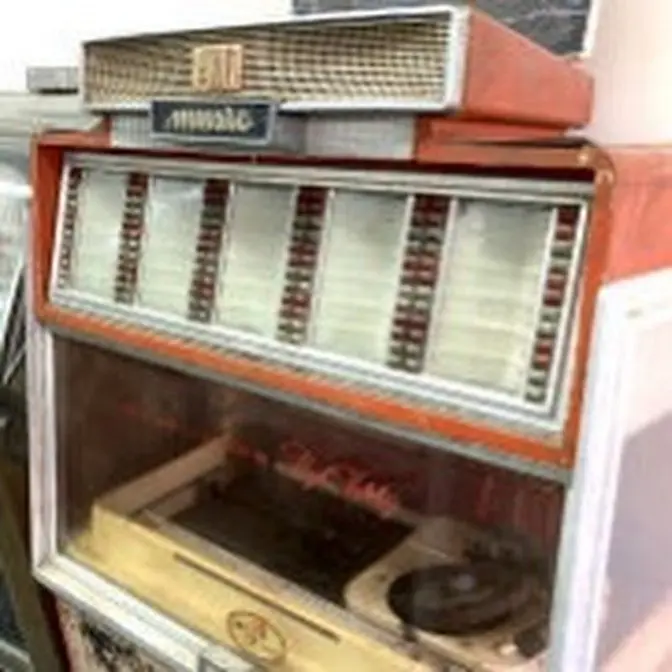
We are finishing up this 1964 Rowe AMI Tropicana Jukebox . Only thing left really is to test the tubes....
Joe's Jukeboxes is our channel sharing all the repairs we've recorded videos of over the years. If you've got a jukebox that needs repair, if you watch our videos you may be able to fix it yourself. There are playlists here on the channel of each manufacturer, keep in mind that the boxes usually used similar if not exact mechanisms from year to year, so if you can fix one Rock-Ola, others will be very similar.
This channel is a subchannel of our main channel @JoesVideoGames !
Ladies and gentlemen, this is Joe's classic video games back with another cool
Jukebox kind of video for you today
Look what we've got this huge box came in. It's like Christmas. What do you think's in it Joe?
It might be a video game, let's see what's in this sucker
I cut it open here. Get the razor blade running it down the side
We've been telling people about buying Ferraris on Amazon, but I don't think it is
Might have to kill this cardboard Joe. Oh god. There's another one
There's a there's a box in the box people hold on a second
This is inside it cut it open a little bit
Wow
Boy, it looks pretty cool so far Joe
One more left to go. All right, folks. Well, that looks pretty cool. What do you think Joe?
Maybe there's money in it
Now we have been working on
some older jukeboxes and rebuilding
So that's off of a AMI jukebox. That's the control amp
Power control. I think they call it the control amp and then the other sides the power amp
But they've got tubes in them and so we don't have any way to check tubes
So we need to get a tube tester. Now. There are different grades of tube testers. There's real cheap ones
Joe have you seen the ones that are like a little square and you put a tube in it and a light comes on
Well, the problem well now they are but back in the day they made just little ones those ain't no good
All they tell you is if the thing lights up it's useless for a tube
It would be like buying a thing to test the light bulb
By screwing the light bulb into it and seeing if the light bulb turns on
completely useless and
It might tell you if there's things shorted, but you can do that with a multimeter so that that types real cheap
Ain't worth crap. Okay, and then there's a high-end type way over here. That's like it can do everything
It can tell you how many minutes the thing has left on it
Not really, but so it can tell if the emissions are right
It can check every little thing on the tube if everything is perfect, right and you can use it to match ones
That are biased similarly, I believe is how they say it and all of this, but they're real expensive. They're like $1,000
You think I should the big one should I order this one? No, no way
So we only work on the tube equipment about once or twice a year, right
but we might work on it more once we
Get a little better with it. Well, one of the problems that we have is we don't have any way to test the tubes
so this is a
mid-grade
Tube tester so it can test for shorts and stuff like that and it can test
Leakage and things like that, but nothing
Serious, so it's you got your low-end. This is better than that. Then you got your high-end. It's not as good as that
It's mid-grade and out of the mid-grade ones. I think it's kind of like a little better than the cheap ones
So that's my that's my opinion. So let's see what she looks like. Now. This is vintage stuff. This is old-school
Uh-huh. The top comes right off
Very cool. It's in good shape. Don't put that somewhere where we won't lose it
They've kept it all these years now Joe don't lose it again
Uh-huh
Cool. All right
So this is a mercury model 301 combination tester
Okay, and they call it a combo tester because it can actually test
CRTs and
It's also like a voltmeter
But we don't really need a voltmeter. I got a bunch of them. So I got a
multimeter, I've got a
Somebody just mailed me one the other day actually
Got one of these bad boys now
I got a bunch of flukes. So I don't really need the volt ohm meter part
Unless there's something I don't understand. I mean, maybe that maybe we do need it Joe and we just don't know probably
Okay, so it's got that
We probably won't use it much
Still has the original probes it looks like
It came with it back in the day to use it as a voltmeter. That's pretty cool
and then it still has the
CRT cable too. So this plugs in here
And so you can check CRTs now, I've got several rejuvenators. I've got about six of them
the thing with one of these is
This works on really old
CRTs
So if you've got an old black and white TV
This will work pretty good
But on the little bit newer stuff and you know the stuff that was made up into the 90s
You have to have an adapter for it and I don't have the adapter. You could make one though
And you can see you can test the color gun separately
But again, it's for more like the earlier
Ones. I don't know when this thing was made. I would guess
early 60s
Maybe 1960 something like that
And then here's the power cord and we also have a little clip here
That is probably also used for the CRT
Okay, and then the middle part is the
what we need to test our tubes with so
We're going to see if we can get this sucker to work now this thing
Is so old-school that we kind of need to work on it first before we even use it
Because it's got old caps in it, so I'm gonna take the the
I'm gonna take it out of the case so we can look behind it
And there's a I looked on the schematics before it even got here. There's a few little caps that we may need to replace
Just because it's vintage equipment you have to worry about stuff like that
So let me take the screws out and we'll we'll pop the plate off
All right, so we took the screws out and popped it over now. We're not plugged in. I'm trying not to kill myself
It says that whenever you turn it from
Volt meter to tubes to CRT all of that's independent
So we don't really need to rebuild the stuff that works for the CRT just the CRT
but who knows the old-school battery in it and another old-school battery in it because it's
In the manual it says that the volt meter can be used without it being plugged into the wall
Which I would guess that's what those are for
and then the the sockets that the tubes plug into are all just daisy-chained together and
So according to the schematics, there's only about five capacitors in this thing, so
We've got one here. That's a one
microfarad
capacitor 400 volt we've got a
0.05 microfarad 600 volt
0.1
another 0.05 and
another point
Or a point zero one
And that's like it if you look in the schematics now
We might have burnt up resistors or burn up diodes or whatever
But the capacitors are old enough that they're probably definitely need to be changed
so I'm gonna swap them I actually ordered some ahead of time by looking in the
schematics online
Six volt battery be interesting to see if either one of those still have a charge there ain't no way
There's no way
Maybe we could look in the schematics and see what that even goes to but there's also a light bulb here
That's gonna be used to light up the short maybe or something like that. There's something shorted
And another one here
So all in all pretty cool
Be interesting to see if it does anything
Okay, so I'm gonna swap some capacitors, and then we'll move on from there
well folks I took the one out and then we broke out our capacitance meter and
The thing was almost dead on the money, it's 950 nano farads
And that's a pretty nice freaking cap and then we're talking and we're like man that might be nicer than the ones we're putting in
So it's in spec
Took one leg of this one loose just to check and it's in spec. Look look at the quality of that cap
Even though it's 60 years old
Okay, check this one in circuit
Here I'll have Joe do it Joe. That's a 0.1 micro farad. Hold it to both legs
100 to 1 nano farad people can't get much better than that. I mean it's dead on the money. That's a 1% cap
And this one which is just on a light bulb by the way is fine as well
And this one is fine as well. We could even test them in circuit, so
Thumbs up to our capacitance meter
And the caps, I don't think there's anything wrong with them. Now. I'd already swapped the one so I guess we'll leave it out
What do you think?
Think maybe I should put it back in. You might want to put it back in there. I'm gonna put it back in
Why not if it's I mean, it's a good cap and it's the original one
They've been working together all these years now you're trying to separate them
You know, he's got a good point people. He's really he's got people. Come on now
He's got a good point now if you think about it, really
Okay, I'm gonna put it back
Okay, folks. So here's the schematics in the manual you can see how all of the tube
Sockets are just kind of daisy-chained together like we were talking about and if you go down here and see this switch
It's off
CRT tube or the voltage meter you can see the voltage meter is down this way and there's battery 2
And there's battery 1 so they are used for the voltage meter. I
Don't know if that will work
on AC power or not
You may have to have the batteries in to get the voltmeter to work, I don't know
But whatever, okay
Show you some more. Oh, and one of the batteries is dead. The other one has almost 1 volt in it
It's supposed to be 6 volt
The warranty card we're gonna fill this out and send it in
Mercury Electronics Corp
Mineola, New York, this is back when they actually built anything in the United States
Now they build like just a couple things in the United States
Okay, and then this
Must have been hanging on it when they bought it wherever they bought it
Three instruments in one it was a hundred and ten dollars in
1960
Man I think that might be like a thousand dollars now
Well, I got it I just had to get an old one
One it's a tube tester test dynamic cathode emission
Inter-element leakage and gas content of all tube types including no bars new vistas compactrons, etc. Now as I understand
No bars new vistas and compactrons didn't really get used in hardly anything. It was kind of like didn't happen
to a CRT tester rejuvenator reactivator test repairs and reactivates all black and white and all color picture tubes three
VOM
28,000 ohms per volt 6 DC voltage ranges 6 AC voltage ranges 3 ohms
Ranges 5 DC current ranges 2 capacity ranges a complete portable service shop Joe. We're in the money now
This is a little
Thing that tells you the procedure
the test CRT
It's basically telling you that you have that cable works
But we're not going to use it for CRTs
Because we we have other ones a very weak picture tube may have its life extended by use of a CRT brightener
Which is an extra thing you put on it
Mercury offers you more for your test equipment dollar technician approved for performance quality and value
model 1101 tube tester a dual purpose tube tester
Look, it's a self-service tube tester
Signal generator
True dynamic mutual conductance tube tester at an amazing low price
Get that stuff, that's pretty cool. I've actually seen a copy of this online. I think that's already scanned
Because I was looking at the schematics. Oh, by the way on the capacitors the reason that I
Go in the wrong way
The reason that I've ordered the capacitors is because we didn't have it in yet
And I was placing an order for capacitors for the amp
So I just went ahead and ordered the five caps that the schematics
Had listed for this, but I didn't realize I didn't know what kind of caps they were
They might have got here and been wax ones that you need to replace
Tube is good if it reads past the diodes
Okay, line on the meter tubes with multiple listings have separate sections which must be tested individually
So this is you know, basically telling you how to set all of your
Settings and then there's a supplement which would have been just newer tubes or other stuff that
They want to do to be able to test
Yeah, and then there's a few little notices if this instrument is returned to the factory at any time
It must be packed and shipped in the original carton with the inserts as received
We will not be responsible for any shipping damage unless the instrument is packed as specified
Before attempting to remove panel be sure to remove the two screws on the underside of the case
Unless these screws are removed. It will be impossible to remove the panel
Well, well where there's a will there's a wage and we probably could have done it without it when replacing panel
Be sure to replace the two screws on the underside of the case if the screws are not replaced
The instrument can be badly damaged in shipment or shock in the event
This instrument is returned for repair without the panel properly secured mercury will not be responsible for damage or breakage
Revision the picture tube test cable included with this instrument is the new model mh2
Picture tube test procedure is
Exactly as given in this instruction manual except for the following it applies only to black and white tubes
so basically you're
So that it can test color ones
You got a new cable and they're telling you if you just want to do a black and white one again
Just set it through it
Okay, so I'm gonna put the cap back
So I'm gonna put it back down and then we'll plug it up and see if anything burns up now
We could have resistors out and stuff too, but everything looks good
Even the cats are still good. So who knows?
So I'm gonna I'm gonna flip it back over and we'll try it out
All right, folks. We got it all back together. By the way, I sprayed contact cleaner in all of the knobs
From the bottom and then work them
So we got a button. We've got a momentary switch here
We've got some selectors and then we got a whole bunch of knobs
Okay, so we are off
And we got it plugged in so I'm gonna turn it on and see if we get electro shocked
on the CRT tester and
The light is on
the meter
Is not doing anything because we don't have anything hooked up
Okay
Now we're on to same thing
And
Now we're on bolt-on meter
Same thing, okay
so I think what I want to do is spray some cleaner in the sockets, too, and
Then we're we're ready to
Test one and see what we can get it to do
All right folks so
We've cleaned the sockets just with some
contact cleaner
Okay, now we're gonna try some test them tubes. What do you think?
The six-and-a-half inch meter is common to all circuits of the model 301 see illustration of the various scales above
The wide three color scale is used when testing tubes
The narrow three color scale is used for picture tubes tester reactivator and the numerical scales marked AC DC ohms
Classiness microfarad are used by the bolt-on meter. Okay, so way at the top
We've got ohms if we're going to disregard that then we've got AC voltage
We're going to disregard that and then it says receiving tubes
There's a bad and a good and then there's a what does that say in the middle weak?
There's a week in the middle there and then down below. It's a CRT. So this is all labeled really well
You know, I looked at this online a little bit before I bought it and thought it would be good for our purposes
We may get a better one down the road
But for what we're doing this will be a good little start get us kind of into it a little bit
Okay
And then the capacitance meter down at the bottom
Okay, the tube tester section is activated when the main switch is at the position labeled tube, okay
so
Yeah, let me let me read this part just so you know
What's going on dials located S&T or switches where it's place heater connections on any desired socket pin
So since each tube has different connections for everything
They've got basically all of these switches what they do is they just change what's connected to each pin on every socket
You know since they're all daisy-chained together
So S&T are the heater connections the eight long life sockets accommodate all popular tube bases including seven and nine pin new Vista 10 pin
compactron and novar types
special regular switch
This slide switch is always left in the regular lower position unless the symbol S appears in the column W of the tube chart
In which case the switches move up to the special position
So that's probably gonna be used for some of those weird ones
Rotary switches X Y & Z switch X is a 12 position switch that connects the proper pin element to the meter
Switch Z is a 12 position switch that connects the proper pin element to the return circuit
Switch Y is a 9 position heater voltage switch
So Y is basically going to change what voltage the tube the tube is working at X connects it to the meter
and Z
Connects it to the return circuit, which I guess would be a ground
Switch W this switch has four positions which provide the proper limiting resistance for the quality test
So basically that's got resistors
wired into it
To change the resistance to the meter so that the meter can properly read it
Press for quality switch. This is a spring return slide switch normally in the upper position for shorts test
It is used only to get quality readings on the meter
Shorts grid leakage indicator this clear view neon indicator shows a short or leakage of any type between any two pins of a tube
It is sensitive to two mega ohms
Pin straighteners are provided for miniature seven pin and nine pin tubes so you can just stick the tube in there
It's not hooked anything. It's just to straighten the pins out if you've got bent
Okay
Test procedures, here we go. Here we go. Are you ready?
Receiving tubes preliminary be sure to set controls before inserting the tube in its socket in
This way damage will be avoided due to the due to excessive heater voltage being applied to the tube. So if you know if it runs on
20 volts or what? I don't know what they run on
but instead you've got it set for a hundred and you go ahead and put it in there and then change the
knob
No big problems check for shorts and leakage before testing for quality
Do not test the tube for quality if the shorts or grid leakage indicator glows when the tube is inserted in its socket or else
Damage to the tube or tube tester circuitry may result
So in other words if the thing shorted it will immediately show up that will light up if it's shorted
You're done throw the thing in the trash
If you test it for quality since it's shorted
You're gonna send voltages where they don't need to go and screw something up
Shorts and leakage test plug in the power cord and set the main switch to position labeled to power indicator
Jew jewel should go and I'm notice they're telling you to do it hot
They're telling you to go ahead and turn the damn thing on. All right, that's what we're doing. I'm doing it by the book
people
People I've got the book. Why would I not do about?
People I got to do it by the book. I've got the book. Come on now you think I people I didn't invent this
following the instructions
Look up the tube listing on tube chart and set switches ST X Y Z and W as directed. Well, let's do that
okay, so let's pull our first tube we have a
12 ax 7 the very common tube I believe
I've seen those in a bunch of stuff. We've messed with 12 ax 7 Joe
You know the settings for that one off the top of your head
No, Joey, that's not that's not the right settings that's for come on Joe
Okay
so 12 ax 7 is
Right there. See it. So four five eight. So four is s five is T X is eight
What I say Joe one of them was seven wasn't it? I heard an X. Okay
Okay, so four
one s
five on T and
Eight on X. I believe I said
Right, I hope so too boy the knobs are off we are in trouble
And four five eight eight is X. Okay
Y is F
Z is 7 F and 7 Joey
7 okay
12 ax 7 and then W is a
So since W doesn't say special we leave this in regular and this thing the Springs a little touchy
So I'm gonna leave it up
Okay
Disregard shorts
Lamp glow that may occur as above switches are rotated when switches are set up positions
Listed in tube charts shorts lamp will not glow
You know, I'd like to know if that yep, okay good
I wanted to know if the damn lamp works because if that bulbs burn out you can have shorts all over the place
But guess what folks the bulb ain't burn out. So by the way, if you're not keeping keeping score
1960 and
We didn't have to do nothing to it. We replaced the cap. We didn't need to and put it back
We've cleaned it a little bit
Let's see if she'll work
The slide switch marks special a regular regular should always remain at the regular lower position
Unless the symbol s appears in column W of your tube chart where s appears use the special upper portion of this switch
We're on regular
Plug the tube into the proper socket and allow 10 seconds for warm-up. Here we go
Are you ready Joe ready now? It may burn me up. I'm gonna put it in the straightener first boy. That's straight
They're telling me the hot swap it. Oh, I don't know about hot swapping it
But that's what they say and then allow 10 seconds. Let's see if we get any kind of filament glow. I
can't turn the lights off because I've got the
I've got it plugged into the
Lamp socket. Oh
I see a little glow down in there
It's up at the top
She's glowing
Just barely
But you know some of them glow more than others
She's glowing folks. Okay
Observe the neon indicator any steady glow shows that there is a short or leakage between the cathode and the heater or between cathode and grid
There's no steady glow people come on people come on now, there's no steady glow on it. Don't give me that
If tube showed a short and proceeding test do not test for quality or damage the tube or tester might result the tube is bad
And should be replaced
Okay
If tube shows no shorts, press the quality test slide switch and read tube quality on the meter
Okay, so we're gonna press this switch. Oh
Well, guess what it's bad boy, it's borderline, but it's bad
So according to the tester, that's not a good tube. Now. Remember it's an old tube. So that's probably right
Okay, so that one
Probably not good enough to use
now
That's a good thing because now we know one of the things that was wrong with our amplifier
Tube was about half worn out or maybe you might even say all the way worn out
Okay, so here's another one exact same tube
We'll try it
Put it in the straightener. I've already got it set
Put it in there. Should we put it in a different? Let's put it in on different power cord Joe
I'll get into something else swing turn the light out and swing see if there's any glow
All right
Go ahead and hit the lights Joe
See if we get a glow
So you can see although it's faint on that particular tube
She is glowing
Okay. All right, Joe turn our lights back on
No short
Mm-hmm. So that one's good. But yeah, what do you think Joe could be better could be better Joey says
That's a good one, but could be better now would the would the amp run with those in it? I don't know
probably
So that one could be better
Okay, I think that's all of that model. I've got
Let's see. What's next on our list here. This is an ECC
81
Make sure I got that, right
Yes, ECC 81 people
Let's look that up
from what I understand that's more of like a
British
Numbering system they call them something different in the United States
And the reason I know that is because if you look on the thing they put two I
Put two numbers. Okay, ECC 81 is four and five again four and five. So it's the same
eight and F
eight and
F. Yeah, look there they do them in order and then two
ECC 81
Z should be two
All right. No, I'm wrong Z should be seven. Oh
There's two of them. I see
You know what on the 12x7 I didn't I didn't check the other part of it. We've got to go back. Okay, ECC 81 four five
Three
We're getting it messed up Joey
four five three I
forgot to test the other half of the
12x7
four five three F
two
ECC 81 four five three F to a okay
Says give it ten seconds to warm up
Boy, she's warmed up
No short
It's in the weak area
very borderline
Okay, I'm gonna I'm gonna turn that off
While I change this one setting or these two settings
four five eight I
guess really it
Since that one we already know is a week. There's really not much use to check the other part of it, but we'll see
f7
Okay, and it specifically says in there that all of this is isolated
So when I'm on CRT tube is completely turned off
So I'm basically still off so you don't have to worry about voltage from this jumping over as you turn the knob
No short
Yeah, so that one's not really doing all that great
Okay
Let's go back to that second
12 a x7 that we didn't test the other part of
So the next part was four five three F four five
Three F
12 a x 7 4 5 3 F 2 a
2 a
All right, so this is testing basically the second side of the 12 a x7 basically when these came out
They only had four pins and they were basically diodes and then
They figured out that you could put more pins in it and use the same element so you don't really
Have to make an you don't have to use two tubes. You can have extra pins on it
And do extra things with it
So they have a couple distinct sides, right? So this is the one that checked good earlier
We're now on the second half of it
so
What is that? That could be there's a short
Or that could be I've got something set wrong, so let's check it one more time
I think what's probably going on is I've got the wrong tube in there
No, it's a 12 a x7
So, let's see what I've got wrong it should be four and five four and five
It should be three and F
three and F
And it should be two and a
So that one's got a short in it so a short in it would definitely make the amp not work, right
So that one's bad too. Now. That's the one that the other half was fine
so
We're not doing too good on these tubes so far yet people
We got two left here though
On this part of it at least
so this is a 6a
One of the problems with these old ones is that the label wears off it's a 6a w 8a
Okay
So 6a w 8 4 5 1 4 5 1
6 a w 8 4
4 5 1 e 2 a
To a
Straightener
What do you think Jim?
And some glow up the top
We are not getting a short
That's more like it
So that's a decent little tube
I'll try it again
Yeah, seems to be working. All right, but there's two sides to this one
6 a w 8 4 5 1 e 2 so I got to change it to 4 5 6 e 7
6 e
7 all right warm up a little bit. So this is basically checking the second side of it. No short
Also good, that's a good tube
According to this tester
What do you think Joe? I think it's real good. Well, that's a real good to bear
You like that one?
Maybe we just put all of those in
So this is the same tube and we're on the second half of the tube because I didn't change anything
It's neck low they said give it 10 seconds
There's no shorts Joey
Yeah, buddy. That's a good one, too
Pretty good
Well, you kind of want them to be I think similar like if you got a matching pair
you kind of want them to both kind of mean about the same but
4 5 1 e 4 5
1 e
2 a
All right, let it warm up a little bit. Okay
No
leaking
All right, and the second side of that one's good, too. All right, so that's a good
That's a good little tube there as well
Cool and every one of them so far of the five has used this same socket
So you can see that socket would wear out after a while
We might have to get a little adapter or something to sit in it
Hmm great. All right. Well, that's that I need to so I'm gonna make a list of the ones that we need to order and
then
also
We'll have to
See if we've already got some of them I've got
Hundreds of tubes
With no tube tester, but now we got a tube tester
So this one's telling me some of them are good and some of them are bad
I don't know kind of sounds like it's working Joe. What do you think?
Perfect. All right, so we got some some other ones to test and then we'll uh, we'll see what comes out
It'd be kind of cool to get our hands on a new one and then see if the new one tests really good
All right, folks. Now this one's an interesting one. It's a 5u for GB
Big old tube old more old-school and you can see that it has
five pins so that's going to be two for the filament and then
This is probably like a diode one with like maybe two
Anode or cathode or whatever different socket 5u for 284
284
D 8a
D
8a
So everything and it's on
Okay. Yeah on regular. I've been turning it off on some of them. I just don't want to
Try anything. So, let's see if there's any kind of short
Or if we even get any kind of glow some of these are deceptive
They don't glow hardly at all, but that doesn't really mean that there's anything wrong and some of them glow real bright
And that doesn't necessarily mean that they're good. It is glowing
Just barely
Old school
Okay, no shorts now, oh
Five you for it has a star beside it, which means that it's a diode
So we don't need it to go up to here. We want it to go past where it says diode tubes
Okay, so if it gets to there, we're good
Still kicking ass after all these years
Whoever built that one good job people. Now, let's see if the other side of it works
to a 6d 8 so the only difference is
that one pin
So if you remember it said this is the one that connects to the meter
So these are the two heaters
This connects to the meter. That's the voltage and that connects to the
The common or when it did it say common it said
return
Okay, so
so there's only one one pin that changed because the
Basically, the input is the same and then there's two pins that are outputs
We tested one connected to the meter and it was fine. So now we're testing the other one connected to the meter. No shorts
Also good
So that big old tube even though the filament isn't glowing all that strongly
Works just fine
Interesting. All right going to the next one. All right now we're on to the power amp and there are these four 78 68
So it uses a different socket and it has a
Screen in it a g2
right, so
And all of this is
There's different things that it mentions whenever you get to that two in the chart. It says
screen g2 short test
The cathode to control grid and cathode to heater test performed in the above procedure
Will detect over 95% of all shorts found in tubes
Okay
For those tubes which have a screen grid such as tetrodes and pentodes
You can check for a short between control grid and screen grid g1 to g2 as follows
Referred to the tube chart column labeled g2 short now g2 short
Most of them don't have anything listed but on this particular one it does
It says x1
Move the designated
Mezzet move the designated switch either X or Z to the position
given in that column
So you move X to 1 so basically what they're doing is now remember this is the one that connects to the meter
So you just moved
It around to that, right?
Any steady glow in the shorts indicator means g1 is shorted the g2 and the tube should be replaced
So there is no steady glow
it says
So we're checking for
Shorts between the control grid and the screen grid it says
Any short not involving the cathode may be found after the quality test cathode shorts can damage the instrument during quality tests
So they are absolutely
Automatically found before the quality test
So basically they've just constructed it so that if the if those the cathode shorts
It just automatically finds whenever you've got these set the way they want you to set it in the manual
And then you can do the quality check after that and then only after all of that if both of those tests pass then you
Can check for the screen to control grid short
Okay, so you got to do it in order
Screen shorts are quite rare. There are other types of shorts that are so rare that a test for them is ordinarily not important
Unless a shorted condition is suspected
The model 301 can find any shorts between two pins of a tube the method for locating other shorts is it is described
On pin 12 of the appendix under the heading additional shorts test procedure
By using switches X and Z is short between any two elements in a tube can be found as follows use base
Diagram of tube as given in popular handbooks available free edit or at nominal cost from any tube jobber
Sets there's a word you don't see too often anymore jobber set switch X to the number
Corresponding to one of the base pins to be tested set switch Z to the number
Corresponding to the other base pin to be tested observe the short grid leakage indicator if glow occurs
There's a shorter leakage between the two base pins being being tested, right?
Note shorts between cathode and heater or cathode and control grid have already been tested in the regular test procedure
So do not make any other tests for shorts involving the heater or the cathode
now look at this if you press the quality switch when the indicator shows a short you may damage the meter or
Rectifier and the tube tester as a result of excessive current current flows if switches X and Z or X and T
Are left at the same setting the shorts jewel will glow glow will disappear if switch s is moved to the same position as switch X
This effect can be disregarded
Since no tube will be tested with switches at these settings as long as the quality switch is not pressed a short
Indication will do no damage
Okay, so what they're saying is you can turn this around
However, you want and as long as you don't press that quality button, you're not juicing it
And it won't fry it so what that means is whenever you're going between and
testing the
the two sides of a tube
You know if it's got two two settings, you don't have to
Turn it off. You can just change them and then hit the look for the short and then hit the quality check
So as long as you don't hit that while you're on the wrong settings, you won't fry anything
So if I got to go from seven to two
You know if I turn it
It's going to let it light up until I get to wherever I'm supposed to go. Whatever the setting is for this one
and so while I'm changing the settings some of those are going to be shorted because I'm on the wrong setting but as long as
I don't actually hit that while it's on the wrong setting everything's cool. So I think it's a cool little tester
it's not a top model top of the line one like I was talking about but it's
Seems to be pretty good and it's the quality seems pretty good. I mean you saw those caps are right in spec and
60 years old. So I think they use deep decent stuff to construct it and it's kind of stood the test of time
so I'm gonna finish up the
the last of my tubes and then we'll
We'll see what's next
Okay, folks a years ago. I bought hundreds and hundreds and hundreds of tubes off of a guy
And then I think somebody gave me a whole bunch more because they know that I like all this old stuff
So I've got boxes and boxes and boxes of them
And I've been trying to organize them for years
But I got this particular box off of a guy that apparently
You know worked on him back in the day and what he would do was he would you know
He'd throw out the bad ones, but he he would always have ones around that he had saved
that uh tested good, so
You know, some of them are really old and there's just all kinds of different types
So I've been looking through this box. Not what I've been doing is going through and kind of
Putting them sorting them into boxes by their
numbers, you know, and then I've made a big master list, so I
Had on my list that somewhere I had a 1287 which is a real common one
But is one of the ones that tested bad
on our
On our meter on that control amplifier
So one of the ones we need is a 1287 and apparently I've got it in a box here somewhere
I'm gonna go find it. I
Have found it old-school Sylvania 1287 put it in no leaks
The old-timers saved me some money whoever it was that saved this all those years
He may have took that out of something in
1971 and here I am in
2022 and I'm finally going to use it buddy. We're putting it in a jukebox
Whoo
Our little tube testers really gonna help us out. So that's good
We've been cleaning on it a little bit
They came out pretty nice
some nice new
title strips in it
unfortunately
Can't get the full effect because it's daytime, but you get the general gist such a cool one
All right, so I'll do one more little video
Showing it playing one of these songs if I do this if I do it as part of this
video though
eBay will demonetize us. We can't do that folks. It has to be its separate video
So I'll upload it just immediately after this one. If you've seen this video
It's already uploaded because I waited five minutes and then uploaded it and so go check it out
It's on our channel just after this video. Hope you enjoyed it. It's a 1964 Tropicana
Love our little tube tester. I think it's gonna work just fine
It sure got this thing sounding fine along with the cap kit. But I
Think those three bad tubes were the whole problem. I
If I didn't I think I mentioned it earlier
But if I didn't mention it
We have a whole bunch of tubes in the back
In a box hundreds of them and so I was able to find those three tubes in that box test them
They were fine put them in the amp and it works and sounds great
So, there you go folks
All right
So I get leave your comments down below make sure to give us a thumbs up for taking the trouble to film it for you
If you want to know how you can help our channel out
Down below. There's a link to Amazon
If you if you're gonna buy anything on Amazon already click our link before you do it and it gives us a tip
Because we sent you there. Okay
So we appreciate everybody's been doing that
You can also check out our website go to lions arcade calm where we have prices pictures and descriptions of everything
We've got available for sale at the moment and we also have a parts page on there
with some of the parts and things that we use on our
repairs and our t-shirts and all that kind of stuff so go check it out and
Last but not least don't forget to check out my brother Donnie
Literally, my brother has his own channel here on YouTube
We work on old jukeboxes coin operated equipment and he works on old vehicles things like that. So go check it out
I'm over there with him. If if you enjoy our channel, you'd enjoy his he's just a little bit crazier
We'll see you on the next video. Hope you enjoyed it