
Top 6 Discoveries By Albert Einstein || The Great Theories By Einstein || Explained ||
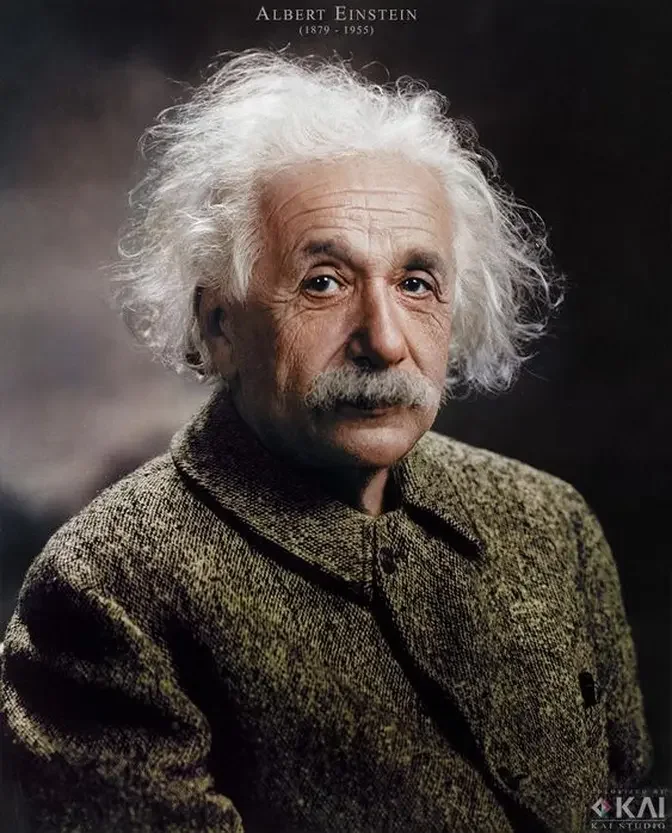
Albert Einstein is thought to have been a genius, and he is considered one of the world's
greatest thinkers. Although he isn't known for inventions, as with Thomas Edison or Nikola
Tesla, Einstein's theories and ideas related to physics continue to exert influence today.
He spent much of his life researching his theories of relativity, investigating space,
time, matter, and energy. Today we are gonna talk about Top 7 Inventions by Albert Einstein.
So. Let's begin. Number 6. Quantum Theory of Light. Einstein proposed his theory of light,
stating that all light is composed of tiny packets of energy, called photons. He suggested
these photons were particles, but also had wave-like properties, a totally new idea at the
time. He also spent some time outlining the emission of electrons from metals, as they were
hit with large electric pulses, like lightning. He expanded on this concept of the photoelectric
effect, which we'll discuss later in this article. Number 5. Special Theory of Relativity.
In Einstein's studies, he began to notice inconsistencies of Newtonian mechanics in
their relation to the understanding of electromagnetism, specifically Maxwell's
equations. In a paper published in September 1905, he proposed a new way of thinking about
the mechanics of objects approaching the speed of light. This concept became known as Einstein's
It changed the understanding of physics at the time. Understanding the special theory of
relativity can be a little difficult, but we'll boil it down to a simple situation.
He began with the understanding that light always travels at a constant 300,000 km per second,
and asked what would happen to our ideas of space and time if that was the case?
If you fire a laser at something moving half the speed of light, the laser beam still keeps this
constant, and it doesn't travel at one and a half times the speed of light. Number 4. The Bose-Einstein
Condensate. In 1924, Einstein was sent a paper from a physicist by the name of Sojendranath Bose.
This paper discussed detailed a way to think of light as a gas, filled with indistinguishable
particles. Einstein worked with Bose to extend this idea to atoms, which led to a prediction
for a new state of matter. The Bose-Einstein Condensate. The first example of this state
was produced in 1995. A Bose-Einstein Condensate is essentially a group of atoms that are cooled
very close to absolute zero. When they reach that temperature, they hardly move in relation to one
another. They begin to clump together and enter into exactly the same energy states. This means
that, from a physical point of view, the group of atoms behaves as if they were a single atom.
Number 3. General Theory of Relativity. In 1916, Einstein published his General Theory of Relativity.
This paper generalizes the concepts of special relativity and Newton's Law of Universal
Gravitation, describing gravity as a property of space and time. This theory has aided our
understanding of how the large-scale structure of the universe is set up. If you want detailed
knowledge about General Theory of Relativity, check out the video link in description below.
Number 2. The Photoelectric Effect. Einstein's theory of the photoelectric effect discusses
Scientists had observed this phenomenon and had been unable to reconcile the finding with
Maxwell's wave theory of light. His discovery of photons aided the understanding of this phenomenon.
He theorized that, as light hits an object, there is an emission of electrons,
which he deemed photoelectrons. This model formed the basis of how solar cells work
Light causes atoms to release electrons, which generate a current, and then creating electricity.
Number 1. Wave-Particle Duality. Einstein's research into the development of the quantum
theory was some of the most impactful he ever accomplished. During his early career,
Einstein persisted in asserting that light should be treated as both a wave and a particle.
In other words, photons can behave as particles and as waves at the same time.
This became known as wave-particle duality. If you want detailed knowledge about wave-particle
duality, then just click the link given in the description below. So, this was the video about
top 6 inventions of Einstein that changed the world. But then also Albert Einstein is one of
the greatest thinkers who hanged our world. For this video only this much, next top 10 video will
be uploaded soon, and I have a great topic for next top 10.The next video will come soon, so
subscribe the channel and hit the bell icon, and don't forget to share and like the video.New video
will be coming soon till then. Stay tuned.