
Albert Einstein 1930 Radio Exhibition Speech (German w/ English subs) [HD, Colorized]
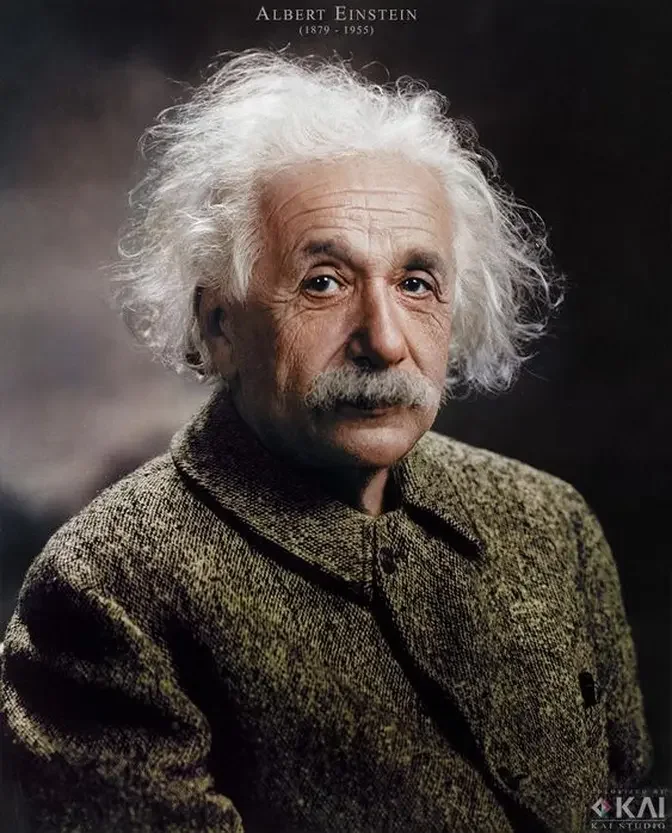
Dear spectators,
When you hear the radio,
think about how people came into possession of this wonderful tool of communication.
The source of all technical achievements is the divine curiosity
and the playfulness of the crafty and grumbling researcher
and no less the constructive imagination of the technical inventor.
Think of Oersted, who first noticed the magnetic effect of electric currents.
Of Reiss, who first used this effect to produce sound on electromagnetic waves.
Think of Bell, who, using sensitive contacts with his microphone,
first converted sound waves into variable electric currents.
Also think of Maxwell, who showed the existence of electric waves in a mathematical way.
Think of Hertz, who first produced and reproduced them with the help of radiation.
Think especially of Lieben,
who invented an incomparable sensory organ for electric vibrations in the electric valve tube,
which at the same time turned out to be an ideal simple instrument for generating electric vibrations.
Think gratefully of the army of nameless technicians,
who simplified the instruments of radio communication in such a way
and adapted them to mass production that they became accessible to everyone.
Let all the shames that use the miracle of science and technology without thinking
and have not mentally grasped more of it
than the cows of the botany of the plants, which they comfortably feed.
Also think of the fact that the technicians are the ones who make true democracy possible.
Because they not only make life easier for people,
but also make the works of the finest thinkers and artists,
whose pleasure was recently a privileged preference of the class,
accessible to the whole, and thus awaken the peoples from sluggish stupidity.
As for the radio station in particular,
it has a unique function to fulfill in the sense of reconciling the peoples.
Until our days,
the peoples learned to know each other almost exclusively through the distorted mirror of their own daily life.
The radio station shows them each other in the most vivid form
and, mainly, from the loving side.
It will contribute to the feeling of mutual alienation,
which so easily turns into mistrust and hostility.
Consider in this sense the results of the work
which this exhibition presents to the astonished senses of the visitor.