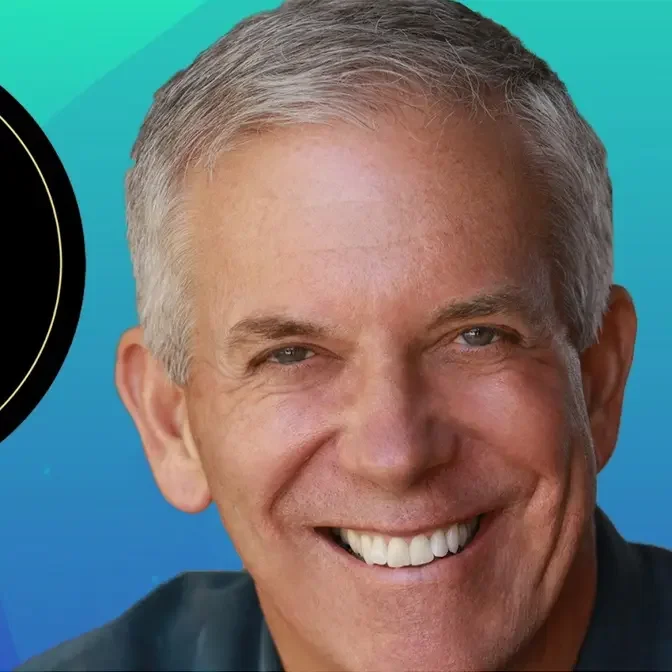
Things to do in Stockton, California! Stockton is an inland port in the Central Valley. We visit the amazing Haggin Museum, mid 50's mini -park Pixie Woods, the former U.S.S. Lucid wooden mine sweeper and the wonderful Fruit Bowl, a Ports hot dog and other eating spots. @stocktonports1025 @hagginmuseum4227 , @Visitstockton
“The Best of California with Pat Pattison” is a fast-paced half hour TV show that explores the natural wonder, people, history and mysteries of the California Lifestyle. California native and TV Host Pat Pattison explores the state’s nooks and crannies from the historic backlots of Hollywood, famous California Cuisine all the way to the mansions of the Gold Rush and Silicon Valley.
Watch us in: Los Angeles KAZA (MeTV) Ch. 54 Sundays 7:30am Palm Spring on the CW5 Sundays 12:30pm Fresno MyTV 53 Sundays 2pm
Search your local system for our show
Watch us in San Francisco, Las Vegas, Salt Lake City, Detroit, Philadelphia and Orlando on Fun Roads TV. Check local listings at:
Make suggestion for segments in the comments
Welcome to Pat Pattison's Best of California. Today, the Central Valley of California. We're
in Stockton. We're at the Haggin Museum, unbelievable hidden gem, art and history.
We're going to go to the USS Lucid, which is a minesweeper that's being converted by volunteers,
high school students, great community project. We're going to go to Pixie Woods. We're going
to go get a lot of food out to the Fruit Bowl. Lots of places to see in the Central Valley.
Let's get going. I'm Pat Pattison, and I love California.
I'm so excited. We're in Stockton. This is a hidden gem museum. It's the Haggin Museum,
and I'm with Sue Obert, the CEO of the Haggin. And Sue, where have you been keeping this all
these years? I mean, my gosh, this is incredible. Well, we're so excited to have you here.
We have been open for 93 years, so we don't want to be hiding ourselves, and we're glad you're here
to show it to the public. It's just so beautiful, and just the depth of the collection. We're going
to get into that with Sue and history. So tell me, why Haggin? What's the story behind the name?
You know what? There were three generations of the Haggin family that collected our art collection.
The third generation was married to a man who grew up in Stockton, and in the late 20s,
Stockton was trying to build a history museum. And this woman named Isla Haggin McKee's father
had just passed away, so her husband suggested that she support his childhood community in
building a museum. And that's how we became Half History and Half Art, and named after the Haggin.
Wow, wow. So let's go check out this incredible hidden gem, the Haggin, here in Stockton.
So tell me the main artists that you specialize here, that you have the largest collection.
We have both Albert Bierstadt, we have many of his major works, and then we have the largest
museum collection of American illustrator J.C. Leyendecker. This is a Wave of the Bahamas,
which are several of the paintings later in his life, in sort of the heyday of
Bierstadt's work. He did a lot of national parks, and you'll see those later through our museum.
So let's go look at the Leyendecker. Oh, beautiful.
You got to tell me about this. This is, you said that he's credited with kind of the New
Year baby as we know it now. Tell me about that. He is given credit for sort of the New Year's baby,
as we recognize it, and Santa with big rosy cheeks. The Coca-Cola Santa. Yes. Okay, wow, wow.
This is just so amazing. This was one of the last New Year's babies that he did paint. 1950? Yeah.
Here's a famous character, and you know, this is one of the reasons I know
Leyendecker is the arrow shirt man, right? Yep, that is absolutely probably what J.C.
Leyendecker single-handedly is most well known for. Now, correct me if I'm wrong,
but there's a lot of people that attribute the entire look of the 20s to this illustration.
Absolutely, absolutely. When you think of the flapper and you think of all, it's really off of
his style, right? Yeah, no, there is no doubt about it. That's Jay Gatsby right there. That's
where it all came from, right? Yep. Okay, there we are. We are a cover, a Leyendecker cover,
on a box of cereal. Absolutely. We're celebrating the 150th anniversary of Leyendecker's birth
and just trying to get people involved. Yeah, you gotta have an Instagram shot. Exactly. Let's go
look at some stuff. What we really call this, this is not what downtown Stockton looked like
specifically in the 1800s, but it is a typical main street of that time. That's my old desk.
My old desk is in the one-room school shop from the 1890s. A giant caterpillar. Yep. Now,
tell me why this is here. It is a Holt 75 Caterpillar tractor, which was built by
Benjamin Holt. Benjamin Holt was really credited with developing the track type wheel. The name
Caterpillar actually supposedly started almost as a joke when they were testing the track wheel.
It went up and down like a caterpillar, and one of the people on the test
called it a caterpillar, and that name has stuck. Thank you so much for showing me the
Hagen Museum here in Stockton and the beautiful building it's in. Everybody has got to come up
to Stockton. This is a true hidden gem, this museum. Sue, thank you so much. Absolutely,
our pleasure. We love showing off the museum.
So, Wes, tie me up. What did you get? I got the chicken satay. Chicken satay. It's gone.
So, Wes Ray, you got us up here to Stockton. Yes. I'm a former Disney executive.
Where are we? Well, this was inspired by Disney. This is Pixie Woods. Pixie Woods. Yeah,
it's like a fairyland amusement park that we've had here in Stockton. So, Wes, muralists,
artists. So, this is like in LA. We have this huge group of imagineers and whatnot.
Do they work with the art schools? How do they find? The art community, the local muralists,
those volunteers who just have talent, who want to spend some time painting some of these castles
and things that you see around Pixie Woods is all done by these volunteers who just feel
passionate about this park. So, how young were you when you came here? You know, I would imagine I
came here when I was four or five years old and my son came here. Both my boys came here when they
were that age and my dad was born here in Stockton, too. He came to Pixie Woods also. No grandkids to
I'm in no hurry. Pack them up.
No theme park or even a mini theme park is good without a train engine and a railroad. Yeah.
Whoa, I love it. I love it.
What an enchanted little place here, Pixie Woods. Let's see what's next.
So, we're here at Waterloo, California, and we all ordered salads,
but Mary Jo insisted we try their specialty, which are ribs and pesto. So, John, dig in.
Gotta have it. Here we go. Go for it. Go for it. That's fantastic. Good stuff. I'm not a red
meat eater, so John not only is our designated drinker, but he's our designated red meat eater.
Thank you for the team here. I'm loving it. Waterloo, California. Come check it out.
So, we're here in Stockton. I'm with Ralph Fluchetti, and we're at the Fruit Bowl, and Ralph,
this farm is unbelievable. Thank you so much for bringing us here. Thank you for being here. So,
tell me the story about the farm. This is a family operation. When did it start? Correct. In 46,
actually, my parents had a house here that they bought with the ranch, and unfortunately,
after a few months, the house caught on fire one night and burned to the ground. There was
no fire department or anything, and so they had to look for another place to live. They rented a
small piece of property across the street that had some peaches on it, and it was like Fourth
of July weekend, and there was no market for the peaches. They were getting like a dollar a box,
and a friend of theirs told them, put a table out on the road, and mom sat there and packed
the peaches, and dad picked them, and that's how it started. And enough people drove by to do it.
Right. So, you're a second generation. I understand there's a third generation. Correct.
Andrew, come on in to join us. Andrew, how did they talk you into this? Well, long, long
conversations. Long conversations. You were ready to go off into the world, and they went,
you gotta stick with the fruit, son. Oh yes, gotta continue to provide the fruit for the community.
This is a potato. A what? Placato? No, this is a tomato. Picadum. Picadum. Oh my gosh,
this is incredible. So, this is a peach, apricot, plum. And what's unique about these?
I mean, the feel of it, the touch of it, the taste of it? Well, the feel and the taste, they have
fuzz like a peach. Oh my god, like a peach. Yeah, but they don't have that in their genetics.
So, we're here at the farm market at the fruit bowl, and this is incredible. And this is Deneen,
and you are Ralph's wife. Yes. Or is Ralph your husband? I think Ralph's her husband.
And Ralph keeps telling me he really does all the work around here. Oh, does he? Yeah. Okay. Is that
true? No, I don't think so. Andrew's in on it, too. So, what's going on here? Well, I'm just
packing peaches. Okay. Yeah. And do they go to market, or are they for here? No, just for here.
Okay, so it's all basically over there. And Andrew, what are you doing over there? I'm just sorting
through these beans. Beans, okay. So, come to the fruit bowl farmer market and bake shop. They bake
fruit pies here. We're going to take a look at those. You got to check this place out.
And Deneen, pies. Yeah. And you said you don't get to work in here. Why is that? Not too often.
Not too often. It's air-conditioned in here, which we love. So, tell me about some of your
specialties. Well, we do fruit pies mainly, and then we do pastries, and we do milkshakes,
and we do sandwiches. Wait a minute. Milkshakes? Milkshakes. What kind? Well,
our specialty is peach right now because we use our fresh peaches. Bing, bing, bing, bing. Peach
milkshake. I can't believe it. Well, Deneen, Lucchetti, thank you. Well, you're welcome.
I'm glad you guys stopped by. Peach milkshake. We're going to get one. Yeah.
Oh, boy. Oh, boy. Oh, boy. A ball game. John, we need hot dogs.
So, I've had my hot dog. It's time for ice cream. That is really good. I don't think I've had a
Dippin' Dot before. I'm so excited. We're in Stockton. We're on the USS Lucid, the former
USS Lucid, and I'm with Dave Rakovich, who is the president of the Stockton Maritime Museum.
Dave, explain to me what we're on right now. Well, we're on an all-wooden minesweeper,
an aggressive class minesweeper, the last of 65 that were built for the United States Navy.
Oh, my God. And you guys, the goal here is to turn this into a museum. Tell me about that.
A floating museum ship, a stationary museum ship. We're going to be tied up in the downtown
Stockton waterfront, the historic waterfront. Which we'll come back and cover the opening.
Yes. Okay. Absolutely. And actually, three of these, because these were built in an emergency
shipbuilding program, they were built in a dozen shipyards concurrently around the nation.
Three of them were built right here in Stockton. Who are the primary people that
support this effort? Support comes from sailors that actually served on this. Isn't that amazing?
That's so great. And now children and grandchildren are those sailors, because this is the last of
the 65 that served in our Navy. All the other ones have been dismantled by the Navy. So,
that's our primary means of support. And so, we post regular updates on our Facebook page and
videos on our YouTube channel. We'll show you all that information.
Absolutely. Because our support comes from all around the country.
And you have cooperation from the Navy? From the Navy, yes.
Thank you, Navy. That's incredible. The Navy lets us go on ships before they
sink them as targets or they sell them for scrap. And we've removed the appropriate parts
to put this back together. Wow. Well, come show me around.
Absolutely. This is unbelievable. So, all of this had to be done.
Exactly. All this has been replaced or manufactured by us.
And you've got presidents and officers at the time?
That's the chain of command board. That is what every ship would have had. And this was done...
So, you could run down and see... Who your boss is.
Don't make him mad. Exactly. This is in 1970,
when the ship was decommissioned, as I said. And this is the galley, a functional galley,
where all the meals were prepared for the crew. So, what does this do?
This is the mess decks. This is where the crew would eat. The ship had a crew of 70.
So, 65 of those were enlisted men. And I feel kind of...
Yeah, it's tight. I mean, if you're a tall guy,
our cameraman, John's tall, and we're watching out for him.
So, half the crew would eat in here at a time. Wow. Half the crew. Wow.
So, how many men on the boat? The crew is 70.
Five officers and 65 enlisted men. Oh my gosh. So, is this where their
grandkids are going to stay? All the bunk beds? I wish. Yeah, this is one of two birthing
compartments for the enlisted men. This is called forward birthing. 34 men slept in here. It was
very cozy. Wow. Three high racks. And we have a photo here of what this looked like when we started.
Nothing was in here. These were all fabricated from the original plans.
So, when you took this over, were these bunks here?
No, nothing was in here. Nothing. That's just such...
Because they're all aluminum. So, all this was removed for scrap.
Okay. So, we built these racks,
is what these bunks are called in the Navy, the racks. We built them from the original plans.
Oh my gosh. So, Dave, what do we got here? Well, this is an example of how the sailors
were required to keep their lockers. Oh my God. You had to be neat.
Exactly. You were trained in basic training how to keep your locker and there was inspections.
So, this is exactly how it was done. Every sailor, enlisted man was assigned one locker and one rack.
Everything you owned had to go in there. And being the son of a World War II
Korean and China veteran, I can testify to the fact that all this went away the minute they
were out of the service. Absolutely. A lot of guys told me,
yeah, we had this, but I threw it all in the garbage as soon as I got it.
Yeah. So, this is what the boat looked like. Exactly.
Hopefully, it looked like quite a bit. Who made this?
Don Reinhardt, one of our board members and our volunteers.
Wow. Good job. What a nice thing to do. He spent five years building this and he built it.
Is that you on the top? No, no, no. That must be him.
But anyhow, even the signal light is flashing, sending out a message here.
So, Dave, you have a unique situation with the local school district, right?
We do. We have a collaboration agreement with the San Joaquin County Office of Education.
We're moored here at a site called the Building Futures Academy. It's a vocational high school
for at-risk youth. And we got John right here.
He's actually the instructor here from the Building Futures Academy.
So, John, good to meet you. Good to meet you.
And tell me what you do. I'm the youth build instructor for the
program for San Joaquin County Office of Ed. We started about 11 years ago. I was hired onto the
ship, brought an old program, PNCC. That later turned into the youth build program. We do
low-income homes for the county. And we've been bringing the students onto the ship and then,
you know, remodeling the ship. So, the kids get a very unique opportunity.
Yeah. Youth build program, we're taking 18 to 25-year-olds right off the streets of Stockton.
We're giving them OSHA 10 training, first aid, close confinement,
a lot of certificates, and their diploma. And then we put them right into, hopefully,
into union jobs. But with the skills that they learn on hands, especially being on an old ship
like this, it's a very unique situation for them. And it really just turns a kid around,
turns a student around in Stockton. I'm trying to teach those old life skills to these students.
It's something that they're going to hold on to for the rest of their lives.
So, Dave, what have we got here? This looks a little dangerous.
It is. It's a 40-millimeter Bofors, originally an aircraft gun developed during World War II,
that was installed on these ships originally to explode mines once they were able to get
to defeat the anchor that was holding the mine submerged, bring it to the surface,
then shoot it with this. Watch?
Yeah. I had no idea.
At a great distance, of course, yeah.
And this whole beautiful USS Lucid that's being restored by all volunteers.
Exactly.
And it's going to become the Stockton Maritime Museum.
Part of the Stockton Maritime Museum, yeah.
So there's going to be a building as well?
We're going to have some buildings. We're going to have a classroom and a shop and display areas.
I got you. So this is the working part.
Yeah, exactly.
That's awesome. Well, Dave Rakovich, thank you so much.
Thank you. Thank you for coming.
You bet.
In honor of the award, Charisse gave everybody a free root beer plug.
So I'm going to try my root beer plug. This is incredible.
This tastes so good right now.
And I'm getting the Chicago dog.
John, what did you get?
Straight on.
Chili, mustard, choice of relish, sweet or dill, cheese and onions.
So I hope you've enjoyed our hidden gem tour of the Central Valley.
Make sure you check out the Haggin Museum here in Stockton when you come up this way.
I'm Pat Patterson. Watch for our next episode. Talk to you soon.
Reefer flats.
So they'd smoke?
No, no, no.
No, no, no. Refrigeration.
Refrigeration.
Okay.
Yeah.
You know, because you told me a bunch of hippies owned this.
At one time.
At one time, yeah.
And they lived aboard it.
And so it was like a...
Party boat.
It was a party boat.
Got our peach milkshake. John, cheers. And of course, the family doesn't get to eat.
No, no, not at all.
They're too expensive.