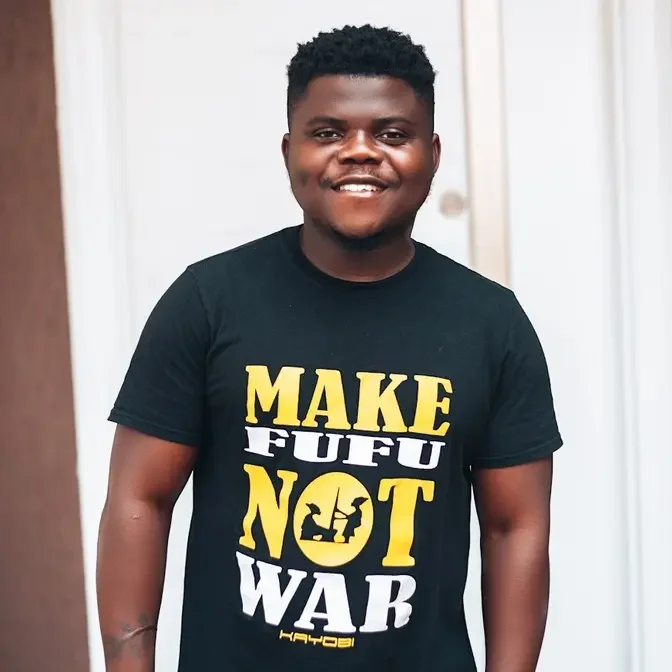
The Image of AFRICA has been DISTORTED around the WORLD & We are CHANGING the NARRATIVE via YOUTUBE videos One Country At Time.Until the HISTORY of AFRICA is told by AFRICANS, the story of GREATNESS will always GLORIFY the IMPERIALISTS!.
This is an Episode that showcase the beauty & The People Of Botswana
This is Botswana.
This is the place where I was born, this is the place where I grew up,
this is the place where I grew up, this is the place where I was born and raised.
Look at Tobogo in the middle, it's Tobogo in turn.
Botswana is definitely Africa's hidden crown jewel.
Applying for visa to visit this country
is definitely my most difficult visa I've ever applied.
It took me two solid years for my visa to be granted, but finally I made it.
I finally made it to Botswana.
Yeah, you wouldn't believe that I finally made it after all that shit.
Duu Melang, welcome to Khabaroni.
We're standing right here at the Central Business District,
which is the first capital city of Botswana because we've got two.
We've got Francetown and Khabarone as we mean capital city.
Botswana is located in the southern African region of Africa
and this is the place you definitely want to be
because you've got very amazing people, friendly, outgoing, sociable
and of course receptive to everybody else in the world.
Do you believe this guy?
Ah, Jesus Christ!
Oh my goodness!
Oh my God, come on!
I'm going to show my friends.
I want to take him to my home village.
This country is a beautiful country.
It's peaceful.
The people are kind.
They're loving.
You can go anywhere and you won't struggle to make friends.
The people that you meet are going to be genuine.
You know like in some places, I've been to places where you meet people
and they're being nice because chances are they want to rob you.
Chances are they want to do something sinister, you know what I mean?
But here when you meet people and they're smiling with you
and they're drinking or eating with you, it's actually genuine.
They're not planning anything later.
And they're just, you know, kind, very kind.
That's what I can say about this country.
Hi!
Generally people that come from outside come here and say we are hospitable people.
We're lovely, we're well-mannered people and we're kind-hearted people generally.
That's what people say, tourists say about our country.
I love how the people are very friendly and I also love the infrastructure.
This is definitely one of the most perfect countries that I've been in Africa.
The present-day Botswana was one second poorest country in the world.
And with right leadership, they've been able to transform the Botswana that you see today.
This is where the city of Gaborone started, the Bonington Farm.
What do you mean by that?
Well, essentially what it means is that in 1966 when Botswana got independence,
this was the only home that was found out.
So literally there was nothing in the entire Gaborone?
The entire Gaborone was just the bush.
All you see right now, all this beauty is what was established by Botswana.
We are one of the few countries in Southern Africa that did not inherit any infrastructure.
So you can imagine that this place was an entire bush
and there was a white colonial family that was staying here
until the government bought the area.
It's now government property.
On a journey to change the negative narrative of Africa,
I'm here to tell you fasten your seatbelt because I'm going to be your co-pilot
in terms of showcasing the real beauty of Botswana to you.
And I must say that it's time for Botswana!
Welcome to Botswana!
Give it to me.
It's my first day in the country of diamond and I believe that I can get diamonds everywhere.
Hi, do you have diamond?
No? Maybe?
Is that not a diamond?
In the country of diamond, I guess there should be diamonds everywhere.
But I feel so happy to be here.
Listen, this is my first time walking on the street of Central Business District
of Botswana's capital, Gaborone to be precise.
And listen, I feel like I'm the only one walking on the street.
The rest are cars.
I'm like, where are the people?
But guess what?
I believe that it's something to do with the population of this country.
Ozone has about two million people.
Another thing is that the Central Business District looks like a new city that they are
building because every building that you see right now is new.
So I guess I need to know the reason why.
Walking in the street of Gaborone excites my soul because can you believe that prior
to independence, there was literally nothing.
So this country was built from scratch by the people of this country.
So you actually saw the city grow?
Absolutely.
Remember, we got our independence in 66.
So I was a tiny baby in 65 when we came here.
None of these other buildings were there.
And after five decades after independence, this is one of the fastest growing economy
in the world.
Botswana got one of the best roads in Africa.
This is Francis Town, the second largest city in Botswana with a population of about
120,000 people.
Look behind me.
What do you see?
That's a beautiful tard road.
So Francis Town is the first city or is the first in Botswana to have a road, a spaghetti
road, the one we just drove on and show you.
This is really impressive to see because this is a country that had only 12 kilometers paved
road right before independence.
How would you describe the roads in this country?
If I say they are good, it's an understatement.
They are too perfect, as you can see yourself.
I don't know if you can remember us going through any portals.
I don't think there are that many.
All the roads are really good.
In some places, in some countries, you find only good roads in certain areas, highways
or just getting into the central of town.
But here, all around, it's all the same.
The roads are immaculate, well done, and the lighting is really good.
And as you can see, most of the street lights, they're all solar related ones.
So the investment that the government has done, I think it's very, very good.
Did you ever imagine that Botswana's capital would be this beautiful?
I mean, have you ever seen this part of Botswana on your screen?
I'm here to tell you that this is Africa.
This is Botswana.
This is Gaborone.
And let me tell you something.
When I got in here, I found it so identical to South Africa and Namibia.
But I'm not here to compare.
But I'm here to tell you that this city's infrastructure development is on the rise.
And it's about time for you all to come, see, live and experience it.
So this is my brother who lives in Botswana.
And I just want to know, how is life like living in Botswana?
Botswana is a very, very peaceful country.
And it's fast developing.
And there is development all around most of the cities.
Even in the villages, the government is investing quite a lot for the locals.
The housing projects with the government are actually giving people money to build houses
in every village.
And then there are a lot of tenders where they are doing roads, street lights within
the villages, not even in the main city.
So if you have been around, like what you've been seeing, you can see that there's quite
a lot of development within the central of Botswana, here in Gaborone.
But as you go out, it is partially the same.
The truth about here, the law is very strict.
We should follow the law.
Now, if you don't follow the law, you will be in trouble.
This country is a country whereby the African continent, they must learn from this country.
Because of the way they do their things.
Law and order waits.
Everybody obey the law.
This is a country I prefer to my own knowledge.
I want the youth of Africa to learn from this country.
This is an African country that I believe that the entire Africa must learn from.
Because I have traveled and I've never seen anything like this before.
This is one thing that I think is quite interesting in this country.
You see where I am right now?
These are actually new roads that have been constructed.
And as you can see, they are busy installing the solar power streetlights.
So you guys are busy installing streetlights?
This is a forest?
But you believe that people will be coming to stay in here?
Yeah, they will.
So you have to do the road plus the streetlight before people move in here?
That's it, man.
That's the point.
Now, you guys got one of the best countries in the world.
Yeah, man.
Good luck.
In Botswana, education is free.
Is it really true that education is free in this country?
Yeah, it's very free.
From primary to almost tertiary.
I heard that you guys, even when you are in school, they still give you money?
Yeah, you basically get paid to come to school.
Oh my goodness, you get paid to come to school?
So which means that every month you get money for being in school?
On Friday, I'm getting...
Can I be your friend?
Are you saying that you get paid to go to school?
I get paid.
How do you get paid for going to school, man?
It's more like, you know, I don't know whether to say that the government is
in a way thanking you for doing well for your own level,
and also for purpose of, you know, empowerment in terms of the human resource to say that
you have done well and the country maybe is lacking in terms of the human resource.
Therefore, you have done well, get the money, get the degree and come work for us.
And we are paying, it's more of a grant, you know, so yeah.
So that doesn't mean that after school you pay for it?
Yeah, yeah, yeah, you pay for it, but they're not really that harsh on you, you know.
Oh, okay.
Just to encourage you to go to school?
Yeah, to encourage you to go to school.
I want to know how much do you receive in a month for being in school?
They receive, because I indicated that, yeah, I'm self-sponsored for the second one,
they receive like $1,900 as the monthly allowance.
Yeah, then at the beginning of an academic year, they get like $3,000,
2.5 if it's social sciences and stuff for book allowance.
So the book allowance is credit.
Even your books?
Yeah.
And also to understand that, you know, our university is one that was,
Botswana came together and channeled the resources for us to have the university.
So in short, the government is more like paying for your studies,
is in a way doing exactly like the essence of the university itself.
It's more like paying you back for what your parent did in the past?
Yeah, our forefathers.
That makes sense?
Yes, yes, more or less, yeah.
That makes sense, because this was built by the people.
This is a country that right after independence, they had no university.
Well, there's always been an institution of higher learning for people in Southern Africa.
So the colonial governments of Basotuland, Swaziland and also Botswanaland
had a university in Lesotho, which was mostly covering people of Botswanaland,
Basotuland and Swaziland.
And then up until our independence around 1976,
the government of Botswana decided to have its own university.
Therefore, that meant stopping people going to Lesotho
or going to Swaziland to go study education.
So there was a call for the government to fundraise,
where every family in Botswana was encouraged to commit or donate a cow.
As you can see in the background here,
one man, one cat.
One man, one beast.
So it is out of this money that was generated that we managed to build this university.
University of Botswana is one of the biggest universities in Africa
and one of the fastest growing because it has over 17,000 students.
And it's free education.
Free?
It's free education, yes.
We don't pay education in Botswana up until university.
Even if you go study overseas in the best courses, the government takes care of that.
You have no right to say that you won't go to school in this country.
In Botswana, healthcare is free.
Well, this is one of the main hospitals in Botswana.
It's called Princess Marina Hospital and health is free in Botswana.
Like it's free for everyone.
We don't pay anything at all.
Yeah.
You mean you don't pay anything at all?
Nothing.
Okay, there's a small fee that we pay for administration, which is five poula.
And if you don't have the five poula, they still consult you.
You still get free medication and everything.
And there is a hospital or a clinic at every corner of this country, including the villages.
I mean, in Botswana, even to farm or to be a farmer, the government does everything for you.
You came straight from the university.
Was it really a capital intensive project for you or you started from somewhere with no money?
I actually, you know, like I was saying that immediately from the university, I did rain fed.
I went to the offices because usually in Botswana, when the rain season comes,
you know, citizens, they register for free.
If you want to be, if you want to farm, if you want to produce, yes, you know,
you register your four hectares land, the government will give you free fertilizers,
free seeds, you know, the tractors will come and plough for you for free.
For free.
My fellow brothers and sisters across the globe, welcome to the land of the free.
Literally, I would say that first impression, Botswana is super safe.
Guess what?
I left this bag here yesterday and this guy already showed you the bag yesterday.
Why did you bring the bag back?
I'm a rasta man, just a rasta man.
Take the bag, man.
Which means that the people in this country are super nice.
Literally, phone, everything is in this bag and he just returned it.
So, you know what?
I realized that there are two sides of Gaborone because the first place that I was literally
walking, I realized that I was the only one walking in there.
I felt like, I mean, I was walking in the street all by myself.
But here, I see more people.
Where is this part of the city?
So, it's in Main Mall.
Yeah, it's not far from the station.
Yeah.
This place is called Main Mall?
Main Mall.
Is it the oldest part of the city?
Yes, that is.
Okay, but what happens in here?
You normally find stalls, there are different stalls, food stalls.
You'll find clothing stalls.
So, yeah, that's pretty much it.
Okay, so literally you can get everything.
Everything you want in here.
Yeah.
Wow, but literally what I'm seeing is more clothes.
Yeah.
Like everyone sells clothes in here.
Yeah, and also food stalls, especially like during lunch hour.
The streets in this country are super clean and very organized to the extent that I never
saw a single hawker, nor beggars, on the street.
Tell me one thing that the world doesn't know about our beef.
I'll say that we have the best beef.
Even Steve Harvey is talking about our beef.
So, if you don't know about our beef, now you're going to know.
Our beef is one of the finest beefs across the continent.
Everybody who's been to Osana will tell you about our beef.
And it produces another cuisine that I really enjoy, which is the sassoie.
And you can pair that meal, the meat, with your bap, your beans, your ssam,
your madombi.
So, you can pair it with anything and it's absolutely delicious.
We are in Botswana and I want to let you all know that whenever you find yourself in here,
there is one meal that you need to try, which is sassoie.
I mean, when I got in here, everyone is like,
you cannot leave this country without tasting our traditional, authentic meal.
And guess what?
When I found myself in here, I realized that everyone was literally here.
What is so special about sassoie?
Oh, well, sassoie is our staple food.
I guess it's our staple dish.
It is beef, well cooked and pounded.
There's nothing really into it.
Just plain beef, pounded.
Plain beef, pounded, with water?
It is cooked, I guess, with water and salt.
A little bit of cholesterol.
Do you have spices in there?
No, just plain beef.
It is plain, yeah.
Finally, I got my sassoie.
So, now taste your sassoie.
I need to taste only sassoie or I have to eat with something else?
I think you came here for sassoie.
I just came here for sassoie.
I'm tasting sassoie for the first time.
It's very tender, it's very soft.
But very salty.
You put salt in there?
Yeah, you season for taste, right?
Oh, okay.
But above all, it's so tasty.
On a scale of 10?
9.5.
9.5?
Yeah.
Oh, thank you.
The 5, if you put pepper in there, I'll give you 10 out of 10.
A nation without a past is a lost nation.
Hence, the genesis of Botswana.
And welcome to Botswana.
Behind me, we have our three chiefs and they are the ones that made us.
The men behind me are our three great Kikosi or chiefs.
So these are the three chiefs who went to England in 1895.
They were protesting against the transfer of this country to a company called British
South Africa Company, owned by a British man called Cecil John Rhodes.
By that time, that man Rhodes was ruling three countries, almost owning them.
Zimbabwe is Southern Rhodesia.
Zambia, Northern Rhodesia.
Malawi is Nyasa land.
So the name Rhodesia came from his surname Rhodes.
So his mission was to rule and to control the whole of Africa from Cape in South Africa
and Cairo in Egypt.
So he convinced the British officials here for them to transfer Botswana to his company,
British South Africa Company.
So the three chiefs went to protest in 1895.
Say no, we are against being given to a company.
As Botswana, we want to remain under the protection of the British government.
By the time they went to England, it was 10 years after we got protection from the British.
31st March 1885, we got protection from the British.
And the country was then named the Botswana Land Protectorate.
So they misspelled Botswana Land and wrote Botswana Land.
We're not a colony, but a protectorate.
Interestingly, Sir Susan Rhodes is the one also who set up the railway, the railway you
see which moves past the train right now.
He managed to leave Cape Town up to DRC with his dream of establishing a continent of Africa
as his own country.
So you can imagine at that time in terms of project management, somebody building a railway
line from Cape Town all the way to DRC.
The company is called Botswana Land Railway Company.
That's the company that he owned to conquer the whole continent of Africa.
So he was quite a very interesting man.
From my research on the internet, I was told that Botswana was never colonized, but rather
a British protectorate.
How true was that?
Well, it's more of the same thing.
The only country in Africa which has never been colonized was Ethiopia.
Botswana was colonized by the British, but it was called British East Highland Protectorate.
So the practice of government was colonialism.
We are under the protection of the British or the empire.
That is why our capital was the only capital in the world that was outside Botswana Land.
It was in South Africa.
Wow.
Yeah.
As a matter of fact, the person who gave Ghana independence was actually one of our governors
here, Adam Clarke.
He was based in Botswana Land in Mafike.
Then he was also our governor here.
He started here, actually.
Wow.
Yeah.
So we are under the colonial government.
Okay.
And then fortunately, in 1966, we got our independence.
And then the beauty that you see in Botswana nowadays is because of our diamonds and our
tourism.
Natural resources in so many African countries has actually become a curse.
But with the right leadership in Botswana, it actually became a blessing.
When we discovered the diamonds in the early 70s, the kind of agreement that was structured
with the De Beers to then form a big conglomerate called Debswana was unlike any that was existing
in the world.
We're now, we're 50-50 partners in the most valuable resource.
And then that resource, diamond resource, was managed very, very frugally.
But the most important thing that both these gentlemen had, QKJ and Festus Makhay, QKJ
Masire and Festus Makhay, was to underscore the importance of education.
So priority was given to educating, educating, educating the public.
And a lot of the diamond monies were diverted to education.
In my view, that is what contributed the most to the explosive growth that we experienced
in the 70s and 80s and also in the 90s, where I think we were the fastest growing economy
in Africa, if not the world.
Botswana is one of the least corrupt countries in Africa.
So the other factor that really, really made a huge difference in my judgment is that there
was no corruption at first.
Yes, now we do have corruption, but the corruption that we have is a function of the last 10
to 15 years.
But those days were zero, zero tolerance for corruption, where cabinet ministers were happy
to drive simple cars and live in simple houses.
And with the same diamond revenue, Botswana now owns a national carrier known as Air Botswana.
Botswana is not just Gaborone.
So come along with me.
Let's fly to the touristic capital of this beautiful country.
These are the stars of Air Botswana.
Yeah.
Okay.
You can call us queens of the jet.
We are the queens of the jet.
It's a testament that in this country, there are more cows than humans.
You know why?
Because this is my first time boarding an airplane that has been served dry meat,
popularly known as biltong.
So we finally made it to Kasane.
Welcome to Kasane, guys.
Whatever you do, guys, please eat the brim.
Please.
The best fish.
Yeah, enjoy.
You're going to love it here.
What makes Kasane so unique that everyone has to be here?
It is the best place to be on earth.
On earth.
It's the best place.
And you guys are going to the Okavango Delta?
This is where four countries meet.
This is the only crowded point in the world.
Ever.
You guys are going to have fun?
Have fun.
And enjoy.
Enjoy.
The beautiful Botswana.
We made it.
Everyone is called Kweku.
Can you believe it?
He said he has friends in Ghana and his name is Kweku.
And I'm like, everyone is called Kweku in Ghana.
Kwesi.
Kwame.
Let's go to the shackle.
Botswana Tourism?
Yeah.
Nice to meet you.
Wow.
I'm Jonathan and that's Jennifer.
Hi.
Nice to see you.
Welcome to Kasane.
Thank you.
Kasane is Botswana's tourism capital.
Famous for the Chobe National Park, which has a large number of heads of elephants.
This is the tourism destination where when tourists come,
this is the place to be.
We've got the mighty Chobe River, the perennial river that never dries.
And this place called Kasane is where you get the quadruple point.
The only place in the world where you get the quadruple point.
This is where you get to experience Namibia, Zambia and Zimbabwe whilst you're in Botswana
by the famous Kazungula Bridge.
I'm about to make history because this is one place in the world that I've always wanted to be.
I mean, I've heard about this place.
Four countries meeting at one particular place in Africa.
And I was like, when will be the day that I will step my foot in here?
This is the day.
I'm happy today because I just made history.
I've always wanted to walk on this bridge.
I've always wanted to kiss this bridge.
Hi.
Can I kiss it?
Only place in the world that four countries meet each other.
So the Kazungula Bridge that you see right now did not exist before.
But Zambia and Botswana decided to come together to make life of the people and goods easier.
A major infrastructure project delivered in partnership between the Republic of Botswana
and the Republic of Zambia.
We believe this project is really a regional flagship and goes far to demonstrate how much
countries can get to achieve if we collaborate on these common developments in the region.
Boat cruise on Africa's Great Lake is something that I really enjoy doing.
I mean, I've done a cruise on the Zambezi River and here I am in Botswana.
I'm here to do another one, which is on the Chobe River, man.
And I can't wait to share all the excitement with you all.
I feel like it's about time for me to tell you all that it's about time to travel Africa,
experience Africa, live in Africa, enjoy Africa, explore Africa.
Listen, I got so much to tell you.
But hey, Botswana to me is the new found land.
Welcome to Chobe River, guys.
So Chobe River is the borderline between Botswana and Namibia.
So on our right, where you're hearing that music, that's Namibia.
That's on our right here.
And on our left here, that's Botswana.
So the music you're hearing there, that's an island.
That's a bar in Namibia.
We call it Pole Pole Bar.
It's on an island.
No, it's not.
Not possible.
We have to go through the immigration.
If I can't go and dance, I guess I can still enjoy the music and dance in Botswana.
Botswana.
In Botswana, dancing to music from Namibia.
Africa is funny, bro.
So one of the things that I really enjoy being here,
the fact that I can actually do two safaris in a day.
What do I mean by that?
In the morning, we did a game drive by, I mean, driving to see animals on the land.
But guess what?
We are now on an aquatic safari that I've never done before.
So guess what?
We'll be on this boat for a few hours, get opportunity to see the sunset
and also get opportunity to see, I mean, animals like.
This right in front of me, you see African buffalos.
And guess what?
You can only see this if you do the boat cruise safari.
This is an experience worth dying for.
So more like the Tropic River is inside the National Park.
So you see elephant right behind me.
This is beautiful, man.
It absolutely feels unreal, man.
But it is what it is.
That's what Botswana gives you.
See the sun on my face, the animals on my background.
What a perfect picture, man.
I hope you all enjoyed this amazing episode as we enjoyed for a minute.
But let me ask you a question.
Have you subscribed to the channel?
Please help us hit 2 million subscribers and like the video and share to friends and family.
And I'll see you all in the next one because your boy, Wodemaya is back.