
Visit Charming Cefalu #Sicily #TravelLikeAPro #GJWRisingStar
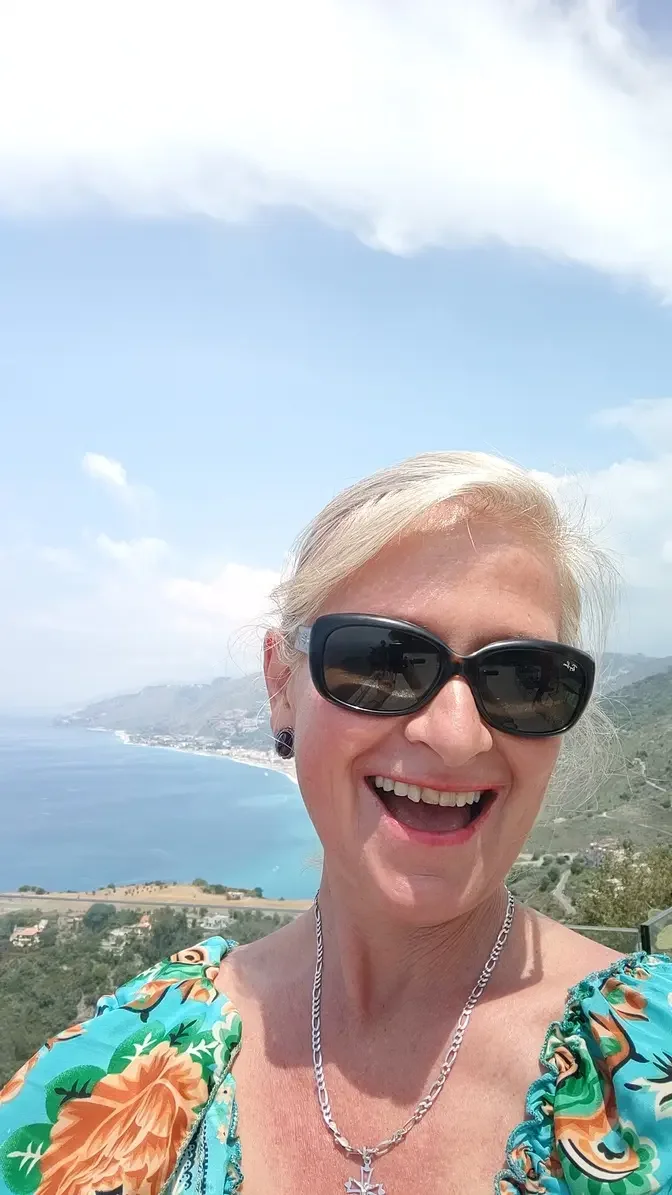
We head to te Province of Palermo and Cefalu, one of the most charming towns in Sicily/
#travellikeapro
Buongiorno from Cefalu. We're going to walk around this charming town in the province of Palermo.
A little bit of history, a little bit of sea, a little bit of going into the Duomo and so much
more. And then we're going to go to a town called Mesojuso that's so important because
of its Greek Orthodox iconography. You're going to love this. Come with me. The city of Cefalu
actually spreads all over but we're just going to enter the historic sections.
Pact. And this by the way is the Tyrrhenian Sea. Over by us is the Ionian.
The thing about Cefalu is that there's all these side streets and then this street
Right along the main road is this medieval wash house. Pretty remarkable and a must-see here
in Cefalu. It was used up until the 20th century. The women would wash their clothes here
and the natural waters that flowed down here came from the river Cefalina.
Imagine the woman kneeling down and washing clothes right here.
Each one of these streets that are perpendicular to where we are
lead up to the Duomo. Straight ahead is the Molu. That's where Cinema Paradiso was filmed
and it's a great spot to sit and take in some sun. We started over on that side and walked
all the way around and here's the Lido of Cefalu. Pictures really don't do this justice.
I've taken one million videos and pictures from this exact location. Just can't really capture
it. You have to come here. Imagine living up there and having to do those stairs every day.
Up and down, up and down.
This is Piazza Duomo with the main cathedral. Construction of this beautiful place was 1131.
It's specifically built like a fortress. It is said that Roger was sailing off the shores here
and there was a big big storm and he made a promise to the Lord Savior that if he would
save him and his men he would build an edifice dedicated to Jesus. And there you go. Looks like
there's going to be a wedding. And here it is, Christ Pentecrator in the Duomo of Cefalu.
And as you can tell this is not a finished cathedral because Roger then went over to
Montreal and Palermo to build those majestic churches. This is an ancient baptism urn.
In terms of a place to stay for a prolonged period, I think Cefalu is a great town. All of it,
walking distance, there's supermarkets, lots of great things to see. Be careful for the motor
cyclists. But all in all, I think if you are planning to come to Palermo, consider staying
in Cefalu for sure. And it's really a great walking town. You know what's also very iconic
here in Cefalu? What? The clothes hanging everywhere. Take the off the beaten path off
the main roads because sometimes you find the biggest treasures when you go off the tourist
trap. And places like this for instance. This is called the Postiella and it is situated within
the defensive walls and it was built to give citizens access to fresh water which flowed at
sea level. And so people come down here as well because it's very private and you can just swim
over here. These are the remains of the ancient Greek walls and they were made out of limestone.
The geographer Idrisi who was in Roger's court, he wrote the book Book of Roger around 1100.
He said Cefalu is like a fortress built on top of a cliff next to the shore and that pretty much
describes it perfectly. And straight ahead is the lighthouse. Now this type of arch over here
that you see is very typical of the Arab influence and leads to these beautiful courtyards. Right now
we're in the back of the cathedral which is over there and I like to come here because
it's less people and you have this view of the sea. There are several gates just like this around
Cefalu and this one is the Judeka and these gates led to different
areas. This for instance was where the Jewish people in Cefalu lived. But you got to get off
the main touristy shopping streets so you can see all these little treasures.
You may recognize this beautiful lady Gabriela. She's been on many of our videos and she's one
of our regular guides in the Palermo region and an expert on all things Sicily. Gabriela we went
to Cefalu and we went to Mezzogiuso. Can you tell us a little bit why Cefalu is so important?
Well Cefalu is a beautiful picturesque town. Not only the landscape is wonderful but the
landscape itself is a counterbalance with men's creation. We saw a beautiful cathedral which is a
UNESCO site since July 2015. So you have beautiful sandy beaches and cliffs, rocky cliffs and
beautiful architecture. And some remains, some Greek remains. Absolutely, we have megalithic walls.
I call Cefalu one of the most charming towns in all of Italy. It still is, it really is.
They do a really really good job with street art. Lunchtime, some of the shops are closed
till about four o'clock. So that's something to keep in mind. Not all of them but some of them
stay open. So between one and four most of Sicily you'll find things are closed.
Cefalu by the way is on our east coast tour of Sicily in 2025. Check it out on www.youmeandsicily.com
We'll be here on the west coast and also include towns like Castelmare del Golfo,
Segesta, Palermo, Monreale of course and so much more. Check it out and we'll see you here in Sicily.
20% of the population here is Greek Orthodox.
And how cool is that? Both churches are right next to each other.
This is a beautiful palace.
Bellissimo balcone, vero?
Little sides and alleys. And this is the patron saint, San Nicolo d'Amira.
Everything's gold here. All gold.
In the 1700s.
He came here, he went to the monastery, fell in love with Mezzo Drusso and then opened up a
school for this type of drawing.
That's from the 1600s.
All made from gold.
And there's Paradiso right there.
1800s also.
In the iconography, in this type of art, every color, every shape, there's a symbol.
Mm-hmm, everything in Greek.
And here's the altar.
Everything has symbolism.
This is square because the square is perfect.
And also four points.
Wind, earth, fire, water, and air, right?
And here's Padre Pio.
This is actually the first street of Mezzo Drusso.
1600s. No, 1400s.
End of 1400s.
Let's go inside.
So this was where the iconography school was.
Oh wow, that is beautiful.
And here we are, the Albanian arms.
Wow, that's from the 1300s.
This right here has been here since the Norman times.
1600s.
Oh, look at that.
That's Christ's Pentecrator.
Jesus is dressed in a different way here.
See, after the fall of the Byzantine Empire, Constantino.
And here's the other altar, also square.
So the painter who does this fresco is from Messina.
Definitely a different type of landscape there.
Very old towns.
You know, the origin of this community are actually very old.
And they recall the Greek and Albanian culture.
We talk about Albanians themselves that left in the 15th century.
They moved to Mezzo Drusso, so they left their own country.
And they settled there, rebuilding a new city on the remains of the old city.
What's so fascinating is the Albanians came because they were prosecuted during the Ottoman
Empire, but they didn't conquer Sicily.
They just settled in some of these nice towns, but kept their culture.
Absolutely.
Everything is still in the same language.
The road signs are in two languages, Italian and Albanian.
And so there's that town and also Piana d'Albanesi, one of the best cannoli places in Sicily.
They won the Guinness World Record for having the largest and longest cannoli of the world.
Thank you for always being a great expert and one of our favorite guides.
Thank you.
So it's a town of the original Albanese.
At the end of the 1400s,
so these were the ones that came from present-day Turkey when there was the Ottoman Empire,
Ottoman invasion.
They came here.
They liked the territory and they settled here.
Thank you so much for watching.
And of course, we'll see you on another episode of You, Me and Sicily.
We're here every Sunday at four o'clock.
And if you haven't yet, please consider subscribing and have a great day.
We'll see you soon.
Ciao.