
15 Things You Didn't Know About Albert Einstein
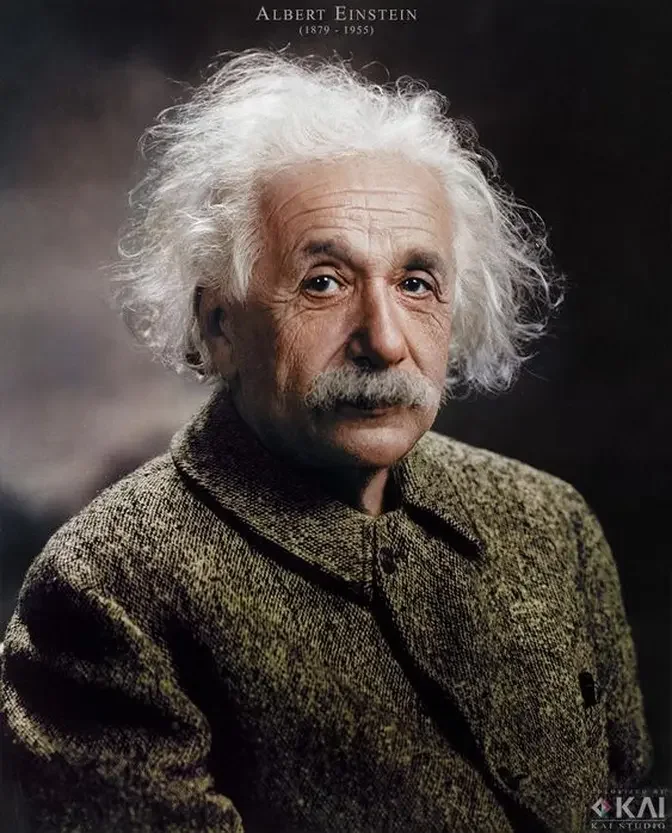
15 Things You Didn't Know About Albert Einstein
Welcome to ALUX.com, the place where future billionaires come to get inspired.
Hello there Aluxers and welcome to yet another fantastic fact-filled video.
As I'm sure you know, here at Alux our commitment is to giving you insights into some of the
biggest and best things in life from luxury vacations, resorts to celebrities to historic
icons. And one such historic icon that everybody in the world should know something about is the
admittable Albert Einstein. Born in Alm, Germany on March 14, 1879, Albert Einstein was a theoretical
physicist who was responsible for developing many of the key scientific theories in modern culture.
He is perhaps best known for his mass-energy formula E equals mc squared, dubbed the world's
Although it would be fair to say that everybody in the world has heard the name Albert Einstein,
it's our job to give you a further insight into the world of such an iconic figure.
So without further ado, here are 15 things you didn't know about Albert Einstein.
1. He was an average student Although his name is now one associated
with the peak of learning and intellect, it might surprise you to know that Albert Einstein was
a rather average student in his youth. Though not a struggler, Einstein did not excel in any
of the traditional school subjects during his childhood, except for one that is. Can you guess
which? That's right, Albert was unsurprisingly the top of the class when it came to mathematics.
A false fact is often shared on the web about his having failed the subject,
but we can confirm that this couldn't be farther from the truth.
2. He was a talented musician Not only a math genius, Einstein was also
an incredibly talented musician. As a child, he grew up with a mother who was an incredibly talented
piano player, and this led to a love of music being installed in him at a young age. If the
whole math and science genius path hadn't worked out, it is said by those who knew him that Einstein
could have forced a career as a world-class violinist.
3. He was married twice Einstein liked women. After his death
letters revealed he maintained close connections with six women, spending time with them and
receiving gifts from them. He married twice. His first wife was physicist Mileva Marek,
whom he married in 1903 and divorced in 1919. In the same year, he married his cousin Elsa Lowenthal,
whom he had a romantic relationship since 1912. Despite them both being married,
Albert and Mileva had two sons, Hans Albert 1904-1973 and Eduard 1910-1965. Elsa died in 1936.
4. He also had an illegitimate child A fact that was hidden from public
knowledge until it became light in the 1980s, Einstein apparently had an illegitimate daughter
from before his marriage in 1902. Old correspondence between Albert and his first wife
revealed they had a daughter named Liseral a year before their nuptials. Mysteriously,
all mention of the child came to an abrupt end in the letters to one another, and the fate of
little Liseral has remained unknown till this day. 5. He was worth $1 million
At the time of his death, on the 18th of April 1955, it is believed that Einstein
had an estimate net worth of $1 million. This equates to roughly $9 million in today's money.
Using his genius intellect, his wealth amazed from various publications and patents of his
most well-known theories. Though a million dollars doesn't seem like the kind of figure
that you would associate with such an influential figure, that kind of sum in 1952 was certainly
enough to be able to live like a king and continue to spread your knowledge without financial worries.
6. He promised his Nobel Prize money before he had even won it
During the process of drawing up divorce papers between he and his first wife, Einstein put in
writing that he promised Maleva the monetary from winning the Nobel Prize for physics.
The only unusual thing about this promise, Einstein was still two years away from actually
being awarded the prize. Of course, Maleva did not have to worry because if anything was ever
a dead cert, it was the fact that Albert Einstein was going to win the Nobel Prize at some point.
He stayed true to his word and awarded his wife the winnings.
7. Einstein was awarded the Nobel Prize for Physics in 1921
The citation for the prize is for services to theoretical physics. However, he didn't win for
the reason you might first think. The prize was not in recognition of his work on the special
and general theories of relativity that he is perhaps best regarded for. Instead, Einstein
received the prestigious accolade for his work on the photoelectric effect,
which is the emission from the electrons when light is shown directly onto a material.
8. There is evidence to suggest that Einstein's wife co-authored the theory of relativity
If this is indeed true, then it wasn't so unusual that Maleva received his Nobel Prize winnings.
In 1905, prize-winning Russian physicist Abram Fedorovich Loff claims to have seen
the original manuscript for the theory of relativity, stating that it was signed by
Einstein Merrick. As Einstein did not leave any documents which acknowledged the contribution
of his former wife, Loff claims can but be left unproven.
9. Albert Einstein changed citizenship twice
Einstein was born a German Jew. He re-announced his German citizenship in 1896 in order to avoid
conscription and move to Switzerland where he was officially stateless until becoming a Swiss
citizen in 1901. He returned to the German Empire in 1914 to take up the post of director of the
Kaiser Wilhelm Institute of Physics. During his tenure, he undertook various excursions,
including to the United States. In 1933, with Hitler's rise to power, he was in the U.S. when
he realized he could never return to Germany. Einstein became a U.S. citizen in 1940.
10. He had big New York connections Throughout his career,
Einstein built strong and long-lasting connections with the city of New York.
He first visited New York in April of 1921, where he was treated to an official welcome by the mayor,
John Francis Hyland. Incredibly proud of his Jewish heritage, Einstein also joined the crowd
of 15,000 people at Madison Square Garden for a mass Hanukkah celebration. There is also a
permanent reminder of the great physician in the form of the Albert Einstein College of Medicine
in the Bronx, established a year after his death in 1953. You can find out much more about the
wonderful city of New York in our dedicated video, just click the top right hand corner.
11. He has a large brain Officially,
in fact, the periodal lobe in Einstein's brain was 15% larger than that of an average brain.
When Albert was born in 1879, there were fears from both his mother and from attending physicians
that he may have been deformed due to the unusual large size of his head. Those fears soon laid to
rest, however. As the story goes, that little baby's body grew quickly to match up with the
of his head, perhaps so large because it was already accommodating one of the biggest brains
the world has ever known. Postmortem research on Einstein's brain suggested it had a high number
of glial cells per neuron, which scientists have analyzed to mean Einstein had better
thinking abilities and conceptual skills than average. 12. You can visit Einstein's brain
Einstein's brain was the source of much fascination and amazement for scientists
It was also the subject of some controversy as people felt pathologist 1 Thomas Harvey
went beyond the remit of a postmortem because he cut up the brain into 240 pieces of roughly
one cubic centimeter. 46 of those pieces were acquired by the Mütter Museum in Philadelphia,
USA, and is currently one of only two places in the world where Einstein's brain is on public
display. 13. He has a massive library of works
Einstein is widely recognized as one of the greatest minds the world has ever seen.
Although the theory of relativity is one of the two pillars of modern physics,
together with quantum mechanics, his knowledge theories and influence are immeasurable.
He published more than 300 scientific papers. When in 2014, the university's Archives and Libraries
of the World announced the release of Einstein's papers, it amounted to 30,000 unique documents.
14. Einstein was against the nuclear bomb Many people associate Einstein with the
development of the nuclear bomb. Einstein was in fact a pacifist, and because he was horrified at
the work going on in Germany to develop nuclear fission into a weapon of mass destruction,
he was persuaded to write a letter to President Franklin D. Roosevelt. It is accepted the letter
was the catalyst for the U.S. to start the Manhattan Project, which eventually presented
the nuclear bomb to the world in 1945. He went against his pacifist principles because of the
danger he saw if Hitler had atom bombs, but he would continue his fights throughout his life
being particularly active in the civil rights movement and in Jewish issues.
15. He could have been the Israeli president Israel's first president was Chaim Weizmann,
and when he died in November 1952, the position was offered to Albert Einstein
before his death. Weizmann had often referred to Einstein as the greatest Jew alive,
and when then young state lost its first figurehead, they turned to him to lead them
into a new Israeli era, feeling that he wasn't equipped to rule a nation. Einstein politely
declined the offer, stating, I am deeply moved by the offer from our state of Israel,
and at once saddened and ashamed that I cannot accept it.
So there you have it Aluxers, 15 fun facts about Albert Einstein,
one of the world's most important and influential minds. Did the work of Einstein inspire you to
go into physics? Do you have a favourite scientific discovery of his? Let us know
down in the comments. And for all of you who have stayed with us until the very end,
here is a bonus fact for you. Einstein never wore socks. This amazingly brilliant man who won the
Nobel Prize, the Copley medal, and the Max Planck medal, the Franklin medal, and the Berner medal,
and the Matusi medal, and the gold medal of the Royal Astronomical Society, a man who was named
Time magazine's person of the century, hated socks. He also wasn't much of a fan of haircuts.
Thank you for spending some time with us Aluxers. Make sure to like and subscribe
so you never miss another video. We also handpick these videos which we recommend you watch next.
You can talk to us on social media or ask us questions on our website at alux.com.
Thank you for being an Aluxer.