
Dessert Wines | Re:Wine w/bschwitty | Wine Basics
4 Video Views·Jul 7, 2024
Today on Wine Basics, we cover the all encompassing term known as "Dessert Wines."
I'm drinking a nice 2010 Sauternes from SIchel
It's kind of just more of a sugary fuller version of a wine that you would
normally get. That's not true at all.
I'll go back to rewind and be shitty because well,
the fridge broke and I had to eat everything.
I may sound a little sick today. I'm going to apologize for that.
And I'm going to sound sick for the next two weeks because I'm shooting all of
these back to back. But welcome to another,
well wine basics. We're going to do some wine basics today.
We're going to talk about dessert wines.
So what do I have in terms of dessert wines today?
I'm going to be drinking some Sarturnes. Uh,
this is a 2010 from a Sitchell and we're just going to,
we're going to talk about some dessert wines, which Sarturnes falls under.
God, I hope I'm pronouncing that correctly.
The dessert wine actually refers to in America,
any wine that's over 14% alcohol and under 24% alcohol,
which is kind of confusing, but, uh, it's for a tax purposes,
which there are wines, um,
especially California wines that are above 14% alcohol,
but are considered a dessert wine by a us standards. But again,
that's just, that's just legal ease.
The colloquial definition of dessert wine is kind of an aperitif or a, well,
a literal dessert wine, something that's sweeter.
And just to touch back on the terminology for dessert wine,
as defined by the American tax code, uh, even if it is dry wine,
like I was saying,
California produces wines that are above 14% alcohol on the rag.
Um, but even if they're dry or unfortified,
they will end up in this dessert wine tax bracket.
But dessert wines, sweet wines, um, not like,
not like the kind of sweet wine where it's just residual sugar.
That's because it's kind of an intro wine. Um,
more like it's intentionally sweet,
but it's intentionally sweet. Uh, like port Sarturnes,
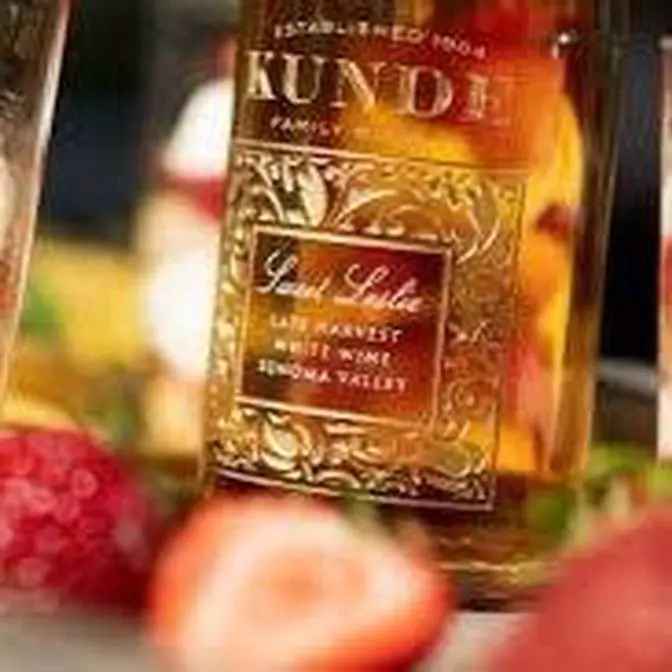
uh, ice wine, uh, late harvest wines,
and they're designed to be enjoyed as dessert wines.
That's quite nice. So some types of dessert wines.
I'm going to cover five, the five most popular. Um,
we're going to start with fortified wines.
So fortified wines are wines that the fermentation process is halted, uh,
while there's still some sugar left and it's halted by the addition of spirits.
Like a neutral spirit, like brandy or something of that nature.
Port is an example of the style of wine.
Late harvest wines are wines that are made from grapes that are left on to hang
on the vine longer so that they'll ripen and grow and gain more sugar before
processing. Therefore, if it's like a white wine like this,
it will probably be picked somewhere, uh, later September,
October versus when it would normally be picked in late August to early
September. Although this is not a late harvest wine,
late harvest wines you'll find are somewhere around the 17 to 18% alcohol
range, uh, in general. Uh, sometimes it's, uh,
likened to port, especially in America. Um,
but you'll find that these wines weren't fortified with spirits, uh,
dried grape wine. Um, I've not actually had any of this before, but, uh,
I think I may have had one that's kind of like this,
but what dried grape wines are, the grapes are left out to dry in the sun. Uh,
they're made to raisinate, which means to become raisins. Uh,
and they lose up to about 70% of the moisture or water that's inside the grapes,
um, which will result in a lower yield,
but it will also concentrate those flavors in there.
Not unlike a botcher sized wine,
except for the fact that the sun is what's drying out the grapes and shriveling
them up, not, uh, mold.
Ice wine, uh, is a really special subset of this.
Um, kind of a little bit of a late harvest thing going on. Uh,
the growers will leave their grapes on the vine until they frost over and freeze
and then they'll pick them all frozen and then produce them,
press them off while they're still frozen to create wine before they thaw out,
which I've had once and it was quite good.
It's very popular in New York and the Finger Lakes region.
And, uh, I've seen a lot in Canada. It's also ice vine.
Um, sorry, Jay. Uh,
which is popular in Germany in some areas.
And finally the fifth botcher sized wine, botcher, Botrytis wine. Uh,
this is wine that are made from noble rot or Botrytis,
which is a fungus that, uh, attacks the grapes.
It lets the water out of the grapes leaving higher acid and a higher
concentration of flavor and also gives off kind of a,
gives it more of a honey, honeysuckle, um, sweetness to it,
which, uh, the Sauternes is.
Now dessert wines are interesting because they, um,
they're not something that you have with your main meal. It's more,
like I said, an aperitif or a dessert that is reflected in what it pairs with.
And this is just a generalization of what, um,
dessert wines will pair with. It's, it's a broad spectrum. Like I told you,
there's at least five different types of dessert wine. Um,
so this is more of just a generalization, but, uh,
dessert wines will pair well with hard and soft cheeses, exotic spices, uh,
cured meats and desserts. Duh.
Delicate and nutty cheeses such as Brie, Gruyere, Havarti,
Swiss and Mozzarella. Pungent cheeses like blue cheese,
Gorgonzola and Stilton. Cured meats, charcuterie,
salumi, uh, bacon even. Ooh,
I think I know what I'm having after this. Uh, and then nuts, almonds,
pecans, cashews, exotic spices like cumin, ginger,
five spice. They'll balance out.
And then finally baking spices like cinnamon, um,
clove and allspice make a interesting pairing with these sweet wines,
these dessert wines. So tell me,
what's your favorite style of dessert wine?
They always say that you start with sweet wines and then you go into the drier
wines and you come back to the sweet wines in the end. Um,
just as the process, the evolution of, of your enjoyment of wines.
So tell me where you are in your wine journey in the comments below.
Have you tried any sweet wines? Are there any in particular that you enjoy? Um,
I know I love this. I had my first satins was, uh,
at a wine themed restaurant in Woodinville,
Washington and we,
one of the desserts pairings was a creme brulee and some satin and it blew my
mind. And so every time I find, um,
an affordable satin, um, I had to try to pick one up.
So, um, join us as we keep going through the week.
I may sound sick, but I'm here for you.
I'm going to go die now. I'll catch you next time.