
Ancient Egypt Made Planes Way Earlier Than We Thought
Most people think about hieroglyphs as the main form of writing in ancient Egypt, but many other scripts existed
more than 5,000 years ago Egyptians managed to invent practically everything ancient Egypt is rich in history and
Filled with surprising inventions be it cultural or scientific this period of history is super fascinating
To this day some of us still use what they created
Millennia ago from the Egyptian pyramids to the mystical mummification. Here are 20 ancient Egyptian inventions that will surprise you
Number 20 the pyramids
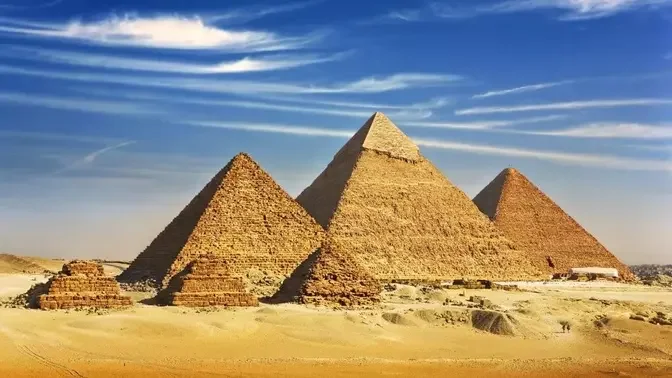
What ancient Egypt is probably most famous for is its incredible pyramids a construction of these giant triangular towers
Served as tombs and symbolic monuments for the Pharaohs
They are filled with carvings drawings and writings which are super precious in terms of history
Most of them were constructed during the Old Kingdom era which goes back to 2700 BC
Others were built a thousand years earlier during the Middle Kingdom era in 1700 BC
Which is still pretty far back in history pyramids are ones are still standing today and they're basically giant historical witnesses
Some are nearly 4,000 years old. The most ancient pyramid is
4690 years old it was built in
2667 BC in Saqqara, which is south of Cairo
Pyramids are for the most part
constituted of bricks earth and sand
Historians suggest that approximately at 100,000 workers resided on site during their construction
That's a lot
But it's not surprising given the fact that building a single pyramid required at least 20 years of labor
Small towns were surrounding the construction zones and were mainly occupied by these workers
Archaeological findings at pyramid sites have revealed artifacts associated with various roles like bakers and doctors
so it's even possible that some of these workers traveled with their staff and
Family or that some of them had different functions at the same time
Maybe they were priests physicians and even bakers who knows there's still a great amount of mystery surrounding the Egyptian pyramids
what we do know is that the construction of those massive monuments came with a
Significant cost and this is precisely why pyramids stopped being built. They were just too expensive
Time for rare topic on May 19th
1798 a fleet of 3,000 French ships led by General Napoleon Bonaparte left France for Egypt
It was the largest expedition that had ever crossed the Mediterranean Sea
This French military campaign first aimed at seizing Egypt to control the route to India
However, it quickly became a real scientific and cultural expedition. That's right
Napoleon's fleet counted many scholars artists professors
engineers designers and
Architects that were about to unravel the secrets of ancient Egypt. Napoleon opened a historical window to ancient Egypt
he discovered hieroglyphs pyramids obelisks and
So much more inventions. One of their most legendary findings was a 2,500 year old airplane in
1898 a tomb near Saqqara was discovered pieces of iron and wood surrounded the area
Some of them were described as massive iron wings onto which were engraved drawings and paintings of eagles and other large flying birds
Ancient Egypt made planes way earlier than we thought some people do believe that airplanes were in fact created by Egyptians in
1969 years after Napoleon's Egyptian expedition. Dr. Khalil Masiha was observing the model of a bird in the museum
This model was found in a tomb near Saqqara and was dated 300 BC
Masiha noticed some unusual things. This bird did not have legs nor painted wings
It had a 7-inch wingspan and a vertical tail, which was super atypical for bird figurines from ancient Egypt
After reproducing a wooden copy of the model Khalil Messiah showed it to his brother a flight engineer
Both were certain this was the model of an airplane and not a bird
Moreover the hieroglyphs that are presented on the model airplanes say the gift of Amun and
Amun was the god of wind and air in ancient Egypt were Egyptians the first pilots
Did they build the first airplane and if so, where is it? Let us know what you think in the comments
number 19 mummification
Did you know that the Egyptians preserved dead bodies almost perfectly quite creepy in ancient Egypt people used to mummify their dead
Mummies are real and are basically canned human corpses
No wonder why they fascinated and terrified contemporary culture through stories and movies like the mummy
But mummies are super interesting and they do tell a lot about ancient Egyptians lifestyle in ancient Egypt
it was believed that mummification allowed the spirit of the deceased to recognize its physical appearance and
Regain it in the afterlife during the Old Kingdom
Only a few royal embalmers were allowed to perform mummification on members of the Pharaoh's family
Thousand years later the ritual was open to people that could afford it
Mummification is actually super interesting and tells a lot about society back then
Practically speaking the mummification process consisted of preserving a whole body
It involved extracting all moisture from the body to ensure a long-term
Conservation organs were also removed and placed in special jars
This procedure was carried out by special priests known as embalmers. They were the ones capable of combining religious beliefs and science
Number 18 ancient Egyptians used water clocks to measure time at night
Can you wrap your head around the fact that the notion of time?
Historically appeared at a certain time and that was 3,000 years ago
Egyptians had the notion of life passing and time they created clocks and more specifically water clocks to manage their day and organize the
Rhythm of their lives water clocks are also known as clepsydras
These water clocks were precious items preserved for high dignitaries and the aristocracy
The technical principle is at first sight quite simple two basins are necessary
One of them is filled with water and then drilled to allow its evacuation into the second basin
It then gets trickier
Measuring spaces were engraved on the inner wall of the vase receiving the water and they and to be properly read and calculated
This enabled Egyptians to know the duration of a day and a night and even a season
There was systematically some water left at the bottom of the second basin and guess what?
This was usually where two mysterious hieroglyphs were inscribed the ones of life and stability
This is proof that the Egyptians did take the notion of time super
Seriously, they linked time to life itself
The oldest clepsydra ever found came from the ruins of the Karnak temple and was created around
1403 BC
However, a text explaining the mechanisms of water clocks was found within the pyramid of Amen met which was built around 1500 BC
This means that clocks were already a thing for a long time
number 17 comb
Did you know that hair combs are one of the most ancient tools in the world?
They were invented thousands of years ago and the Egyptians are believed to be one of the earliest
Civilizations to use them hairstyles were definitely a thing in ancient Egyptian culture
Children had their heads shaved with a side braid
This hairstyle paid homage to Horus the god of the Sun who wore the same braid during his childhood
Depending on the social rank of the child
The braid was decorated in different ways with simple flowers and even in some cases with gold clasps during puberty
Future men shaved their heads and future women let their hair grow
Once Egyptians reached adulthood men would grow their hair and make sure to show their ears while women's hairstyles were much more varied and complicated
Some things never change
Women's hair could be straight wavy curly tied in a ponytail or even with pigtails
Even back then hair trends were a thing during the Old Kingdom era
Women preferred to have short or mid-length hair while under the New Kingdom era long hair was more fashionable
It was usually decorated with different ornaments like diadem pearls precious stones pins or flowers in either case
Ancient Egyptians definitely needed something to untangle their hair and that's probably why they decided to use comb
When women combed their hair in public, it also means something else. That's right
It used to signify that they were willing to please a man
number 16 ancient Egyptian calendar
We all use a calendar be it for work appointments or meetings society would be lost without it
How would we start working or go to school? How would we function without understanding the seasonal changes all over the world?
Well, thanks to the Egyptians we have one
In fact, the Egyptians invented one of the first calendars in the world
Calendar that we now use is quite similar to the ancient Egyptian version more than 10,000 years ago
Egyptians lived next to the Nile River and were following its annual flood to live and fertilize the land
The rhythm of the Nile was super important to them. It was punctuating their days and work on the fields
Niles as floods were even more important than the moon phases to create their calendar
The Egyptians decided to base themselves on the arrival of a serious also known as the dog star which was following the Nile's floods
From Sirius's arrival into the eastern sky. They formed a year-long calendar that had
360 days and counted 30 days per month
It is similar to ours except they forgot about leap year meaning that it became inaccurate over time in any case
Using a calendar enabled Egyptians to keep an eye on the seasons and maximize the cultivation of their land
Egyptians still managed to create the first solar calendar in the world
It is famously represented on the walls of the comb on bow temple located in Aswan for Egypt
number 15
surgical devices
In ancient Egypt surgery was a serious thing
Can you believe that Egyptians used and invented a variety of surgical tools that are quite similar to those of today?
Egyptian surgeons were able to make stitches with needles and remove objects with scalpels or forceps
They would even apply ointments to certain wounds
Egyptians were super advanced in the medical field
Yes, they did also use spoons forks and knives, but it's still quite impressive to think that lives could be saved
3,000 years ago. It's also surprising to think that it happened with some of our modern tools
Medical knowledge of ancient Egypt is precisely described in a variety of texts written on papyrus
They were all written during the Middle and Old Kingdom eras meaning that medicine is a super old science
Some of the main texts that were discovered are the Edwin Smith papyrus and the London medical papyrus
They described certain surgical procedures like amputations
They explained certain plant-based preparations used for medicine or as ointments
Some illnesses are also transcribed like oral infections or ulcers
Another famous text is the Ebers papyrus and this one depicts how to use all the medical tools from ancient Egypt
These tools were quite advanced and some of them like scalpels are systematically used by surgeons today
number 14 prosthetic toe
3,000 years ago Egyptians were already creating prostheses
It all started in 1871 when two Egyptian brothers went to look for their lost goat. That's right
They had no idea what discovery they were about to make looking for their goat
According to the story they slipped through an opening between rocks and discovered a 3,000 year old necropolis
Which served as a cemetery in ancient Egypt?
It's called the necropolis of Sheikh Abd al-Gorna and is home to different tombs
Amongst them researchers found a mummified woman wearing a wooden toe prosthesis
She had her right toe amputated and managed to find a solution back then to be able to walk properly again
According to scientists, this is one of the oldest prostheses ever discovered
It is about 3,000 years old and is made of wood and leather parts
The prosthesis is very detailed and resembles a toe but was not only decorative but served its user
number 13 codified writing
Ancient Egyptians established the first ever written alphabet. That's right
Egyptians created hieroglyphs which consisted of signs and characters the oldest hieroglyphic inscription was found in a tomb
Dating back to 4,000 BC other pieces of hieroglyphic writings were identified in a temple and date from the 4th century
This is proof that hieroglyphs have been used for more than 3,000 years
Making it one of the longest used forms of writing be they on walls papyrus or monuments like pyramids
Thousands of hieroglyphs have managed to make it to this day without a scratch the engraved characters aren't letters in the usual sense
They represent sounds or actions as they were codified. They took on different meanings depending on the sign
They were written next to thanks to an incredible French guy named Jean François Champollion
Also known as the father of Egyptology hieroglyphs code was finally cracked in 1822
These signs had multiple functions
They corresponded to a phonetic sound a meaning and had an ideological value as the vowels are not written
We're not very sure of their pronunciation
But we do get an idea the characters however were not used by just anyone and for anything
They consisted of symbolic signs that were considered sacred. Each of them was associated with Egyptian gods
They were also super complex and took a long time to draw and engrave
That's also why some hieroglyphs were changed to simpler versions of themselves far from being a simple mode of linguistic communication
Hieroglyphs were used to transcribe important pieces of information that needed to be remembered
This is why they are mainly printed or engraved on special monuments later on in history
The scribes the ones who knew how to read and write during those times also used hieroglyphs for important administrative medical or political texts
Number 12 ancient Egyptian black and red ink
How would we write without ink thanks to the Egyptians again?
They invented it 5,000 years ago
The ink they used was either red or black black ink was more commonly used than the red one who would have guessed
That's right
Red ink was strictly employed for specific pieces of information such as titles
Important instructions or names or crossing out all the wrong answers on
Egyptian students homework
Just kidding over the past decade many studies have been conducted to understand how the Egyptians managed to create their ink
It's a whole mystery researchers have discovered that the composition of their ink was actually far more complex than expected
They found traces of chemicals and a bunch of complex mixtures involving heavy metals and for pigment purposes
But also as a secretive in other words as a component to accelerate the drying of the ink
This is super smart, but also super modern their time
This form of composition was used again centuries after by Renaissance painters. Did they time-travel?
number 11 papyrus
It's almost impossible to separate papyrus from Egyptian history. I mean, come on papyrus is a unique plant
It had many functions but was mostly used as a medium for writing papyrus began to be used for writing around 2000 BC
But what is it exactly papyrus is basically a semi-aquatic plant only grows in the wetlands
It can reach up to 5 meters in height
They're fantastic refuges for wildlife and can serve as a home for birds hippos and even hide crocodiles
No wonder they wanted to chop it all down
originally from tropical Africa
Papyrus disappeared from Egyptian shores around the 18th century the same time that Napoleon visited the country
Guess the plant didn't particularly like the French Emperor a papyrus sheet was obtained by assembling thin strips cut from the stems of a
Plant these strips were then arranged perpendicularly
They were then beaten against each other with a hammer
Finally the strips adhere to each other after being immersed in the water of the Nile
The sheets were glued together with a dough made from flour and formed rolls of paper
These were white in color
Thanks to the bleaching action of the Sun and darkened over time to take on a yellow brown color in general
Only one side was used to write the one where the fibers are horizontal
It's a super precise process. The longest papyrus ever discovered is the Harris papyrus
Which is 41 meters long once unrolled. Can you believe it?
It's almost the size of an entire building in length
All of it recounts the reign of Pharaoh Ramses the third and lists the different donations made to the temple
scribes used to write hieroglyphs on papyrus using their ink and a sort of pen
Papyrus was such a success that even the Greeks and the Latins started importing it from Egypt
But papyrus was also used for different purposes once bound together
Bundles of papyrus were used to build boats
The stem also gave a raw material for a basketry and weaving papyrus was then used to produce all types of things like baskets
Clothes sandals ropes and sailboats even the root and the pith of the plant were used to wick torches
Papyrus was also food the fruits and the tender part of the stem were eaten while the rhizome rich and starch was roasted before
Being eaten truly a magical plant
number 10 irrigation system by digging canals from Nile River
Egyptians invented many things and were brilliant visionaries their knowledge also extended to agriculture as we know the
Inundations of the Nile were super important to cultivate their land
They used the annual floods to irrigate their fields and to make sure to keep their soil healthy and fertile
the floods of the Nile were cyclical meaning that the Egyptians were well-prepared a
Chain of basins was developed around the Nile Valley to receive water from the floods
These basins were bordered by earth dikes and formed a pool that was connected to different canals
While some were feeding the basin with more flood water from the Nile
The other canals were redirecting it to certain fields this enabled them to keep lands
Irrigated all over Egypt. Isn't that super genius?
The Egyptians also invented a more efficient water lifting device at first water was lifted using seesaw wells with a counterweight
Then they used a wooden wheel with jugs inside
Finally this system evolved into a two-wheel machine where a blindfolded animal would be in the first wheel that would then turn the second
One in motion these ancient mechanisms are still visible in Egypt today
number nine the ox drawn plow
Irrigation was not the only necessary thing to cultivate an entire land
Floods were the most important aspect of Egyptian agriculture, but people obviously needed to work the land as well
Fields had to be plowed grain had to be sown and water had to be moved to different areas
That's a lot of physical work
But again, the Egyptians found a way to make it easier with irrigation, but also with the invention of the ox drawn plows
The ox drawn plow was designed by Egyptians and there was not one
But two gauges the heavy plow and the light one
The heavy plow went first and dug the furrows while the light plow followed and turned the soil
Once the field was plowed the workers equipped with hoes broke up the clods of earth and sowed the rows
They still had to work manually, but the ox plow definitely helped
number eight toothpaste
Today brushing your teeth is a mechanical gesture. It's completely part of your daily routine
But did you know that it was also a thing in ancient Egypt? That's right
Egyptians cared very much for their hygiene and that included their teeth. They invented toothpaste
It consisted of a mixture of salt mint pepper and crushed dried flowers
This is all mixed into a powder which would then be soaked in water and transformed into a paste
Egyptians rubbed their teeth with a reed and that exact paste
They also added tree bark to try and hide the bad taste of their preparations
at the same time teeth cleaning was also very popular in India and China where dried herbal powders were flavored with
ginseng and other medicinal plants
number seven eye makeup
Did you know that makeup was already super popular?
7,000 years ago for centuries the world of cosmetics has experienced many trends in ancient Egypt people even had a spiritual
protective and
Aesthetic view of beauty products. They knew how to combine the elements of nature to create a whole variety of natural pigments
The origins of makeup date back more than 4,000 years BC. It was first used for religious purposes
It was then applied to the faces of deceased people during funeral rites to give them a clean and youthful aspect
Sure
We swear you're not dead looking a bunch of cosmetic products for hair and makeup were often found in tombs
The Egyptian civilization was the first in history to use makeup as a beauty enhancer
They definitely cared about their physical appearances. They used a variety of pigments for their faces and especially their eyes
Egyptians considered makeup around the eyes to be an amulet for protection against the evil eye
Of course, they had a great knowledge of cosmetic chemistry and made their own products to preserve their beauty products
They added resins
Antioxidant properties they also invented blush and eyeshadow that they obtained from a mixture of plants oils and minerals
One of the most famous looks from then is Cleopatra's eye makeup
Consisting of dark blue eyeshadow on her upper eyelids light green on her lower lids and finally her famous liner of coal
let's not forget that Egypt was as hot and humid as it is today a
Super hot country and was still dry and sandy back then
Makeup around the eyes and especially coal was filled with antibacterial qualities to fight against eye diseases
It also played a defensive role to avoid the extreme Sun on the eye retina
number six wigs
Egyptian sculptures and paintings are all filled with human or divine characters wearing wigs
And that's because people used to wear wigs quite often in ancient Egypt
Hairstyle was a serious thing and wigs were worn by Egyptians including men women and children
The most precious ones were composed of real hair some others were made of wool horsehair or vegetable fibers
Egyptians took special care of their wigs
They were combed and covered with beeswax and resin to hold the hairstyle in place
Wigs were meticulously made by hand a wig maker would first collect enough material to make a wig and would then begin
Knotting the base layer with the help of a wooden wig stand it would take up to 200 hours or even more to compose
number five breath mints
Egyptians did brush their teeth
But teeth decay and oral abscesses were quite common back in the day while studying mummies scientists found many tooth and gum diseases
They apparently had chronic bad breath. Can you imagine but Egyptians found a solution breath mints?
That's right
They invented breath mints five thousand years ago to make them they combined and boiled a bunch of ingredients like myrrh
Cinnamon frankincense and honey that they then shaped into pellets
Number four corbeled arches and stone carving
Egyptians could really create magical things using simple stones
They did build incredible monuments like pyramids, but they didn't stop just there Egyptians used the architectural method of corbeling
Which basically consists of filling spaces within a structure in the form of an entranceway or bridge?
Egyptians used corbeled arches within the chambers of certain pyramids and some of them are three thousand four hundred years old
Stones were also engraved by Egyptians from regular bricks to gemstones
Egyptians would carve symbols that would express their beliefs
They often consisted of gods or animal heads like lions cats and eagles
All these symbols were meticulously engraved on monuments and fine stones like carnelian amethyst emerald
hematite turquoise and even lapis lazuli
When the engravers coated the stones with divine images or even with inscriptions that were prayers
They became talismans that would be used as protection
It would protect and defend the person wearing it and was identified with his personality quite magical
number three Shadduf
Egyptians didn't just stop at the canals to irrigate their lands. They also invented a super cool water pump called Shadduf
This tilting device is used to draw water from a well a water point or a stream
It consists of a wooden beam fixed on a vertical axis
One end of which is equipped with a rope and container. The other end has a stone used as a counterweight
during excavations in Egypt
Archaeologists found segments of copper pipes that were probably used to carry drinkable water
So not only did Egyptians pump their water, but also did they dig pipes and ensure a good distribution of water?
number two granite cutting technology
Egyptians like to use a variety of materials to build their monuments
They mainly used limestone but usually favored black gray and red granite
This type of stone was mostly located around the city of Aswan
Situated on the right side of the Nile where granite mines cover an area of 20 square kilometers. That's the size of a town
These mines are still used to this day
They are rich in history and reveal the techniques used by ancient Egyptians to extract and cut the stones they needed for their pyramids and
temples
Cutting a piece of granite is not a piece of cake to properly do
So Egyptians had to cut a series of holes in the granite using a hammer
They would then insert pieces of wood in those holes
After doing this Egyptian workers would soak the chunks of granite in water
So that it would cause the wood to expand and the rock to split
How smart is this the final touches were done using a chisel to break the pieces properly. The chisel was usually made of iron
number one police
Can you believe that police forces emerged 5,000 years ago?
Just like today they maintained order in the cities
Police had different roles in ancient Egypt from checking taxes to ensuring security on the roads
Egyptian policemen were super organized
One of their main tasks was to guard the Pharaoh his palace and the royal family
They were dispatched all over the country and especially around the river the temples and of course the royal family
There were two distinct categories of policemen in Egypt
They had the Metropolitan Police which maintained order and security in big cities like Memphis and the Eastern and Arabian Desert Police
back then the police even used trained dogs and had weapons just like today except theirs were mostly arrows bows and shields a
Minister oversaw the entire police department
His main role was to provide global security reports and keep track of the people entering and leaving the country just like customs today
What else could the Egyptians have invented did we discover everything ancient Egypt had to offer?
What if society then was way smarter than society now, let us know in the comments below
Also, check out our other cool stuff showing up on screen right now