
10 Strangest mysteries of ancient Egyptian Sphinx
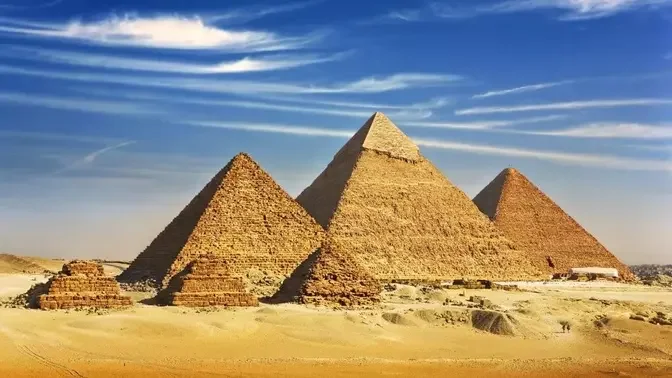
Let's delve deeper into the mysteries surrounding the Sphinx of Egypt,
uncovering the secrets that have long fascinated historians, archaeologists, and enthusiasts alike.
One of the most tantalizing enigmas of the Sphinx is the theory of a hidden passage
or tunnel beneath it, possibly leading to mysterious underground chambers.
This concept, championed by historian Matt Simpson, suggests that a French archaeological
expedition may have stumbled upon this secret entrance during a 1837 dig, an event reportedly
witnessed by the renowned Egyptologist Colonel Howard Weiss. What adds intrigue is the notion
that both the expedition team and Weiss were somehow compelled to keep this astonishing
discovery under wraps. The idea gains newfound credibility with the discovery of secret tunnels
beneath the Giza Plateau in 2019. If such tunnels exist, they hint at an intricate connection
between the Sphinx and the pyramids of Giza. The question persists why the secrecy,
the existence of such tunnels would be historically significant, and yet their
concealment remains a perplexing puzzle. Beyond the covert tunnels lies the undeniable fact that
the Sphinx was hewn from a single colossal block of limestone, an endeavor that appears almost
unimaginable. Hundreds of ancient laborers, armed with rudimentary hand tools, meticulously carved
and shaped this 240-foot-long, 66-foot-tall monument. The sheer scale of this undertaking
defies belief, leaving us in awe of the ancient Egyptians' remarkable craftsmanship. However,
this awe is accompanied by a curious void, the absence of any record that identifies the
mastermind behind this monumental project. Venturing further into the realm of speculation,
the Sphinx's identity becomes a source of debate. Was it originally fashioned to resemble Pharaoh
Khafre, as conventional archaeology suggests? Or, as some passionately argue, does it depict Anubis,
the dog-faced god? The resemblance between the Sphinx's form and that of a canine hints
at this alternate interpretation. Considering Anubis' role as the guardian of the necropolis,
the idea gains plausibility. Could it be that the Sphinx's visage underwent significant changes over
time, obscuring its true purpose? Yet, as we seek to unravel these mysteries, the very identity of
the Sphinx's builders remains elusive. The motivation behind its construction and its
original purpose remain shrouded in the sands of time. Curiously, there are no records documenting
the creation of this iconic monument from a civilization that meticulously recorded its
history. The Sphinx's original name is another enigma. It curiously fails to appear in the
annals of ancient Egypt. Its designation as Hormikhet only emerged during the New Kingdom
era, leaving us to ponder if earlier records were purposefully erased and why. In the midst of these
puzzles lies the curious case of the Sphinx's missing nose. While some accounts attribute its
loss to Napoleon's troops during their invasion in 1798, an Arabian historian suggests that the
nose had vanished long before. The theory posits that a Fatimid sheik named Muhammad Siam Eldar
was responsible, yet conclusive proof remains elusive. The most contentious proposal is that
the nose was intentionally damaged by Europeans upon their arrival in Egypt to conceal its
original African features, which could have revealed the ancient Egyptians' ethnicity.
Another curious twist is the idea of water erosion shaping the Sphinx. Geological analysis indicates
that the Sphinx may be far older than previously believed, challenging established timelines of
Egyptian history. In the shadow of the Sphinx, a tapestry of secrets, riddles, and unknowns beckons
to those who dare to unravel its mysteries. This ancient enigma invites us to question our
understanding of history and ponder the enigmatic stories that lie beneath its timeless gaze.
Let's continue to unravel the profound mysteries surrounding the Sphinx, exploring the intricate
web of questions and paradoxes that surround this enigmatic monument. It's essential to maintain a
balanced perspective. While D.R. Robert Shock's theory of water erosion on the Sphinx suggests
an ancient age, it's crucial to acknowledge that many of his peers vehemently disagree, dismissing
him as a fringe theorist. Despite the debate, the undeniable existence of water erosion damage on
the Sphinx poses perplexing questions that mainstream theories are yet to fully explain.
One of the most intriguing aspects of the Sphinx's history is the fact that it remained
concealed from the naked eye during the 18th century. This casts doubt on the traditional
story that Napoleon's troops damaged the Sphinx's nose during their 1798 invasion, a claim often
found in history books. It's worth noting that they wouldn't have been able to see the Sphinx
as this awe-inspiring sculpture was entirely buried beneath the Egyptian sands. It wasn't
until the sands shifted, revealing the top of its head, that the world even knew of its existence.
In the 1920s, French engineer Emile Barr embarked on the monumental task of excavating the Sphinx,
a project spanning a decade. In 1936, the world was finally able to gaze upon the Sphinx for the
first time in 150 years. Earlier attempts by notable figures like Italian explorer Giovanni
Caviglia and French archaeologist Auguste Mariette were abandoned due to the colossal
scale of the task. This perplexing fact raises the question of why and how the Sphinx was
intentionally buried and by whom. A burning question arises, did the Sphinx once possess
a complete head with a forehead profile, upper skull, or even a chin beard? While the Sphinx's
nose bears unmistakable signs of damage, the rest of its visage shows wear and tear that exceeds
what natural processes can explain. It's apparent that someone has either disfigured or altered the
sculpture's face, and it's possible this occurred more than once. The disproportionate size of the
head compared to the body raises further concerns, as the ancient Egyptians were meticulous about
proportions in their statues. Was the head chiseled down, erasing the original design,
or is it not the original head at all? A recent photograph, from 2022, showing the Sphinx with
its eyes closed, stirred controversy. This seems impossible, as the Sphinx had its eyes open since
the 1930s when it was excavated. However, it's likely a case of optical illusion or photo
manipulation. Another revelation that captivates our imagination is the existence of the Sphinx's
beard. A sizable fragment of this beard resides in the British Museum. The official account states
that it was found in pieces between the Sphinx's paws during the 19th century. This story faces
scrutiny since, as we mentioned earlier, the paws were buried until the 1930s. Despite the gaps in
its recent history, the beard is real, and efforts are underway in Egypt to restore it to its rightful
place. Yet, the most significant revelation might be the Sphinx's age, or rather, our inability to
determine it with precision. While some place its creation during the reign of Pharaoh Khafre
around 2600 BCE, the possibility exists that it is much older, possibly several millennia beyond
the pyramids it oversees. Such an age would challenge our understanding of who built it and
when, suggesting the presence of an advanced civilization that preceded the ancient Egyptians.
The Sphinx's original purpose remains a profound enigma. Was it merely a monumental testament to
a particular pharaoh's power, or did it serve a higher, more mysterious role? The unanswered
questions are as endless as the grains of sand in the desert, and as we navigate this labyrinth
of mysteries, we invite you to ponder alongside us. As the sun sets over the Sphinx, its gaze
endures, guarding its secrets and inviting us to question, explore, and imagine the unfathomable
stories etched into its ancient stones. Subscribe to our channel, and with each new video, embark on
another intriguing journey into the unknown. Thank you for joining us, and until our next exploration,
keep asking, keep wondering, and keep seeking the mysteries that enrich our
understanding of this incredible world.