
King Henry 8th and Anne Boleyn
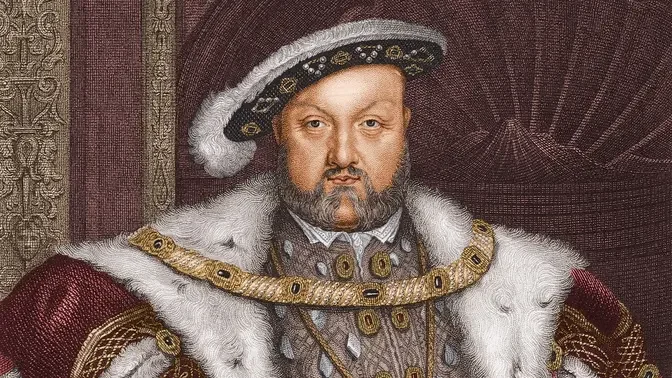
Hello historians and welcome back to another episode. Today we are continuing our deep
dive into the life of King Henry VIII and his reign, this time focusing on the period between
1533 and 1536. These years are significant as this was the time when Henry was married
to his second wife Anne Boleyn and guys let me just tell you how excited I am to be talking
about Anne Boleyn. Out of Henry's wives she is one of my favourites. History's portrayal of Henry
and Anne's relationship is incredibly interesting as it changes depending on whose perspective you
look at it from. Some people see their relationship as a classic love story, some as one of passion
and some take the view of Anne being a manipulative ambitious woman who never loved Henry in the first
place. A woman pushed from a family desperate to climb the political ladder. Well we will never
know as very little of the letters that Anne wrote to Henry still survive, we only have the ones from
him to her. What we do know is Henry and Anne's courting started years before their marriage.
Anne became queen in 1533 just after she married King Henry VIII in 1532 but their relationship
started back in 1525. The marriage was delayed due to the king already being married, I can see how
that held him up and trying to get an annulment. Check out the last episode for that. Anne was the
lady-in-waiting for Queen Catherine of Aragon's household which is where she first caught the
king's eye. The king pursued Anne as a mistress and the story goes that she refused to sleep with him
which was keeping him interested. Apparently it had nothing to do with her intelligence, wit or
charm. However despite the pushbacks Anne did eventually give in as she was pregnant during
their wedding and heavily so during the coronation to the point that her ladies-in-waiting kept her
potty handy under the table just in case. In 1533 the king and queen welcomed the long-awaited baby
however both parents were disappointed as the baby was a girl, Elizabeth, named after both their
mothers. The royal couple were both expecting a boy especially after the promises that the queen
had made. Henry was furious and flew into a fit of rage. When he'd calmed down he told Anne
the boys will follow. When she expressed regret at not having given him a boy the Princess Mary was
declared illegitimate and the heir to the throne was now the Princess Elizabeth and any other
children Henry and Anne would produce. Three days later the Princess Elizabeth was christened.
Henry was still so furious at Elizabeth not being a boy that neither he or Anne attended their
daughter's christening. Elizabeth was baptized with all the pomp but the planned tournament,
fireworks and bonfires due to celebrate the new royal baby were all cancelled. Elizabeth was
undoubtedly Henry's heir but she was not a welcomed one. Hindsight is a wonderful thing
if only they had known. Queen Anne feared that the former princess, now Lady Mary,
posed a threat to her daughter Elizabeth's place in the line of succession. Henry soothed Anne's
fears by separating many of her servants and sending Elizabeth to Hatfield House. The Lady
Mary was then sent to wait on her sister as part of her household and as punishment for refusing
to recognise Henry's marriage to Anne and his religious reforms. December 1533, Jane Seymour,
who was a lady-in-waiting to former Queen Catherine of Aragon, was moved to Anne Boleyn's
household. After 1533, King Henry VIII begins to gain weight. He was less attractive than in his
youth and the crown of his head was bald and his hairline was starting to recede, far from the
athletic hunk that Catherine of Aragon was once married to. On the 23rd of March 1534, the Pope
finally announced his judgment that Henry's true wife is Catherine of Aragon and that he needs to
make amends and get rid of Anne or he will be excommunicated. At this point, I doubt Henry really
cared as that threat had been thrown around a lot for the last seven years and the Church of England
no longer answered to the Pope anyway. In May 1534, Catherine is finally moved to Kimbolton Castle
and Anne Boleyn suffered a miscarriage in the December. 1535 was a turning point for Henry.
The divorce between the King and the Pope forced the clergy and the others to choose their allegiance.
Sir Thomas More, as devout Catholic, sided against the King. Wrong move Sir Thomas More! And guess what?
He was executed for treason. He also had his Catholic teacher Cardinal John Fisher beheaded
for disagreeing with his plans for the Church of England and put his head on a spike. This was also
the year that Anne decided she needed to get rid of Catherine of Aragon. Ironically, many historians
agree that Anne's downfall was catalyzed by the death of Catherine. Anne told Henry that she had
a dream where God revealed to her that it would be impossible to conceive a child while Catherine
and Mary lived. Henry failed to rise to her bait, a sign of Anne's power over the King diminishing.
Once Henry had gotten over himself, he decided that he quite liked his red-headed daughter and
liked showing her off to visiting ambassadors, much like he had done with Mary when she was younger.
In the July, King Francis I agreed to enter negotiations for the marriage of Elizabeth
and his third eldest son. Anne was thrilled as many still saw the Lady Mary next in line,
despite being illegitimate. This would only help to strengthen Elizabeth's claim.
During early September, Anne and Henry stayed at Walthall for six days, the family home of the
Seymour family. Although there is no evidence, it seems likely that Henry and Jane's courtship
might have started around this time. November 1535, Anne was pregnant again,
so she continued to press Henry to execute Catherine and the Lady Mary, out of fear for
herself, Elizabeth and the unborn child. But Henry would not succumb to Anne's demands. Catherine
then became very ill, and this would be the beginning of the end for Catherine.
1st December 1535, desperate or vindictive, you decide, but Anne thought Catherine may soon
recover. She begged her husband to kill Catherine and Mary. Henry read Catherine's medical reports
and knew that his ex-wife and former queen did not have long, so he didn't act.
On the 30th December 1535, it was apparent that Catherine was dying. Chapuis, the Spanish
ambassador, informed the king who said, when she is gone, the emperor will have no further excuses
for interfering in English affairs. Chapuis responded, the death of the queen will be of
no advantage. His imperial majesty will never abandon her while she lives. Henry shrugged,
it does not matter, she will not live long. Henry gave Chapuis permission to visit Catherine,
but banned his daughter Mary from seeing her dying mother. Chapuis travelled to Catherine
at Kimbolton Castle. Chapuis noted that his friends looked so wasted that she could neither
stand nor sit up in bed. In her will, Catherine left Mary the collar of gold which I bought out
of Spain, and her furs. Catherine asked Henry to make church garments out of her gowns.
He refused, and he didn't honour giving Mary her furs either. Catherine wrote a letter to Henry on
the last evening of her life, and in her final defiance, she signed the letter. Catherine,
the queen, former queen Catherine of Aragon, died on the 7th January 1536 at the age of 50,
and he rejoiced. God be praised that we are all free from all suspicion of war.
And Anne declared, now I am indeed queen. Anne had always maintained that while Catherine lived,
she was not safe. However, she was gravely mistaken. As long as Catherine lived, she was safe.
Henry would not admit that he was wrong all the time Catherine is campaigning
her right as queen. With Catherine gone, nothing was in the way for Henry to now get rid of Anne.
Two days later, on the 9th January, the royal couple held a court ball to celebrate England's
liberation from the threat of war between England and Spain. Both Henry and Anne wore yellow,
the colour of royal mourning in Spain, as a mark of respect. However, not all historians see this
as such. Some view the wearing of yellow as a snub to Catherine, as they were dancing, enjoying
life and bright colours, rather than being sombre and wearing black, the English colour of mourning.
Henry took great pleasure in parading his daughter Elizabeth around the room. Catherine was to be
buried as the Dowager Princess of Wales, and out of sheer happiness, Henry gave her a state funeral
as magnificent as possible, despite not following her personal wishes. A 44-year-old Henry fell off
his horse during a joust on the 24th January that year. This fall didn't stop him at first,
but this accident, along with others that would follow, began Henry's decline into the fat, foul,
tempered monarch that we have become accustomed to, due to his inability to exercise. Catherine's
funeral took place on the 29th January, 1536, and the royal couple donned the colour yellow again,
and a pregnant Anne was frustrated, as the conversation seemed to be about Catherine,
and not her. That afternoon, Anne found Jane Seymour sitting on the king's knee, and she flew
into a frenzy. Fearing for their child, Henry sent Jane out of the room, in hopes of calming Anne.
Peace be, sweetheart, and all shall go well with thee, he soothed. Anne miscarried later that afternoon,
and she would forever blame Jane. The foetus had a male appearance, and Chapuis noticed that she had
miscarried of her saviour. Unsurprisingly, Henry was disappointed, and he commented,
It is evident that Henry is now questioning whether Anne should still remain queen, seeing as
he was having the same issue with Anne as he had with Catherine. Anne and the king would later have
a big argument in her bedchamber. Henry would blame a distraught Anne about the loss of a boy.
She then blamed him, to which Henry retorted that she should have no boys with him. Anne then
deflected that retort, and blamed the wench, Jane Seymour, because the love I bear you is much
greater than Catherine's, so my heart broke when I saw you loved others. Henry, quite clearly, did not
have a leg to stand on, and he was sick of arguing, so he told Anne that he would speak with her when
she was better, and then left her chamber mentally and physically. When the king had left, Anne told
her ladies that she would soon be pregnant again, and that she will bear another son, and this son
will not be doubtful like this one, conceived during the life of the princess Dowager.
Again, somehow, blaming Catherine. The real reason for the miscarriage may have been because Anne
was, okay, I can't really pronounce this word, rhesus negative, I think, I don't know,
I'll, if you're watching on the YouTube version, I'll put the spelling up, but this basically meant
that her first pregnancy, Elizabeth, was healthy, and it produced a substance in the bloodstream
called, oh my god, agglutinogen, agglutinogen, say it confidently and everyone will believe you,
which then destroys the rhesus positive red cells in any subsequent fetus, usually with fatal
results. So basically, she had something in her blood, and that every time she got pregnant,
it would then attack that, so the more time she got pregnant, the less likely the baby was going
to survive because of how her body was working. That's the TLDR of that. Obviously, the Tudors
wouldn't have known that, but it explains why Anne was able to conceive, but she wasn't able
to carry the baby to term. As early as January 1536, Fromwell and Chapuis were scheming to get
rid of Anne. More Fromwell than Chapuis, but they were still helping each other out, and Henry was
parading his affections for Jane, the same way he did for Anne in front of Catherine. And for once,
Anne knew exactly how her formal rival felt. Presents and messages arrived regularly for Jane,
from Henry, and Anne's disgust and jealousy made her more difficult to live with,
and on more than one occasion, Anne lashed out at Jane and slapped her. Once, Jane received a locket
containing a miniature from Henry, and she made a great show of opening it in front of Anne,
who then ripped it from Jane's neck so violently that she cut her own finger. I think Anne would
have loved to have got rid of Jane as one of her ladies-in-waiting, but I think the backlash she
would have got from Henry would not have been worth it, and it would have put her in a very
dangerous situation. Anne rarely saw her husband during the early months of 1536, and spent most
of her time at Greenwich doing charity work and playing with her dogs. A common theme in 1536
is the swap of favours. When Anne is in the king's favour, Fromwell is out of it, and vice versa.
In the Easter of that year, Fromwell is disgraced by the king and is removed from court, which put
Anne back into the king's favour. Anne went in procession to the chapel on the Tuesday after
Easter. Chapuis bowed to her, something that he had never done, something that he would be so ashamed
of, and the fact that Anne was here and commanding such power at this event was evidence of her being
back in her husband's favour. Fromwell, on the other hand, knew that he was in a dangerous position,
so he asked for two weeks off because he was ill. It wasn't really, but he had sent his spies to the
court to get any dirt he could on the queen. Anne was not popular with many at court. She was actually
known for being quite a cruel mistress. However, that's only if you weren't part of the Boleyn
faction. If you were part of the Boleyn slash Howard faction, then she'd actually treat you
quite favourably, but if you weren't, she could have been quite nasty at times. So it didn't really
take much convincing for some of the ladies to give up the tiniest bit of information, even if
Henry needed Anne out of the way if he wanted to marry Jane. Anne was most likely innocent,
and I think most historians agree on this conclusion, but Henry had decided that she
needed to go. If I could choose one word to describe the downfall or trial of Anne Boleyn,
I would probably say convenient. That's what this whole thing was. To Henry,
if it was convenient in terms of getting Anne out of the way, he chose to believe it, or he
went for it. So Henry had pretty much convinced himself that Anne had been adulterous because
it was convenient. If she had committed adultery, he could get rid of her to marry Jane.
So he had genuinely convinced himself that she had been adulterous, and he flew into a rage.
He then gave the orders for his wife's arrest on the 29th of April, 1536. So Anne returning to
power on that Easter really did not last that long, and that was kind of how the power play
between her and Cromwell kept playing out during this period of time. When one was in favour,
it would not be for long before the other one switched. And I think it just so happens on this
flip that Cromwell had just played the better hand than Anne. On the 2nd of May, 1536, Anne was
watching tennis when she was summoned to the Privy Council. Her uncle Norfolk, Sir William Fitz
William and Sir William Paulette, all grimaced, stood in front of her and charged her with having
committed adultery with Norris, Smeeton and one other guy who was not named. She was informed that
the two named men had confessed their guilt. Although this was actually post-torture,
and even in the Tudor times, this confession should not have been valid. But guess what?
It was convenient! Apparently, Norfolk was tutting at his niece like a naughty schoolgirl
upon her arrest. This is the same uncle that would be responsible for the downfall of Anne's cousin
and his other niece, Catherine Howard. The Duke of Norfolk, the 3rd Duke of Norfolk should I say,
is a nasty piece of work. He is genuinely one of those human beings that I would not have liked
to have met because I just think he's foul and he's just vile and he just puts power
in front of everything. But I mean, that's neither here nor there. I just don't like him.
Anne was stunned and did not respond because she was innocent. Anne was escorted to her
apartment at the Tower of London. She was told that she did not need to pack as everything would be
there. It was at this point that Anne's mental health started to wane. She tried to appear composed
but she would be seen crying and begging with people en route.
She asked Mr Kingston, her jailer, if she would be going to the dungeons.
No madam, he replied, you shall go to your lodging you lay in at your coronation.
It is too good for me, she sobbed. Her sorrow fell into great laughter, a behaviour she would exhibit
several times during her stay. Anne was worried as she had teased Norris about him delaying his
marriage, saying he looked for dead men's shoes. For if ought came to the king, you would look to
have me. Norris was shocked and denied this. Anne, at the time, was playful. Playful teasing was
something that she had always done at the French court. It was very much the in thing to do.
However, the French court was very different to the English court and this would have been
seen potentially as adulterous. She now feared that her remarks had been overheard and could
be misconstrued, which they had. Francis Weston had come to Anne's chamber on Wit Monday and Anne
had playfully teased him as well, asking if he loved Madge Shelton. Now, Madge Shelton, actually
there's some debate with historians whether she's Madge or whether she's another name.
There was a few M Sheltons running about, but I'm going to go with Madge for this. So, Madge Shelton
was a lady and relative of Anne's. He had replied that he loved one in her house better than her,
as in Madge. Which, to be fair to Sir Francis Weston, in court that would have been the correct
answer, because the king and the queen are supposed to be the most desirable people,
even if you didn't actually think so. So, his response was actually a good response,
because if he had said no, he would be insulting the queen, but then if he said yes, then it was
a case of you're being unfaithful to Madge. So, he really couldn't have said anything other than
what he did say, but the issue is that Anne then took it a step further and she asked who,
to which he replied, it is yourself. Unfortunately, this is all the evidence that Cromwell
and his rumour mill needed. Henry wanted to be divorced from Anne before executing her,
so he didn't have the mess similar to the divorce of Catherine. Thankfully, with there being a new
church and Henry being the head of that new church, divorce from Anne was a bit easier and,
because Henry had had sexual relations with Anne's sister Mary, the marriage was seen as incestuous.
Anne had maintained that the worst that Henry could do to her was divorce her. You know,
that's what you did at the time. The thought of her being executed was actually out of the question,
although with Anne's hysteria, as soon as she entered the tower, it's possible that it had
crossed her mind. Now, from our point of view, the fact that Henry executed Anne and then obviously
her cousin Catherine Howard, we just go, oh, that's something that he did. I just want to point out
that in that time, when he did it, that was a monstrous thing to do. That was unheard of
and that the other kings in Europe were equally disgusted by the fact that Henry had done that.
You just don't do that, which is why you got the marriages annulled, or you wait for them to die
naturally. The 5th of May 1536, the five men who allegedly had committed adultery with the queen,
including her brother George, were executed before large crowds. Again, the fact that Henry decided
to dissolve the marriage because he'd slept with Anne's sister Mary, because that was incestuous,
and the fact that he had to get special permission to marry Catherine from the Pope, because again,
she had slept with his brother, so again, that was seen as incestuous. The idea that Anne would
then sleep with her brother, that's actual incest and that's just a big no-no, even in Tudor times.
Brother and sister, nah, nah, that would have been grim even for the Tudors. The queen was taken to
the bell tower, as its windows overlooked Tower Hill, so she could watch them die. Understandably,
this greatly aggravated her grief. George mounted the scaffold first and made a long and pious
speech, of which there are apparently three versions. Then Weston, then Norris, and Beriton,
and then finally Smeaton. Anne was also accused of witchcraft along with adultery. Witches were
normally burnt at the stake, and Anne was told that she would be beheaded and that the king had
given her the mercy of a sword, which was quicker and cleaner than an axe, and she was getting the
best swordsman from France. This is potentially more evidence that Anne was innocent, and to be
honest, would Henry have cared about giving her a swift end if he believed her guilt? No, not really.
Also, on this day, Anne was stripped of her title as queen. Her marriage to Henry was declared
invalid, and she would be beheaded as the Lady Marquess of Pembroke, not Queen of England.
This was Henry's way of numbing the backlash. As I said, executing your queen is an outrage,
a scandal. Executing a Lady Marquess, not so much. The next day, Cranmer came to hear Anne's last
confession. She swore of the damnation of her soul, that she had never been unfaithful to her lord and
husband, and affirmed that she had never offended with her body against the king. Anne was supposed
to die on the 18th of May. However, Kingston told Anne that the executioner had been delayed, and
that it would be tomorrow. Anne thought she would be dead by now, and said, I thought to be dead before
this time, and pass my pain. Kingston told her that there should be no pain. Anne replied, I have heard
say the executioner was very good, and I have a little neck. She then put her hands around her neck,
and laughed heartily. Henry, on the other hand, was preparing to marry Jane Seymour, and had asked
Cranmer to issue a dispensation to allow the marriage to take place, as Henry and Jane were
related. Jane's grandmother, Elizabeth Neville, was a cousin of Henry's great-grandmother, Cecily Neville,
Duchess of York. Henry spent the evening with Jane at Strand, who was dressed as a queen.
Anne could not sleep that night. She prayed and talked with her ladies. She was calm, and sometimes
cheery, even making jokes, saying that people would call her Queen Anne Lackhead, as in like she
lacked a head. After her death, Anne had come to the resolve that her execution was God's judgment
for her harsh treatment of the Lady Mary. 19th of May, 1536, Anne's execution day. Henry wore white
the day of Anne's execution, the color of morning in France, a token of respect for his late queen,
despite not watching the execution, as he spent the day with Jane and played a bit of tennis.
Henry invited 1,000 people to watch Anne's execution, which in itself is not normal for a
noble execution. Anne was the first English queen to be publicly executed. When Anne was executed,
guns were fired to signify the queen's death. The speed that Henry moved on after Anne is actually
quite disturbing. In the royal palaces, carpenters, masons, and seamstress were working to remove Anne's
initials where it occurred, and replace it with Jane's. Portraits of Anne's were taken down and hidden.
It was to look as if she had never existed, and not once during the years left to Henry would he
ever be heard uttering her name. The next day, King Henry VIII and Jane Seymour would be engaged.
I know this episode is of longer length, and I know I've been saying that a lot recently,
but I could genuinely talk about Anne Boleyn and the Boleyn family for days. I just, I love the
topic. I think her life was really fascinating, and how she was just done dirty, you know?
But I do hope you enjoyed this in-depth look at Anne Boleyn's life while she was queen during the
reign of King Henry VIII. In the next episode, we'll be looking at Henry's reign with his third
wife, Jane Seymour, and trust me, that one will be a shorter episode. If you did like this episode,
please help in any way you can by subscribing or listening to another.
But until then, have a wonderful day.