
Johann Philipp Krieger (1649-1725) - Quis me territat (1690)
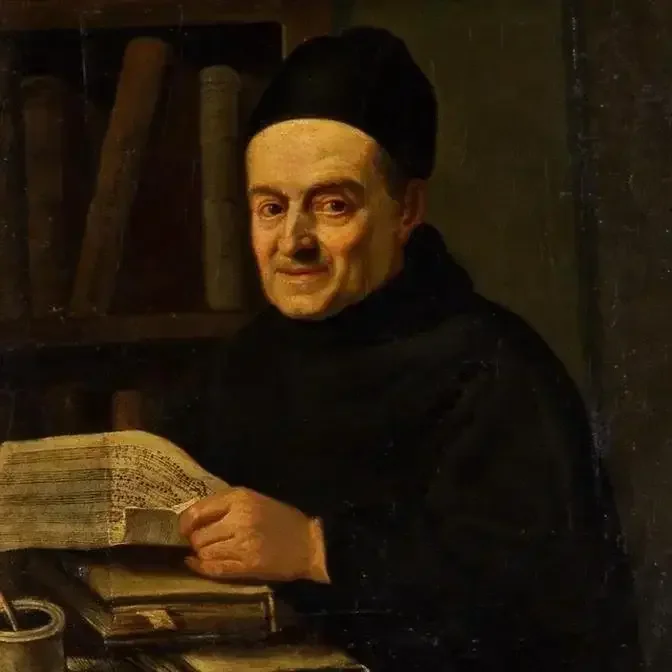
★ Follow music ► https://www.instagram.com/reciclassicat/
Composer: Johann Philipp Krieger (1649-1725)
Work: Quis me territat (1690)
Performers: Heidrun Luchterhandt (soprano); Kai Wessel (alto); Christfried Biebrach (bass); Hamburg Ratsmusik
Painting: Johann Adam Delsenbach (1687-1765) - Der Platz bei St. Jacobs-Kirche zu Nürnberg (c.1730)
Further info: https://www.jpc.de/jpcng/classic/detail/-/art/Johann-Philipp-Krieger-1649-1725-Kantaten-f%C3%BCr-Schloss-Gottorf/hnum/9722594
Listen free: http://open.spotify.com/album/6RFG1L43gsoPyi1bmwimMV
---
Johann Philipp (Kriegher, Giovanni Filippo) Krieger [Kriger, Krüger, Krugl]
(Nuremberg, bap. 27 February 1649 - Weissenfels, 6 February 1725)
German composer, organist and keyboard player, elder brother of Johann Krieger. He was one of the outstanding German composers of his time, especially of church cantatas, of which he wrote over 2000 (nearly all lost); under his direction the cultivation of music at the small court at Weissenfels rose to the highest level of German court music. The chief sources for Krieger’s biography, who agree on its main events but vary in details and dates, only some of which can be substantiated from other sources. Mattheson told the following about his early musical training in Nuremberg: ‘In his eighth year [he] began clavier lessons with Johann Drechsel [Johannes Dretzel], a pupil of Froberger; he also received instruction on various other instruments from the famous Gabriel Schütz’. According to Doppelmayr ‘he progressed so rapidly in this [clavier lessons] that already at the age of nine he amazed large audiences with his playing; moreover, he was able to play any melody that was sung to him and to perform well-made arias that he himself had written’. At the age of 14 or 16 Krieger went to Copenhagen to study organ playing with the royal Danish organist Johannes Schröder and composition with Kaspar Förster. Declining a position as organist at Christiania (Oslo) he returned to Nuremberg after a stay of four or five years in Copenhagen, either from 1663 to 1667 (Doppelmayr) or from 1665 to 1670 (Mattheson) – probably the latter. He cannot have remained long in Nuremberg, for Mattheson reported, confusingly, that he was both at Zeitz in 1670–71 and organist and later Kapellmeister at the court at Bayreuth between 1670 and 1672 (Doppelmayr has 1669–70 for the latter dates). According to Werner the civic records at Zeitz contain no mention of him or his brother, and, more confusingly still, records at Bayreuth list his name only in 1673, as court organist. When Margrave Christian Ernst left the Bayreuth court in 1673 to join the war against France, Krieger was given permission to travel to Italy without loss of salary. He probably stayed there for about two years. Mattheson stated that in Venice he studied composition with Rosenmüller and the clavier with G.B. Volpe, and that in Rome he studied composition with A.M. Abbatini and the clavier and composition with Bernardo Pasquini. Immediately after his visit to Italy he played for the Emperor Leopold I in Vienna, in return for which, in a letter dated 10 October 1675, the emperor ennobled him and all his brothers and sisters. Krieger soon left Bayreuth for Frankfurt and Kassel and was offered positions in both cities. He apparently refused them or held them for only a short time, for on 2 November 1677 he accepted a position as organist at the court at Halle. When Duke August died in 1680 his successor, Johann Adolph I, moved the court to Weissenfels. Krieger went with him as Kapellmeister, a position he held until his death. For a time he also acted as musical adviser to the court at Eisenberg. Before leaving for Weissenfels Krieger sold some music to the Marienkirche, Halle; a list of it, including seven of his own compositions and about 50 works by other German and Italian composers, is extant. He compiled a more important document during his years at Weissenfels: beginning in 1684 he maintained a catalogue of every vocal work he performed. After his death his son Johann Gotthilf (who succeeded his father as Kapellmeister until 1736) continued the catalogue until 1732. #ClassicalMusic