
Andrew Roberts on Winston Churchill's Lacrimation (His propensity for crying)
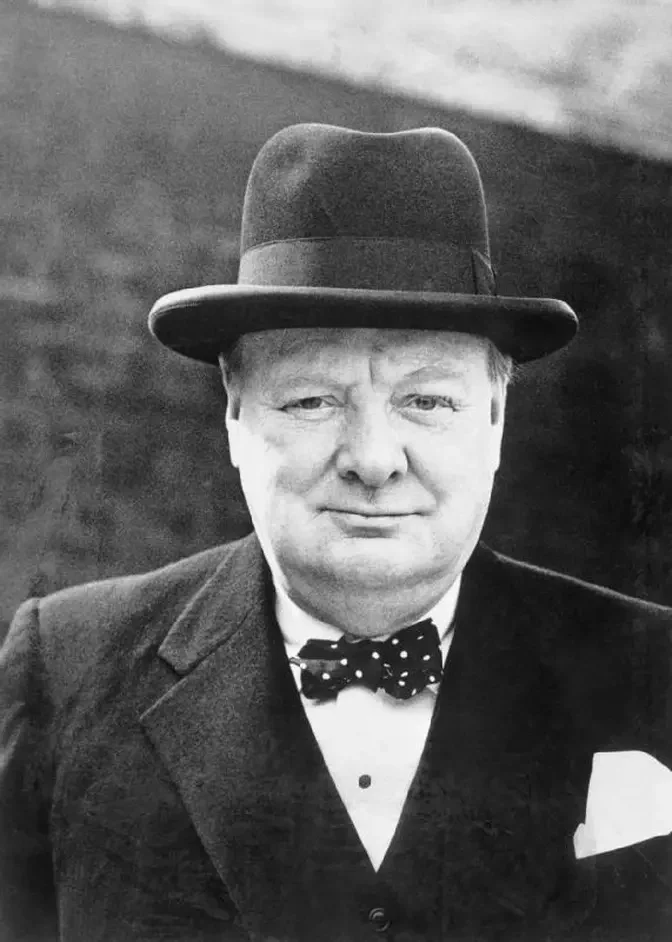
3 Video Views·Apr 19, 2023
Good morning ladies and gentlemen. Once again we are resuming and to introduce our next speaker
we have Megan Spilker. I'm very much enjoying my first experience at the International Churchill
Conference and I'm very pleased to be to be introducing our next speaker Andrew Roberts.
Coming from the National World War I Museum and Memorial in Kansas City we've enjoyed many
partnerships with the Churchill Center and are looking forward to the next partnership this
coming weekend at the World War I Centennial Symposium and I've been very excited to be
working with the Churchill Center and Lee Pollack as particularly I don't know where he is right now
on a new young professionals group that will be having a Churchillian event next Saturday so
hopefully we have a whole new wave of Churchillians joining the conference in the future and that
event has completely sold out so that's really exciting news for everyone here. As someone who
works in social media 24-7 I can't help but wonder what Winston Churchill might have done had he had
access to Twitter especially at 3 a.m. but I encourage everyone here to continue to tweet out
using the hashtag Churchill 2016. The social media team at the Churchill Center has been doing a
actually Andrew Roberts is on Twitter as well so that means it's absolutely okay.
So I emailed Andrew Roberts a few times before as I was constructing his this introduction
and I asked him to give a highlight to which he replied this is not a direct quote
I've written 13 books. So I do have the immense honor to introduce Andrew Roberts who is 13 times
over an incredible author. Andrew Roberts is presenting is present presently a visiting
professor at the War Studies Department at King's College London and the Lehrman Institute Lecture
at the New York Historical Society. He has written or edited 19 books which has been translated into
22 languages. His works include Eminent Churchillians, Hitler and Churchill, Masters and Commanders, and
The Storm of War. He is presently writing a biography of Churchill for Penguin which will be
published in November 2018. So speaking today on the romantic imagination of Winston Churchill
please welcome Andrew Roberts. Ladies and gentlemen it's a great honor to be invited to
address you again and thank you very much indeed Megan for those kind words. I've put a book over
there not because it has anything whatsoever to do with my speech today but simply because I believe
in the power of subliminal advertising. In August 1933 Churchill wrote that American audiences
quote yield to none in the interest attention and good nature with which they follow a lengthy
considered statement. It's up to you ladies and gentlemen to keep that tradition going for at least
the next 45 minutes. The concept of the British stiff upper lip was invented by the Victorians
and was especially prevalent in the upper classes where it was considered infridig to show one's
emotions openly to wear one's heart on one's sleeve. It was widely believed that the British
empire itself depended on the capacity of officers and gentlemen to rise above their natural human
emotions and stay calm and collected regardless of whatever appalling thing was going on. The very
center of that British belief system which some including Churchill's grandson Nicholas Soames
have diagnosed as only really having broken down at the time of the death of Diana Princess of
Wales in 1999 was to be found in the British army. In earlier periods tearfulness did not imply a lack
of manliness or self-control. At Admiral Horatio Nelson's funeral in January 1806 for example every
single one of the eight admirals who carried the coffin down the nave of St. Paul's Cathedral was
in tears as well as at least half of the all-male congregation. Regency men were not expected to
have to control their emotions in the way that their Victorian grandsons and great-grandsons were
yet there was one Victorian upper class British army officer and gentleman who cried in public
to such an extraordinary extent that it was remarked upon by on so many occasions that we
need to regard him instead of being a Victorian which he was obviously chronologically speaking
but actually as a regency figure born out of his time. Winston Churchill was a man of such
powerful such deep emotions with a profoundly romantic imagination and capacity for empathy
and also possessing such aristocratic disregard for what others thought of him that if he felt
like crying he did. Such was his historical imagination too that this astonishing lacrimosity
could be unleashed at minor moments as well as on great occasions especially if martial music
were involved. In 1993 Churchill's last private secretary Sir Anthony Montagu Brown was interviewed
by John Maida about Churchill's tendency to weep. In his early days when I was with him about three
months he wept a lot Anthony told John. He said to me after dinner I blubber an awful lot you know
you'll have to get used to it. John asked what would stimulate that and Anthony replied tales of
heroism emotional emotions of tales of heroism he loved animals a noble dog struggling through
the snow to his master would would inspire tears. It was touching I found it perfectly acceptable.
When it came to blood toil tears and sweats Churchill knew about all of them and especially
tears as Lord Halifax described him as having a most curious mixture of a child's emotion and a
man's reason. So here are a few occasions taken chronologically through Churchill's life in which
he's recorded as crying. On the 30th of September 1897 he wrote to his friend I read sorry he wrote
to his mother I rarely detect a genuine emotion in myself after his great friend Lieutenant William
Brown Clayton was killed close to him on an expedition. I must rank it as a rare instance
the fact that I cried when I saw Brown Clayton literally cut to pieces on a stretcher. Churchill
wept on Sir Henry Wilson the commander-in-chief of the British expeditionary force departing for
France in 1914. I never liked him so much Wilson wrote about him. On the 10th of August of that
year when his faithful manservant Thomas Walden died who'd worked for his father before him
Churchill wrote to Clementine after the funeral alas my dearest I grieve to have lost this humble
friend devoted and true whom I've known since I was a youth. Few other aristocrats of the day would
have described his manservant as a friend. He added that there were about 40 mourners including
all our household who wept bitterly and it's fair to assume that he could be included amongst them.
On the 8th of November 1924 when Stanley Baldwin asked if he would serve as Chancellor
Churchill assumed it meant Chancellor of the Duchy of Lancaster and said of the Duchy
and Baldwin said no of the exchequer and tears came into Churchill's eyes because he said that
he would be able to vindicate the chancellorship of his late father. On the death of Effie Smith
Churchill's great close friend Lord Birkenhead in 1930. Last night Winston wept for his friend
Clementine wrote to Effie's widow Margaret. He said several times I feel so lonely
in November 1934 the Soviet ambassador Ivan Mysky whose brilliant diaries have just been
published by the way edited superbly by Gabriel Godorovsky. Ivan Mysky was attending the wedding
at Westminster Abbey of Prince George Duke of Kent to Princess Marina of Greece and recorded
afterwards Churchill looked deeply moved and at one point even seemed to wipe his tears his eyes
with a handkerchief. I remember how Churchill shed tears at T.E. Lawrence's funeral in 1935
wrote Captain Basil Littleheart. The next year Edward VIII noticed how after lunching with
Churchill on the 11th of December 1936 the day after his abdication as I saw Mr Churchill off
there were tears in his eyes but they were ecumenically royalist tears because as during
the coronation of George VI six months later at the precise moment that the Queen Consort was
crowned Churchill his eyes full of tears turned to Clementine and said you were right I see now
that the other one wouldn't have done. During the Munich crisis there was a dinner at the Savoy
during which it was discovered that neither Anthony Eden nor Clement Attlee would join him
in signing a telegram to Neville Chamberlain who was in Munich at the time adjuring him to make no
further concessions at the expense of the cheques. Lady Asquith recalled how the telegram was not
dispatched and one by one our friends went out defeated. Winston remained sitting in his chair
immobile frozen like a man of stone. I saw tears in his eyes I could feel the iron entering his
soul his last attempt to salvage what was left of honour and good faith had failed. I spoke with
bitterness of those who had refused even to put their names to principles and policies which they
had professed then he spoke what are they made of the day is not far off when it won't be signatures
we'll have to give but lives the lives of millions can we survive do we deserve to do so when there's
no courage anywhere. Three days later on the 2nd of October when Anthony sorry Alfred Duff Cooper
resigned Churchill cried again. In 1940 when FDR's confidant Harry Hopkins told Churchill that he'd
get a million rifles from the USA Churchill was visibly moved to tears. On the 13th of May 1940
coincidentally on the same day as the blood toil tears and sweat speech Lloyd George recorded the
MP and diarist Harold Nicholson makes a moving speech telling Winston how fond he is of him.
Winston cries slightly and mops his eyes as Lloyd George's private secretary AJ Sylvester recorded
Winston's eyes filled with tears he buried his head quickly in his left hand and wiped his face.
On the 4th of July 1940 Churchill cried after the House of Commons applauded his decision to sink
the French fleet at Oran. When Churchill finished his speech and sank into his seat
recorded Maisky the whole house irrespective of party affiliation jumped to its feet and
applauded the Prime Minister for several minutes a loud powerful and unanimous ovation. Sitting on
the treasury bench the tension draining from his body Churchill lowered his head and the tears ran
down his cheeks. It was a strong and stirring scene at last we have a real leader was the cry
echoing through the lobbies. Colville recorded of that occasion Winston left the house visibly
affected. I heard him say to Leslie this is heartbreaking for me. Visiting an air raid
shelter where 40 people have been killed in the east end of London after the first big raid of
the blitz on the 8th of September 1940 Churchill in the words of a letter from the military
secretary to the war cabinet broke down completely at his welcome. You see he cares he really cares
a woman called out he is crying. Two months later another Tory MP and the PPS to Lord Halifax
noted at Neville Chamberlain's funeral Winston had the decency to cry as soon as he stood by
the coffin. In January 1941 Hopkins recited wither thou goest I will go. One of those present
the American ambassador wrote in his memoirs how it was hard for Mr. Churchill to recall this
incident without being overcome with emotion. The next month Lady Diana Cooper wrote to her son
from Ditchley the country house in Oxfordshire that Churchill used to go to stay occasionally
to say we had two lovely films after dinner. One was called Escape and the other was a very light
comedy called Quiet Wedding. There were also several short reels from Papa's ministry.
Her husband of course was minister for information at that point in the
Churchill government. Winston managed to cry through all of them
Lady Diana Cooper wrote including the comedy. The month after that in March 1941 there were tears
in Churchill's eyes when he met Mamoru Shigemitsu the Japanese ambassador. When
Mysky asked Lloyd George why he was told with a smile tears in his eyes yes that happens to
Winston he's a very emotional man so what now he has tears because he wants to crush Hitler
within a year he may have tears because of the shock and the horrors of war
things change. It was a disgraceful remark needless to say for Lloyd George to have made.
In April 1941 Elizabeth Nell joins the number 10 typing team taking dictation from the prime
minister. Sometimes his voice would become thick with emotion she recalled and occasionally a tear
would run down his cheek. The next month he cried when visiting the destroyed chamber of the house
of commons and didn't make any attempt to wipe away the tears. When in June 1941 the following
month therefore Colonel George Groussard Pétain's spy chief met Churchill in London his account of
the sufferings of occupied France reduced Churchill to tears. Alec Cadogan the permanent
undersecretary at the foreign office noticed the prime minister crying the following month also
while watching that Hamilton woman the great Lawrence Olivier Vivian Lee movie about
Admiral Nelson. And that same month on the 10th of August while singing oh god our help in ages
past on the USS Augusta with Franklin Roosevelt in Newfoundland a journalist present noticed how
Churchill was affected emotionally as I knew he would be his handkerchief stole from his pocket.
That November Clement Attlee wrote to his brother Tom about the effect of the bombing of cities and
the way it affected Churchill personally. In particular he wrote to the prime minister's
extreme sensitiveness to suffering. I remember some years ago his eyes filling up with tears
when he talked of the suffering of the Jews in Germany while I recall the tones in which he
looked at blitzed houses and he said poor, poor little homes. It's a side of his character
Attlee wrote that is not always appreciated. The very fact ladies and gentlemen that so many people
mentioned it shows in it and of itself how unusual it was for men to cry in public in those days.
Even something as mundane as a lunch for lobby journalists on the 9th of March 1942 could set
off Churchill's waterworks. Major General John Kennedy recalled one on that particular day
with a good peroration with some tears that brought him some applause. On the 16th of October 1942 he
was moved to tears in cabinet by a speech by Field Marshal Jan Christian Smuts the Prime Minister of
South Africa. The next month he cried again during the 8th Army march past after the battle
of El Alamein and again in Tripoli in February during the march past of the 51st division.
The mast pipe bands beautifully turned out and nearly a hundred strong led the march recalled
Colonel Ian Jacob the Deputy Military Secretary to the cabinet. The sun shone down in a cloudless sky
and the Union Jack floated from a staff set up over an archway on the upper part of the ruined
castle an armed sentry standing outlined in the archway. All around were the veterans of the 8th
Army standing in the last city of Mussolini's empire. No wonder the tears rolled down the Prime
Minister's cheeks as he took the salute of one of our finest divisions with General Alexander and
General Montgomery standing beside him. The bitter moment in the White House when Tobruk fell was
swallowed up in the joy of the morning in Tripoli. When Admiral Cunningham took the Prime Minister to
visit the submarine crews in Algiers harbour in June 1943, Churchill made a delightful speech
and he came away with tears running down his cheeks. Cunningham feared for morale actually on
that occasion as Churchill had talked about boys walking in the valley of the shadow of death
but it certainly didn't seem to affect the morale of the of the submarine crews that day.
That November during the Cairo conference, one day after lunch with the President,
Churchill asked his daughter Sarah to arrange for a car to go to the pyramids to see if he could get
close enough to take FDR there. When it was found possible to get quite close my father bounded into
the room and said, Mr President you simply must come to see the Sphinx and the pyramids. I've
arranged it all. When FDR tried to lean forward on his arms and about to rise only to sink back
again, Churchill turned abruptly away saying we'll wait for you in the car. Outside in the shimmering
sunshine, Sarah saw that his eyes were bright with tears. I love that man he said simply.
The end of that conference, that same conference in Sarah's words, as it was Thanksgiving we had
turkey. The President carved the giant turkey for 20 people like a skilled professional. Both Papa
and he made little speeches afterwards, Papa with tears flowing down his cheeks. A band composed of
American boys played beautifully in the background and everyone sang Home on the Range. New Year 1944
saw Churchill seriously ill in Marrakesh, seriously ill with pneumonia. On January the 18th he made an
unexpected return to the House of Commons. He was flushed with pleasure and emotion, recorded Harold
Nicholson, and hardly had he sat down when two large tears began to trickle down his cheeks. He
mopped them clumsily with a huge white handkerchief. My friend the late Kenneth Rose, a very fine
historian, told the journalist Charles Moore that when the Guards Club, sorry not the Guards Club,
the Guards Chapel was hit and 121 people were killed on Waterloo Day 1944, he saw the arc lights
shining on the scene and illuminating Winston Churchill who stood on the rubble weeping.
Receiving the freedom of the city of Paris in the Hotel de Ville after the liberation in 1944,
Churchill was presented with an attractive inlaid box. On opening the casket, recorded one onlooker,
he found it contained not a scroll but the Nazi flag that had flown over the town hall during
the occupation and the tears poured down his cheeks. He cried in April 1945 at FDR's memorial
service in St Paul's and also when he visited FDR's grave after the war. On the 4th of May,
there were celebratory drinks, 4th of May 1945, celebratory drinks with the chiefs of staff
and there, according to Alan Brooke's diary, tears in his eyes for all we had done. It was an
appalling moment that actually because Alan Brooke, Field Marshal Lord Alan Brooke, failed to
make a speech thanking Churchill for everything that he had done and it was one of the great
missed opportunities for the chiefs of staff to show their appreciation to the Prime Minister.
Later that month in the coalition, after the coalition government had broken up,
Churchill was at home at number 10 Downing Street to those who had served there during the war.
Hugh Dalton wrote in his diary of how standing behind the familiar green-based cabinet table
now draped as a buffet, he addressed us with tears streaming down his cheeks. He said that we had all
come together and had stayed together as a united band of friends in a very trying time. History
would recognise this. The light of history will shine on your helmets, he said. Two months later,
Patrick Kinner and Elizabeth Leighton sat crying with him when the results of the 1945 election
came through. The tears, just as he'd wept a lot before the war, so did the tears keep flowing
after it. In May 1947, the French politician Paul Ramadier presented the médaille militaire to
Winston Churchill. Ramadier was an impeccable choice, having won the declaration himself as a
during the defence of Verdun, and Churchill wept with emotion during his speech. He was particularly
delighted by the apocryphal, sadly, story that any holder of the military medal, if incapacitated by
drink, had the right to be driven home without charge by the police. There's a photograph of
Churchill weeping on the 7th of May 1948 at the Congress of Europe at The Hague, and there was
another moment of emotion for Churchill during a Conservative Party meeting the same month. At the
Council of Europe at Strasbourg in 1949, a book records how he was acclaimed in the city by
cheering crowds, he wept, he spoke in French, and gave wisdom and guidance to the council.
When, on returning to office in 1951, Churchill learnt that the Canadian government had decided
that rule Britannia should no longer be played by the Royal Canadian Air Force or the Canadian Navy,
he had the by now British Defence Minister, Lord Ismay, complained to the Canadian Prime Minister
Monsieur Saint-Laurent. He almost decided that he would cancel his visit to Ottawa in January 1952
over the matter. He was persuaded not to by Clementine, who according to Colville, threatened
to close down Chartwell and move to a flat by the sea in Brighton. When he disembarked from the
sleeper in Ottawa at the station opposite the Chateau Laurier, the Royal Canadian Air Force band
struck up rule Britannia, and Churchill wept. And from then on, in Colville's words, nobody ever dared
to utter even the mildest criticism of Monsieur Saint-Laurent or of Canada. The death of King
George the Sixth had the effect that you would by now at this point in my speech have expected.
When I went to the Prime Minister's bedroom, he was sitting alone with tears in his eyes,
wrote Jock Colville, looking straight in front of him and reading neither his official papers
nor his newspapers. I had not realised how much the King had meant to him. I tried to cheer him up by
saying how well he would get on with the new Queen, but all he could say was that he did not know her
and she was only a child. He nonetheless went down to Heathrow to meet the new Queen and took
Jane Portal, to whom he dictated in the car, who recalled how he was in a flood of tears.
He later broke down in tears when rehearsing his speech about the King, the one that he was
going to deliver to the House of Commons. The following year, on the death of the King's mother,
Harold Nicholson recorded,
Queen Mary dies at 10.20 and Winston announces it in sobs at 10.45.
Jane Portal's son, Justin Welby, the present Archbishop of Canterbury,
remembers him being in tears when Welby visited Number 10 as a boy.
Similarly, only yesterday I heard from Edwina that Winston Churchill also used to
cry at Chartwell when he would recite poetry such as Macaulay's The Lays of Ancient Rome.
On the 11th of July 1955, the Oxford historian A. L. Rouse visited Chartwell.
We talked about the sinking of the Bismarck, he recalled. He spoke affectingly of how bad it was
to wake up in the morning and hear the news of the sinking of a great British ship.
What was the name of that ship? Yes, the Hood, he said, tears in his eyes.
In the 1950s, when Sarah Churchill reminded him how he had told her back in 1922 that she
needed to grow up, I looked up to him and to my surprise found his eyes bright with tears.
In January 1958, Churchill rang Ava Waverley, Ava Anderson as was, whose photograph you saw a
little earlier today, to console her on the death of her second husband, John Anderson,
and ended by shedding tears when discussing her first husband, Ralph Wigram. That August,
Brendan Bracken died of oesophageal cancer. Upon hearing the news, Churchill wept saying,
poor, poor dear Brendan. The following year he wept when the Labour MP John Freeman,
who'd shown great bravery in the Battle of Tunis, took up his seat in the House of Commons.
There are reports that I haven't confirmed yet that he wept on hearing the news of President
Kennedy's assassination, and he certainly did on his own 90th birthday in 1964. An American
journalist, Charles E. Frank, who went to London to cover Churchill's funeral two months later,
wrote of how many recalled Churchill himself in tears of pride, of humility. The stories and
photos of Churchill weeping were relished. And so they should be, for they show an intensely
emotional man, completely at odds with the prevailing stiff upper lip mores of his time.
I'd like to thank John Mather for pointing out that Churchill has even been recently diagnosed
with a specific illness, pseudobulbar effect, known as PBA, by a doctor of neurology in
Charlotte, North Carolina. However, as John points out, that this condition, if such it was,
could only have taken place after his stroke in 1953, when his specialist, Lord Brain,
noticed an increase in emotionality in Churchill. As we've seen, he was clearly profoundly emotional
throughout his life. He felt things with a profundity that expressed itself in lacrimosity
again and again. And if anyone here can think of other documented times that he cried,
I'd love to know them. I've been building up this file over the last 20 years.
In that letter about the death of his brother officer, Brown Clayton, in 1897,
Churchill told his mother, I think a keen sense of necessity or of burning wrong or injustice
would make me sincere, but I rarely detect genuine emotion in myself. All too often,
ladies and gentlemen, this has been taken at face value. But I think now,
especially considering the sheer number of times that he cried, we can discard it.
Plenty of people get emotional at weddings and funerals. But Churchill cried at those,
but as well, also, at resignations, movies, the Blitz, the sinking of the French fleet,
the Holocaust, military march paths and parades, lunches with journalists,
accepting presents, old songs, and noble dogs struggling through the snow.
He had the moral courage necessary to cry when all his contemporaries were keeping stiff upper
lips. There's nobody else who comes anywhere near the lacrimosity of Churchill amongst his
contemporaries. As we can see, Winston Churchill was a slave to his emotions,
and because those emotions were fine and honourable ones, this is something that we should
applaud. The decision to fight on against the Germans after Dunkirk was as much an emotional
decision as anything. Certainly, it didn't seem to have much rationality as a military decision
at the time. So we can be thankful that Churchill wore his heart on his sleeve in the extraordinary
way that he did. Thank you very much indeed. David tells me we've got 15 minutes for Q&A.
It doesn't necessarily have to be just about this subject, obviously. Do ask whatever you like.
John. Andrew, thank you for coming. A couple of
assistance to you from me. Just to pick up on that last point of the PPP. Clearly,
Churchill was a very emotional man, tearful and laughed. But by the time he had his first stroke
in 1949-53, the sense I get is that there were times when it was sort of unprovoked.
You can understand circumstances of a funeral when we'd start to tear up, but the notion you
just sort of walk into the front door of Chartwell and start tearing up, one would not necessarily
expect that. And that's more of a feature of PPP or pseudobulbar palsy, that in fact,
you can be emotional, but on top of that, there's sort of times when it'd be totally unexpected
for someone to be tearful. How interesting. I haven't heard of him just crying for absolutely
no reason whatsoever. I think all of the ones that I've been trying to track down do have an actual
stimulus to them. So if you can come up with examples of times that he just cries for the
sheer hell of it, then do tell me because I'll add them to this list. I don't know. I mean,
of course, there's going to be a medical expression for what connects the synapse of the
emotion to the synapses to the actual tear ducts. But as I say, I've only ever found outside stimulus
for this. Randolph. That was a wonderful disposition and not something that's often
talked about. I was always told the Atlantic Charter was such an important moment for
Winston, the rights of man and everything like that, and the singing of the battle hymn of the
Republic on board the great ship. But I know that Churchill was greatly affected when six months
later, the Prince of Wales and repulse was sunk in Singapore. And I was always told that he was
in floods of tears over that. Thank you. That's really helpful. Thank you. And of course, I mean,
if he cried over the singing of the hood by Bismarck, then one can certainly understand.
I mean, so many of the ships that we fought the Second World War with were ones whose hulls have
been put down whilst he had been first Lord of the Admiralty, of course. And so he knew these ships.
He knew the men in them extraordinarily well. So it makes perfect sense if if he cried when those
two great capital ships were sunk in 1941. Gentleman at the back. Oh no, Edwina.
Hi, Andrew. Wonderful, of course. I actually do really remember being at Chartwell. One of our
great pleasures was that there was a cinema and that sometimes it went wrong when the tracks
went off. But Grandpa Pod definitely cried. He cried all sorts of films. And one of them he did
like Our Dearest Emma, Lady Hamilton. But the one I particularly we had many, many times was City Lights
about the poor blind flower girl. And Charlie Chaplin was a great friend of his, too.
And he cried, I know, during that film. Thank you very much. That's marvellous to know.
Anyone else? Yes. Thank you. I have a question about an occasion when Winston Churchill
should have cried but maybe did not. And that was the death of Sir John Dill,
his representative here in Washington during World War II. I don't know how many people in the
audience know about Field Marshal Dill, but he was Churchill's representative on the Joint Chiefs
of Staff. Died here in November of 1944. Was given a funeral here and is buried in Arlington.
He's the only member of another nation's military, I believe, who was buried in Arlington.
Churchill referred to him as Dilly Dally. And I've read about him in your book Masters and
Commanders and was curious if Churchill ever really re-evaluated his opinion of Dill.
Yes, it's an interesting question. I don't think one can expect him to cry if everyone dies.
A little harsh on him to expect that, it strikes me. You're quite right, the burial
plot of Field Marshal Sir John Dill is one of the magnificent... Arlington Cemetery, of course,
is magnificent from beginning to end, but if any of you are going to visit it at all, do go and see
Sir John Dill's grave, because it has a full-scale equestrian statue of the Field Marshal,
and it is in such extraordinary detail that even on the medals that are on Sir John Dill's breast,
you can tell the individual medals, including the rosettes that are placed on certain medals
to denote mentioned in dispatches. And this is the most extraordinary kind of representation.
So yes, he did call him Dilly Dally because he wasn't impressed with the way in which
he chaired the Chiefs of Staff. And that was why in December 1941, he swapped him with,
or at least he sent him off to America and brought in Brook, who he knew he would have
lots of problems with and have lots of arguments with, and boy did he, and you only have to look
at the Alan Brook diaries to see that he did. And there are occasions when Brook would sit
in front of Churchill in Chiefs of Staff meetings, breaking pencils in half, saying,
no, I disagree with you, Prime Minister, crack. It must be very off-putting to have a sort of
tall, strong, angry Ulsterman break pencils in your face. But nonetheless, he appreciated that
it was really important to have somebody who would say no to him. Unlike so many politicians
who love to surround themselves with yes-men, he surrounded himself with no-men, knowing that he
would have to win the argument in order to get what was needed to be done done. And that shows,
I think, also a tremendous amount of moral courage.
A wonderful point, how Winston never said no to his commanders. For those of you who've been to
the wonderful Churchill war rooms, in the cabinet room down there, facing directly opposite where
Winston and Clement Attlee sat, were the seats of the three Chiefs of Staff, and there was a quote
placed there in front of them, which has never moved, and it's a quote from Queen Victoria,
that defeat is not an option in this house. And I think it sums up perfectly the position
that the commanders could argue with him, but not over victory.
I like the way this is turning into a Churchill family seminar.
Lord Watson.
Now you have somebody not in the Churchill family.
I wanted to ask you to comment on something which is always a difficult subject.
There have been reports that Winston wept, or dabbed his eyes, when watching a film of the
burning of dead bodies, pyres of dead bodies, after the destruction of Dresden. And
you're probably aware of those reports. Of course it was followed by Churchill's note in which he
basically questions the policy of the destruction of the German cities at that time. And of course
there's a tremendous pushback from Air Marshal Harris, and it's rescinded. But I would be very
interested to hear your comments about that. Yes, the phrase that you're referring to is,
when he asked, are we beasts? Of course, the bombing of Dresden, which I go into in immense
detail in my book, Storm of War, and also cover a bit in Masters and Commanders,
is highlighted as the most outrageous act of the combined bomber offensive. I do not see it in
that way at all. I think it was necessary, because the Russians had asked us to do this,
to smash the railway lines connecting east and west, because they were moving men from the west
to try to shore up their position on the eastern front, the Germans. The large numbers who died
there were largely the fault of the Gauleiter, who, unbeknownst to the British and Americans,
had built no deep air shelters, air raid shelters in Dresden, except for himself and his family.
And many other factors that one can go into, the way in which the firebomb killed some 20,000
people, which is nothing like, ladies and gentlemen, the 120,000 people that David Irving,
the former historian David Irving, as I like to call him, states, let alone what Goebbels stated
at the time of the bombing. So, look, there are operational reasons for that, but did it affect
Winston Churchill? Yes, of course. And there's something magnificent about that, to be able to
cry over the enemies, dead and wounded, as well as your own, I think shows a universalist sentiment
that was mentioned yesterday by Candace about the way in which he was able to say in his maiden
speech about how, if he were a Boer fighting, if he were a Boer, he would hopefully be fighting in
the field, a tremendously controversial thing to say. He went on to say the same kind of thing in
the Second World War, when he praised Rommel, which was, you know, he was a good general.
It's not the kind of thing you usually hear during wars, but nonetheless, it showed that he had a
capacity for largeness, for big statements, and that, I think, was the reason that he cried
over the deaths in Dresden. The question, are we beasts? It's a good one for him to have asked,
but I don't believe that we were beasts. I think the key thing was that all of those men, Harris
included, were desperate to end the Second World War as soon as possible, and Churchill was being
advised by Lord Linderman and others that the way to do this was to destroy German capacity to
produce. And when you look at the graphs, and I've actually got one of these graphs in my book,
Storm of War, it goes up and up and up until the firebombing of Hamburg and other cities in 1943,
and then it cuts off, and it doesn't go down, as you wouldn't expect it to, but it loses that
exponential kind of trajectory that it had up until that point. And so I think Churchill comes
out very well indeed from that. One more question. Whoever gets the mic first, I think, basically.
Thank you. You have an encyclopedic mind. Can you think of other great leaders who would be noted
for their lacrimosity? And then, would there be some virtue in leadership today if we saw people
who had a little more of a display of this kind of emotion? Well, I do think that it would be
probably helpful in your presidential election at the moment for the candidates to cry rather
than the whole of the rest of the nation. But with regard to famous leaders, Bismarck is the one
person who comes to mind. You never think of the Iron Chancellor as being a man who would be moved
to tears, but actually he was a profoundly emotional man, and he cried a lot. But otherwise,
it's not a trait often found in great leaders, and so I thought that was the reason that it
would be worthwhile to collect up these examples of it happening. And thank you very much indeed
to Randolph and Edwina and Alan for coming up with a few extra ones. Ladies and gentlemen,
thank you very much indeed. Thank you, Andrew. Brilliant as always. I think I can safely say
that if the word lacrimosity was not in the vocabulary of anyone in this room today,
it has now become a permanent addition to their arsenal of words. All right, ladies and gentlemen,
we'll have our second break of the morning, and we will reconvene promptly at 11.45 for our last
speaker. Thank you.