
François-Joseph Gossec (1734-1829) - Symphonie Concertante du Ballet de Mirza (1779)
★ Follow music ► https://www.instagram.com/reciclassicat/
Composer: François-Joseph Gossec (1734-1829)
Work: Symphonie Concertante du Ballet de Mirza (1779)
Performers: Lilly Laskine (1893-1988, harp); Odette Le Dentu (harp); Orchestre de chambre Jean-François Paillard; Jean-François Paillard (1928-2013, conductor)
Painting: Balthasar Beschey (1708-1776) - A portrait of Jacques-Jean Cremers (1736-c.1803) and his wife, dancing, on a garden terrace surrounded by other members of the family, playing music
Image in high resolution: https://flic.kr/p/2kgV98Z
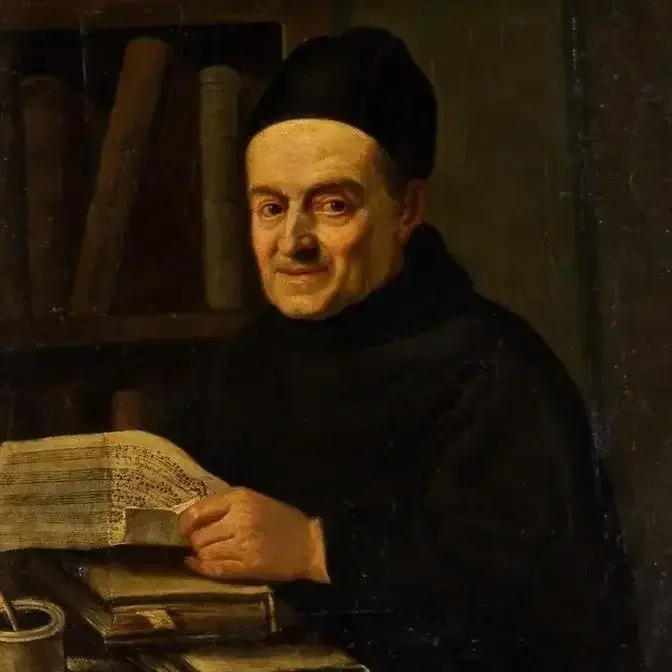
Painting: Antoine Vestier (1740-1824) - Portrait de François-Joseph Gossec (1791)
Image in high resolution: https://flic.kr/p/2kgQRgB
Further info: https://ks.imslp.net/files/imglnks/usimg/6/64/IMSLP409132-PMLP662620-BnF_btv1b55009633n_-_MS-1458_-_Gossec_FJ,_Rondeau,_B90_(Ms).pdf
Listen free: https://imslp.eu/files/imglnks/euimg/3/35/IMSLP611530-PMLP662620-Gossec_F.J.,_Symphonie_concertante_..._Mirza_p._2_harpes_-_O._Le_Dentu,_L._Laskine,_orch_%26_dir_J.F._Paillard.mp3
---
François-Joseph Gossec
(Vergnies, 17 January 1734 – Passy, 16 February 1829)
French-Belgian composer. Gossec received his earliest musical training in a local church under Jean Vanderbelen before becoming a chorister in Antwerp, where he was trained further by André- Joseph Blavier. In 1751 he moved to Paris, where he became a pupil of Jean- Philippe Rameau. He succeeded Rameau as the conductor of the orchestra of tax official Le Riche de la Poupelinière before accepting an appointment with the Prince de Condé. In 1760 he produced a Requiem that gained him overnight fame for its “terrifying” music. His fame as a symphonist and composer of opera in Paris was matched by his activity as a musical entrepreneur. In 1769 he founded the Concerts des amateurs, in 1773 he helped to reorganize the Concerts spirituels, and in 1784 he instructed at the École de chant. During the Revolution he was France’s most famous composer, writing a large number of works for the Directorate, and later when Napoleon rose to power, he was one of the first teachers at the Conservatoire, a post he held until his retirement in 1817. During his long life, he was considered the foremost composer in France, regardless of political views. His early works show the influence of the Italian style, but beginning in the 1770s he became a strong supporter of Christoph Willibald von Gluck. Gifted with a knack for memorable tunes and sometimes awe-inspiring orchestral effects, Gossec seemed to have a gift for discerning popular music. He was a prolific composer, writing 48 symphonies, six sinfonia concertantes, 22 operas, four ballets, 12 trio sonatas, six string quartets and six flute quartets, three Te Deums (including a massive multimovement work from 1817), two oratorios, the aforementioned Requiem, three Masses, numerous smaller sacred works, a wind symphony, and dozens of Revolutionary hymns, dirges, marches, and cantatas. #ClassicalMusic