
Ferdinand Lukas Schubert (1794-1859) - Pastoralmesse (c.1830)
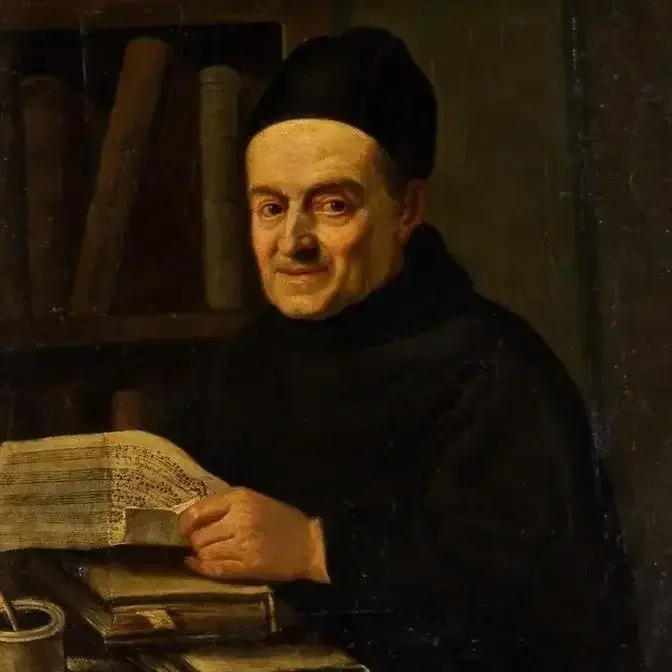
Alles Gute zum Geburtstag Ferdinand Lukas Schubert! 🙏🏼🍻
Composer: Ferdinand Lukas Schubert (1794-1859)
Work: Pastoralmesse in B-Dur 'Hirten-Messe', Op.13 (c.1830)
Performers: Bernadette Dеgеlin (soprano); https://tinyurl.com/34vkvdmj
Lucienne Van Dеyck (alto); https://tinyurl.com/ejnza3js
Zeger Vandеrstееne (tenor); https://tinyurl.com/5n7r4fyv
Kurt Widmеr (1940-2023, bass); https://tinyurl.com/ybk3snda
Mааstricht Kamerchor Conservatorium; https://tinyurl.com/43rebuw3
Musica Polyphonica;
Louis Dеvos (1926-2015, conductor); https://tinyurl.com/mwbt2cht
Pastoralmesse (c.1830)
1. Kyrie 0:00
2. Gloria 2:22
3. Credo 5:54
4. Sanctus 13:21
5. Benedictus 15:30
6. Agnus Dei 19:34
Painting: Jakob Alt (1789-1872) - Panorama von Wien gegen Osten von der Peterskirche aus
HD image: https://flic.kr/p/2sGge7a
Painting: Ferdinand Schubert (1824-1853) - Ferdinand Lukas Schubert
HD image: https://flic.kr/p/2sGLg3T
Further info: https://www.discogs.com/shop/list?master=4336785
Listen free: No available
---
Ferdinand Lukas Schubert [Subert, Šubert]
(Vienna, 18 October 1794 - Vienna, 26 February 1859)
Austrian organist, composer and teacher. Brother of Franz Schubert (1797-1828), he received his first music lessons from his father Franz Theodor Florian Schubert (1763-1830), and after training in the Normalhauptschule in Vienna (1807-8) he became a teacher in his father’s school. He was an assistant teacher (1810-16) and a teacher (1816-24) at the Alsergrund orphanage, then headmaster (1824-51) and director (1851-59) of the Normalhauptschule. He was twice married, first to Anna Schüler (1816) and, after her death, to Therese Spazierer (1832). He frequently drew on his brother’s music for help in his daily work, passing it off as his own. The most famous instance of this appropriation is the Deutsches Requiem, which he submitted to the examiners of the Alt-Lerchenfeld school; on its strength he was appointed organist and choirmaster (1820). As a composer, he wrote vocal music almost exclusively, including two Singspiels, four masses and a requiem. As a custodian of his brother’s manuscripts his record is mixed; he continued to appropriate the lesser, earlier works for school music books and choral test pieces (so that a list of his compositions must be suspect). But he also did all in his power to obtain the publication of Schubert’s larger works, and in this task he was more or less successful.