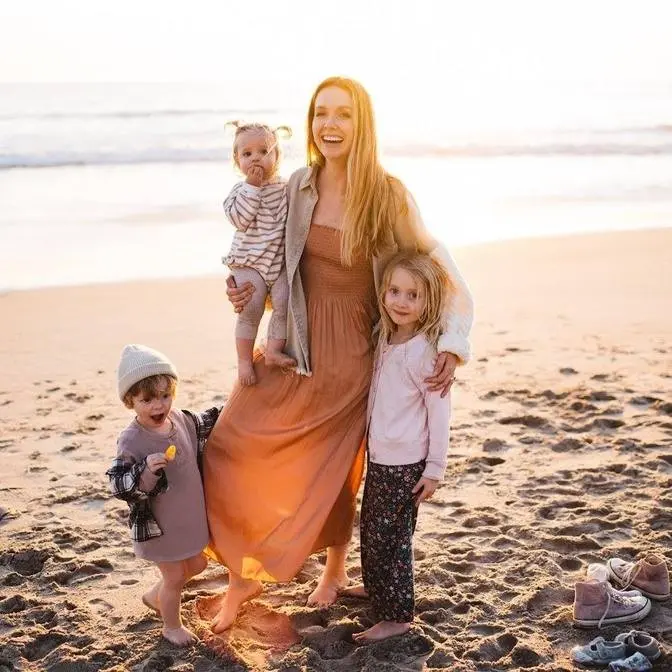
Nutritionist and body image expert Lizzy answers YOUR questions about pregnancy & postpartum nutrition! Go to http://www.doughp.com/Jess to get an additional FREE mystery pint of Doughp when you purchase a 2, 3, or 4 pack!
Lizzy is currently authoring a book, No Bull Nutrition, that encourages women to make 10 rebellious acts in reclaiming their natural right to unconditional love for their bodies.
We'd love your help raising funds to get this book published into the world so you, your moms, sisters, daughters, and girlfriends can experience more self-love.
Visit https://gofund.me/f6f36df8 to find out more and to contribute to this powerful self-love movement.
Anyone with questions for Lizzy can reach her on her website http://www.nutritionbylizzy.com, via Instagram (nutritionbylizzy or her Facebook page: NBL- Nutrition by Lizzy
QUESTIONS + Minute markers: 6:23 Weight loss & breastfeeding Will i lose weight? 9:03 How can you see yourself (stretch marks.. etc) and not feel like sh*t? 16:00 Exercise while breastfeeding? 17:44 Maintaining gut health? 20:17 Easy food ideas? 22:33 Squishy tummy? Constant body shifting... how to think about it? 27:54 Caffeine during pregnancy & after baby? 28:58 Postpartum hair loss? 30:29 What is healthy? How much to eat and when? 34:37 What should my kids eat?
There is soo much information out there about “health” it can be confusing and overwhelming to know how to care for our bodies. I found this conversation to be both helpful and refreshing because Lizzy takes a very open approach to nutrition. She speaks about pregnancy, postpartum, breastfeeding, weight loss, squishy tummies, healthy meal ideas, and how to love our ever changing mom bodies. __________________
Hi guys, welcome back to my channel. My name is Jessica. It's so good to have you here.
I make content for growing families and today's video is with a friend and nutritionist,
body image expert of sorts, and so we are going to talk about pregnancy, postpartum. It's kind
of a Q&A style video. I opened it up on Instagram for you to submit questions and we're going to
give you answers. Don't forget to like this video, subscribe to the channel. You can turn on the
little bell notification so then you'll know when I make new content. If you want more of my family,
you can follow me on Instagram at Jess underscore Hover. If you are a parent looking for more
support, you can join us on Facebook. We have a group, Jess Hover and Friends, really awesome
people in there. Answer the questions so we can let you in and know that you're real and great.
Thank you so much to everybody who's been shopping Very Good Mother's Club, our small
business. You are making it possible for us to keep making content for you. Thank you, thank you,
thank you. Today's video is a partnership with a company that we love. We're going to pause
and tell you about them for a minute. Thank you so much to Dope for partnering with us for this
video. Legit cookie dough, so good, but safe to eat raw. Dope ditches the eggs and heat treats
the flour so that you can eat it raw or bake it into the cookies. Each flavor starts with simple
ingredients that you can pronounce, flour, brown sugar, flaxseed, butter, vanilla, and baking soda.
Every purchase of Dope helps provide mental healthcare and substance abuse treatment to
those in need. After getting sober in 2015, Kelsey, the founder of Dope, set off to make
the world a little better and a lot sweeter. Every purchase of Dope helps provide mental
healthcare and substance abuse treatment to those in need. Click the link in our description to buy
some Dope. Have I ever been able to say that and mean it? Do it. It will add a free mystery pint
to your order when you click buy now. Then we can eat cookie dough together while watching the rest
of my video about nutrition. How about that? This is my friend, my new friend, Lizzie. She's a
nutritionist. What I want to tell you first is I just have such an appreciation for people who do
what she does. When I was 19, 20 years old, I struggled really intensely with an eating disorder,
with really distorted view of my own body, of really the female body in general. What I ended
up doing was scheduling an appointment with a nutritionist. I went and I said, I need help
understanding what's good for my body. What does my body need right now? How much of it does it
need? When do I eat? What's the right amount? Because I was lost. It was a nutritionist who
helped me to understand what was going to be good for me. I trusted this person and I did what they
said. Honestly, it was a huge piece in me finding a healthier relationship with food and a healthier
relationship with my own body. That's new information for you, but I really respect what
you do. I think that it's so important. I'm excited to be able to share with you guys today.
Mostly, I'm going to be taking the stuff that you've given me and presenting it to her and
letting her speak to us collectively. Even though I'm on this side of the camera, I'm going to be
sitting right there next to you watching her teach us about our bodies and what would be good
for us. Before we begin, would you go ahead and give us a big picture? Who are you and what
brought you to this bed here today to be talking to them? First of all, I am so, so grateful for
you having me and the opportunity to be able to share my knowledge and my journey as well.
As you shared, so many women and men meet this minefield of information and it really is difficult
to know what to eat, what not to eat, how to achieve a healthy, balanced diet and relationship
with food. I come from across the pond. The accent, isn't it beautiful? You know I'm an
accent person. If you've been around a while, I love them. This is good. I come through across
the pond, but I come from a very similar story. I started from an eating disorder as a teenager.
I had anorexia and decided one day that I wanted to be healthy, but I turned to magazines,
online. I didn't know what I was doing. I was naive and that made me very, very ill for a
long time. That helped me find my passion in nutrition and actually learning how to
nourish my body. I trained as a nutritionist and that really started a passion for
helping other women to love their bodies. I am now a nutritionist that helps women in the UK
as well as the US with their nutrition and I'm also currently writing a book
all about self-love and how to reclaim our right, because it is a right, to unconditional love for
our bodies. I am so, so excited about being able to share some of that material today
and just help you ladies out. This really is the ultimate thing that you can do
is to achieve that nourishment in mind and body. I guess I should say I've spoken to you as if
you're women, but I do recognize that a lot of men watch my channel too. If that is you and you
are watching, we will speak to you too, right? Absolutely. This will be relevant to all of you,
but I know that many of you are pregnant watching. For the pregnant people, we're going to talk a
lot about pregnancy because a lot of the questions that came were specifically about pre-baby,
post-baby body. Your book, how about below this video, I will link any information that you would
want them to know, your Instagram, any information about contacting you. I'll put all of that below
so you can be in touch. When we're breastfeeding, it's actually recommended that we increase our
calories. I think it's around 500 calories per day, both in the UK and US is what's recommended
to breastfeeding women. By increasing our calorie intake, that's super important for
nourishing our bodies as well as our newborn baby, but it also means that we are increasing
our energy intake. When we increase our energy intake, sometimes that means that we can gain
weight. Please don't be alarmed if you do see that and you're not seeing yourself lose weight.
In order to lose weight, we need to be in an energy deficit. My advice would be don't rush
into trying to lose weight too quickly. Make sure that you're focusing on nourishing yourself and
your baby with enough of that energy, enough of those calories. Some bodies are different.
Some bodies will need less energy than others. Therefore, when we're increasing our calorie
intake, we'll gain weight slightly. Some bodies will need those extra calories and use absolutely
everything that it's got and therefore might lose weight. I'm thinking of someone very particular,
my sweet little sister. She had her baby about seven weeks ago. Meredith, I think you're okay
with me speaking about you because you've already been on the channel a few times. She's feeling
that tension up. She's breastfeeding, but the breastfeeding alone isn't causing her to lose
weight. She's wanting to, she's tempted to diet right now, restrict calories. What you're saying
it sounds like is now's not the time to focus on that, that if your body's going to gain a bit of
weight, that's actually okay. That's the right thing for this time. Absolutely, yes. I would say
to give your body grace. I think a lot of women get into the trap of feeling like they need to
regain their body postpartum that they had before they were pregnant. This is something that,
as a society, we're almost guilted into that we need to retain exactly the same image as we did
before. Naturally, giving birth, our identity changes slightly. There's so much stuff going
on and it can feel rather overwhelming and rather frustrating just because of that message that we
need to become a certain way. Really, it's not like that. It's your story and your body that
you're speaking into and nourishing. Make sure that you treat it kindly and just focus on putting
the nourishment in at this stage. That is a really great question. Again, it relates back to what
we're telling ourselves. I call them stories. A lot of people call them beliefs. How can you turn
around the stories about the stretch marks into positive ones? How do you want to see your body
and start seeing that instead of seeing the things that you were telling yourself?
I can personally relate to this. I had a massive scar across my stomach from when I was a baby.
I had an interception, which is where your stomach telescopes in on itself,
and had to have emergency surgery. It left a scar, a massive scar. I used to be, especially
when I was a teenager, really, really self-conscious because you wear a bikini and it'd be
very visible. I started rethroning the story about, or it makes me look like I've got a roll in my
stomach. Oh, it's just so ugly. Those were the things that I was telling myself. Would you tell
your best friend that? No. No, absolutely not. Why tell yourself that? We have a choice to reframe.
I said, okay, so that's my survival scar. That's what my body did for me and that I survived.
Your stretch marks, you just carried a life with you. How amazing is that?
I'd say it's not anything physical that you can work on. It's all what you're telling yourself.
It's true because it's basically, you're making a decision about yourself. If you decide that you
are ugly, you decide you're unattractive, you're inferior, you can find every reason in the world
to conclude that. Even if you don't have stretch marks, you'll find any other reason to figure
that. You probably felt that way about yourself to some capacity before this baby even entered
your body. If we did the opposite and determined that we are beautiful, worthy, valuable, amazing
beings, then we'll find reasons to validate that truth. Yeah, a stretch mark is evidence. It's a
fact that you just did an incredible, miraculous, totally insane, amazing, amazing thing of growing
a little life and carrying that life out. If we end up with a stretch mark to remind us that that
happened, then it's going to require some natural reframing, especially because we live in a world
that is one where it's like, you didn't get a stretch mark. Oh, did you get any stretch marks?
How did you not get a stretch mark? What are you going to do about those stretch marks? That's
the noise, but most people, I think, get stretch marks. People get stretch marks even before they
have kids. Yeah. It's like cellulite, right? Yeah. We're so programmed to see in the external world
so much editing, so much filtering out as all of the so-called imperfections that we have,
that we're giving ourselves grief about cellulite, stretch marks, when in fact, I think 90% of women,
whatever size, weight, shape they are, have cellulite of some form.
That's true. So it's very normal to have these experiences of looking in the mirror and seeing
something that you talk negatively about, but as you say, it's all about the reframing.
It's fair to need a little bit of time to adjust to the newness of these things on your body. I
think the reframing we're talking about, it's normal if it takes time. It's normal if it doesn't
come naturally. Sometimes we even need a little extra motivation to do it. Why do that to yourself?
It feels a bit like you're lying, kind of probably what you felt when you were first saying,
I love you to yourself in the mirror. It feels a little bit like, well, I'm lying. I'm just trying
to make myself feel better for being ugly. But I think that sometimes what helps, for me, it helps
to realize that I never want my children to hate their own appearance. I never do. It grieves me on
the inside to think about my own kids who I adore ever feeling hatred towards their own appearance.
What I understand about kids is that they are looking to their parents to understand how to
see themselves. It's more than just my daughters looking to me to tell them like, Eloise, you are
beautiful. Your body is amazing. Or Jules, your body is amazing. What they're looking for is how
does mom respond to mom's body? Because one day they're going to get older and their body is going
to resemble my body in some way. And what I want them to be able to see is me looking at my own
body and not treating my body like it failed me. But even if I see my body and there's something I
don't love about it, being able to kind of doing what you're just saying, the reframing thing of
like, okay, my body is really squishy right now. Yep. Mom just had a baby. Isn't that crazy? Mom
had a baby and now her body's so squishy. Oh, that's interesting. Like how funny. It didn't
used to be. It is now. And then if there's things we want to change about our bodies or modify or
something in love, my kids could watch me do that too. Mom works out because mom cares about her
body and wants it to be healthy and wants it to live long. And so then eventually my kids, as they
get older, can carry that into the way that they relate to their own body. And so the reason why I
say all of that to you is that sometimes it's not enough for me to love my body for myself.
It's not enough to just, I wish I had peace with my body. Okay. Now I will have peace with my body.
It's more that I need to know that these kids are looking to me for an example, because that
is where I find strength to do what I'm doing. Um, in, in whatever stage of life that applies.
When I didn't have kids, I thought a lot about my sister, about my close friends, about people who
I knew who looked up to me. So it's kind of grabbing for meaning and grabbing for a story
that will help you to relate to yourself in a way that brings positivity versus negativity
and heaviness. Yeah. Oh yeah. The benefits just ripple out from, you know, when you can talk to
yourself in that way, in a way that you would talk to your children, your best friend, it's just,
it's, it's mind blowing. So not only do you have a better relationship with yourself,
you improve your relationship with others. You waste less time focusing on the stuff that
doesn't matter anymore. You spend less money on the fad diets and just feel this inner peace,
which I would just want for every woman and man out there, you know? Yeah. I agree with that.
Yeah. Especially if that's something that, um, you really enjoyed in pregnancy and before,
I think it's really great way to just keep your body moving, doing something for you. Um, and you
know, that has huge mental and physical benefits, but again, it's all about balance, right? So,
you know, having a balance in terms of what we're feeding our body and a balance in terms of how
we're moving our body, you know, too much is sometimes just as bad as too little. And trust
yourself. If you are exhausted, that's probably not the time for you to think you need to go
move too much. A nice walk with the baby might feel good. Some fresh air. Sometimes,
sometimes we're exhausted, but we actually can't sleep yet because the baby's not sleeping or
something. And a walk can just help you feel like you're alive commercially. And through the diet
industry, through, you know, adverts, we're kind of told that we don't have something. And in fact,
we often do have it. Um, and it's all about learning that, you know, healthy and
balanced is something that intuitively we know it's not necessarily, um, you know, what the
latest commercial is telling us. It's not the latest fad. It's not cutting out certain food
groups. Um, it's about trusting what your body's telling you. You know, if you feel tired, you know,
give yourself a rest. Yeah. You know, you feel like you want a snack. You're hungry
and you're feeling into your body and it's telling you those signals. Just honor that.
Yeah. That's really good. So maintaining gut health essentially means making sure that our
digestive system is functioning optimally. Um, and we can do this in many ways. Um, and it's
important both again for our physical and mental wellbeing. Um, I find it really,
really fascinating. Have you ever heard of the phrase butterflies in your stomach? Yes. Yes.
So there's truth in that, right? So when you're anxious, you feel it in your stomach,
your gut and your brain are connected by something called the vagus nerve.
So anything that goes on in your gut also is affecting your brain and vice versa.
So making sure that we have a healthy gut is really, really important. We can do this several
ways. Um, the first way is making sure that we're eating enough fiber. Okay. Now fiber sounds
super, super unsexy. Yeah. Spinach. Yeah. Yeah. Fiber and a lot of fruits and veggies. That's
where all of that kind of comes from, but also whole grains, um, oats, that kind of thing.
And it's really essential. So just keeping our digestive system moving, um, and feeding off
our gut bacteria. So, um, probiotics. Is that good? So probiotics. Yeah. We're going to get
there. We're going to get there. So some, um, some fiber is a good source also with prebiotics. Now
prebiotics is a food through our probiotics. So the food through our probiotics is called
prebiotics and probiotics are gut bacteria themselves. Okay. So fiber sometimes provides
prebiotics and it just helps everything kind of like keep moving need about 30 grams per day.
We tend to, as a population have that half. Oh, wow. Yeah. Okay. So that's really,
really important. So step one, eat your veggies. Okay. Veggies. Um, and step two is take some
probiotics. So best way of getting it easiest way of getting it is through, um, taking a supplement.
There are a ton on the market, so it's really, really difficult to give a specific recommendation
because everybody's got is different. Um, and that's something that I kind of work with people
on, but some foods, a good source of probiotics. Okay. So things that have been fermented. Yes.
So like kombucha, that's why it's really popular in health circles. Um, even sourdough that's been
cemented, those sorts of things. I drink kombucha while pregnant and breastfeeding. I don't know
across the board, if they say that's good or bad, you could talk with your doctor to be sure,
but I drank it during pregnancy and I drink it now. The night oats, super, super simple. Just
throw some oatmeal and some milk cause your choice and some fruit and some nuts in a jar,
put it in the fridge overnight and voila, you have a healthy, nutritious breakfast with protein,
carbohydrates, fats, all of the good stuff. Um, for lunch, something like, um, you know,
a baked potato with some kind of protein. It depends if you're a vegetarian, vegan,
et cetera, but I like to have a Jack potato or a baked potato. Sorry. I'm bringing in my English.
I like tuna. Um, but you can also have the English oats, baked beans, um, or cheese or, um, chili.
Okay. Those kinds of things. They're super, super easy. Okay. And what I really love to do also for
dinner is use my crock pot. Super, super useful if you're time poor, just throw a bunch of
ingredients into the crock pot in the morning, put the lid on, let it cook for six to eight hours,
and then voila, you have a delicious meal. And the hum smells good too, which is a nice feeling.
Absolutely. Yeah. And then my final tip really is in terms of meals is to make large batches
and then save some for leftovers the next day or freeze it. In terms of snacks,
it really depends on what type of person you are, if you're sweet or savory. I'm a sweet person,
so I like to snack on things like a piece of fruit with some peanut butter. You've got some healthy
fiber, fiber, some carbohydrates with a little bit of fat and protein. And that's really what
you're aiming for with a snack. If you're more on the savory side, some popcorn, that's always
really good. Or a handful of trail mixes. Be mindful of trying to get all of the nutrients
in, protein, carbohydrates, and fat. I love to have eggs that I can hard boil if I don't have
time to actually look over the stove, but I have it boiling and then I can have it later. Fruit,
veggies, kind of protein bars. Sometimes smoothies are nice if you have time to make a smoothie.
With that, I think I would just recommend make sure that you've got some protein in there in
the smoothie just to slow down the release of the sugar into your bloodstream. So yeah,
like protein powder or some yogurt or something. That's what I do. I'm doing it.
Don't put pressure on yourself to be a certain way at a certain time, but there are certain
things that you can do. Mostly it relates to exercises as opposed to your nutrition. Obviously,
having a healthy balanced diet is going to help, but doing some exercises that specifically target
your core muscles can really be great. So things like brushing twists or mountain climbers,
and just doing a small gentle set in your daily routine. You can just easily sit it in like 10
minutes after you've brushed your teeth. That can be really good at slowly, gradually transforming
your body so that you've got that more toned physique. In terms of the shape shifting and also
being able to tone that area might work for one person, might not work for the other.
And it's okay if that takes time. I feel like there's a lot of pressure, but I'm on my third
child that I just had now five months ago, and my body's still quite soft. Weight wise,
I don't actually know what I weigh. So I don't choose to weigh myself because it messes with
my head a little too much. The numbers, I just don't find it to be the most helpful way for me
to live. Yeah, probably because I had a lot of issues with this at one time in life. But fit wise,
like my clothes are fitting in a way that it works. I bought bigger pants, and I just try to wear
things that feel comfortable and flattering. I think in a few months, I may feel more in a space
where I can focus on tightening certain parts of me that are soft right now. But I don't know,
I think you can take your time. The pressure to be a certain shape and tightness might be an
external pressure that we don't actually have to carry right now. If we're working on keeping our
babies squishy, feeding those babies so that they are healthy and nourished and taken care of,
whether that's from our own breasts or formula feeding, that is a big undertaking. And it's time
consuming and we're running on very little sleep. And so just, I don't know, I guess my advice in a
sisterly type way would be just take care of yourself. Survive this season that is very,
very, very demanding. And it's okay if you're a little more squishy than you hoped you would be
right now. Eventually, you'll have more time to focus on tightening bits that need tightened.
Absolutely. And it's also looking at, first of all, the stories that you're telling yourself
and the language that you're using towards your body. So, you know, are you talking to it in a
nice way? And you reminded me actually, whilst you were speaking, of the really cool exercises
that I've used in the past, actually, because I was very insecure about my facial appearance.
And it's the mirror exercise. And essentially, you stand in front of the mirror for a mildly
uncomfortable amount of time, like five minutes. It doesn't sound like one, but it feels like an
eternity. And look at your body and you tell it, I love you. Whoa. I cannot recommend this
highly enough. It is huge. And within probably two weeks, I felt so differently about my body.
My inner mean girl, so judgmental first time around. And first time around, I was so frustrated
because it felt hollow. It was just like, I love you. Did it the next day. And it gradually,
gradually, gradually builds. And it's a total game changer. It's so cool. Yeah. You know,
what's kind of sweet about that is from a mom's standpoint, I have no problem at all. In fact,
I don't even think about it. But when I'm holding my little one, my little ones, I have three,
it's very natural to say, I love you to their little bodies. Like, I love your little face.
I love your little feet. I mean, I just did it this morning before coming here to film.
And so it's that, it's kind of tapping into that kind of love. That's very easy to give someone
that you love. Yeah. I could do it to my sister too. It'd be a little awkward to just start
adoring her body, but I actually feel that love towards her and her shape. But yeah,
to be able to look myself in the mirror and say, I love you to my body. I will do it. I'll do it.
But I could imagine, I mean, I already know it will be a little bit weird, but it's so good.
And I, if I could feel that same kind of affection towards myself and kind of compassion
towards myself that I feel towards my people, that would be life changing. So let's do that.
Let's be the weird, wonderful people who love ourselves and our reflection. I have a couple
good friends who they are experts in exercise and especially like the postpartum exercise.
I would love to tap into some of those resources. And so they can even cover some things that we
aren't going to be experts in. Okay. So I'll do that in a future video. I'll have someone
who can tell us a little bit more about how to move, to tighten the parts we want to tighten.
But in this video, what you're going to get is a gentle reminder
to just be gentle on yourself in this whole process.
So there is some evidence to suggest that too much caffeine in pregnancy can result in a low
birth weight and premature babies. So essentially babies in the womb don't have a fully developed
metabolism. And even when they're born, their metabolism is still not as developed as ours.
So they can't metabolize caffeine quite like a adult body. And that means that it's in their
system, raises their heart rate and can cause these issues in the womb. Postpartum, same thing,
get into the mother's milk and be passed on to the baby. So I would advise, whilst you still
can have your cup of coffee in the morning, thank goodness, to limit it to around 200 milligrams per
day. So that's about, I believe a 12 ounce Starbucks. Okay. Yeah. I think I break that rule.
I might've been good about the fiber probiotics and smoothies, but I'm probably overkilling the
caffeine. Here, there's some in here and I didn't really notice it being a huge deal with my other
pregnancies, but this one, um, not during pregnancy, but postpartum. Yeah. Well, I think
you've got lovely hair and I know for a lot of women, it can feel very distressing though, when
they experience hair loss. I've experienced it in the past when I had my eating disorder. There are
some things that we can do nutrition wise. So, um, for example, make sure that you're getting
enough biotin, which is B7 from things like eggs. Um, you can also take supplements, but I'm always
like get everything that you need from food first. The eggs are a great source, nuts and seeds,
that kind of thing. Um, but also make sure that you're getting enough protein as well. Our hair
is basically protein. So make sure that you're getting enough of that lean meat, beans, pulses,
but a lot of the time hair loss isn't related to nutrition. So it can be related to our hormones
and it can be related to stress. Two things that we experience postpartum. Totally. So generally
what happens is that our hair loss will slow down eventually. Um, so it's really just sort of like
hanging in there, making sure that your diet is balanced, um, and managing stress levels. Yeah.
Right. If it's hormonal, there's not a lot that you're going to be able to control there. It's
just going to happen and then it passes and your hair grows back and then you have these really
funny little baby hairs that dance all around and then they grow and then they're fine.
And the term healthy is just so broad. So my question to you would be, what do you think
is healthy? Um, because again, in marketing healthy can be used to mislead us. But to me,
healthy means having a very balanced diet full of all the macronutrients, the protein, carbohydrate,
fat and micronutrients. So your vitamins and minerals, um, needed to keep you from, you know,
staying in tip top shape. So feeling good. Um, and also having a balance between the energy that you
consume and the energy that you use. So having that balance and again, everyone is very different.
So if you're breastfeeding, for example, you need more energy. So you will feel hungrier than you,
um, than you were before you got pregnant and when you're pregnant. Yeah. Yeah, exactly. So
you need more calories in the third trimester particularly, um, because that's kind of like
the final part is the baby growing and developing. Um, so listen to your body. If you feel hungry,
eat. Yeah. Um, if you're feeling tired, you know, have a rest, but it also may be because you're
lacking in some of the nutrients. So having, yeah. So having enough iron, for example,
having enough of the B vitamins, where do you get those iron and B vitamins? Great question.
So B vitamins generally tend to be the vitamins. You can keep recording that. I also liked when
she said tip top shape, tip top shape. Okay. Um, so, uh, B vitamins, um, or vitamins. Um,
I'm kind of like being bilingual now. Oh yeah. She lives here. She got your master's at UCLA.
Is that right? I did. So, um, I trained at UCLA, um, after I'm studying in the UK. So yeah. Um,
but B vitamins, uh, you get in whole grains. So again, like your wholemeal bread, pasta,
oats, those are really great sources of the B vitamins. And then in terms of iron, the best
source I'm not going to lie is red meat. So red meat in moderation is actually really
quite good for you. Um, but you can also get iron and things like spinach, remember Popeye,
um, things like beans, lentils. There are a lot of good sources of iron, um, in terms of fish,
meat, all of the kind of animal products generally contain, um, iron, um, in, in a good amount. But
if you are vegan or vegetarian, you can get plenty of iron in your diet from those plant-based
sources. Portion control fat is again, individualized and I have really great rule of
thumb, literally. So for each meal, okay. Thumb of fats, fist of protein and a cupped hand of
carbohydrates. Okay. Thumb of fats, fist of protein, and then a cupped hand of carbohydrates.
Okay. For each meal. And that kind of scales nicely to your body size. Are carbohydrates
are vegetables? So carbohydrates, vegetables, as well as fruit and the whole grains that I
was talking about. So your bread, pasta, rice, potatoes. Okay. Yeah. Great. So that's a balanced
meal. That's a balanced meal. Yes. And that is what I would consider as healthy in a healthy
portion. Okay. Yeah. And then snacking in between, uh, you can snack in between some people like
larger meals. Okay. Um, and then don't snack. Other people like to graze throughout the day,
but it's perfectly fine to snack again. It depends on what your body's telling you. I'm
a grazer, so I like to have one snack in the morning and one snack in the afternoon and then
three meals. Cool. I do. I do the same. I like to eat throughout. And I found if you're pregnant,
this might be helpful to you. I found that my nausea was less intense when I wasn't hungry.
So I pretty much was always like a midway full so that I wouldn't get sick. Cause I was sick a lot
during this pregnancy. Your children are really looking to you as models for how to eat. So I'd
say in general, make sure that they're having a balanced diet overall, but aren't restricting
anything. If they would like a slice of cake, it's just about, you know, portion control and
making sure that they know that they can't eat cake every meal. Right. About having that balance,
um, and really introducing them to a variety of foods early so that they, um, have a wide palette.
And as a mother of some kids who have a pretty narrow palette, you can just keep reintroducing
the foods. I think for us, we've just, we just keep trying and trying and trying until eventually
they like certain things and the stuff like there's some vegetables that I just cannot get
my five-year-old to eat, but there are some that she does. So I offer the ones she does and then
just keep kind of trying the other ones. And you can be kind of, um, quite sneaky and creative
with it as well. True. I sometimes cook it and blend it into other things. And yeah,
there are times that she's eating things that she doesn't know she's eating. So that's good.
They can be in touch with you. Is that right? If they have more personal questions. Yeah.
I'm a complete nutrition nerd. So any questions about nutrition, please contact me. And any
questions about loving your body more also, please, please message me. Great. Thank you so
much guys. Thank you for watching. Please do be in touch with her. Also. We'd love to see
conversations happen in the comments. So if you heard something and it stood out to you,
tell us about what that was. And we'd love to see you guys interact with one another
about this video. Thank you so much. And we will see you again soon. Bye.