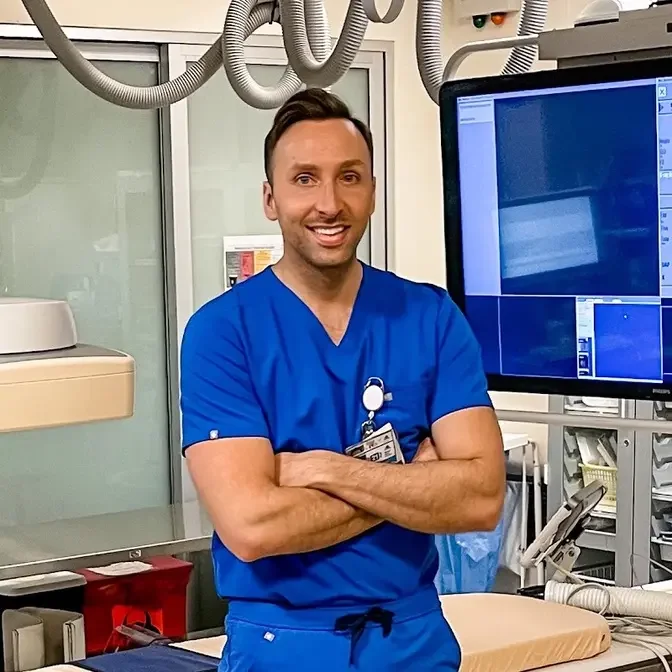
Academic medicine vs Private Practice medicine. The major decision a Doctor must make before getting their first job in the real world! Both academia and private practice each have their own perks, and it is ultimately up to you to decide which area of practice fits you the best! I try to give my best breakdown of the differences between Academic practice and Private practice jobs as a physician!
Welcome back to my channel everybody. For those of you who are new around here, my name is Michael
aka Dr. Cellini, and I am a radiologist doing my final year of training in interventional
radiology in New York City. Now, I'm almost done with fellowship. I have just under five months
left, which means I am currently in the process of looking for a job, and with that process comes
the decision of what I want to do with my life. And what I mean by that is, what kind of job am
I looking for? Is it academic? Is it private practice? And that's the question I keep asking
myself, and that's the question that so many people keep asking me. I figured I'd do a video
and show you all the difference between private practice and academic jobs and everything in
between. So let's go. Now, one thing people never told me upon finishing fellowship was that there
is another hurdle that you must jump across, and that is finding a job. And that's come to be one
of the hardest parts of this entire medical training thus far, because now that you're
finally done, you have to commit to a job and settle down for the most part in one location,
and you have to find the perfect job, and not every job is perfect, and it's just difficult.
When I was in training, I thought when this day came, I was going to finish training,
and all of a sudden the job would just appear in front of my face, and that's not exactly what
happens. Now, of course people want you, and of course people need interventional radiologists,
and diagnostic radiologists, and surgeons, and all that stuff, and every other type of doctor,
but you actually have to go searching, and do your homework, and see which job is right for you.
So the bare bones question you have to ask yourself right off the bat is, do you want to go
into academics, or do you want to go into private practice? Because those are the two different job
markets out there, and you kind of have to pick one way before going on all these interviews.
It was after much thought that I decided private practice was the right career path for me.
The next question I always get asked when I tell people I'm looking for private practice career
options, how does a radiologist see patients in their office? Do they come to their office to get
scans? Not many people realize how it all works being in radiology, so I'm going to use this video
to kind of A, shed some light on the differences between academia and private practice, and then
talk about what private practice radiology and interventional radiology is all about. So before
we go any further, let's talk about the differences between private practice and academic radiology.
Now this is mostly regarding radiology, but it can be applied to a lot of different other
specialties as well. For all intents and purposes, this is purely about radiology. So I'm going to
touch on a topic, and I'm going to compare the difference between private practice and academic
on that topic. Topic number one, teaching. Now there's an obvious difference between private
practice and academic radiology in the fact that in academic, you are obviously teaching residents
throughout your entire career. Most programs are entirely resident run, and as an attendant,
you have requirements to continue teaching these residents throughout their journey. Now on the
other hand, private practice doesn't always have residents in their hospitals. It's ultimately just
the physician, me, who's doing all the procedures, dictating all the studies, and there are no
residents to overlook or teach throughout your time there. Honestly, this was the hardest part
in my decision because I love teaching, as you know from my channel, but ultimately I decided
I teach all the time on YouTube. I can still do the same thing anytime I want without the
requirements of academic medicine. However, in private practice, you're not necessarily working
with residents, but you will be working with a lot of physician assistants and nurse practitioners,
which you can also teach as well. And like I've said many times before, a good physician assistant
or nurse practitioner are worth their weight in gold, and you should treat them and train them
as your colleague, and you will be rewarded for such. Topic number two is patient complexity. Now
academic hospitals are notorious for having the sickest of the sickest patients. Obviously,
the academic institutions are going to have complex patient care. They have a ton of different
sub-specialists in their hospitals taking care of the sickest of the sickest patients, and that's
not always the case in private practice. Yes, there are sick patients at the hospitals, but overall
you're not going to be treating very complex patients. If the patients have complex disease or
complex chronic diseases, you're going to ultimately probably send them out to a tertiary
care center like the ones I trained at. And it's good, right? Because for one, you don't want to be
handling these complex patients with limited supplies compared to these tertiary care centers,
and you want these patients to go somewhere where there are specialists to take care of them. So my
thoughts on this are I love taking care of complex patients, but I don't want to do it day in and day
out. Maybe if there are a few complex procedures here and there, but doing complex procedures for
multiple hours every single day is very exhausting and it takes a toll on you. So I'm glad there are
physicians that do that, but I'd rather have more of the bread and butter type stuff. Next topic,
or topic number three, is pace. The pace of an academic institution is not very fast because
it's not necessarily money driven. And the reason being is because, like I said prior,
a lot of these patients are very sick and complex, and it takes a lot of thought and a lot of time
to organize procedures and surgeries and care for these patients. Whereas private practice is more
bread and butter, so it tends to be faster paced and more efficient, which is right up my alley.
Fourth topic is vacation. This is very important to me. It is not so important to others, but as you
all know, I like to travel and go somewhere anytime I have off. So having time off to travel and also
having time off to make more YouTube videos and social media content is a top priority for me,
which is probably different from a lot of people. So the difference in vacation for academia is
physicians or interventional radiologists will usually start around three to four weeks vacation
per year. And in private practice, vacation time is actually quite higher, sometimes double. And
to start off, you're probably looking at eight to 12 weeks of vacation a year. And once you hit
partnership track, could be up as high as 14, 16 weeks vacation. I've personally even seen jobs
where you work night shifts only and work one week on and have two weeks off. So you do the math.
Topic number five, and this is obviously a hot topic, and that is salary. The salary of academic
radiologists is lower than the average private practice radiologists, and it starts low and it
basically plateaus at that level with maybe some minor progression if you pick up more academic
appointments or get involved in residency programs and all that stuff. But in general,
private practice radiology pays quite a bit higher than academia. Furthermore, after you hit
partnership track, which is usually around two to three years after you start your job, your salary
bumps up significantly and almost could double that of an academic radiologist. The next topic
is research. Now, research is obviously very heavy at academic institutions, and a lot of
academic appointments and academic jobs require their attendings to do research and oftentimes
require them to do a certain amount of research or get a certain number of grants every single
year while they are on staff there. Compare that with private practice, there is usually minimal
to no research in private practice because, like I said before, the case complexity isn't that high
and it's more bread and butter type stuff and you don't really have time to spend doing research.
It's more so that you're cranking out studies or doing procedures as fast as you can. Now, I've
obviously done my fair share of research in medical school and residency, but I've learned over the
few years that it's not really my favorite thing to do, but I'm glad there are people that love it.
The next topic is politics. Now, academic institutions are notorious for having quite a
bit of politics going on in their hospitals. The reason being is because there is a hierarchy
amongst these hospitals. You start off as a social professor or assistant professor, and then once you
become a professor, then you may become a chairman of the department, and then once you become a
chairman of the department, you may become the hospital chief medical officer or the dean of
the medical school or whatnot. There's a ton of different academic appointments and each of them
has a hierarchy. Now, I know politics is not supposed to get in the way of medicine, but
oftentimes it kind of does at these academic hospitals because you're taking care of a patient
and the chairman of medicine who's been there for 50 years and knows everybody in the hospital tells
you he wants a procedure now. You kind of have no choice but to do it because, you know, they're
more senior than you and if you don't do it, it looks bad on you and you want to look good to
them and, you know, it's just it's hard to explain, but there's just a lot of politics. Now, in the
private practice world, politics don't really come into play. If they do come into play, it's more of
like hospital administration type stuff, but less so the hierarchy of medicine. A quick disclaimer is
this is like a broad generalization just for radiology. It doesn't necessarily apply to every
academic hospital. This doesn't necessarily apply to every private practice. So take everything I
say with a grain of salt. The next topic is marketing. Now, for academic institutions,
obviously, these are huge names that may be known internationally. If you start working for Harvard,
I don't think you have to do much marketing because you are a Harvard physician and patients
will come see you no matter what. Alternatively, if I go into private practice and work at some
small community hospital, the name doesn't really carry that much weight and nobody knows who I am
and nobody's going to come see me over this Harvard guy unless I go around the hospital,
meet people, get a patient referral base, and market myself. That's definitely a huge difference
between going straight into one of these practices versus academia. The next topic is creativity. Now,
in academic hospitals, your creativity is kind of limited by what the hospital wants or what
the hospital needs. They don't really care that you want to do a certain type of procedure.
They're going to do whatever is in the best interest of the hospital and they don't really
care if you want to start doing some groundbreaking procedure or whatever is just whatever's in the
best interest of the hospital. And in order to start doing this, you may have to get approval
from the board at the hospital and all this stuff and it's just a lot more difficult to be creative
under the hospital's name than it is to be creative under your name or your smaller private practice.
If I wanted to start doing a specific procedure at my private practice, I would likely just go
talk to some of my partners and we would have a quick meeting and say, yeah, that sounds good,
but to do so at an academic institution would be quite a bit hard. The next topic is opportunity.
Now, I know that's a broad topic, but what I'm trying to say is the hospital doesn't really care
about what benefits you so much as a physician. They're more so worried about what benefits them
as an institution versus private practice where you have the ability to think outside the box per
se and maybe start some other business ventures or investment opportunities that may or may not
pertain to medicine, but they may benefit your practice and your partners as a whole.
That doesn't necessarily fly in academia. For instance, if I wanted to open up a vein clinic
and start treating varicose veins and doing sclerotherapy, it would probably be a lot easier
for me to do so at my private practice than it would at an academic institution and trying to
convince them to spend a whole bunch of money on me to start this whole venture. Furthermore,
if I wanted to invest some of our private practice funds into real estate or land or something,
it would be quite a bit easier to convince my partners to do so versus the board of a hospital.
The last topic I want to talk about is student loans, which is a very hot topic as well. In
academia, you may be working for a non-profit hospital, which means you will still qualify
for the Public Service Loan Forgiveness Act, which means you may get all of your loans forgiven after
10 years if you work at a 503c, I believe, non-profit organization for those 10 years.
Now, I've been working for a 503c non-profit hospital for the past six years, but if I go
into private practice, that is completely null and void, and the government will not pay off
my student loans after 10 years because the next three years will be in private practice and
probably not at a non-profit organization. In private practice, some places offer you
lump sums as an incentive to join their practice, so they may offer a $50,000 or $100,000 loan
repayment up front if you join their practice, and the other side of that is your salary will
be quite a bit higher in private practice, and you will have the ability to pay off your student
loans quicker. It's kind of whatever you want. I see pluses and minuses to both sides of those,
and honestly, this was the hardest decision for me because I've already worked six years at a
non-profit hospital. It was hard for me to give up on that 10-year public service loan forgiveness
and venture off into private practice. Now, obviously, this isn't black and white when I'm
talking about academic versus private practice because there's always an exception to the rule.
There are a few kind of hybrid private practice academic institutions around the country which
are also very favorable to work at. They're kind of rare, but they also offer the benefits of private
practice with the benefits of academics kind of mixed into one, but they're very difficult to
find a job at sometimes because nobody ever wants to leave those places because, for instance, you
have the private practice salary, but then you have residents do all your work for you. So yeah,
I wouldn't want to leave that if I had that job either. Now, before I end the video, I just want
to touch quickly on the private practice model itself as it pertains to interventional radiology
because people don't really understand how radiology can be private practice. We don't
have an office like family medicine, internal medicine, or surgeons do. We ultimately get
contracts through hospitals. So the way these private practices work is there's a group of
interventional and diagnostic radiologists that come together as a partnership. They get contracts
at hospitals around the area. So if there's a smaller community hospital that has no radiologist,
they have to have somebody read all their images, so they pay this radiology group to read all of
their studies. Furthermore, they will pay the interventional radiologists to work at their
hospitals and do procedures on their patients. So essentially, it is a partnership group that gets
contracted out by the hospitals to read their studies. We don't really have an office per se
seeing patients day in day out, but I will be seeing patients at the hospital in interventional
radiology and read all the studies from around the area as well. In addition to that, these
radiology groups often own their own imaging centers, so they will benefit from that as well.
So if you have any questions about that, let me know in the comments below because it can be a bit
complex and no two private practices are the same. This model is actually very similar to the way
anesthesiologists work as well. The newest venture lately for interventional radiologists is
something called office-based labs, or OBLs, in which an interventional radiologist essentially
buys their own radiology suite, has their own patients, does their own procedures on their own
patients in their own radiology suite, and they get to basically profit from the entire thing as
a whole versus giving some of the profit to the hospital who hosts that radiology suite or whatnot.
That model is up and coming, and a few people have done that very well so far, so I'm curious
to see how it goes in the future. All right, so that officially concludes this video. Let me know
in the comments below if you have any questions about academics versus private practice, and I
will try to answer it. Like I said, this is just a very general overview. This is not specific to
any certain academic hospital or private practice. This is just some of the stuff I've seen across
the interview trail thus far, and also let me know where I should work because that's still kind of
up in the air at this moment. Also, hit the thumbs up on this video. Subscribe to my channel.
I see a lot of you lurking around still. Follow me on Instagram and TikTok if you don't already,
and I'll see you all on the next video.