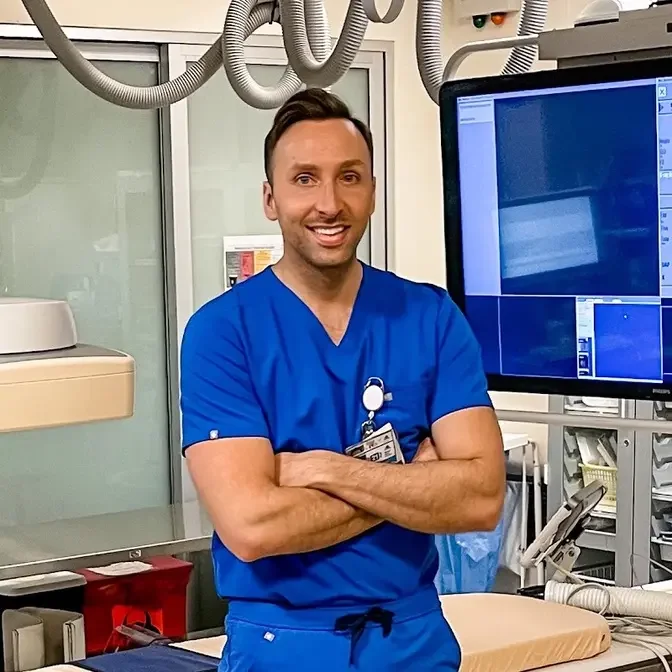
Here are few of the techniques I used in MED SCHOOL to memorize everything for the tests, and boards, and how I became a DOCTOR :). Hope you find some of these tips helpful!
What is up YouTube? Today I'm going to teach you guys how to study.
That's right. Study. In med school,
information comes at you faster than you could ever imagine.
And if you don't have a proper study technique or know how to study,
learning that information is almost impossible. For me,
the hardest part in med school was actually learning how to study.
So I wanted to give you guys three tips on how I learned how to study
effectively and memorize every single thing in med school.
Not everything, but most things. Let's go. All right.
So first and foremost, I apologize for how tired I look.
These bags under my eyes. This is my sixth night in a row,
sixth 12 hour night shift in a row. And I am a little on the tired side,
but this is my last night shift of the entire year of 2019.
Anyways, tip number one, find a study spot,
create a schedule and get in a routine.
I cannot express to you how much a routine helps you study. For me,
my routine was waking up at 5 AM,
going to the library and studying in my same cubicle or my same table every
single day. For me,
that was really important because once I sat at that table,
it was business time and it was game on. If I were to stay at home,
I would dilly dally around, watch some TV, watch some YouTube.
Instagram wasn't as popular when I was in med school,
but I can imagine I'd probably be on Instagram a lot if I were in med school
now. So for me, I had to get the heck out of the house,
go somewhere and get to work. Some people like studying at home.
I'm not one of those people, but if you do,
make sure you leave all distractions away from you and focus.
I'm currently studying for radiology boards right now,
and I adopt the same exact routine. I wake up early at 5 AM.
I go into the kitchen or downstairs in my apartment complex and I get to work
and I do this before I actually go to work.
So I wake up two hours early before work,
start studying and then go to work and come home. If I don't do that,
I don't even know when I would have time to study while having a full time job
in residency. Tip number two, find yourself a study partner,
preferably smart and preferably motivated and stick with them throughout med
school. My study partner in medical school was a girl named Alexandra.
Shout out to Alexandra. I don't know if you're watching, but if you do,
thank you for everything you did. She was amazing during med school.
She was extremely motivated,
unbelievably smart and more importantly she kept me on task and made me a better
student.
It's always nice to bounce topics off of a study partner and quiz each other back
and forth. This really helps you nail down the material.
And it's always nice to see what that person picked up during lecture and what
you picked up and comparing notes and trying to come up with a condensed
version of what to study. Another tip along those lines,
what really helped me was actually verbally going over topics.
So we would verbally quiz each other,
which forces you to think about a topic rather than just being able to pick it
out on a multiple choice test.
If you were able to recall it and verbalize it,
you're much more likely to actually understand it and memorize it versus just
being able to pick it out of a multiple choice menu.
So study partners are worth their weight in gold if you find the right one.
My third tip on how I memorize everything relates to note taking.
In medical school we get about a hundred PowerPoints per test and each
PowerPoint has 40 to 140 slides on it.
You have to kind of condense that information and really focus on what's
important and oftentimes condensing that information is actually the hardest
part because you don't want to miss anything and you don't want to leave
anything out. So this actually goes back to my second tip,
which is my study partner and I used to take turns on each PowerPoint.
So for instance, if there were 30 PowerPoints, I would take 15,
she would take 15 and we would both outline them.
And the way we formatted and condensed these outlines was the best thing ever.
So this is what we did.
So our goal was to fit a PowerPoint onto an entire PowerPoint onto one sheet of
paper landscape mode. So what we would do is go into Excel,
split up by columns,
three to four columns of the entire PowerPoint and outline it.
And then we would condense it down and fit it to one page.
So the, so the font could be really small sometimes,
but it was always on a page.
So what we ended up having would be like 30 pages of just pure notes like this
all on one page.
And the reason this helped is because it condenses the material and puts it all
in front of you rather than scrolling through PowerPoints mindlessly and
missing stuff here and there. When I looked at this sheet of paper,
it was almost like a spatial recognition for me.
So if I was in the test and I couldn't remember a specific detail on a topic we
were tested on,
I could at least put it to like a specific portion of the page and I could think
that, okay, so I think that was up on the left side of the page,
which means it was probably one of these two things.
And it oftentimes just on spatial memory or spatial recognition of what was on my
outline,
I could kind of pick the right answer because there's so much information.
It's impossible to know everything.
So you have to develop different techniques that work for you. So for us,
we split up the PowerPoints. We outlined every single one like this,
fit it all on one page and we would have the exact same material to study.
We could quiz each other and we could at least spatially recall information if
we couldn't remember every single detail. All right guys,
so that concludes my three tips on how I memorize everything or almost
everything in med school and the tips I still use today.
So if you liked this video and thought it was helpful, leave a thumbs up,
get that like and subscribe. Don't just hit it,
smash that like and subscribe button and I guess I will see you guys on the next
video.