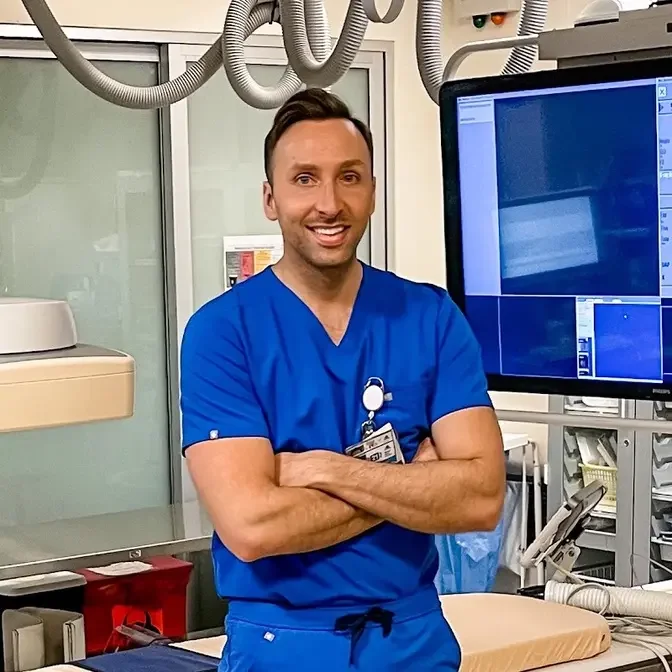
Here is the long-awaited updated version of how I like to study! It's been a while since my last "How I memorized Everything" video, so I thought I would give away a few more of my favorite study tips, and let you in on the ways I like to study.
I have used these study techniques throughout high school, college/university, medical school, and even in residency. They have helped me accomplish a lot and do well on MANY exams over the years. Hopefully, some of these study tips can help you all and help you become more productive and ultimately have more success on exams!
What is going on everybody? Welcome back to my channel. For those of you who are new around here,
my name is Michael aka Dr. Cellini, and I'm a fifth year interventional radiology resident.
Now it's been almost a year and a half since I uploaded a video entitled,
How I Memorized Everything in Medical School, and since I uploaded that video,
it now has over 1 million views, which is absolutely mind-blowing. And since it's been
almost a year and a half since I uploaded that video, I thought I would do an updated video
in which I gave you all three more new tips, and also do a deep dive into one of my favorite
resources that I use in med school, and they happen to be a sponsor of this video. So why
don't we go ahead and get into it. So at this point in my career, I think it's safe to say
I've taken a few examinations, and of those examinations, including step one, step two,
physical exam boards, step three, my recent radiology boards, which I can't believe it's
been almost eight months since I've taken those, that's crazy to me. Anyways, of those board
examinations and seemingly millions of tests that I took throughout medical school and undergrad,
I use the exact same study technique for all of them. So why don't we touch on a few tips that
have helped me do so well throughout my journey. So the first tip I have for you all, and I've
also touched on this in prior videos, and it's that you must wake up early. I mentioned this
tip in one of my prior study videos or some other video I did a while ago, and I got so
many comments about how the person cannot wake up early and it's impossible to wake up early.
First of all, no it's not. Second of all, you better get used to waking up early if you want
to do anything related to medicine, but almost all medicine starts first thing in the morning.
For instance, when I did my surgery intern year, rounds started at 6am sharp, which means I would
pre-round before getting there around 5.30ish, which means I would wake up about five o'clock
or 4.45 every single day, six days a week for a year straight. So if you're not a morning person,
you'll turn into one really quick if you do any surgical specialty. So why is waking up early so
important to doing well on examinations and doing well with your studying? In short, I don't really
know, but I will say that it's helped me and it's helped many of my colleagues along our medical
training. As I've said in prior videos, I used to wake up about five o'clock and get to the library
at like 5.15 or 5.30 and there's something about being there while it's still dark outside, before
everybody's up, before the sun is up, with your nice cup of coffee in a quiet area and you just
get to work. I really can't explain it, but as soon as I have that coffee in my hand and I sit down,
I'm like laser focused first thing in the morning and I don't stop until like noon. The other reason
I like waking up early, especially in medical school, was that most tests started about 8am
and I was always in that groove of getting to the library at 5am or so and doing that on test day
was so clutch because you get that kind of last minute three hour study block right before the
exam and you just crunch all those small minutia details and you get all those answers right on
the test. So that's a little secret. So the next tip I have for you all is that repetition is
everything. When studying a specific subject matter in medical school or residency, I would
often first start with a review resource or program that was recommended to me by a colleague.
One of my favorite resources I use in medical school happens to be a program called PicMonic,
which also happens to be the sponsor of this video. PicMonic is an online platform that
uses picture mnemonics and stories, which helps you remember large quantities of information
quite easily. So on the homepage, you can type in and search anything throughout their entire
system right here. So to give you all an example, we'll focus on the coronary artery anatomy here
because that seems to be problematic for a lot of people. So let me go ahead and show you this.
So here we have the anatomy that we're going to be talking about. We're going to click on this
video right here. So the first thing I recommend you doing is actually listen to the educational
video first and then follow that with the story view, in which I'll give you an example right now.
In this PicMonic, we describe the coronary arteries, the crown heart with artery arteries.
Coronary blood flow begins with the aortic root, the aorta roots, which then flow into the right
and left coronary arteries. The RCA, or right coronary artery, the right crown heart, is notable
because it supplies the SA and AV nodes. It gives off the right marginal, the right margarine. The
RCA later branches into the posterior descending artery, the post-terior descending. From the
aortic root, blood also flows into the LCA, or left coronary artery, the left crown heart.
This first gives off the left anterior descending artery, the left anteater descending. This is
sometimes called the widowmaker because it is the most commonly diseased coronary artery.
The left coronary artery then branches into the circumflex, the circumference compass,
which supplies the left ventricle. The left marginal, the left margarine, branches off of
the circumflex artery. So let's recap coronary artery anatomy. The aortic root supplies arterial
blood to the right and left coronary arteries. The right coronary artery first gives off the
right marginal, and then the posterior descending arteries. The left coronary artery first branches
to the left anterior descending, and later splits into the circumflex and left marginal arteries.
So next I recommend you play the story view because it's actually pretty funny and it'll
help you kind of tie all the subject matter in and help you memorize large quantities of info
pretty well actually. So let's listen to this. This crown heart is covered by arteries,
through which characters do battle with archery arrows. The arteries are fed by the aortic root,
so picture the aorca with roots, and it's been hooked up to these coronary arteries,
like this is some kind of whaling operation and the characters are after its whale oil.
But whaling is illegal, so these crown hearts show up at the right and left coronary arteries,
and shoot archery arrows to defend the whale. Let's start with the right crown heart artery.
It sees the right marginal artery branching off to fill the right margarine tub with whale oil,
and it goes crazy. It lets an arrow fly and it hits the responsible posterior,
causing it to descend towards the posterior of the heart. The left crown heart comes face to
face with two characters responsible for the whaling op, and shoots them both. First it
shoots the anteater and sends it descending down the anterior of the heart. Then it shoots the
circumference compass and it goes swinging back around the circumference of the heart.
With the whalers out of commission, the whale oil at the left margarine tub slows down to a trickle
and the whales are saved. Hooray! So once you've watched both the educational video and the story,
you can then go along and quiz yourself on each section. This is just another way to help you
ingrain this info in your head because you're getting asked questions on material that you
just watched and listened to. And if you aren't 100% sure what the answers are, you can click to
reveal the hints that will further stimulate your memory a little more. So for instance,
on this question, the right coronary and left coronary artery originate from which of the
following structures? If you don't remember, you can click on the hint and hopefully that'll jog
your memory on the educational and story that you just watched. So this is the bid aorta or aorta,
so they arise from the aorta. One thing I like about these quizzes is that they track your
progress over time and it knows what questions it needs to repeat in the future. So when every
time you log onto the platform, you will be asked to do your questions for the day and you oftentimes
get retested on some of these answers that you got incorrectly. So one of my absolute favorite
things about this program is say you are studying for step one or step two, you can actually go into
the first aid book and go into the different chapters of each book and even open the pages
and do the pygmonic based on the pages that you are reading in first aid. So for instance, page
353 would be about tracheoesophageal fistula and you would then do a pygmonic and the educational
and the funny story view and then follow that with the quiz. You can also create your own and
use these, you know, kind of funny characters to kind of create your own pygmonic, which I also
think is super cool. Some of these are pretty funny actually, like anemia is an anemone or anemone
is kind of funny. So you can actually drag these characters onto pygmonics that you made or
ones that have already been made and you can drag them and kind of customize your own pygmonics for
your learning. So if that wasn't enough, they also have a ton of information in the margins
next to the pygmonic. So you actually have a ton of information at your fingertips when you work
on this program. So once you get accustomed to using it, I mean, honestly, you can do so much
with it. Alright, so like I said, this resource is pretty much limitless and I cannot recommend it
enough. So this program actually just came out when I was a med student studying for step one
and I thought some of these pygmonics were so hilarious. Since then, the company has grown
exponentially and we now have this amazing platform to work with. So hopefully you guys can
enjoy it like I did. This platform is also available for all health students. For instance,
med students, nurses, nurse practitioners, physician assistants, pharmacists, occupational therapists,
physical therapists, etc, etc. So go check out the website and see if they have something for you.
And if you're interested in using pygmonic and want two weeks free, use the link in my description.
So since we're still talking about repetition, after I would use these review resources like
pygmonic, I would then go back and read the subject matter in the textbook and it makes it
seem less dry. When you read it, you can remember stuff and especially remember some of the images
that you saw in the review programs like pygmonic. It'll further help you solidify that information
in your brain and hopefully let you not forget it. After all, memorization is a huge part of
medical training. So the third and final tip I have for you all is that you need to set a time
limit on your study session. For some reason, setting an arbitrary time limit helps you stay
laser focused during that study time. So there's multiple ways to do this. For me personally, I
would set a daily time limit. So like I said, I would get to the library super early around 5 a.m.
and I would say that I'm going to study until 6 p.m., which is not that unreasonable when you're
studying for like step one or whatnot. So what I would do is sit down at 5 a.m. or so and study
completely without any interruption until about 6 p.m. and 6 o'clock on the dot, I would close my
books, pack up and go home and just sit on the couch, you know, watch tv, make dinner or whatnot.
A lot of my friends would actually break up every hour into study session. So they would set a timer
for 50 minutes and when that 50 minutes was up, they would take a 10-minute break in which they
would just go walk around the school or, you know, use the bathroom or whatever and then they would
come back as soon as that 10 minutes was up, start again, do another 50 minutes, repeat, repeat, repeat
and then finish the day whenever. So setting a time limit always helped me and it might help you
all as well. Okay, so that officially concludes this video on my updated tips on how to study
effectively and efficiently. I hope you all enjoyed it. I want to thank Picmonic again for
sponsoring this video because it is a fantastic resource and I'm so happy to be working with them.
If you have any other study tips you'd like to share with everybody, leave them in the comments
below and I will try to pin them if I think they're awesome. As always, smash that like and
subscribe button and follow me on Instagram if you don't already. Leave a comment below if I like
it. I'll respond to it. As you know, I usually respond in the first hour or so. Don't forget to
turn on post notifications so you are notified when I post a new video which is usually one or
two times a week. Otherwise, I'll see you all on the next video.