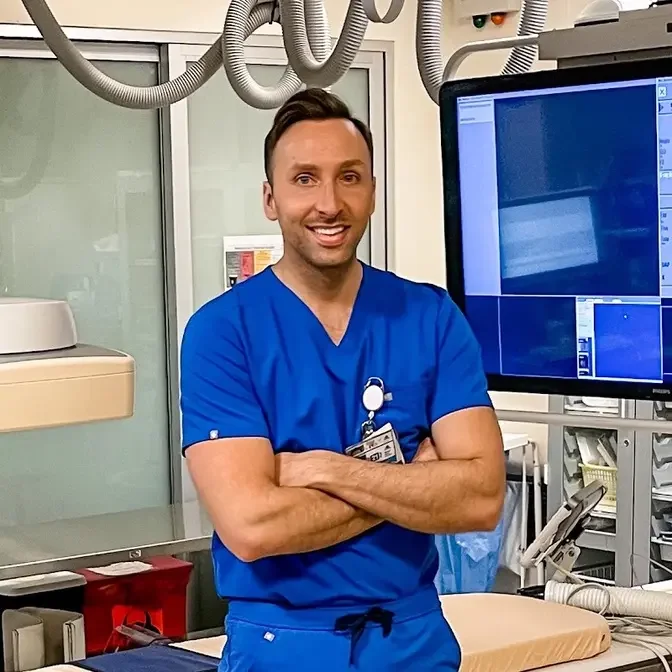
**Sponsored video with Picmonic** ______ Coming back at you with some more study tips! These mostly apply to medical school, or as a premed, but these techniques/tips can be used in all fields! Enjoy ------ Marcus & Kristin accident video: https://youtu.be/Rs02UZF5mjU
You know what? I don't really care anymore. Do not go to class.
Of course my refrigerator goes off the second I start this up.
What is going on everybody? Welcome back to my channel.
For those of you who are new around here, my name is Michael,
AKA Dr. Cellini and I am a senior interventional radiology resident
or interventional radiology fellow, whatever you want to call it.
And on today's video,
I'm hitting you again with another study tip video because everybody needs a
little study tips. I'm going to hit you with a couple more new ones today.
So let's go ahead and get into it.
So this video is sponsored by my good friends over at Picmonic.
You've seen me work with them before because they have an amazing platform and
we'll touch on that in a little bit.
But first let's go ahead and get started with the first study tip,
which is a bit controversial and that is do not go to class.
Now I was skeptical about saying this on video, but you know what?
I don't really care anymore.
I used to be a class goer until I realized that going to class every day at
eight to five, just, it's just not sustainable. Five days a week,
eight to five every single day.
That's a lot of lecture and when do you have time to study after that?
Going to class for a full day and then also going home and studying all into the
wee hours of the night. That's just not sustainable.
So I know we're living in different times right now and there are no classes,
but eventually that'll change. Hopefully some people will like to go to class
again,
but the whole thing with med school is just being as efficient as possible with
your studying.
The reason going to class is not very efficient is because those lectures are an
hour long and a lot of times you can reduce those lecture times to like 30
minutes or even like 20 minutes by putting them on two times speed or double
speed and watching them later on.
And you can also watch them at your own leisure rather than having to get up
early. And some people aren't morning people, which is fine.
I'm a morning person as you know before, but I don't know.
I just think it's a waste of time to spend an hour per lecture when you can cut
that in half. So you have to maximize your time, watch it at double speed.
You get the same amount of info in half the time and then you use the other 30
minutes per hour to study. That's like what? Four, five, nine hours.
So that's four and a half extra hours to study every single day.
If you watch every lecture at double speed, it makes perfect sense.
Don't go to class unless for some reason you have to, or they take attendance.
I don't know. Just don't go. Tip number two,
sleep as much as you need to.
Now it's easy to kind of get bogged down with staying up all night studying.
Just go to sleep because when you're studying and you're tired, it's just like,
you know, operating on someone when you're tired, you're just not at your best.
So go to sleep, get some rest, wake up and do it again.
Some people rely on like a strict schedule. That's how I was.
Wake up at 5am, start studying, be done at like 6pm,
have the rest of the night off to just veg out. But some people can't do that.
Some people will wake up at 10am, study for a little bit, eat lunch,
study a little bit after lunch, and then have dinner,
study three hours in the morning.
Then they get tired and they try to keep pushing and try to keep pushing.
But if you're tired, just stop.
Unless it's test day and you have to like memorize random pieces of information.
Just stop. Your sleep is the most important thing. And without sleep,
you can't retain any information. Trust me. Tip number three, meal prep.
This is huge because you never want to like worry about things in your life
besides studying while you're in med school or any school for that matter.
So meal prepping was always key for me. So on Sunday evenings,
I would always prep out at least four or five days worth of meals.
And I would usually just prep dinners because I would eat the same thing for
breakfast and lunch every single day.
I would eat a yogurt with granola in the morning.
I would have my coffee as well with that. I would have a little snack.
Then I would have a sandwich or salad for lunch.
Then I would have another snack, usually like protein bar or something.
And then I'd be done studying at six,
go home and have my dinner already made for me, which was amazing.
So then you can just like sit there,
veg out on the couch, eat your dinner and relax.
The whole goal of med school is to kind of limit the things in your normal daily
life that would actually take time because you have to maximize your time spent
studying. The study time is the most valuable part.
If you can minimize the time spent doing normal activities in your life,
then you can maximize that study time.
And that's the most important thing while you're going through this process.
Tip number four is use the best study programs or platforms that you have
available to you. And as you all know,
PicMonic is arguably the best platform for studying during med school.
I used it during my med school.
Luckily one of my colleagues found out about it early on and told me about it.
Right now it is incredible. Way back when I was in med school,
it was just being developed, but now it is crazy good.
And I want to share a little bit to you all so you know how good it is too.
Let's dive in.
PicMonic is an online platform that uses picture images and mnemonics to help you
memorize large quantities of information.
So let's go ahead and look up something so you see exactly how good this
platform is.
So here's the search bar right here where you can type in anything you want.
So today we're going to look at the leg arteries right here because this tends
to give a lot of people trouble. So let's go ahead and open this up.
We'll start by playing the PicMonic.
It's PicMonic.
The anatomy of leg arteries is described by the leg with archery arteries.
You can try to recall these arteries with the story of the characters being
afraid of the A-Orca's revenge from above.
Lower limb blood flow begins with the descending aorta,
the descending A-Orca,
which splits into the iliac arteries and the ilium, the island bump.
The common iliac artery turns into the external iliac artery,
which then continues as the common femoral artery, the comma femur.
This diverges into the deep femoral artery, the deep diver femur,
and the superficial femoral artery, the super fish femur.
The superficial femoral emerges through the adductor hiatus to become the
popliteal artery, the Pope leg.
This diverges into the anterior tibial, anteater tibetan,
and posterior tibial arteries, the post terrier tibetan.
The fibular or peroneal artery,
the pair on yield branches off of the posterior tibial artery.
The anterior tibial artery continues to supply the dorsal foot as the
dorsalis pedis, the dorsal fin foot. So let's review.
Leg arterial flow begins with the descending aorta,
which splits into the iliac arteries.
These continue into the common femoral,
which splits into the deep and superficial femoral arteries.
The superficial continues as the popliteal artery,
the popliteal artery splits into the anterior and posterior tibial arteries.
The peroneal artery branches from the posterior tibial artery while the
dorsalis pedis is a continuation of the anterior tibial artery.
So the next thing I would do is go ahead and start the story mode because it can
kind of tie all of this together for you.
This leg with archery arteries is shot full of arrows because the descending a
orca is sort of like Moby Dick and it comes crashing down to return all of the
arrows to those who shot it over the years.
The resulting wave of blood splashes the island foam and an arrow goes whizzing
past. It finds its mark when it hits the comma on a femur.
The femur sinks into the deep to be salvaged by a deep diver.
And as the onslaught of arrows continues,
another femur is saved by a super fish. During these trying times,
the poplite holds a service and characters flock towards it.
But the anterior Tibetan and the posterior Tibetan are climbing up the leg for
another reason.
A tasty peroneal has attracted a predator of the ocean near the foot,
a vicious foot with a dorsal fin, which circles below,
waiting for someone to make a mistake and fall to become a meal.
All right, so now we'll do the quiz mode here.
So which artery comes off the descending aorta?
The iliac artery comes off the descending aorta. Next question,
which artery branches from the posterior tibial artery?
And if you don't know, you can ask them for a hint.
And this may jog your memory.
One thing I like about the quizzes is that they track your progress over time
and know exactly what questions it needs to repeat in the future.
Also below the Pygmonic is a ton of different pictures to help you kind of
remember all of this stuff. As if this isn't enough,
you can actually customize your Pygmonics by adding notes to them.
If you are feeling creative,
you can actually create your own Pygmonic on a specific subject matter and
create it in a way that helps you memorize something.
And this platform is available on iOS and Android.
So if you travel a lot like I do, well, I used to, I should say,
you can use this pretty much anywhere.
This platform is available to all health professionals,
including med students, physician assistants, nurses,
nursing students, nurse practitioners, pharmacists,
occupational and physical therapists, paramedics, and so much more.
And if you are interested in using Pygmonic for yourself, which you should be,
use the link in my description and you'll get 20% off.
Go ahead and use that link.
So the next tip and lesser talked about tip is to ask your seniors for help.
It sounds basic,
but your seniors have just gone through everything you just went through,
especially in the first two years of med school.
And they can provide you with help on how to go about studying for each class
and how each professor has unique things that you need to study for.
So ask them for help.
They literally just went through the whole process.
So my med school actually assigned us with a big brother or big sister who was in
the class ahead of us.
And I can't tell you how many times I would reach out to them,
asking them advice on how they studied a certain way or how they studied for a
certain class. Not only would they tell me,
but they would oftentimes send me the entire outlines of lectures that were from
last year,
but they don't really change much year to year.
So they'll just gift me an outline that's already done and I wouldn't have to
waste time doing outline for that lecture.
So the next and final study tip I have for you all is arguably the most
important. And I may have said that already, but this is the most important.
You must stay on a nice workout routine throughout med school.
You just have to keep that fitness up at least three to five times per week.
It doesn't have to be like, you don't have to run a marathon every day,
but just at least get up out of your chair because that's all you do in your
study. And you just sit there for like eight, 10 plus hours a day.
You need to get up and get moving,
whether it's walking on the treadmill while you're watching a lecture or,
or listening to Golgin step one audio while you're working out,
which is what I used to do. Actually,
for those of you who don't know what Golgin audio is or was one of the best
resources back in the day for studying for step one.
But we used to listen to all the lectures while we were working out.
So you like never missed a beat. So I was still working out,
but I was also studying at the same time.
It's important to keep focused on your mental strength,
but also your physical strength as well,
because you can't just let your body go during med school and you have to stay
fit. It's easy to kind of let things slide, eat poorly, not work out,
but don't do that because I promise you residency is way harder.
And if you get in that kind of trend now,
it's hard to kind of break when you're in residency, starting early,
stay fit, stay healthy, and you'll crush every exam.
So that officially concludes this video.
Thank you to Picmonic for sponsoring it as always go check out their platform.
I promise you won't regret it. The link is in my description below 20% off.
As I told you before, otherwise I'll see you all on the next video.