

The invisible line between virtue and vice
While looking up (from that invisible line) will inspire you to be more virtuous and better yourself, looking down will lead you to look down on others, to blame others and to look for the cause of your own misery in the fault of others.

Dear Friends
A friend of mine recommended “Poetics” by Aristotle and I liked it a lot.
“The Poetics”, written around 335 BC, is the earliest surviving work on dramatic theory and the first Western philosophical work on literary theory that is known today. I learnt a lot for my storytelling and screenwriting, but it teaches much more than that.
Aristotle said:
“Poetry now diverged in two directions, according to the individual character of the writers. The graver spirits imitated noble actions, and the actions of good men. The more trivial sort imitated the actions of meaner persons, at first composing satires, as the former did hymns to the gods and the praises of famous men.” – Aristotle
According to Aristotle's poetics, there seems to be an invisible line:
Those above it will look up and strive to be more virtuous, which will be reflected in what they write (hymns of virtuous heroes, hymns to praise God's creation and God Himself), while those below it will look down on others and become more vice and evil, which will also be reflected in what they write (mocking songs, satires).
In other words, in what direction you look, it will influence your art and how you see life.
While looking up (from that invisible line) will inspire you to be more virtuous and better yourself, looking down will lead you to look down on others, to blame others and to look for the cause of your own misery in the fault of others.
In ‘Aristotle's Poetics’ he also describes how poets differ in their use of different verse forms for hymns or satirical songs. I found that very interesting and it reminded me of the scenes in kindergarten when children count others out. There, too, they used a different rhythm in their speech than when they praised or appreciated someone.
… this begs the question …
In which direction of this invisible line do I (do you) want to look, which group of people do you want to be part of?
It is obvious that a human being cannot look in both directions at the same time. The eyes of the human body simply make it impossible to look in opposite directions at the same time, so each of us has to make a choice:
"Where do I want to be: above the invisible line, looking up, or below the invisible line, looking down? Or in other words: What kind of person do I want to be in my life? A person of virtue or a person of vice?"
I hope you enjoyed this quote from Aristotle as much as I did. Please let me know your thoughts on the subject in the comments.
Wish you all the best
Simone
***
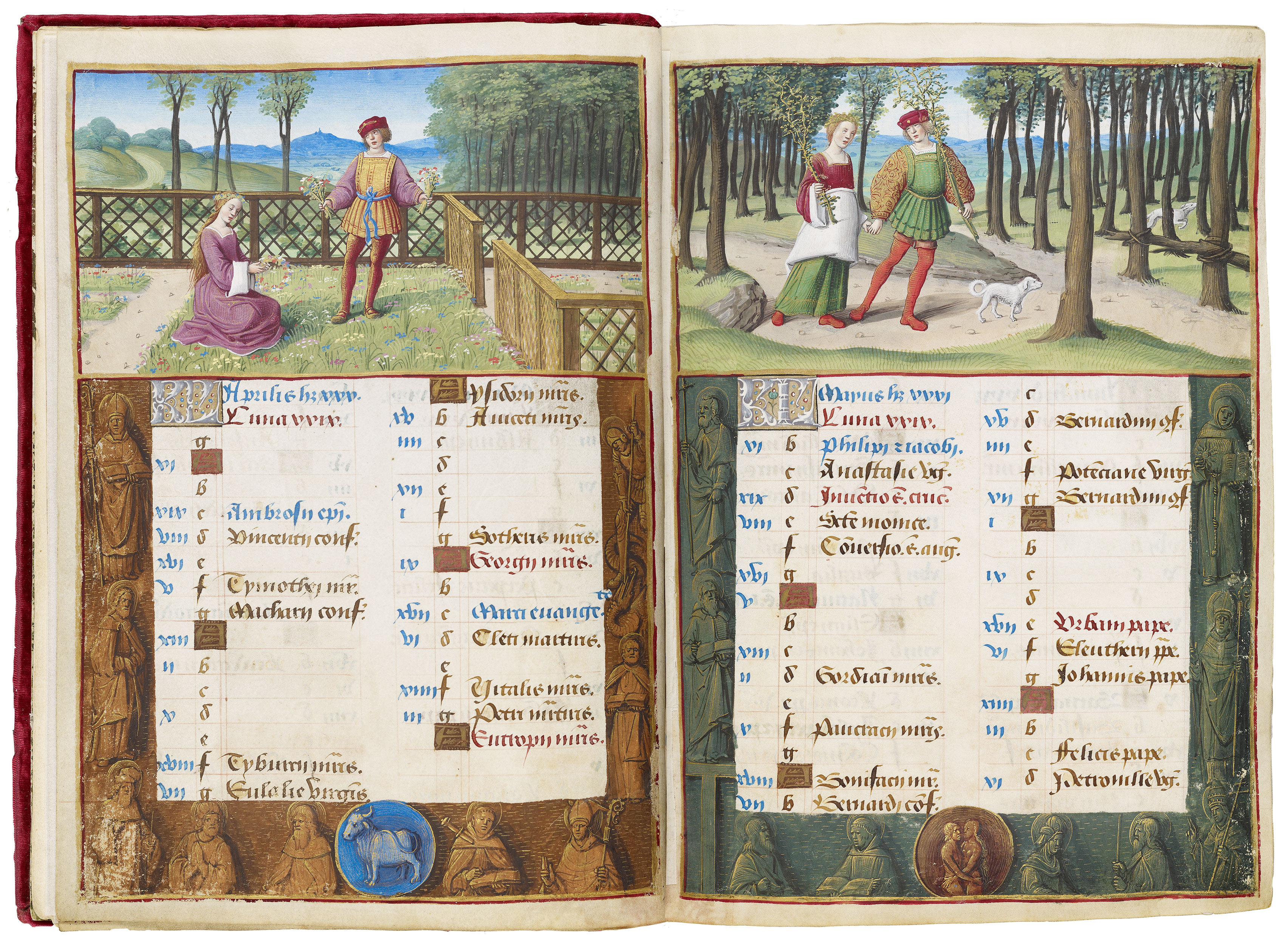
The tumbnail shows a painting by Jean Poyer, April: Picking Flowers and Making Wreaths from the book Hours of Henry VIII (around 1500)
Source: The Morgan Library & Museum, https://www.themorgan.org/collection/hours-of-henry-viii/10
The Project Gutenberg EBook of Poetics, by Aristotle This eBook is for the use of anyone anywhere at no cost and with almost no restrictions whatsoever. You may copy it, give it away or re-use it under the terms of the Project Gutenberg License included with this eBook or online at www.gutenberg.org
Comments