
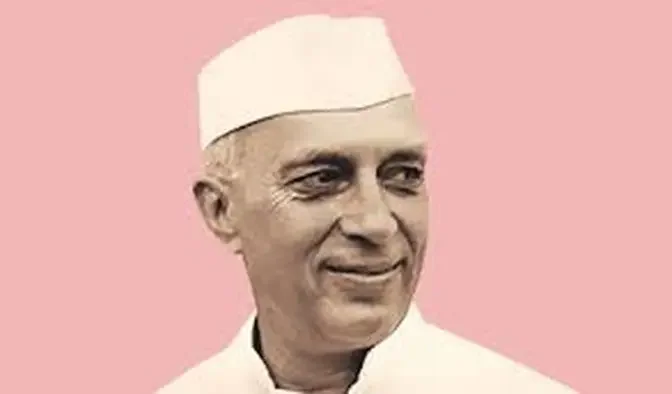

Advent of Gandhi
Meanwhile, Jawaharlal had married Kamala Kaul, the daughter of a Delhi businessman, in 1916. In November 1917 Indira, their only child, was born. Like many of his contemporaries, educated in British universities, young Nehru would have slid into the comfortable anonymity of a well-off up-country lawyer, were it not for the emergence of a new leader on the Indian scene. M. K. Gandhi had returned to his homeland in 1915 after twenty years' sojourn in South Africa, where he had led the small Indian immigrant community in its struggle against racial discrimination. In the course of this struggle, Gandhi had evolved satyagraha, a new method of rectifying injustice and resisting oppression nonviolently. Nehru first met Gandhi in 1916. He was somewhat puzzled and baffled by his political philosophy but attracted by his personality. Reports of an agrarian agitation that Gandhi led against European indigo planters in Bihar in 1917 impressed Nehru; they indicated that Gandhi possessed a keen political sense and an effective weapon of nonviolent resistance, which was a promising alternative to the armchair polemics and the sporadic acts of terrorism between which Indian politics had so far been oscillating.
Nehru's real initiation into militant politics came in the spring of 1919, when Gandhi launched a campaign against the Rowlatt Bills restricting civil liberties, one of which was passed by the Imperial Legislative Council in the teeth of the opposition of Indian members. Jawaharlal felt an irresistible call to follow Gandhi, but his father, a moderate and constitutionalist Congress leader, strongly disapproved of his twenty-nine-year-old son plunging into an unconstitutional agitation. Having failed to dissuade his son, Motilal Nehru sought Gandhi's intervention. Gandhi visited Allahabad and advised Jawaharlal to be patient. Soon afterward the British massacre in Amritsar and martial law in the Punjab alienated millions of Indians from the British Raj and brought both Nehrus, father and son, into political alignment with each other and with Gandhi. Motilal was the first front-rank leader of the Congress to cast his lot with Gandhi when the Mahatma launched a campaign of "nonviolent noncooperation" in September 1920. The call to nonviolent battle against British rule swept young Nehru off his feet. "I gave up," he was to write later in his autobiography, "all other associates and contacts, old friends, books, even newspapers, except insofar as they dealt with the work in hand. I almost forgot my family, my wife and my daughter."
In December 1921, Jawaharlal and his father were arrested and sentenced to six months' imprisonment. The noncooperation movement was fast gathering momentum when in February 1922, alarmed by a riot in a remote village in eastern India, Gandhi called it to a halt on the ground that the atmosphere in the country was not conducive to nonviolent mass civil disobedience. Not surprisingly, he was arrested soon afterward, and his campaign collapsed.
Comments