

Nation Building
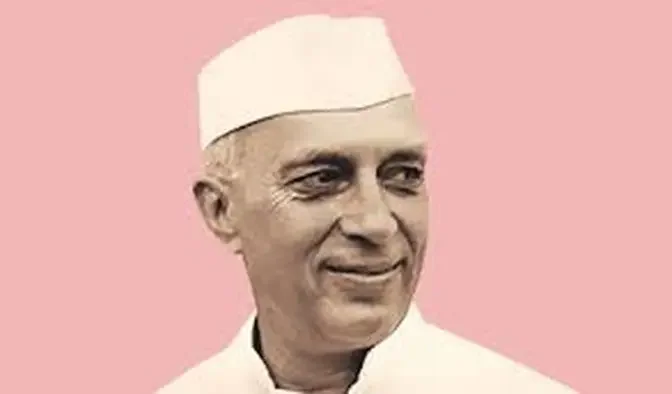
When Nehru assumed office as prime minister, he was fifty-eight. Although his entire working life had been spent in opposition to British rule—nine years actually spent in jail—he made a remarkably effortless transition from rebel to statesman. His political philosophy was eclectic. It drew upon nineteenth-century British liberalism, Fabian socialism, Marxist dialectics, Soviet economics, and Gandhian ethics. In spite of a penchant for political theory, Nehru's approach to critical issues was pragmatic. In 1949 he led India into the Commonwealth despite the long history of conflict with Britain and his own vehement opposition to dominion status twenty years earlier. Similarly, even though he had avowed his allegiance to the socialist ideal in the 1930s, he sought, after he assumed office, to reconcile socialism with economic growth and stability.
Immediately in 1947, Nehru's government was faced with formidable challenges: the restoration of order after the terrible upheaval caused by the partition of the subcontinent, the resettlement of the uprooted 5 million refugees from West Pakistan, and the rehabilitation of the transport system and the administrative machinery. The five-hundred-odd princely states, with the exception of Kashmir, were integrated into the Indian Union with remarkable speed and smoothness. Nehru took an active part in the Constituent Assembly in framing the constitution of the Indian Republic, which was inaugurated on 26 January 1950. He had to lay the foundations of a new political and economic order. He had never been a member of a legislative body, but he quickly became a great parliamentarian. Unlike many other leaders of newly liberated countries in Asia and Africa, he submitted himself to the verdict of three successive general elections, the fairness of which was never questioned. He nurtured institutions and traditions indispensable for the growth of parliamentary democracy, such as a free press, an independent judiciary, and the supremacy of the civil government.
Comments