
Why the Confederacy Lost: The Experiences of Robert E. Lee's Army of Northern Virginia
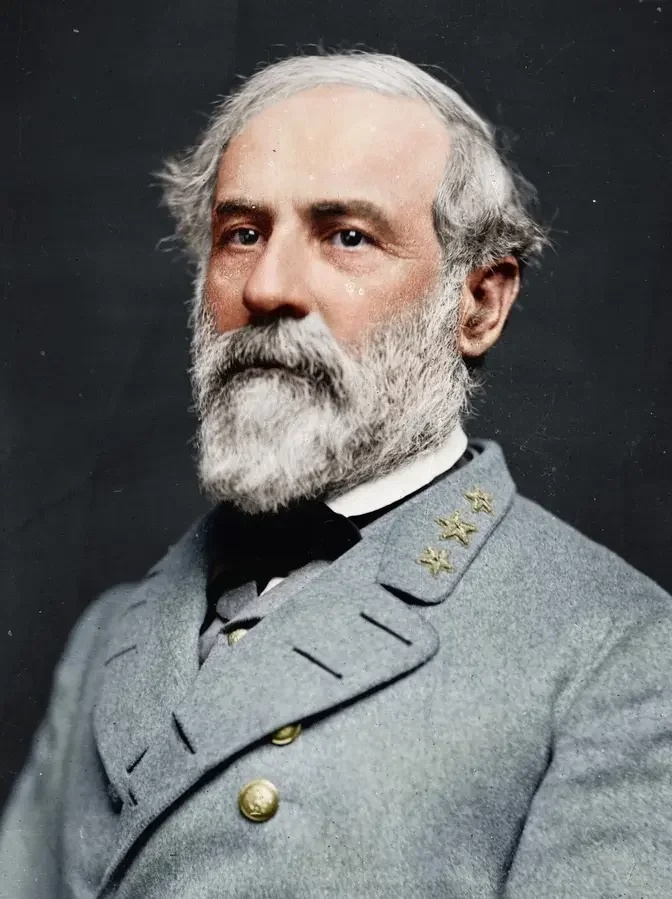
Thank you very much. I'm really delighted to be here.
Let's hope you still have that same commitment to applause when the talk's over.
When Jefferson Davis became president of the Confederate States of America,
it was apparent to him that a war was going to occur. And Davis formulated the Confederate
strategy. The strategy was simple, to punish the invaders. The objective was to discourage future
attacks, and also to convince the northern public that future attacks would be futile,
and that military efforts to reconquer the Confederate States would fail. One of the
most celebrated officers in the Confederacy, Edward Porter Alexander, explained the Confederacy
hoped, quote, that the desperation of her resistance would finally exact from her adversary
such a price in blood and treasure as to exhaust the enthusiasm of its population
for the objects of war. Davis wanted his subordinate generals to strike the enemy
as close to the borders as possible. As Davis explained to one general officer,
resist invasion as far as may be practicable, and repel the invaders whenever and however it
may be done. Because citizens and soldiers lived along avenues of invasion, Davis believed
the Confederacy could not yield territory unless it was absolutely necessary. Quote,
the evacuation of any portion of territory involves not only the loss of supplies,
but in every instance has been attended by a greater or less loss of troops, end quote.
Now, every strategy has its flaws, particularly one against an enemy that has superiority in
manpower and resources. Those nations, such as the Confederacy, with inferior resources and
manpower can compensate by developing a sound strategy and utilizing resources more efficiently.
Also, by tapping soldiers and civilians' commitment to the cause and requiring them to endure more
hardships than their enemy. But the fact remains, they have a limited margin for error.
As that margin for error is stripped away, the demands of war are cut into the sinew and bone
of the war effort, breaking down institutions and morale and inflicting ever-increasing hardship.
For the Confederate States of America, there would be enormous hardship,
sacrifices and tragedies. The war would stretch manpower and resources to the breaking point,
and they would incur heavy losses delivering powerful blows against the enemy.
Nonetheless, Davis believed the Confederate people could endure any sacrifice for freedom
and independence. We will do all that can be done by pluck and muscle, endurance and
dogged courage, dash and red-hot patriotism, Davis claimed. No Confederate army fulfilled
that strategy like the Army of Northern Virginia. Yet even it wore down in the face of two,
then three, and finally four years of fighting against those overwhelming odds.
The margin for error dwindled and ultimately disintegrated. Fissures appeared in every
institution and every facet of life, including the Army of Northern Virginia. And despite its
efforts, it too was ultimately overcome. Now the Army of Northern Virginia had to utilize manpower
and resources effectively, but the two early commanders, Pierre Gustave Toutant Beauregard
and Joseph E. Johnston, established ineffective precedents and policies. Three times those
officers abandoned positions, one at Harper's Ferry, another in Northern Virginia, and a third
at the Manassas-Centerville Axis. The result was massive destruction that not only affected
the Confederacy's ability to prosecute the war, after all the resources were precious,
but it also sent the wrong message to troops. The destruction helped establish aspects of the
military culture that encouraged indiscipline in the ranks and that paid little credence to
the preservation of valuable resources, which in turn reduced the Confederate margin for error.
Now every organization has a culture and the Army of Northern Virginia was no different.
Army culture derives from two areas, elements that individuals bring into the military from
civil life and military experiences and training. Normally, boot camp tears down and rebuilds so
that the military culture flows from the top down, but with no such experience and because
officers largely came from home, were learning on the job and failed to rigorously discipline their
men, the culture tended to flow from the bottom up. At the core, virtually all these citizen soldiers
share the same fundamental beliefs in the rightness of secession and slavery. From society,
they inherited Southern honor, an overarching concept that embraced powerful perceptions of
manhood, integrity, independence, valor, kinship, and esteem, and among the elite,
both luxury and generosity. In times of war, a wholehearted allegiance to the spirit of honor
would serve its soldiers well, but Southern society also promoted certain qualities that
did not benefit the Confederate nation in a war against the better resourced Union.
A lack of discipline and particularly among the well-to-do, a spirit of profligacy and
self-indulgence were acceptable modes of conduct before the war. Closely related to one another,
these three behaviors elevated the individual over the group and tolerated conduct in uniform that
was not conducive to effective military service. More than simply a spirit of individualism,
which the army could harness and convert to military purposes, these qualities diminished
the usefulness of the soldier. In the pre-war South, an individual who squandered money recklessly
was not necessarily scorned. In some circles, he earned praise by distinguishing himself
from his penurious, materialistic Northern countrymen.
Southerners, particularly males, aspired to fulfill their every impulse and desire,
and society tolerated and often encouraged such indulgence. Attention to administrative detail
and other mundane matters were beneath many of them. Undisciplined conduct and open expression
of passion or a ready resort to violence was not necessarily considered unbecoming in the pre-war
South. After all, to adhere to a code of discipline meant that others imposed their will
on the individual. Such dominance of the individual smacked of slavery, and Southern whites were
extremely sensitive to it. Even in the realm of laws and codes of moral conduct, Southern males
abided by them voluntarily, not out of compunction. If society compelled them to obey,
then it dominated the individual and deprived him of his manhood, and no self-respecting white
Southerner could endure that. These qualities made them wonderful, motivated soldiers, but they also
promoted their resistance to discipline, which in turn was the key to effective utilization
of limited resources. Now at the Battle of Seven Pines on May 31st, 1862, Joseph E. Johnston was
badly wounded, and Jefferson Davis assigned Robert E. Lee quote-unquote temporarily to be
commander of that army. When Lee stepped into that position, he confronted two huge problems. One,
the obvious one, Union forces were literally at the gates of Richmond. They were three miles
outside of Richmond. And the second one was that there were administrative and disciplined
problems in the army. Staff officers practiced sloppy paperwork procedures, and soldiers failed
to conserve, and as a result, troops went without and suffered. I remember one instance where troops
literally outside of Richmond had to trap rats, soak them in water overnight, and then fry them
for food. That doesn't appeal to me, perhaps your dietary practices or otherwise. And of course,
these practices also encouraged undisciplined behavior because soldiers coming from American
society were problem solvers. If they didn't get fed by the army, they were going to solve the
problem themselves, which means that they were going to take from civilians. Now, when Lee
stepped in, he had a great reputation. Of course, you probably know this. Lee graduated second in
his class at the United States Military Academy. He graduated without receiving any demerits. He
was one of several of his class who did so. And of course, he emerged from the Mexican War,
as Tim Johnson will say, as Winfield Scott's favorite. Winfield Scott said in testimony
that he thought Robert E. Lee was the finest soldier in the U.S. Army. Yet within certain
circles, there was an undercurrent of doubt about Lee. By May 1861, after exposure to Lee over the
six previous years, Edmund Kirby Smith had come to the conclusion that Lee lacked ability for
large-scale command, describing his selection to head Virginia forces as, quote, unfortunate,
unquote. Smith, like numerous others, was put off by Lee's slowness to come to a decision.
Sam Melton, who served on Brigadier General Milligel Bonham's staff and had a very favorable
opinion of Lee, I might add, informed his wife in May 1861 that Lee, quote, is a splendid officer,
slow to slow, but thoroughly accomplished, end quote. In a letter that has become almost famous
for its misreading of the man, South Carolina Governor Francis W. Pickens announced to Bonham
just before the Battle of First Manassas, quote, the truth is Lee is not with us at heart, or he
is a common man with good looks and too cautious for practical revolution, end quote. Be careful
what you write, because it may be saved and you'll look like an idiot. I mean, this will go,
this is really the most representative document we have of Francis W. Pickens. I'm sure he did
other things, some things right. In this instance, he sort of missed. Even Lee's trusted staff member,
Walter H. Taylor, complained to his future bride late in the war about Lee's slowness.
He is too undecided, Taylor grumbled, takes too long to firm his conclusions.
After the first campaign, a failure amid the rugged terrain of Western Virginia,
Lee's reputation plummeted even more. Fueled by excessively optimistic tales in the newspapers,
as the campaign was unfolding, soldiers and civilians alike reacted to the results of the
The newspapers and the public howled over Lee's incompetence. Edward A. Pollard,
a Richmond newspaperman and sharp critic of the Davis administration, determined, quote,
the most remarkable circumstance of this campaign was that it was conducted by a general who had
never fought a battle, who had a pious horror of guerrillas, and whose extreme tenderness of blood
induced him to depend exclusively upon the resources of strategy to essay the achievement
of victories without the cost of life, end quote. A student at West Point when Lee was
superintendent there, Ben Alston reported to his father that people called Lee a dirt dauber,
a small insect that leaves a soiled trail in its wake. Alexander C. Haskell, a family friend of
Lee's, described to his mother a satirical sketch he had seen of Lee, quote, with a double barrel
spyglass in one hand and a spade in the other, reconnoitering the position of the enemy.
The caption of the of the cartoon read, quote, to retreat a little and throw up fortifications
the instant he sets eyes upon them. Excuse me. Haskell believed this is unjust to a fine officer,
but it does somewhat exhibit his very cautious policy. To remove Lee from the Richmond spotlight,
Davis sent him to the Department of South Carolina, Georgia, and Florida to oversee defenses there,
a job hardly worth the third highest ranking officer in the Confederate Army. As the spring
of 1862 approached, however, Davis brought Lee back to Richmond to help him. The reaction remained
hostile. The appointment of General Lee as chief military advisor of the president looks like a
fatal mistake, a member of Johnson's staff wrote his wife. Lee's, quote, traits of mind, unquote,
would prove more problematic than they were the previous year, he predicted, and then he concluded
with the words, may God in mercy protect us. Catherine Edmonston, a North Carolinian and an
unusually perceptive diarist, held nothing but contempt for Lee. He is too timid, believes too
much in masterly inactivity, finds his strength too much in sitting still. Even Lee's counterpart
on the Union side, Major General George B. McClellan, rejoiced when he thought that Lee
in his new position would replace Johnston as the field commander. I prefer Lee to Johnston,
he elaborated to Lincoln. The former is too cautious and weak under grave responsibility.
Personally brave and energetic to a fault, he yet is wanting in moral firmness when pressed
by heavy responsibility and is likely to be timid and irresolute in action, end quote.
We would call that projection.
That's exactly the way McClellan was, to a T.
Yet in his job as commander of the Virginia forces and then as military advisor to the
president, Lee gained great insight into the Confederacy's capacity to make war.
He fully understood that the Confederacy had a limited margin for error. The Confederate people,
Lee insisted, must make up our minds to great suffering. He then concluded,
all must be sacrificed to the country. As army commander, Lee began immediately to institute
changes. One of the first things he did in Special Orders number 22, June 1st, 1862,
he referred to it as the Army of Northern Virginia. Other people had called it that at times,
but the name never stuck. And once Lee did, and he announced that his headquarters was part of the
Department of Northern Virginia, then the name Army of Northern Virginia became fixed with Lee
and that body of soldiers. He established and enforced routines for the distribution of
provisions and required division commanders to scrutinize requisitions of subordinates.
As I mentioned, Johnson's staff was pretty inept at administering and the neglect and paperwork
meant that soldiers didn't get provided for with supplies. Lee circulated directives to all
officers to pay attention to the, quote, health and comfort of the men under command and spare
unnecessary exposure and fatigue so that everyone was ready for battle. In one of Richard's favorite
moments, Lee even authorized the distribution of whiskey rations at the discretion of officers,
quote, when deemed essential to the health of the men from inclemency and weather or exposure in the
swamps. I'm sure many college students wouldn't mind serving Lee's army for a day. Lee cracked
down on lost or damaged supplies, which hindered the war effort severely. Quote, the increasing
difficulty in replacing them, he directed, makes greater watchfulness and care necessary in their
preservation. One week later, he complained, quote, the means of supply are becoming more
limited while the demand continues great, end quote. On his daily rides, Lee, quote, observed
with concern in passing through camps too much disregard to the proper preservation of public
property. Be careful to use those kinds of P words in public addresses. It's really easy to stumble
over the words. He was firmly convinced that our success is mainly dependent upon the economical
and proper appropriation of public property at all times, end quote. Compared to their Northern
enemy, Confederates had a very little margin for error and to win, they must husband those resources.
Lee then gathered intelligence from the enemy, from newspapers, and he sent Jeb Stewart on a
cavalry ride around the Union position. He directed his sharpshooters and artillerists to pester the
enemy as much as possible so they couldn't build works. Meanwhile, he was employing his own troops
at building works, yet here he was challenging a naive cultural perspective on warfare.
Soldiers thought they would just slug it out in the open field against the Yankees and rely on
their superior character and martial skills to win the day. It never crossed their minds that they
would have to wield axes and shovels. That was work for slaves. Our people are opposed to work,
Lee alerted Davis. Our troops, officers, community, and press all ridicule and resist it.
Yet he went on to explain that it was the very means by which McClellan was closing in on
Richmond. Why should we leave to him the whole advantage of laborers combined with valor,
fortitude, and boldness of which we have no fair proportion? It should lead us to success.
After describing how the Romans combined fortifications and fighting so skillfully,
Lee then concluded, quote, there is nothing so military as labor and nothing so important to our
army as to save the lives of its soldiers, end quote. Three days into his command, he ordered
each division to assign 300 men to work under supervision of engineer officers to dig fortifications.
Soldiers resented the labor. Lee didn't care. Trenches and works would save rebel lives and
multiply combat power. He also ordered men to, quote, strengthen their positions in the most
perfect manner with redoubts, barricades, abatis, rifle pits, et cetera, so that everyone has a hand
in the manual labor. They finally entered combat and fight they did, winning the seven days battles
in June and early July and then taking the war into northern Virginia and winning the second
Manassas campaign, literally driving the Yankees out of almost every ounce of Virginia soil and
then taking the war into Maryland. But after three months of fighting, Lee knew that he had serious
discipline problems. Lee believed, quote, the material of which it is composed is the best in
the world and nothing can surpass the gallantry and intelligence of the main body, end quote.
Soldiers brought with them from civil life qualities and motivations that made Confederate
soldiers, in Lee's opinion, the best infantrymen in the world. But other aspects injured their cause
in other ways. Had the Confederacy organized units differently, Lee believed. Had they not
been introduced prematurely into combat without adequate training and regimentation? Had they not
endured a series of harsh conditions, hard marches, and frequent campaigns and battles?
Lee felt they might have been able to alter military culture, but the demands of war permitted
no such opportunity. By the time Lee was in a position to implement any changes, he encountered
three difficulties. First, military culture had already taken hold and it would be extremely
difficult to break. Two, the officers upon whom he would have to rely to alter that military culture
came from the same communities and, to a great extent, the same backgrounds as their enlisted
men. Those officers shared the same values in civil life and brought them into the army. And
third, new recruits and furloughed troops revived that sentiment by coming from civil life back
into the army and so they left steady reminders of what that culture everyone left behind was
all about. That, however, didn't stop Lee from trying. After Antietam in September 1862,
he directed his subordinates to, quote, infuse a different spirit among our officers and to
inspire them in making every necessary effort to bring about a better state of discipline.
They must impress men and officers with the importance of a change necessary to the
preservation of this army and its successful accomplishment of its mission, as its better
discipline, greater mobility, and higher inspirations must counterbalance the many
advantages over us, both in numbers and material, which the enemy possess, end quote. But those who
were expected to inculcate discipline, the officer corps had suffered very heavy losses.
Over the entire war, almost a quarter of all officers in Lee's army were killed in action,
and one of every two officers was either killed in action or was wounded in action,
and wounded at least once, many multiple times. Officers were more than twice as likely to be
killed in battle than were enlisted men and more than one and a half times as likely to be wounded
in battle. From the seven days through Antietam, that's the late June to mid to late September,
600 officers were killed and 2,000 officers were wounded. From Antietam through the summer of 1864,
another 1,000 officers were killed and 4,000 officers were wounded. So from the day Lee took
command until mid-1864, 1,600 officers were killed in action, and over 6,000 were wounded
in action. The Confederacy, of course, had a finite number of quality officers, and the staggering
number impaired its ability to train and discipline the troops. What our officers
most lack is the pains and labor of inculcating discipline, Lee complained to Davis in mid-1864.
It's a painful and tedious process and is not apt to win favor. Lee believed his enlisted men
lacked discipline and the officers could not instill it in them because they lacked discipline
as well. As one inspector explained to Confederate headquarters, the extensive fighting stripped away
the best and most efficient men in each command, and in too many companies there is not material
left out of which to make company command, end quote. Yet there was little the Confederacy could
do. If there was any consolation, at least these replacements were, as Major General George Pickett
argued, quote, gallant and meritorious in action, end quote, and the soldiers trusted them to lead
them in battle. Even worse, supply and transportation problems became so severe that soldiers had to
take matters into their own hands. Young people, as we know, can eat staggering quantities of food,
and quality is not always a priority, but these soldiers did not know how to cook and were
unaccustomed to such bad food. A Georgia private grumbled of eating biscuits so hard, quote, I could
knock a bull down with one, end quote. I like this guy. The soldier has a perfect name. His name is
Bacon, and he's trying to bake bread. The first time I made up dough, I had a mess of it. Stuck to my
hands, I can just envision him trying to swing his hand to get it off. Stuck to my hands, and I could
hardly get it off. Then I tried to bake it, but I could not get it done. Some was burnt up, and some
was raw. What a mess I had. My favorite story, though, of soldiers who stole what they thought
was a tub of lard, but in fact it was actually tallow for candles, and they baked the biscuits,
and somebody came by and said, that wasn't lard, that's tallow. One of the guys in the mess decided
to try the biscuits out anyway, and he pronounced them good and tried to convince his fellow
soldiers to eat them, but they wouldn't have any of it. That was early in the war. Then shortages
kicked in. In an average year before the war, 800,000 to one million bushels of wheat were
shipped into Richmond. In 1862, even though the city's population had doubled, and on top of that
you had the army ranging in between 70 and 80,000 men, only 250,000 to 300,000 bushels of wheat
arrived. By mid-January 1863, the army supply of cattle had dwindled down to enough to last
through the end of the month only, and those that they had had become skinny as a result of the
winter. Regarding the other meat, pork, the standard joke in the army was that the bacon
outranks General Lee. In late April and early May 1863, rations for a single day had to be
stretched out over three. By early January 1864, Davis admitted that the army issued one quarter
of a pound of meat per man per day, and Lee only had one more day's issue on hand. Can you imagine
trying to run an army when you only have food enough for the next day? It's incredible.
When the Yankees quipped that the Confederates had a new general, General Starvation, they weren't
very far off the mark. That was supposed to be funny. You guys gotta lighten up here, people. I
know this is a tough subject for many of you Southerners, but you gotta lighten up here.
With shortages, soldiers took matters into their own hands. On the march or in camp,
troops regularly purchased and then later on swiped food from locals. By late 1863,
though, there was nothing left to swipe. Instead, they turned on their government.
As an Alabama private asserted, hunger will drive a man to anything you may depend.
The Confederate government admitted that in 1863 alone, 617,000 pounds of bacon
alone were stolen. The commissary of subsistence in January 1864 confessed, quote,
every shipment of meat is robbed of from 8 to 1,500 pounds, end quote. To combat the practice,
the Confederacy had to place guards on all the trains with orders to shoot people on the spot.
Lee tried to solve the food problem. As a solution, and get a load of this is quite
a revolutionary proposal, Lee suggested an alteration of priorities and civilian consumption
habits. Soldiers in the field should become the nation's top priority. Quote, if it requires all
the meat in the country to support the army, it should be had. And I believe this could be
accomplished by not only showing its necessity, but that all equally contributed. If the government
could convince the public to consume foodstuffs that, quote, cannot be so well used by the troops
in the field, end quote, it would save other eatables for his men. That's pretty revolutionary,
calling for a change in consumption practices. Clothing. Clothing, of course, is a big problem
in the army. Many of the guys came in with their Sunday best and they quickly wore out.
One soldier grumbled about his pants that were, quote, more holy than righteous, end quote. And,
of course, soldiers had shortages of coats, hats, pants, etc. But shoes were the single biggest
problem. Replacement items were often poor in quality. For example, in one shipment, Lee's
army got 10,000 pairs of shoes and over 3,000 of them were absolutely unusable and had to be sent
back. Lee's solution to the problem, he located 271 pre-war shoemakers in his ranks and pulled
them out of the ranks and made them make shoes during all the months when they weren't in active
duty. That was not enough. Soldiers accustomed to solving problems themselves took matters into
their own hands. Early on, they had plundered on the battlefields for money and valuables,
weapons and mementos. By late 1862, they had no choice but to plunder for food and clothing.
As the cold weather approached once again, soldiers hoped for a battle so that they could
clothe themselves properly that winter. The majority of the troops are eager for a fight,
one officer wrote his father. The battlefield is the greatest storehouse of winter equipment
and pocket money and our boys have a penchant for both, end quote. A Virginia private concurred,
semi-literate, I have rather been in hopes that if they were going to fight at all,
that it would come off for I want some overcoat and blankets. If our men whipped them, I would
stand a good chance to get some, he explained. So what they needed to do was defeat the Union
and control the battlefield so they could strip the Union soldiers of the clothing so they'd have
clothing and blankets for the winter. Of course, if soldiers aren't being fed poorly, you can
imagine how badly the animals were being fed. The artillery by spring of 1862 was already short
1,200 horses. If they had them, they probably couldn't have fed them though. By early 1863,
Lee directed subordinates to feed their animals on twigs and bark from poplars, maples and sweetgums.
In the latter part of 1863, Lee had to reduce the number of guns in his artillery because he
could not feed the animals. In November 1863, he complained to Davis, quote, no corn was received
here on the 21st and 23rd and on the 22nd and 24th about five pounds per horse. That averages,
of course, two and a half pounds per animal per day. The Union fed its animals between 23 and 26
pounds per day. In the course of one 40-day period without any campaigning, a cavalry brigade
increased its dismounted men from 292 to 681 due to food shortfalls. Prior to secession, the southern
states had developed a transportation network that serviced distant markets, predominantly with
non-perishable goods such as cotton, tobacco and sugar. With few exceptions, most perishable
products came locally. By the winter of 1862-63, the Confederacy had so overused its rail system
in Virginia that it was becoming increasingly unreliable. At the time, Lee's army was was
occupying a position on the southern bank of the Rappahannock River near Fredericksburg.
The Richmond, Fredericksburg and Potomac Railroad ran there, but it was not designed to carry freight,
just passengers. That left the Virginia Central, probably the most important railroad in the state,
as the only viable alternative. Now the Virginia Central intersected with Richmond, Fredericksburg
and the Potomac at Hanover Junction, and from there it went all the way up into the Shenandoah
Valley, which of course is the richest region for food production in the state. Workers could then
unload supplies at Hanover Junction, put them on wagons and cover the 35 miles to the army.
But of course that became more problematic in the wintertime when the roads converted into mud.
Even worse, it resulted in a bad overuse of the Virginia Central Railroad.
Its tracks had declined significantly in just two years of war. Due to the overuse and a lack of
repairs, its quote, efficiency is most seriously impaired, end quote, so the railroad president
informed Davis. In mid-March 1863, the line suffered four derailments in a five-day period.
To reduce derailments, the Confederacy had to cut the weight in each car by 25 percent
and then slow down the speed of the train. Lee's solution? By early 1864, Lee sought the suspension
of all rail travel except on government business, with the space designated for use in supplying the
army. In addition, quote, and this is pretty revolutionary, all the population whose presence
would impede or endanger our efforts should be removed, especially that part of it which
increases the consumption of public stores without aiding or strengthening the army.
He wants to depopulate Richmond. Fewer mouths, food goes farther. He wanted prisoners, parolees,
federal deserters and unemployed persons removed from the city and quote, every encouragement given
to the rest of the non-combatant population to retire except those whose services may be useful
or who will not increase the scarcity of supplies, end quote. If the individual didn't contribute
directly to the war effort through military or government service, production, direct labor or
transportation, the government needed to urge them to leave the Richmond area to conserve supplies
for the troops. As the Confederate margin for error winnowed in the area of supply and
transportation, it declined in manpower as well. Effective implementation of Davis' strategy was
extremely costly. Four of every ten soldiers in Lee's army was either killed or wounded,
and five of every nine soldiers who ever served in Lee's army was either killed,
wounded or captured once prior to the surrender at Appomattox. One in 16 suffered multiple wounds
and another one in ten were wounded and also captured. By factoring in those who died of
disease and accidents or who were discharged for disabilities, almost three of every four soldiers
who ever served in the Army of Northern Virginia were either killed, died of disease, were wounded
at least once, were captured at least once or were discharged for a disability. That's
unbelievable. When you factor out those who deserted the army permanently, the percentage
of casualties rises to 80%. Not only did these terrible losses damage the army, but they also
hurt morale. Even in the face of resounding triumphs, casualties cut to the core of wartime
support. Let me give you a great example, the state of North Carolina, which narrowly embraced
secession. What fueled the fires of disaffection more than anything in North Carolina were the
tremendous casualties among North Carolinians in Lee's army. Now listen to these statistics
because they're unbelievable. Behind the provost state of Virginia, North Carolina sent the most
troops to Lee's army in the spring of 1863. At Chancellorsville, three of every ten North
Carolinians in Lee's army was killed, wounded, or captured. That was by far the greatest total
and the greatest percentage of any state in Lee's army. The seven highest totals of killed and
wounded fell to North Carolina regiments. Two months later at Gettysburg, after the army had
received two huge brigades of North Carolinians, 46.4% of all North Carolinians were killed,
wounded, or captured. That's almost half. The top four regimental casualty figures and six of the
seven highest occurred in North Carolina regiments at Gettysburg. North Carolina lost 1,782 more men
than the next highest state, Virginia. That 1,782 amounted to more casualties than eight
Confederate states suffered in the Battle of Gettysburg. Then to worsen the discrepancy, at
the Battle of Bristow Station in October 1863, almost every single casualty in the battle was a
North Carolinian. Again, another 10% of all North Carolinians in Lee's army. So while it's difficult
to ascertain with precision, a reasonable calculation over a five and a half month period
indicates that seven of every ten North Carolinians in Lee's army was either killed,
wounded, or captured in that period. The impact of those losses in the most successful and visible
Confederate field command, the Army of Northern Virginia, on the North Carolina home front was
devastating and coincided precisely with the rising disaffection in that state. To compensate
for productivity decline associated with manpower loss to the army, Confederates relied on blacks
who proved increasingly undependable as the war went on. More and more they slowed down work,
ran off to the Yankees, and caused general uneasiness among the population that remained
at home. The situation was so severe that by 1864, the former governor of Virginia,
General Henry Wise, told a family friend that, quote, slavery is a dead issue here in Virginia,
end quote, regardless of who won the Civil War. In other words, even if the Confederacy won,
you could never maintain slavery in Virginia again. Attrition wore down Confederates as Lee
tried desperately to increase manpower. He notified the Secretary of War in January 1863
that they needed every man, and he asked the Secretary to call on governors to appeal to
their constituents to fill the ranks, using, quote, shame against those who will not heed
the dictates of honor and of patriotism, end quote. In one instance, Lee found himself under arrest.
Most of you didn't know that Robert E. Lee had an order issued for his arrest. What happened
was the Secretary of War ordered two privates to come to Richmond to act as clerks, and Lee didn't
know who issued the order, but immediately overturned the order and directed the guys
to go back and be rifle toters again. When the Secretary of War found out, he ordered Lee to be
arrested. That's kind of a funny concept, imagine Lee under arrest. Of course, Lee explained the
situation, and guess what? The Secretary of War rescinded his order, the men stayed as rifle toters.
So Lee even won the battle. The grind of the 1864 campaign took its toll on Lee's army.
After two weeks of fighting in May 1864, Lee had six generals killed, nine generals wounded, and
three generals captured. By the end of May, one Corps commander, Longstreet, was wounded. James
Longstreet, that is. Another Corps commander, Richard Ewell, had collapsed from exhaustion.
A third Corps commander, A.P. Hill, had a flare-up of his old illness, prostatitis, as a result of a
youthful indiscretion. And then Stuart, of course, his cavalry commander, was killed. Lee suffered
from dysentery, and wait till you get this. When I found this out, I found this in the Army Medical
Director's report. Lee did not get more than two consecutive hours of sleep for a three-week period.
Now, Lee is 59 years of age, or was he born 1850? Yeah, he's about 56 years of age.
That's not very much sleep. And of course, he's sleeping on a rack, and if you've ever
seen it, the Museum of the Confederacy has Lee's cot. It's more like a torture rack.
By early June 1864, the campaign locked into trench warfare with all the harsh conditions
that entailed. From September 1862 through July 1864, the hospitals in Virginia had admitted
almost 413,000 soldiers as patients due to illness or injury. During the three months of May, June,
and July 1864, those hospitals admitted 102,000 soldiers alone. Now, even if every soldier was
transferred from one hospital to a second one, that means 51,000 soldiers in a three-month period
were sent to the hospital. That's incredible, isn't it? Nor could Lee effectively replace those
who went down. He had squeezed everyone he could in uniform back into the ranks, and conscription
had augmented his numbers too. As the army passed by communities, his corps commanders had orders
to conscript any male who appeared physically able. Incidentally, and by the late stages of
the war, I would say one in every eight soldiers in Lee's army was a conscript. But I want to
mention this because this plays into the 15th Slave Law. In Virginia, only 2% of all exemptions
from conscription were given to people under the 15th Slave Law. To put it in context,
four times as many farmers, railroad workers, and millers received exemptions. Five times as
many shoemakers and government officials received exemptions. Even doctors and clergymen received
twice as many exemptions as slaveholders under the 15th Slave Law. By the end of 1864,
the Bureau of Conscription decreed that there were no more conscripts to tap except 16-year-olds
who were coming of age in the next year. In Virginia, that amounted to the precise number
of 2,719. In fact, the Confederacy just doesn't have the manpower anymore. The strain of war
proved almost unbearable. One brigade of 1,187 privates, for example, had to defend 2,401 yards
of works and 2,300 yards of picket area every day. The Union was able to rotate troops from
the trenches back. The Confederacy didn't have that luxury. By 1864, food for man and beast
became more and more scarce. Combat had discouraged farmers from planting in the
Shenandoah Valley as far south as Bunker Hill, and a drought had devastated the corn crop between
Stanton and Newmarket, reducing corn production to one-third its usual harvest. Animals got between
two and a half and five pounds of feed per day, and it was no better for humans. In one instance,
Cavalry Commander Wade Hampton seized 2,500 head of cattle from the Federals. That gave the
Confederate Army enough meat for a month, but other than that, as the winter came on, the
situation proved bleak. Soldiers seldom received more than a pound of cornmeal and a quarter pound
of beef per day. By 1865, the commissary could not sustain even that meager bounty. Often,
one quarter pound of beef and either a pound of bread or three quarters pound of cornmeal per day
was issued. That equaled 900 to 1,200 calories per day. The U.S. Army feeds its soldiers in the
combat environment 4,000 calories a day, because that's what the Army feels is essential to
maintain muscle mass and body weight, not put on weight, just to maintain existing weight. These
guys are living on 900 to 1,200 calories a day. That's like two hours at the local pub for most
undergraduate students. Many days, the government could supply troops with either meat or the starch,
but not both. The government diverted corn intended to go to horses for their soldiers.
The corn contained dried leaves and stalks from the corn plant, roughage that the animals
would find nutritious, but of course the soldiers found it unpalatable. Supplies from everywhere
came at a glacial pace. Lee had to draw supplies from as far away as Georgia, taxing the rail lines
even more. One line was so bad, the trains averaged one mile per hour. Once Sherman began
his advance through Georgia and then South Carolina, he cut off those areas from food access,
and so Lee's area from which he could draw on was shrinking more and more. But it was not until
the combination of Lincoln's re-election and Sherman's march that desertion began to truly soar.
In 1865, it got worse and worse. Little clothing, little food, too little rest, and too much work
sapped soldiers of their motivation to fight. Good soldiers, tried soldiers, began to lose faith in
desertion. Men who had fought well in literally dozens of battles. Those final weeks were awful
for men in Lee's army. Over the course of February and March, Lee's army lost on average about 120
men to desertion every day. That's comparable to an infantry brigade present for duty every 10 days
just to desertion. Others held on. On the retreat from the Richmond-Petersburg line westward,
their physical deterioration from poor condition prevented thousands from keeping up.
Unlike previous campaigns where soldiers purposely straggled, many just could not stay up on the
march. For months, Lee's army lived on a diet that lacked half the necessary protein to maintain
muscle mass and provided less than two-thirds the necessary calories to sustain body mass.
The diet, by this point largely down to a quarter pound of beef and two pints of cornmeal
and occasional small amounts of molasses, was woefully deficient in most vitamins,
resulting in weakness and absorption problems of protein, minerals, and vitamins. With soldiers
suffering skin ailments, night blindness, anemia, scurvy, and diarrhea. In other words, they weren't
taking in enough good nutrition to break down the food that they were actually eating.
In a telling assessment, Dr. J.W. Powell, medical director for the Third Corps, commented
on the Corps inspection report in February, quote, while there was not much, well, I'm sorry,
while there was not found much absolute sickness existing, there were many weak and feeble men
who cannot be relied upon to undergo any great physical exertions, end quote. Although Lee once
more called for discipline and reminded them of patriotism, he could get nothing more from many
of his troops. Pressed by Federals, Lee had to push his men hard on the retreat. Thousands dropped
out of the march, some falling into Yankee hands, others slowly working their way home because they
lacked the stamina to keep up. For four long years, this Army had battled overwhelming Federal
manpower and resources brilliantly. Close to 30,000 of them fell in combat and more than 125,000
suffered wounds, but punished the Yankees they did. Lee's Army inflicted 45% of all the Union
soldiers killed and 45% of all the Union soldiers wounded in the entire war. In the last year of the
despite the decline in Lee's Army, Grant's forces sustained some 127,000 casualties.
That's almost as many casualties as the Army of Northern Virginia suffered for four years of war.
In General Order number nine, a farewell to his troops, Lee stated that they had been, quote,
compelled to yield to overwhelming numbers and resources, end quote. To President Davis 10 years
later, he told something different. He blamed the, quote, moral condition of the Army for defeat.
Quote, the operations which occurred while the troops were in the entrenchments in front of
Richmond and Petersburg were not marked by the boldness and decision which formally characterized
them. Except in particular instances, they were feeble and a want of confidence seemed to possess
officers and men. This condition, I think, was produced by the state of feeling in the country
and the, excuse me, and the communications received by the men from their homes urging
their return and the abandonment of the field, end quote. Both were correct. The rebels confronted
vast Union superiority and over the course of four years of war, it wore down the Confederacy.
Ultimately, the Army of Northern Virginia did not collapse because of Southern culture,
industry, agriculture, slavery, motivations, manpower shortages, discontent at home,
or any other solitary factor. Intense and sustained Union pressure caused serious fissures in all
these areas, winnowing away that margin for error and cutting into muscle and bone,
collectively bringing down the Army and the entire Confederacy. Four long years of war
damaged or disrupted virtually every aspect of Confederate life. The demoralization to which
Lee referred was a consequence of all these problems, not a cause. Let me conclude by
telling you a little story about Private Thomas Petty, a native of Virginia and a pre-war clerk
in Washington, D.C. He lost some friends over the secession issue. He joined the Confederate Army
and in a warm July night, 1861, he was gazing up at the sky and saw a comet rocketing through the
sky. The next day he read in the new Richmond newspapers that no one had anticipated the
comet. He wondered what it meant. Perhaps it portends or foreshadows the speedy acknowledgement
of our Confederate state's independence, he pondered, and by its sudden apparition typifies
the Confederate state which has come into the host of nations like the comet blazing gloriously,
end quote. Petty was wrong about independence but correct about the comet as a metaphor.
In the grandeur of time, the Army of Northern Virginia, like the Confederate states of America,
was a short-lived shooting star. It appeared as a powerful illumination and quickly passed
into darkness. Perhaps 200,000 or more men stepped into its ranks throughout the course of the war.
Undermanned, underfed, poorly clothed, and inadequately equipped, the Army of Northern
Virginia kept a significantly larger and better resourced Union Army at bay for almost four
years. Its success was so great that in the minds of Northerners and Southerners alike,
it came to symbolize the viability of the Confederate states. Its commander was perceived
by many as a general superior to all, including Napoleon himself. The combination of Lee and his
Army have left an indelible mark on the landscape and the psyche of the American nation far beyond
its four years. Even today, many decades after its last veteran has passed away, Lee's Army
continues to live in the imagination of the American public, not so much for what it represented,
but for what it accomplished on the field of battle under the most difficult conditions
and circumstances. Thank you very much.