
Robert E. Lee in the Military Wilderness, 1861-1862
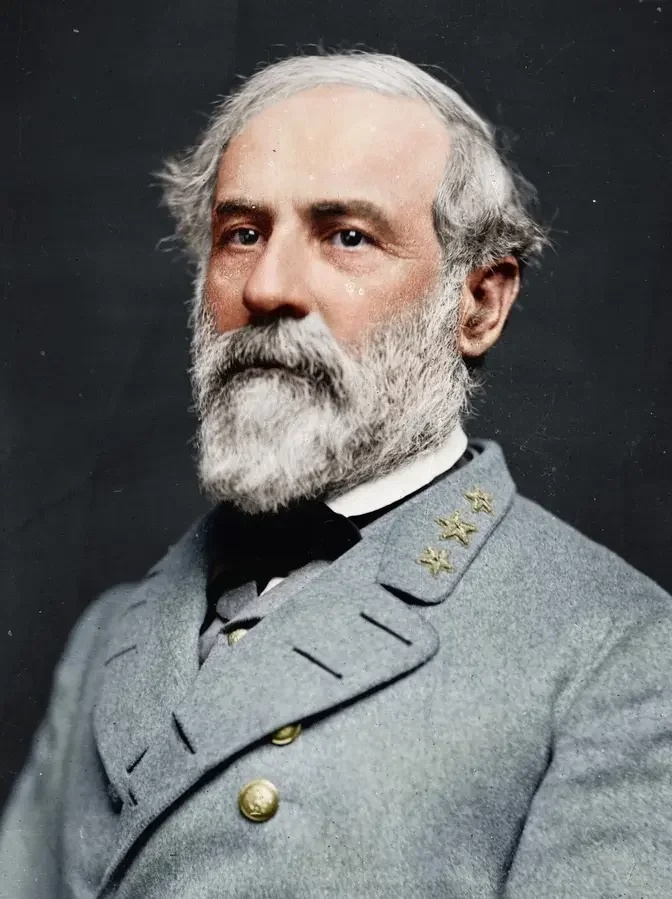
Hello everybody, Thursites the Historian here. I'd like to take a look at Robert E. Lee's
Civil War career prior to his assumption of command of the Army of Northern Virginia
on May 31st, 1862. Most of the time when you read a general account of the Civil War,
Lee doesn't really come into the picture until he takes command of the Army of Northern Virginia,
drives McClellan out of Virginia, and then goes on to become one of, if not the greatest general
in American history. But before that, there was no indication that anything like that was going
to happen. Lee, if anything, was stuck in sort of a military wilderness. And I'm kind of borrowing
this phrase from the famous phrase, political wilderness, which describes politicians who
find themselves without a home, either in disgrace or simply not really fitting in anywhere.
And I think you can sort of apply that to Lee. And of course, because I used the word wilderness,
I had to provide a picture of the Battle of the Wilderness, you know, as one does. It's a bad pun,
and those can be hard to resist sometimes. So today I'd like to take a look at Lee's career
from 1861 until 1862. So let's just dive right in and do that. As with the last video I just recorded,
right now I'm in the process of moving, so my time to record is limited, and I have a neighbor with
a very loud stereo. I don't know if that will bleed over, but if it does, just imagine that
this is a sound of battle, that there's a battle going on near me, and I'm inspired by that battle
to record and talk about the Civil War. I think that works, right? Anyway, let's take a look at
Lee's resume. He graduated from the West Point class of 1829. He was second in his class, had
no demerits, which was pretty rare, but not unknown. And his focus was on engineering,
and if I'm not mistaken, that was a very common focus for West Pointers in the first half of the
19th century. He served in the U.S. Army for 32 years prior to 1861. He designed Fort Monroe and
Fort Des Moines. Fort Monroe is actually in Virginia, and it was a crucial point for controlling
sea access to Richmond, or river access, not sea access. He was one of Winfield Scott's chief aides
in the Mexican-American War of 1846-1848, so he was well connected, and Winfield Scott had quite
a bit of respect for Lee's judgment and abilities. Lee was the superintendent of West Point from 1852
to 1855, so he would have had quite a few connections within the officer corps. Many
people on both sides would have actually had some of their education supervised by Lee. He was
second in command of the 2nd Cavalry in Texas fighting against the Apache and Comanche,
so that was his only actual field command experience, and because that experience was so
limited, that's part of why a lot of the Confederate authorities didn't take Lee all
that seriously as a potential candidate for field commands. In 1861, Lee was 54 years old,
so he would have been approximately the same age as most of the other command generals, maybe a bit
older if anything, but certainly not too old, and yet old enough to command a certain level of
respect that a younger commanding general might not receive, so pretty much in the Goldilocks zone
of age as it pertains to being a commanding general. Let's briefly review the timeline of
the session and consider where Lee fits into it all. On April 12th of 1861, the Confederates
attacked Fort Sumter. This was, of course, the beginning of active hostilities between the North
and South. On April 14th, Lincoln had given up hopes of negotiating peacefully, and he called
for an army of 75,000 volunteers to put down the rebellion. On April 18th, Winfield Scott
offered command of the field army to Robert E. Lee, since he trusted Lee and he himself was too
old to command an army at that point. On April 20th, rather than accepting command of this new
Union army, Lee decided instead to resign from the United States Army and go with his home state of
Virginia, which was seceding and in the process of joining the Confederacy. One factor that may
have played against Lee a little bit is that because he was from a state which seceded relatively
late in the game, this may have not given him a lot of stature among the early leaders of the
Confederacy led by Jefferson Davis in the Deep South, so that could be one factor that is being
overlooked a lot of times when people talk about why Lee wasn't made into a superstar from the early
part of the war. Two days after leaving the U.S. Army, Robert E. Lee arrived in Virginia, and on
April 22nd, he was greeted by Governor John Letcher, who gave him command of Virginia's military and
naval forces as a Major General, and that would be a Major General in the service of the Virginia
Militia. He had an impressive reception and an official investiture on April 23rd, and for quite
a while that would be the height of his career in the Southern service. Lee was of the belief that
the war would not be brief and would require the full utilization of Virginia's resources and manpower,
and he really tried to impress that upon Governor Letcher and others, although most of them didn't
really listen. They were still convinced that the inherent superiority of the Southern man
with his masculinity as compared to the Northern man would quickly decide the war. Lee mistrusted
the combat ability of the new recruits. He didn't really buy into the Southern spirit carrying the
day kind of thing, and he thought that he would need time to hone these men into an adequate
fighting force who had discipline and had good leadership, knew the drills, could keep their cool
under fire, and all of the other things which proved to be true and which everyone else would
realize in due time. So earlier I mentioned that Lee was now the Commander-in-Chief of the Virginia
Militia. Virginia had not officially joined the Confederacy yet, and in fact one of Lee's early
achievements was helping Virginia to join the Confederacy. So in April, he helped to negotiate an
alliance with the Confederacy, and Confederate troops from farther south actually entered into
Virginia on May 10th under the nominal authority of Lee. On May 23rd, Virginia voters ratified the
Virginian Ordinance of Secession, and they officially joined the Confederacy. On May 31st,
Jefferson Davis decided to relocate the Confederate capital to Richmond because that was what he saw
as the best location. It had the most industry and railway links in the South, and neglecting
that city as a major hub would have been a massive mistake. Lee's role was limited to really encouraging
Virginians to sign up for the Confederate service because Davis, for whatever reason, was convinced
that Lee wasn't command material, and we'll see that it takes Lee quite a long time to win Davis's
trust. On June 8th, Governor Letcher mustered all Virginia forces in the Confederate service,
so basically what Lee had been doing by encouraging Virginians to leave the Virginia service and join
the Confederate service ended up being somewhat moot because then the governor just put them all in
Confederate service anyway. So you can imagine, Lee feels like maybe he's not being all that well
utilized, and these feelings will only intensify over time. By this time, when Virginia joined the
Confederacy, Lee received a new commission as a Brigadier General in the Confederate service,
and at the time, although Brigadier General is only one star, that was the highest rank in the South
for whatever reason for several months. The North, by contrast, would prefer to have most of their
division commanders and up be two-star generals, major generals, and then they would have seniority
based on their date of commission until Grant became Commander-in-Chief later on and received
his third star to become a Lieutenant General. The Confederacy, of course, would later then go to the
full four-star system, but for whatever reason, for several months, they had all their senior people at
one star. At any rate, Lee now suffered something of a personal loss and something that no doubt
would have caused him quite a bit of personal anxiety. So he had a massive estate at Arlington,
and this was just south of Washington, D.C., and the Federal troops, not surprisingly, took it.
Lee was a traitor in their eyes, and he had an estate nearby, not to mention that the Federal
Army was eager to get a foothold in Virginia, and Arlington was right there, so it's pretty
obvious that Arlington was going to be in danger. Lee's sickly wife, Mary, who he was always worried
about throughout the war, was now in Union hands for a little while. Why he didn't take her south
with him, I don't know. I feel like that was a fairly major oversight. Maybe he just didn't have
a house prepared in Richmond, and events had moved really quickly, so this is only a couple
months after he had left the U.S. service and joined the Confederacy. So anyway, you can imagine
that this would have added to his professional unsatisfaction, having his wife be a prisoner.
Early in the war, the Confederate command structure was unclear, messy, and chaotic,
and that's not just in the Confederacy as a whole. It even applies to an area as relatively small as
Virginia. So at the time, right after the Confederacy had acquired Virginia, Joseph E.
Johnston was commanding in the Shenandoah Valley with P.G.T. Beauregard, the general from Fort
Sumter, at Centerville, which was directly to the south of D.C. So the Confederates had two separate
armies under two autonomous commanders. And then we had Lee in Richmond, who was about the same rank
as the two of them, and he didn't really have a clear assignment. He was doing more or less the
general officer equivalent of odd jobs. So you can imagine that Lee was not happy about that,
and especially when you consider all these guys knew each other and had served together for years.
Beauregard was quite a bit senior to Lee in terms of his age and years of service, things like that.
They had served together, I think, on the staff of Winfield Scott. So I imagine Lee was privately
not happy about the fact that Beauregard had a field command and he didn't.
So Lee was trying to sort of carve out a niche for himself, and he tried the direct strategy by
ordering Colonel Jackson, later known as Stonewall, to hold Harper's Ferry. Harper's Ferry had an
advantage in that it produced arms, and the Confederacy was not well armed, especially at this
early juncture. But then this happened to fall within Johnston's command district, and Johnston
didn't think that this was a defensible position, so he ordered Jackson to fall back and abandon the
armory. When Lee issued the order, he probably assumed that this would fall within the command
district of Richmond, which presumably he had some influence over. And it wasn't really clear
who was in the right, who was in the wrong, and Jeff Davis didn't really do a hell of a lot to
clarify that. Even when we look outside of Virginia, things weren't much better. There was a
Department 2, the West, which broadly defined included more or less everything that was not
Virginia at this time, and this was under the command of Albert Sidney Johnston, who was the
second most senior general in the Confederate command structure. So he had quite a bit of free
reign out West. Samuel Cooper was the Adjutant General, and he was the highest ranking of them
all, so he was the administrative guy, kind of the head of the Joint Chiefs to put it in modern
parlance. And then you have Joe Johnston and P.G.T. Beauregard in Virginia, and I think respectively
they were the fourth and fifth most senior generals. I might be a little off on that,
but I'm pretty sure that's how it worked. Lee found himself in a no-man's land. He was third
overall in seniority behind Cooper and Johnston, but he had no field command, and with Cooper being
the Adjutant General, Lee wasn't filling that role either. So his role was ambiguous and not defined
at all, and you can imagine for someone who had hopes of holding command as a well-known and
well-respected soldier that this would have been deeply, deeply frustrating. During the spring and
summer of 1861, both sides were organizing, arming, equipping, and training their armies, and Lee was
involved in this process doing odd jobs, as I mentioned earlier. One of his odd jobs was apparently
equipping men as they were raised, and he managed to help raise and equip 40,000 men with 115 pieces
of artillery, and then he made sure that they had ammunition and percussion caps for their muskets.
So he played an important role, but it wasn't the role that he'd envisioned. He had never seen
himself as a logistics guy. He had seen himself as a field commander, but Davis thought differently,
and Davis was the guy handing out the commands. When First Manassas, or First Bull Run if you
prefer, was fought on July 21st, Lee was in Richmond in his office, and he again didn't
really have a clear job. He sort of gave advice here, organized things there. You know, not really
the role that you would want, and I don't think in general you ever want to have an undefined role.
You don't want to be a minister without portfolio, as it were. After some setbacks in the insurgent
western counties of Virginia, there's a whole video that I made on this, Lee was ordered to
take over the forces there on July 28th. So finally, a crisis had arisen, and Lee was the person who was
picked to deal with it, so now he finally had this command. As I mentioned just a minute ago, I have
an entire video dedicated to the West Virginia Campaign of 1861, so if you're interested in
learning more details about that, I suggest you check out that video. Anyway, I'll just give you
a bit of a summary here. This was Lee's first major command, and it was a complete disaster. He had no
direct command authority, his subordinates were incompetent and feuding, two of them were ex-governors
of Virginia, and the third was a professional, but not a very good one. He had poor logistics, there was
illness in the ranks, and there was heavy mud after a period of heavy rain, so movement was very difficult,
and Lee kind of exacerbated that by trying to use flanking maneuvers to move Rose Crayon's men off
the mountains, and of course that failed, as men had neither the discipline, nor the help, nor willing
roads, so the whole campaign was a disaster. There were a couple of battles fought, very indecisive,
and clearly did not result in the Virginians being able to hold on to West Virginia.
On October 31st, Lee returned to Richmond, disheartened and believing that Davis
would, you know, conclude that his initial judgment of Lee as not a field commander would be proven.
So, I imagine things going through Lee's mind at this point were, well, I'm going back to my office,
and I'm most likely not ever going to be allowed to leave it again. To add insult to injury, not only
had Lee failed in his first field command, but he was lambasted by the press for that failure. One
of his former subordinates in West Virginia, former governor Henry A. Wise, was really upset that Lee
had sent him home after one of his feud with the other ex-governor, and Wise happened to have quite
a few newspaper connections in the state, so he and his friends ran a bunch of headlines really
hitting Lee hard for the campaign, and Lee got two nicknames out of that campaign, which ended up
being Granny Lee and Evacuating Lee. So, I imagine these things stung Lee pretty deeply, and until he
redeemed himself the next year, this would probably be something that would weigh heavily on his mind
and keep him up at night. Instead of immediately resuming his job as Davis's advisor
slash errand boy, Lee was actually dispatched to the Carolinas instead, and his job was to
strengthen the coastal defenses there because Union raids were becoming a problem, and it was
also becoming apparent that if those raids were able to hit unchecked, then the Union would
eventually just land an army in that region and cut the Confederacy into pieces. So, this was
actually a very important assignment, even if Lee didn't quite relish it, and once again, it looks
like Davis was trying to look to see what he thought Lee would be good at. Lee had a reputation
as an engineer, so it kind of makes sense, and in this case, I think Davis actually chose pretty well
by assigning Lee to this job. So, Lee set up his headquarters in South Carolina, and then he
basically had to really rally these coastal defense forces and shake the complacency that many of them
felt after the victory at First Manassas. Many Southerners were now confirmed in their opinion
that the Southern fighting man was superior and that their victory was imminent. So, Lee had to
fight against that attitude and get people to work in fortifying the coast. He supervised 25,000
total men across a broad front, and he managed to ensure that they were relatively well equipped
through his efforts. By this point, I'm sure that his ability to round up logistics had improved
quite a bit. This is what he'd been doing for the whole war after all, so he did a pretty good job
of organizing this. What he ended up building was a defense in depth with key points and fallback
positions from the coast that were out of the reach of Union gunboats. So, even if the Union
managed to capture a coastal fort, there were Confederate forces inland who could then rally
and counter-attack, and this defense grid would actually be pretty effective for most of the war.
So, Lee actually deserves a fair amount of credit for this, even if this tends to go under the radar
and be ignored since it didn't really involve any battles that you can name or involve Lee
actually commanding in any of those conflicts. So, Lee was essentially in the Carolinas from
November of 1861 until March 27th of 1862 when he returned to Richmond and then resumed his role as
an advisor. At this point, though, the role was a bit more formalized, which I'm sure that Lee was
not happy about. Before, it seemed like a temporary assignment and that Davis was just waiting to give
him a permanent assignment, and now it looks like Davis had decided, actually, this is where you
belong. So, Lee was unhappy and he still had no direct authority over anything. He was more or
less just an advisor. However, during this time, he worked closely with Davis and they talked a lot
about strategy and the conduct of the war. So, over the next couple months, Lee had a chance to
impress Davis and Davis began to really develop trust and respect for Lee's judgment. At the time
when Lee returned, it looked like the Confederacy was on the verge of a complete collapse and that
the war was going to end early. So, it looked like, ironically, the predictions of the confident
Southerners were coming true, except in reverse. There were defeats all across Confederate territory.
The North Carolina coast, despite Lee's efforts, had experienced more raids. Fort Donaldson had
fallen to Grant. Nashville, Shiloh, and New Orleans had all fallen. So, it looked like the whole thing
was coming unraveled. The Confederate Congress was calling for the replacement of Secretary of War
Judah P. Benjamin and Lee was considered to be a candidate. However, Davis kept Lee as his advisor
since he thought that someone as famous as Lee being the Secretary of War would undermine his
own prerogatives as the Commander-in-Chief. Basically, Davis was jealous of losing any of his
influence and that's part of why he wanted a relatively weak Secretary of War and Lee would
have been a bit too good at it. So, that wasn't an option. I'm sure Lee was pretty happy that he
wasn't made Secretary of War, though. So, you know, I guess it kind of worked out for him, at least.
Now that he was back in Richmond and advising for Jefferson Davis, he was nearby whenever Davis
had a policy crisis and Davis delegated to him something that was of great importance, but was
no doubt not a fun task. I'm speaking, of course, about the Conscription Act. So, this was actually
Lee's biggest policy contribution to the Confederacy and his act that he wrote on April 16th of 1862
was the first law of its kind in American history. So, in other words, Robert E. Lee invented the
draft. What was happening was that in April of 1862, the conscription that had started in April
of 1861 was expiring. They had only signed people up for 12 months because they'd assumed the war
would be over by then, and it was clear that it wasn't going to be over as Lee had predicted.
So, what Lee did was set a law that called for three years of service or the duration of the war,
and this applied to all white men between 18 and 35 years old, and aside from the racial requirement,
this is basically, you know, how drafts work now. The Confederate Congress added a clause where a
substitute could allow a wealthy family to escape service by hiring a poor person.
Also, the substitute clause would, you know, remain in effect and also be emulated in the North,
and it's only natural that an aristocratic slave-holding society would make an exception
to help rich people and help them stay out of a war that was being fought on their behalf because,
you know, corruption. Anyway, as I mentioned, this was a model for a similar law in the North
that was passed in 1863, and the main achievement that Lee pulled off here was guaranteeing the
South had enough manpower for the summer and autumn 1862 campaigns, which he himself would
command, although we will not cover those campaigns on this video. On March 17, 1862,
George B. McClellan began his Peninsula Campaign, and he landed with the intention of driving up
Virginia Peninsula directly at Richmond. He would be able to use the James River to keep himself
supplied, and this is something that it doesn't look like the Confederates had really planned for
very well. Ten days later, of course, Lee arrived in Richmond, and this would be something that he
was consulted on quite a bit. While he was in the middle of working on his Conscription Act,
there was a conference held on April 14th featuring Commanding General Joseph E. Johnston,
his two chief subordinates Gustavus Smith and James Longstreet, the President Jefferson Davis,
and Lee, and this conference dealt with what to do about McClellan. Now, Johnston's idea,
which seems a little ridiculous, was to give up the peninsula entirely and then go north. You would
leave a garrison in Richmond, but then focus all your efforts on invading the North. The North had
left behind a corps or two to guard Northern Virginia, but it wouldn't be enough to stop
Johnston's full army, and I guess the thought was if you can threaten Washington D.C., you can force
McClellan to leave the peninsula. Lee vehemently opposed this plan, however, and he pointed out the
flaws. If Richmond were to fall, that would be fatal to the South. Richmond was just too vital
in terms of its industry and communications and transportation links, and this conference lasted
for 14 hours before Davis finally decided on the side of Lee, and this is something that Johnston
had a lot of trouble dealing with. He expected his plan to be adopted, and he never forgave
Jefferson Davis for going with Lee's plan. I guess it was a good thing for Lee that he was able to
wrap up his duty of writing the Conscription Act on April 16th, because his new main job
would be going between Johnston and Davis, who were not on speaking terms after that 14-hour
conference. Because Davis had sided with Lee's strategy rather than Johnston's, Johnston felt
that Davis had betrayed him, and he would only communicate with Davis through Lee, and then he
was still not very forthcoming about his intentions or his actions. Apparently, he didn't like the idea
of civilian oversight, or maybe it was strictly personal. At any rate, Lee's job was fact-finding
and reporting, and this must have also been a very obnoxious job for him to do. He felt like he should
be in command of an army, and instead he's just begging another commander for information about
what he plans to do. Rather than simply saying no to Johnston's strategy and sitting pat, Lee actually
had a full alternative strategy, and his idea was to create a diversion similar to what Johnston
wanted to do, but without abandoning the peninsula. So, his idea was to take Jackson's army in the
Shenandoah Valley, link it up with other commands like Yule's command, and then threaten the north
using a diversion. But if Johnston were to fall all the way back to Richmond and then push north,
that would negate the value of Jackson's move. So, Lee thought that this diversion should actually
be just that, a diversion rather than the main thrust, and that McClellan, if he wasn't making
any headway on the peninsula and then there was an army approaching DC, this would hopefully panic
President Lincoln and cause McClellan to have to send a lot of forces out of the peninsula,
thereby weakening his chances of breaking out. Lee also, at this time, used what authority he had to
convince Davis to withdraw some of the men from the Atlantic coast that he had trained and equipped
and station them on the Rappahannock in case the Union 1st Corps at Fredericksburg were to strike
south. Lee also understood that it's possible that the Union could shift some of its emphasis onto
their holding troops in northern Virginia, so he wanted to make sure that the south was ready for
that contingency. And when you think about it, it's kind of amazing that Lee was the only person who
seems to have thought of any of these things. It's just amazing how bad Johnston's strategy
actually was in this context. So, I guess genius is a relative thing. Sometimes it
merely boils down to being competent, where everybody else is not. Despite Johnston's lack
of confidence in his ability to hold the peninsula, he was able to hold it for about a month and a
half before McClellan made any serious gains. The peninsula, by the way, is very swampy and it is
not very good for marching, so it should be fairly easy to hold up. For whatever reason, Johnston
really struggled with that though. On May 4th, Johnston withdrew from Yorktown and he withdrew
all the way to Williamsburg and there was a rear guard action fought there where the Union forces
were victorious. At this time, Johnston was still sulky and uncommunicative at a time when Davis was,
as you might imagine, really eager to hear what Johnston's plans were as the battle got closer
and closer to the capital. On May 14th, the Confederates abandoned their naval base at Norfolk
and a whole lot of Confederate naval material was lost, including the CSS Virginia, also known as
the Merrimack. So, if you wondered what happened to the Merrimack, it is that it was captured because
the Confederates abandoned their base. So, you know, not a very interesting way for a famous ship
to die, but it is what it is. On May 17th, Johnston had withdrawn all the way to the Richmond
suburbs and he had also abandoned the entire length of the James River. So now, not only could
the Union utilize its gunboats, but they also had uninhibited seaborne logistics. So, this was about
as bad as it could get if you had wanted to hold any part of the peninsula or keep the Union navy
from being able to keep McClellan supplied by sea. So, things are not going well at this point,
and I imagine a lot of people in Richmond were packing their bags and figuring out where they
were going to go next. While Johnston was being forced back and giving up key position after key
position, Lee was still petitioning Jefferson Davis to send Jackson on a campaign, and finally on May
12th, his suggestion was put into practice as Jackson was able to acquire Ewell's division,
add it to his own, and then strike north through the Shenandoah Valley. By May 30th, Jackson
approached the Potomac, and this panicked Abraham Lincoln who was not expecting anything of the sort.
So, one thing that Lee would take away from this is that when you threaten Washington, D.C.,
the north reacts very rapidly and usually loses its aggressive tendencies in the Virginia theater.
This is something he'll utilize quite a few times. So, in the meantime, while all this was going on
and while he was writing conscription acts, he was also still organizing men, and his efforts helped
to bring about another 40,000 or so men into Johnston's ranks, and the army would swell up to
the biggest size that it would ever be around this time, and this would lead to a great opportunity
for Johnston, who now had the manpower to strike, and the weather was also on the side of the
Confederates. So, as I mentioned, the peninsula is very muddy and very swampy, and the area around
Richmond is only marginally better. So, it had been raining pretty heavily, and some of the Union
army got separated. Two corps were cut off by heavy rain, and Johnston decided to take his chance
and attack these two isolated corps. So, on May 31st, Johnston struck against the third and fourth
Union corps, but he badly mismanaged the attacks, and he lost in spite of having the element a
surprise, and I have no idea the details of how he botched this, but it seems pretty bad.
You know, these troops were probably fairly demoralized from being cut off from supplies
and being isolated from the rest of the army, and then the Confederates appear out of nowhere
and attack them. The Confederates also, to my understanding, had the number advantage.
So, with surprise and numbers, you'd expect them to be able to do something, but they didn't. And to
add more to the mix, Johnston managed to get himself badly wounded. I think a lot of people
thought he was mortally wounded, although he would later recover and go on to command elsewhere.
And at this point, he was too badly wounded to continue in command, and he told Davis that they
would need to find a new commander. On the night of May 31st, as Davis and Lee were riding away
from the battlefield, Davis informed Lee that he would be taking command of this army, as he was
the only full general available and the only person who could be entrusted with such a great
responsibility. The other alternatives would have been to elevate Gustavus Smith or James Longstreet
to the command, and Davis did not think that either of them were senior enough to handle it.
Lee's assignment was seen as strictly temporary, and Davis promised him that this would not
interfere with his advisory role and that he would be returned to his post as soon as possible.
And, uh, obviously, as we know, he wasn't. This became his new assignment. The Army of Northern
Virginia would become the command that Lee would be known for. Without this event happening at
Seven Pines, Lee would never have taken command of the Army of Northern Virginia, the war might
have ended in 1862 or 1863, and no one today would remember Robert E. Lee except as a side note.
So, although the appointment of Lee to command this army was driven by sheer necessity rather
than any kind of deliberation on the part of Jefferson Davis, it actually may have been
Jefferson Davis's best military personnel decision. So, um, this is the story of how Robert E. Lee
got to a position where he could then become the Robert E. Lee that we know in most history
textbooks. I would also point out that the actions that he took in the year or so before
he became a major commander helped him in his job. He learned about logistics, so no doubt
he would have known where to get things and who to talk to to get them. His army was always
relatively well supplied compared to other Confederate forces, and that's not just because
he had prestige. He also helped the Confederacy to generate the manpower that any field commander,
himself included, would need to actually get things done. So, in many ways, you could argue
that had Lee gotten a command early and there hadn't been someone competent to organize
Confederate logistics and military structure, that Lee might not have had the resources to be
the Lee that we know today. So, I think that this period is worthy of study if you're interested in
the Civil War or in Lee's career. So, anyway, that's all I've got to say on this topic.
I don't plan on doing any more Civil War stuff for a while, so I guess this will have to tide you over.