
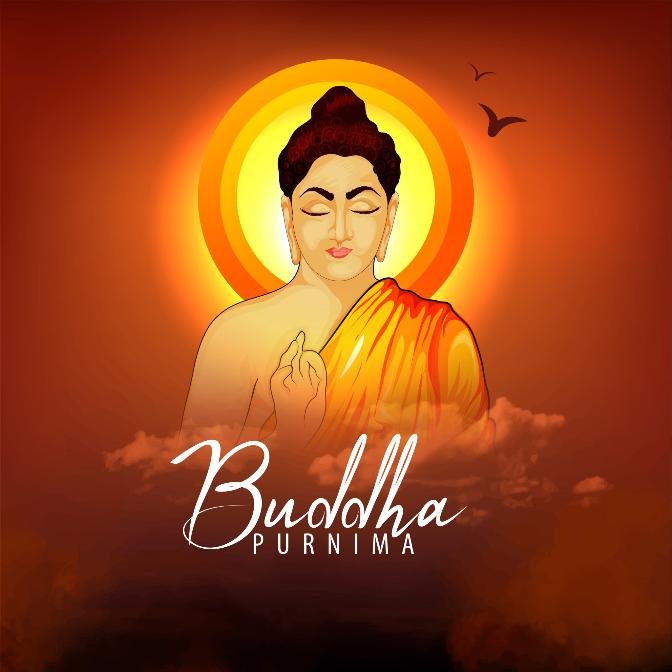
The Buddha - Siddhartha Gautama
30 Video Views·Jan 4, 2023
Designed to bring people to a higher level of compassion and spiritual enlightenment.
That got us thinking about Buddhism, which is one of the fastest-growing religions in
North America.
So to help us explore this ancient tradition and its founder, we've invited Kevin Treanor
as our guest.
He's a scholar of Buddhism at the University of Vermont.
Welcome to Interfaith Voices, Kevin Treanor.
Thank you.
Let's start with the founder of Buddhism, Siddhartha Gautama.
First, are we really sure he existed?
Well, I think it's difficult to say with historical confidence that he existed, but I think that
given what we do know from the historical record, from archaeology, from the texts that
survive, it makes much more sense that he was an actual human being who lived at a particular
time.
So given what has emerged as what we now call Buddhism, I think the best way to understand
that is it goes back to an actual historical person.
But we know relatively little about the details of his life.
We have the traditional accounts.
We don't even have agreement about exactly when he lived.
It had been more or less accepted that he lived 566, 563 to 486, 483, something like that.
Now scholars are pushing his dates later to a death date of around 400 BCE.
And he was born in what is now Nepal, if I'm not mistaken.
Yes.
The places associated with his life are kind of constellated around the border between
Nepal and India, and those political distinctions were not part of the political organization
at the time.
Now, you said the Buddha was born in about, oh, the 5th century BCE, right?
Correct.
And what was the religious world like into which he was born?
Was this like a Hindu world or a primitive form of Hinduism, perhaps?
I guess we could say a primitive form of Hinduism if you look at it in retrospect.
I would prefer to talk about Vedic religion or Brahmanic religion, which are the religious
communities out of which what we now call Hinduism developed.
The religious world at the time was a world strongly focused on belief in a number of
deities, and the Vedic scriptures are hymns to those deities.
Those hymns were in the Vedic language, and they were very strongly linked up with sacrificial
practices, that is, offerings to those gods.
And those practices were overseen by a caste, if you will, that is a social class, a hereditary
social class called the Brahmins.
So this was a world strongly centered on the importance of particular deities and the importance
of the Brahmins as those who are in charge of performing important sacrifices that were
understood to be really important for prosperity and well-being.
Now the Buddha himself was actually royalty.
He was born a prince.
The tradition is that he was a prince, yes, and this is something he renounced.
Because it says that in the accounts I've read that his father kind of sheltered him
from the real world, but somehow or other he got out.
And what happened?
The traditional account is that there was a prediction at the time of his birth that
he would either become a great king or he would become a renunciant and lead people
to religious truth.
And his father hearing this wanted him to become a great king, as one might imagine.
Parents kind of want the safe route for their children.
So he did everything he could to prevent him from encountering suffering, which was understood
to be the trigger for him to renounce the world.
So he surrounded him with every conceivable luxury.
But the gods, according to the accounts, then found a way to manifest what are often called
the Four Omens, which were people representing old age, sickness, and death.
And then the fourth omen is a renunciant, that is a person who has renounced society.
So the gods, according to this account, thwarted the efforts of his father to prevent him from
encountering suffering and had him encounter the circumstances of life that would cause
him to renounce society and set off in pursuit of the ultimate truth.
And so at age 29 he actually became a mendicant, a beggar in the streets.
But that didn't work out.
He tried kind of an extreme asceticism.
What didn't work for him?
Well, it's important to see him as part of a larger movement, which is to say that he
wasn't the only person who set off renouncing society in search of the truth and practicing
asceticism.
The accounts say that, in fact, he had teachers who schooled him in various kinds of ascetic
practice.
But he discovered that those were a dead end, that radical asceticism only had the consequence
of killing the body, and that didn't solve the fundamental problem of being trapped in
the cycle of birth and death.
So he, having kind of pursued extreme forms of asceticism, having gained great mastery
over meditative practices, then decided that he would take food to support his body so
that he could then push on to the final realization of truth.
And in the midst of that he discovered something called the Middle Way.
What's that?
Well, the Middle Way is, I think, a central metaphor that runs throughout Buddhist tradition.
One way to understand it is that it's the avoidance of extremes.
So on the one hand you have extreme asceticism that is punishing the body to try to free
the soul from the body, and on the other hand you have enjoying sensuous pleasure,
rich foods, various distractions, sexual involvement.
All of those things represent the kind of extremes.
And the Buddhist path, which is embodied in the rules for the Sangha, the monastic community,
is understood to be a middle way between those two extreme positions.
And then, of course, he sat under that sacred fig tree, often called the Bodhi tree, and
vowing not to get up until he found the truth.
Tell us that story.
What happened?
Well, having gone through this period of extreme asceticism, almost to the point of starvation,
and then taking food, and then having his followers abandon him because from their perspective
he had fallen away from the path, having gone back to taking food and renouncing extreme asceticism,
he made this vow that he would sit under this tree as long as it would take for him to realize the truth.
In one sense, it's very easy to understand or to imagine this as an individual sitting
under a particular tree at a particular moment in time, and this becomes the arena within
which this realization occurs.
In other words, it's something basically interior to his psychology or cognition.
But in Buddhist accounts, this is framed in terms of a kind of cataclysmic battle between
the Buddha and Mara, who is the embodiment of death and who is sort of in charge of keeping
people in the cycle of birth and death.
So he sees the Buddha as his enemy because the Buddha is going to realize the truth and
allow people to be liberated from the cycle of birth and death.
So Mara and his hordes, his army with all their weapons, attack the Buddha.
And so this is played out in vivid detail in many accounts and in artistic representation.
And then ultimately the Buddha defeats Mara, Mara departs, and that then becomes the point
at which he remembers his previous lives, has the capacity to look into the lives of
others and see the course of their previous lives, and he understands the fundamental
nature of causation, which gives birth to suffering, to the unsatisfactoriness of life,
and also the way to bring an end to it.
And in fact, the name Buddha is not a proper name.
It's a title that refers to one who has woken up.
And so we can kind of imagine the eyes opening up and illumination occurring.
Buddhists believe that there were previous Buddhas and there will be future Buddhas.
He's not the only Buddha.
And he achieved what Buddhists would call today enlightenment.
Is this enlightenment the same thing as nirvana, which is often a word that, say, someone in
the Christian tradition might think of as heaven?
Yes, it's the same word.
Nirvana is a very interesting concept.
It's absolutely central to Buddhist tradition.
In minimal terms, it is the end of suffering.
So it's the end of what's fundamentally problematic about life.
It's also the end of the cycle of birth and death.
It's the end of anxiety, the end of fear, the end of the kinds of sensuous engagement
that lead to frustration and unhappiness.
So in that sense, it's the end of various conditions that prevent people from living
really full, complete lives, you could say.
So nirvana is a condition beyond becoming, that is a condition beyond the cycle of birth
and death.
Now, as you look at Buddhism, what do you believe its core idea is?
If I were to try to identify the core idea, I think it's that life in the world is subject
to a number of fundamental problems.
The basic term that's used for that in Buddhist teachings is the idea of dukkha, often translated
as suffering, but probably more properly translated as unsatisfactory, unsatisfactoriness, or
even frustration.
That even really good things, because they are transient, don't provide ultimate fulfillment.
But at the same time, the good news is that there is a way to put an end to that unsatisfactoriness
and that condition of the cessation of unsatisfactoriness is nirvana, that is a kind of complete liberation
from attachment, from the various things in life that potentially lead to unhappiness
and dissatisfaction.
And that means getting rid of your attachment to any kind of desires.
I'm thinking here of what Buddhists call the Four Noble Truths, namely that suffering exists,
suffering arises from attachment to desires, and it ceases when attachment to desires cease.
And then, of course, freedom from suffering is possible by practicing what Buddhists call
the Eightfold Path, having to do with understanding thought, speech, action, livelihood, etc.,
doing all those things correctly.
Well, I think it's helpful to keep in mind that the term that's used in the Second Noble
Truth, the cause of dukkha, is a term that more literally means craving or thirst.
It isn't desire per se.
Desire is a complicated notion in Buddhist teachings, because there is certainly a sense
in which the ideal of becoming an arhant or a Buddha represents a certain kind of desire,
and that kind of desire is appropriate.
However, there are other desires that, from the point of view of a kind of Buddhist philosophical
analysis, almost inevitably lead to hardship and unhappiness.
What kind of cravings would be unacceptable?
There's a certain sense that sense pleasures can be problematic, in part because they lead
one to a certain kind of desire to continue to have them.
So we have, you know, these images in the life of the Buddha of him being surrounded
by dancing maidens.
And before he sets off renouncing the world, there is an account of how he's surrounded
by these maidens.
He's already gained a certain kind of detachment because he's seen the problems with life.
And the maidens are dancing in front of him, and he loses interest and falls asleep.
And then, after he's gone to sleep, the dancers look at him and say, well, we're wasting our
time.
They fall asleep.
And then suddenly he wakes up, and he looks out and he sees the bodies of the dancers
kind of splayed out in disarray, and suddenly has this recognition from his perspective
that it's like a field of corpses.
He becomes totally disengaged with those kinds of sensual pleasures.
And that then becomes a kind of foreshadowing, if you will, of the enlightenment that he
then later realizes after he goes through several years of practicing austerities and
then sits under the Bodhi tree and realizes the truth.
The monastic community, which is central to the kind of institutional history of Buddhism
over more than two millennia throughout Asia, is identified as a group of renunciants who
don't engage in sexual relations.
So one does not, as a member of the Sangha, have children.
So there is a certain criticism, if you will, a skepticism about the capacity of life in
the world, family life, to bring ultimate completion, ultimate liberation.
We're speaking to Kevin Treanor, a professor and chair of the religion department at the
University of Vermont.
His books include Buddhism, The Illustrated Guide, and Relics, Ritual, and Representation
in Buddhism, better known as The Buddha.
My guest is Kevin Treanor, chair of the religion department at the University of Vermont.
What about a lay Buddhist, somebody who is not a renunciant or a monk or a nun, who wants
to have a family?
Buddhism surely doesn't have a teaching against that, does it?
There's no criticism, if you will, of the lay life.
There is a sense that to follow the Noble Eightfold Path of the Buddha requires a commitment
to monastic life, because it provides the proper conditions for the effective practice
of meditation.
However, the vast majority of Buddhists throughout the ages have not been members of the Sangha.
It's a very small minority, relatively speaking.
The idea is that members of the lay Buddhist community live lives that are in conformity
with basic Buddhist teachings, have families, have means of livelihood, and they support
the Sangha.
So there is a kind of reciprocity going on here, in which the members of the monastic
community embody the ideals of Buddhism, preserve the teachings, and the lay community supports
them and gains merit, that is, the effects of karma, that is, their acts of making offerings,
which lead them to future rebirths that are better, that is to say, that take them closer
to the ideal of nirvana.
So you might be a wife and mother or a husband and father in this life, but in rebirth you
might become a monk or a nun, and that's better?
Yes, in the sense that many people make offerings in the hope that in a future life those offerings
will lead them to be reborn in a time when there's another Buddha, and they will then
follow him as a monk or a nun.
Now I should also be clear that what I've been describing is what is often characterized
as the teachings of the Theravada Buddhist tradition, and that is the form of Buddhism
that is dominant in Sri Lanka and throughout parts of Southeast Asia.
Alongside of that was the development of what's called the Mahayana tradition, and that involves
another set of understandings about the role of the monastic community and the laity.
And so Tibetan Buddhism falls under that broad sweep of what is often called Mahayana tradition.
What's the role of God in Buddhism?
Do Buddhists generally believe in a God?
Buddhists I would say generally believe in lots of gods.
There is a belief that the world has rising above it a succession of various heavens,
and there are various superhuman figures, deities, who reside in those various heavens.
And they're in those places because of the basic working of the cycle of birth and death.
So because of their meritorious deeds, they have been reborn in the condition of being
deities.
But Buddhists assert that over an extraordinarily long period of time, they will ultimately
lose that reverse status as a god and need to be reborn in some other form.
So being a god in Buddhism is not a permanent state.
That's correct.
Though the gods themselves can often lose sight of that because they live so long.
So there is a sense in Buddhism, and perhaps this is something that's quite unique about
it, that despite the difficulties that human beings face in the world, it's really a very
good thing to be human because one has the capacity to gain enlightenment and also has
the kinds of experiences of limitation and difficulty that give you the motivation to
follow the Buddha's path.
It's also important to recognize that for Buddhists, the vast spectrum of living beings,
including insects and animals of various levels, are all part of this realm of samsara.
So one can be reborn as an animal, as a god.
There's all sorts of possibilities.
And you can be reborn kind of almost any number of times, right?
Countless times.
And in fact, that's the problem, if you will, that you are trapped in a cycle of endless
rebirth.
And the only way out of that is to follow the Buddha's path and to realize the truths,
the Four Noble Truths, and in particular, to recognize that there is no permanent soul
or self.
I went to hear the Dalai Lama several days ago when he spoke outside the U.S. Capitol.
And I ran into a lot of people who were not Buddhist but were anxious to hear him.
Why do you think Buddhism is so attractive in North America these days?
I think, in part, Buddhism is understood to be quite different than what most people have
grown up with.
Not so much tied up with institutional demands, with rules.
It is seen to be a practice of self-realization, and Americans are drawn to that.
That's a very powerful element that runs through the history of American religion.
Kevin Treanor is a scholar of Buddhism and chair of the Religion Department at the University
of Vermont.
His books include Buddhism, The Illustrated Guide, and Relics, Ritual, and Representation
in Buddhism.
Thank you so much for joining us today, Kevin.
Thank you.
It was a pleasure.