
The Art and Life of John Singer Sargent (1856-1925)
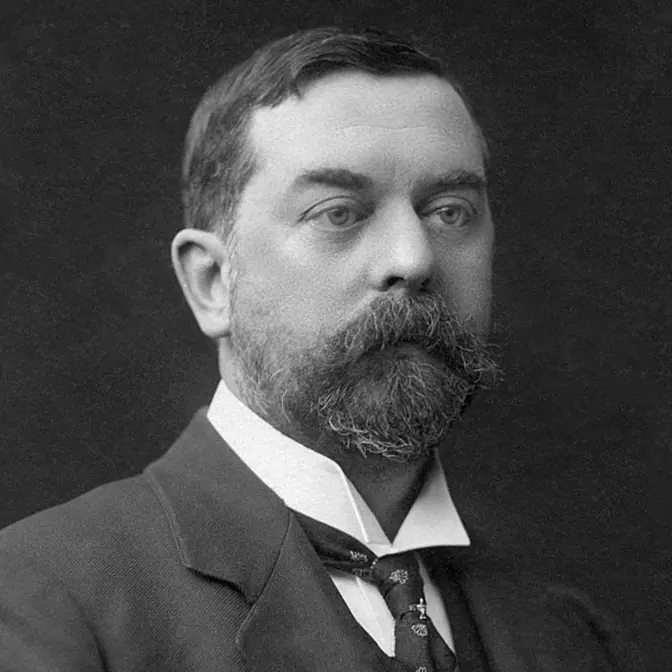
Amuze Art Lecture #116: A detailed discussion of the life and art of the American artist John Singer Sargent (1856-1925).
Check out my coffee table books about artists like Antonietta Brandeis, Eugene de Blaas, Federico del Campo, Thomas Mostyn, Peder Mork Monsted, and Hans Zatzka: https://www.amuzeartbooks.com/
For daily stories about art, follow me on Instagram: https://www.instagram.com/tripimprover/
Chapters
0:00 John Singer Sargent
0:35 Youth
1:40 Talent
3:53 Portraits
5:37 Controversy
7:13 Work Method
----------------------------------------------------------------
Music: Over Time by Audionautix
Few artists in history had such a diverse and artistic upbringing as John Singer Sargent.
As you can see in the variety of these works, he would become a cosmopolitan artist best known for
his many portraits, like this highly controversial portrait of Madame X. But he also painted works
like these paintings of the back streets of Venice, and this sensitive work entitled Guests
at the end of World War I. And as we will discover, he lived a pretty unique and complex life too.
John Singer Sargent's parents were both American, but before John was born,
they decided to move to Europe to just permanently travel around. And while their
not-so-permanent base was Paris, Sargent was born in Florence in 1856. His father wanted to give
John a proper education, but he was not really made for that. He preferred traveling and adventure,
and so his mom decided that the best way of educating was to just travel around and visit
museums and churches. And it worked, as Sargent would grow up to be a smart cosmopolitan young man
who was fluent in English, French, Italian, and German. And he was also a very gifted musician.
And with his mother being an amateur artist, and his father a skilled medical illustrator,
he also got some favorable genes to make it as an artist. He ended up studying in Paris with
Carolus Duran, and he entered the most prestigious art school in France, the École des Beaux-Arts,
on his first attempt. He would turn out to be a star student, getting along well with many
of his colleagues and quickly making better works than his teacher. And his technique was
a little bit different than the traditional one taught in the art academies. The standard method
was to make careful and precise underdrawings from which to develop the painting. But Sargent
learned to paint in the so-called à la prima method, directly applying the paint to the canvas
without making underdrawings first. He would make adjustments on the fly, basically mixing
the paint on the canvas while the previous layer was still wet. It would be in the style of Diego
Velázquez, and after his studies he would go to Spain to passionately study the works of Velázquez
firsthand. By not sticking to a detailed drawing when painting his scenes, Sargent had a lot of
freedom in the way he painted. His brushstrokes are not short and precise but rather long and
free, and from a distance his works look very realistic. But if you zoom in at his works,
you can clearly see his brushstrokes. His brushstrokes fit in with the tradition of
great artists like Titian, Frans Hals, and Velázquez, and they are closer to those of
the Impressionist artists than those of other portrait painters from the 19th century.
Compare, for example, this portrait of his sister on the left with a typical Impressionist work by
Claude Monet. They are not that different in style. Sargent loved to play around with the light and
the surfaces on his painting by blending the paints on the canvas, allowing him to create
shimmering and shiny effects, which make his portraits come alive. You can see that, for
example, in this portrait from 1896 of Mrs. Karl Mayer and her children.
John Singer Sargent was in high demand around the world as a portrait painter because he did not
just capture the likeness of his sitter's appearance on the canvas, he also made an effort
to capture the person underneath the surface. Of course, by doing this in an honest way,
he did not just show their flattering parts, and not all his sitters were equally happy.
But Sargent had a good understanding of people and complex identities, partly because of his
cosmopolitan and itinerant upbringing, but also because his identity was not that straightforward.
He would be a lifelong bachelor, but he would have several relationships with both men and
women during his life, though his relationships with women were particularly short-lived.
And he had a big network with many friends, and he had a special interest in people who would not
fit in one of the standard boxes of society. Among them are many portraits of powerful women,
like Isabella Stewart Gardner, though he also painted portraits of some influential men,
like the writer Robert Louis Stevenson, Claude Monet at work, the American president Theodore
Roosevelt in 1903, and John D. Rockefeller in 1917. And while he was highly popular as a
portrait painter, he was also confident in his own abilities, charging large fees for his commissions.
And if he did not like the sitter for some reason, he would just reject the commission
and paint a portrait of one of his friends instead. The confidence in his own abilities
also came with a risk for Sargent, as he liked to experiment with new and risky compositions.
And none of his works was more controversial than this portrait of Madame X, which you can
see here in Sargent's studio. Unlike the many commissions he would receive later on,
he actually pursued this portrait himself, as he wanted to make a name for himself.
So, he asked Virginie Gautreau, the notorious wife of a wealthy Parisian banker. Sargent was
just like her an American expatriate, and she ultimately agreed under the condition
that she would be portrayed anonymously. This explains the mysterious title and unusual pose.
But when the portrait of Madame X was exhibited, she was immediately recognized by many viewers.
When this work was exhibited, the reaction of the public was not positive. Not only were the
bold contrasts between the pale skin and the backdress unusual, people were shocked by her
portrayal as an unattainable goddess. It even made him move out of France to England to not
suffer too much from the backlash. Interestingly, today it is probably his most popular work,
though he has many other amazing works, and I am curious to hear from you in the
comment section down below if you have any favorite work by Sargent.
Despite the controversy with the painting of Madame X, the reputation of Sargent was on the
rise, and whether he was in England or visiting the United States, he received a large number
of commissions. And they did not come cheap. The price he charged was equivalent to about
150,000 US dollars today. But then you got the full package. When he received a commission,
he would visit the commissioner to see where they intended to hang the painting,
and he would inspect their wardrobe. When sitting for him, he would make sure to create a proper
background and arrange the furniture in such a way to complement the portrait. The average model
would sit for about ten sessions for him, but unlike sitting for many other artists,
these sitting would not be so boring as Sargent entertained his sitters by actively engaging in
conversations. And if things became boring, he would jump behind the piano to play some music
for them. And then, when he finished, he would custom pick a frame for them and make sure the
finished product was securely shipped to their home. And he did all of these things himself,
without any assistance, assuring the highest quality. But by age 51, in 1907, he closed his
studio because he had enough of it. In his own words, painting a portrait would be quite amusing
if one were not forced to talk while working. What a nuisance having to entertain the sitter
and to look happy when one feels wretched. He would take time to travel and spend time with
friends and family. He would still paint some works until his death in 1926, but he no longer
had the need to do it for the money. Well, I hope you enjoyed this discussion of the life
and art of John Singer Sargent, a unique artist who had an impact on the art scenes
in various countries. If you did, please hit the thumbs-up button and subscribe.
And I hope to welcome you in another video soon. Thanks for watching.