
Must EAT and VISIT in Budapest!
1.9K Video Views·Dec 5, 2024
Come on a walking tour of this amazing city in Hungary.
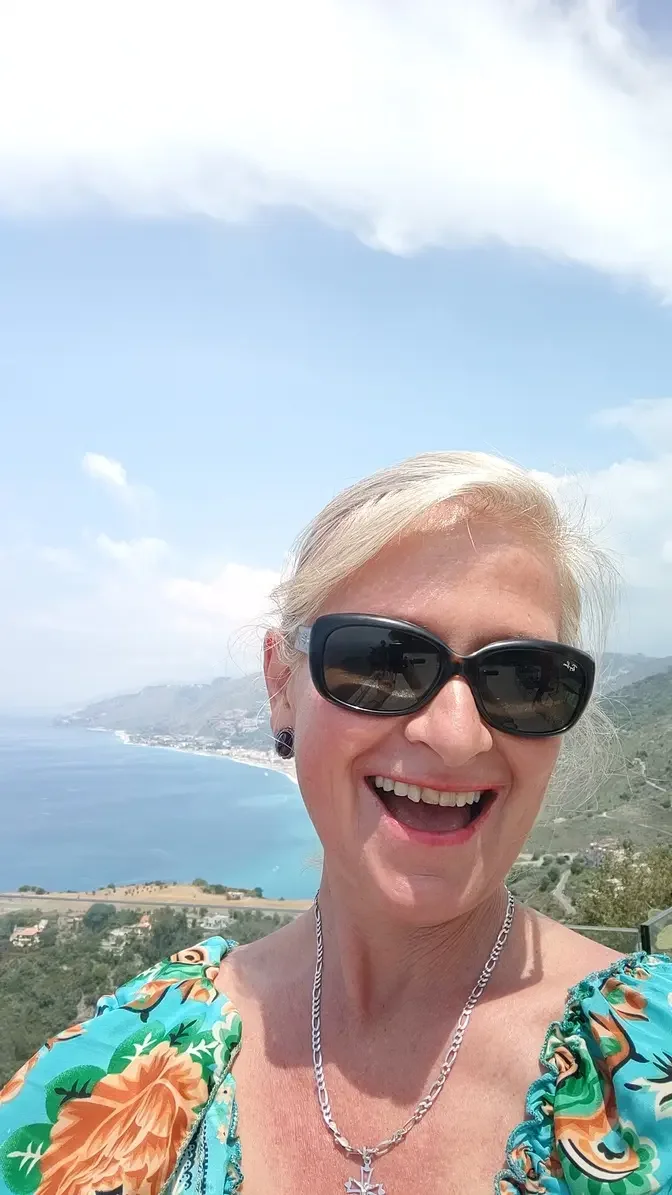
Good morning. I'm Yora from downtown Budapest.
We're going to go on a walking tour, sample some goodies,
learn about the rich history of this dynamic city,
listen to some live music and talk to the locals.
I'm standing on the Pest side of Budapest.
Across the way is Buda and it's divided by the Danube River,
the second longest river in Europe.
You can take boat rides, you can go along it and stop in other cities.
It's really a great city, both Buda and Pest, to visit.
So make sure when you come to Budapest, you go to both sides.
This is how you drink beer.
What's this?
This is onion, cheese and beet salad.
Lamb.
Lamb and noodles?
No, gnocchi.
I'm so excited about this.
This is beautiful, the parliament at night.
You know they call this the city of gold?
At night it literally lights up like gold.
This is Waci Uca, here on the Pest side,
another walking street with lots of shops, lots of restaurants,
a little bit of a touristy,
but the good thing is that there's the big shopping center
where all the locals go, right at the end of the street.
The other thing I want to say is that Pest, on this side of Budapest,
you can find a place to stay, and it's very walkable.
Of course, for other parts of Budapest,
you'll have to take a taxi, Uber, or whatever other service they have,
but Budapest, Pest side, is very much of a walking street.
There's my sister and my niece posing without me,
so they'd better stop.
Do you want to get in the camera?
Of course I do.
This is the Vasa Csarnok.
It's one of the big shopping places.
There's actually three floors of all types of shopping.
You can literally find everything here.
All Hungarian products.
Paprika.
Paprika is actually how they invented the vitamin C.
Yes, it's good.
It's good for the skin.
God, these Christmas cookies.
Made with honey.
Wow, I haven't seen red currants in a long time.
And mulberries.
Salami, salami, salami.
Here on the second floor, you can find everything.
Hungarian, handmade, Italian leather, or Hungarian leather,
and souvenir after souvenir,
and then the food section.
Pancakes, so important in the Sicilian cuisine,
and the other one is langos, which is fried dough,
but they're going crazy with the langos here.
How is it?
Yum, langos.
Pickle, pickle, pickle is my favorite.
This is where you come to for the real smoked and preserved meats.
This is definitely one of the most colorful markets around.
So many products to choose from.
They sell this everywhere.
Oh, I wish you guys could smell this.
So fresh and delicious.
I just said to her, you're here for so many years,
and I look forward to seeing you when you come.
Here we are on the Buda side,
up where the castle is, in St. Matthew's Makyas,
a temple built in 1015.
And since then, it's been built and rebuilt.
When the Ottomans came here in the late 1400s, early 1500s,
they turned this into a mosque.
This is probably one of the most touristy areas you'll find in Budapest, for sure.
This church was used as a coronation place for all the Hungarian kings.
Also served as a mosque.
It is truly one of the most unique in the area.
That bell tower was finished in the late 1400s.
And since then, you can just imagine
the stories, the people, the history that went on here.
This is one of the most magnificent churches in all of Europe.
And if you're a Hungarian Sicily fan, you know I love Capella Palantina,
the one in Montreal, the one in Cefalu,
but the same type of art brought here by the Ottomans.
And then later, all the other conquerors here leaving their mark.
This church is stunning.
Can you imagine having a wedding here,
which is what I think they had a few days ago, I saw.
This is Queen Elizabeth of Hungary.
Take a look at this view.
Up here by the St. Matthew's Church,
there's a series of things that you can do.
You can take down the stairs to areas,
cafes, outlooks.
The Fisherman's Bastion is up there.
The best view.
There's lots to see in the Budapest Castle District,
25 important places.
Here's the castle right here.
And we're over here at St. Matthew's.
Lots of shopping, lots of important things to see.
And then you have this view from the other side of the castle.
On one side is the Danube,
and on this side is the city.
He was a god, but here he actually represents the Danube,
our biggest river.
And the three ladies under him,
they represent the three other bigger rivers in Hungary.
The Sava, the Drava and the Tisza.
The Danube is the biggest one up there.
There were lots of conquerors here in Hungary,
just like in Sicily.
Who were some of the main ones?
The Hungarians arrived here in the 800s after Christ.
The long occupation started in the 1500s.
The first big empire that occupied us for a longer time
was the Ottoman Empire, the Ottoman Turks.
They were here for about 150 years.
And then at the end of the 1600s,
we were liberated by the Austrian Empire.
But the Austrian Empire kind of forgot to go home after the liberation.
So we became part of the Austrian Empire,
and we were part of it until the end of the First World War.
And then came a couple of free decades,
but unfortunately we ended up on the losing side
at the end of both of the World Wars.
And after the Second World War,
we had a long, well, Soviet occupation.
So we had a communist dictatorship until 1989,
and finally we've been free.
And the rest, as we know, is history.
Now, before then, the Romans were here.
This was part of the Roman Empire.
Yeah, so until the end of the 400s, after Christ,
there was a Roman settlement here.
We still have Roman ruins in Budapest,
mostly on the Buda side of the river.
You can find the ruins of a military amphitheater.
And then after the Romans...
Also in Pécs. In Pécs was the first capital, actually, of Hungary.
Down in Pécs, there's some Roman ruins there.
Yep, yeah, exactly. And then in Budapest...
Let's talk about the most important thing,
and that is the food of Hungary.
And I keep wanting to say Sicily,
but we have langos.
Yeah, we have langos, which is a street food,
like a summery street food.
With all types of toppings.
Yeah, it looks like a pizza, like a deep-fried pizza.
Usually we call it the communist pizza.
We put sour cream and cheese and garlic on the top.
That's like the classic langos.
And then we also have a kürtőskalács,
which is a chimney cake in English.
That's my niece's favorite.
It's a chimney-shaped sweet dough,
and we put cinnamon, coconut, walnuts.
Let me ask you, the influence of the desserts,
the beautiful sweets, that's the Austrian...
Yeah, that's the Austrian influence.
Really pieces of art. I always say in Sicily that
there's too beautiful to eat, almost.
Now let's talk about some of the other main foods,
like lecso, which is a tomato and pepper.
Yeah, it's like the Hungarian ratatouille, kind of.
The fish soup.
Fish soup, halászlé in Hungarian.
That's usually made of some kind of river fish
and a lot of paprika, spice.
We put that into almost every Hungarian dish.
Paprika in everything.
Goulash, of course.
Lots of meat, lots of fish, noodles.
Yeah, noodles.
Nókedli in Hungarian.
It's like homemade little pasta thingies.
Soups, even in the summer.
Yeah, meat soup, like a clear broth with vegetables.
Yeah, we eat a lot of soup.
So usually the starter is a soup in Hungary.
We can say that.
So actually, we Hungarians came from the Ural Mountains
near Mongolia.
And we were crazy horse-riding people.
Wild people.
We're still a little wild, you know.
That's right.
So it took almost a thousand years.
Wow.
So we were rendering around.
And finally we took this land in the 1800s.
And why do you think they took this land?
So, you know, this area is in the Carpathian Basin,
so protected by mountains.
Also, it's a really fertile agricultural land.
So I think...
There's the river.
Yeah, the river, exactly.
So these are the main reasons why we chose this place.
And then in the year 1000...
Yeah, we became a Christian country.
By St. Stephen.
St. Stephen, yeah, the first king.
He was crowned in 1000.
He converted.
And here's St. Stephen's Basilica.
This is actually where my grandparents were married.
St. Stephen was the king responsible.
He was the first king of Hungary.
And he was responsible for Christianizing the area.
He realized that to fit in to Europe,
he had to become...
The country had to become Christian.
Before him, the original Hungarians were pagans.
People ask me all the time,
I have a couple days, maybe a week,
what to see in Budapest.
What would you say are the top five things
that are must-see or must-do?
All right, so on the Pest side,
on the flat side of the river,
it's definitely the parliament,
the House of the Country, or Ország Ház in Hungarian.
The St. Stephen's Basilica,
which is the biggest Roman Catholic church of Budapest.
There's a really nice view from the top
of the St. Stephen's Basilica,
which is one of the tallest buildings in Budapest.
And then the Hero Square.
I love the Hero Square.
That's where my grandparents lived,
and I remember playing there as a child.
Yeah, yeah, yeah.
The most iconic square,
summarizing the thousand-year-long
Hungarian history in Europe.
And then on the Buda side,
the Castle District, the Buda Castle District.
And St. Matthew's.
St. Matthew's Church, yes.
And then the Gellért Hill.
So that's five, right?
Yep, that's five.
Grazie.
This is probably the most well-known
and the most beautiful,
the Landshut,
with these beautiful lions at the gate,
leading up there.
Straight ahead is the castle.
It's the Lion's Bridge,
which is one of 15 bridges
with the Danube in the middle,
connecting Buda, which is there,
and Pest, where I am right now.
Now here's a super cool statistic.
Hungary, and I keep wanting to say Sicily,
Hungary is one of five countries in the world
with between 70 and 80 percent
water resources underneath it.
So it's no surprise that
when the Ottomans came here
and discovered this great treasure, really,
they started the baths,
because the thermal baths
are one of the biggest and most important things
that Hungary has to offer.
And that, of course, came from the Ottomans,
brought here to Hungary.
And also the sauna, or sauna.
This is probably the saddest place
in all of Budapest.
What you're looking at are shoes.
And what happened was during World War II,
in 1944 and 1945,
the Nazis gave Jews heavy weights
and told them to jump into the Danube.
And I do have to say
that it's not just the Nazis,
because the Hungarians were complacent.
While I was raised in both a Christian
and a Jewish house,
my mom Christian and my dad Jewish,
I did have family members who were deported,
died, and so seeing those shoes
is heartbreaking.
There's the Danube in front of you,
and look at this amazing view.
And the cool thing about being in this area,
there's trails and all types of things everywhere.
What a majestic view.
God welcomes you.
Look at the beautiful handmade work.
Let's go.
This is how you cook the original
gujašt. Bob Gujašt.
That's with the beans.
And this is the most famous pastry place
since 1858.
Zerbo has been here.
Fabulous.
That's my favorite right there
with the caramel topping
and layers of chocolate.
It's a Hungarian.
This is the National Theater of Budapest.
It's so beautiful inside.
If you're in Budapest in the summer,
don't worry.
There's no beaches,
but there are plenty of pools.
We're in Margrit Sziget,
Margrit Island,
and this is one of two structures that they have,
and they have multiple smaller pools over there.
There's a wave pool down that way,
so you can get a little massage,
a water massage.
You can get a drink,
so it's a great little day
to spend with your kids.
It's about 13 to 15 euro
or dollars to get in.
You get a chair.
You get even a little locker
right here.
So in the hot August, July months,
this is a great place.
Right in the middle of Budapest,
you have luscious,
green,
beautiful trees,
gardens.
By far, one of my favorite things to do
is get a coffee,
get a cappuccino
in a beautiful cafe,
listen to live music.
You can do that at night, too.
A lot of the restaurants have
live music entertainment.
Truly, Budapest is a musical city.
Just like that, I'm back in Sicily.
Today, we're in Syracuse.
I have a little tour going on.
But let me tell you,
it was such an unbelievable experience
being with my mom, my sister,
and my niece.
Three generations taking on
Budapest by a storm.
So, hope you enjoyed this video.
If you're thinking of coming to Budapest,
it's truly a great place.
It's very historic.
Lots of culture.
Lots of music.
Lots of great food.
Lots to see.
So, put it on your list.
If you need any help,
happy to help you.
And who knows?
Maybe we'll have a future tour in Budapest.
Lots of you are asking about it.
Thank you, thank you, thank you
for coming on this adventure with us.
And we'll see you back here
from Sicily next week.
Love you guys.
Ciao.