
Grand Egyptian Museum EXCLUSIVE private tour - ONE DAY BEFORE THE FULL OPENING including King Tut!
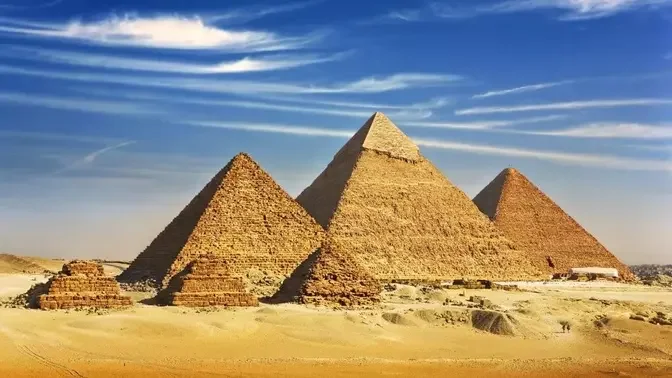
24 Video Views·Nov 10, 2025
# Culture#Ancient Egyptian
Today I had an exclusive private tour of the Grand Egyptian Museum's two brand new galleries,
the King Tut Gallery and the Solar Boat Museum.
I was able to pull some strings and make these special tours happen so that I could take
exclusive footage of these two galleries and share it with my subscribers before they get
overcrowded with visitors on the November 4th opening.
I also got access for the first time of gallery number three at the main galleries.
This gallery has not been opened until today and if you're watching this YouTube video,
you can come to the Grand Egyptian Museum starting November 4th, 2025 when the full
opening is happening to the public and see all of these places for yourself.
This video is focusing on the King Tut Galleries and the Solar Boat Museum,
the two brand new areas at the Gem that have not yet opened to the public until November 4th.
So if you're interested in looking at all of the main galleries of the Gem that have
already been opened for over a year, you can head to the YouTube video linked in
the video description in order to check those galleries out.
I'll also be coming back to the Gem on November 4th in order to show what the full opening is
like with all the people who attend, so check out the video description for a link to that video
when it's ready.
Now if you're brand new to my channel or you're joining me for the first time,
hi and welcome to the Grand Egyptian Museum.
I'm here at Zuba about to have some delicious Egyptian food for lunch.
My name is Gus and I started Egypt Adventures Travel because I love
Egypt and I want to help people have amazing trips there.
You can head to my website, EgyptAdventuresTravel.com,
to learn more about group tours that I host personally in Egypt,
along with private tours which I can set up at any time.
I'm looking forward to hearing from you and to helping with your trip to Egypt
for the Grand Egyptian Museum.
Before we get started, I want to say thank you to Mario,
who is one of the on-staff Egyptologists at the Grand Egyptian Museum.
He did a great job leading me through these new galleries.
And also a big thanks to the Gem Hospitality team who put together this event and even
gave out these commemorative replicas of the King Tut Akh Amun's funerary mask.
Let's jump in so I can show you the new places that I got an exclusive
sneak peek to at the Grand Egyptian Museum.
Gallery number three, which hasn't been open to the public,
the King Tut Galleries and Khufu Solar Boat Museum.
Right now, I'm ascending the Grand Staircase, which has already been open for a couple of years,
but this is the starting point to go to the brand new gallery number three
and the Tut Akh Amun Galleries,
the entrance to both of which is at the top of the Grand Staircase.
For more information about the Grand Egyptian Museum,
including the Grand Staircase and all of the main galleries,
you'll want to check out the YouTube video linked in the video description,
and also go to the blog post that's in the video description.
Both of those resources are going to have a lot of information,
more information than I can cover in this video.
When you reach the top of the Grand Staircase, you'll notice the Giza Plateau
with the two largest pyramids out of the big windows,
and then to your left, where I'm walking now,
is the entrance to the 12 main galleries at the Grand Egyptian Museum.
The layout and orientation of these galleries has not changed
since the YouTube video that I did on them more than a year ago.
Here's the same layout map showing that these galleries are arranged
both chronologically and also thematically.
So they go by time period,
but they also go by theme of the objects and the artifacts.
Something new that I did notice in the galleries
is they now have labels on the floor,
which helps you know really quickly which gallery you're in.
This used to be just up on the wall, and it was kind of hard to see,
so adding them to the floor was a great idea.
And here is Gallery 3.
This is the one that I said has not been open until the making of this video.
This gallery is focusing on the time period from prehistoric times
all the way through the Old Kingdom and the First Intermediate Period,
and the thematic focus of the gallery is beliefs.
So talking about things like religious beliefs.
This gallery was full of a variety of different objects, artifacts,
statues, and pieces of old temples and tombs
that are all from the same time period and relating to the same theme.
So feel free to stop the video and pause at any point
if you want to get a closer look at an object or artifact.
I went quickly through the gallery
because I didn't have a lot of time to film during this day,
and I wanted to focus on the King Tut galleries.
And also this video is not meant to be a comprehensive walkthrough tour,
but rather just to give you the perspective of what you would experience
if you come visit this gallery at the Grand Egyptian Museum.
I found this display particularly interesting
because all of these objects are from the Nakata 3 period
from about 3300 to 2900 BC.
So that means that all of these boats and amulets and animals
and depictions of people are actually older than the Giza pyramids and the Sphinx.
Just like all of the other 12 main galleries,
all of the objects in gallery number 3 are well organized, sorted, and labeled.
So for example, walking past these false doors,
each one has a label.
The labels include object numbers on them.
They talk about what time period an object is from,
what it is, what the historical significance of it is,
and if known, where the object was found.
While it may not surprise you that objects are well laid out
and labeled at the Grand Egyptian Museum,
for visitors who have gone to the old Egyptian Museum,
the original Egyptian Museum in the center of downtown Cairo,
they know that that museum does not have a lot of objects that are labeled
and that it's tricky to visit that museum
and really get a lot of the experience
if you don't have a guidebook or if you don't have a local guide with you
who can point out the highlights and talk about the history
since a lot of those objects don't have any placards
or any explanations to go along with them.
I still am a huge advocate though for people to visit the old Egyptian Museum
if they have more than a couple of days in Cairo
because the old museum has some objects of extreme historical importance
like the Narmer Pallet,
which is our first ever depiction of an ancient Egyptian pharaoh.
So you'll notice this beautiful gallery number 3
with all of the objects well laid out, well lit, displayed, organized, and labeled.
But even so, the old Egyptian Museum in the center of downtown
is a great museum to pay a visit
if you have more than a couple of days in Cairo.
I probably sound like a broken record mentioning it in every single video,
but every single video I still have people reaching out
and commenting and asking me,
Gus, is the old museum closed?
Is the old museum empty now that they moved everything over to the gem?
And I have to remind people time and time again
that the old museum has thousands of artifacts that are still on display
and will never be moved out of that historic museum.
So it's still definitely worth a visit.
Looking at all of these extra galleries,
I know people are going to ask me,
Gus, how many days do I need to visit the Grand Egyptian Museum?
So I want to talk about that really quickly while we wrap up gallery number 3.
I think for the average tourist who has an average interest in ancient Egypt
that visiting the Grand Egyptian Museum as part of a half day
and focusing just on the highlights is the way to go.
Of course, you're not going to see anywhere near the full capacity of this big museum,
but if you focus on the highlights and spend a half day,
that's going to give you ample time to visit other important sites in Cairo
like the Giza Pyramids in the Sphinx,
Saqqara,
maybe a visit to some of the Coptic Orthodox Christian and Islamic sites in the city,
and also a chance, of course, to try some delicious Egyptian food.
So I think for most tourists,
visiting the gem as part of an afternoon half day
after visiting either Saqqara or the Giza Pyramids in the morning is the way to go.
Now for the tourist who has a really, really big or deep interest in ancient Egypt,
I recommend spending either one entire full day at the Grand Egyptian Museum
or spending two half days at this enormous museum.
You could do Saqqara in the morning one day
and then have lunch at the gem and visit the gem in the afternoon.
Then the next day, you could do the Giza Pyramids in the Sphinx
and visit the Grand Egyptian Museum that afternoon for the second visit.
So that's what I recommend for somebody with more than just your average interest in ancient Egypt.
And then, of course, there's going to be the Egyptophiles
who want to spend days at this museum,
and it still won't be enough time to cover everything that's on display.
And now we finally arrived at the entrance to the King Tut Galleries.
This is November 3rd, and so that is why you barely see anybody in these galleries at all.
I'm really lucky and I'm grateful to the Grand Egyptian Museum
that I had this exclusive opportunity to come take a video
and show all of my followers what these amazing galleries look like
before they get filled up with tourists.
In the blog post, I'm going to have a link to show you the layout of the King Tut Galleries
and also the layout of the Grand Egyptian Museum
so you can use those layouts to help plan your visit.
The King Tut Gallery is basically one big hall
that's split in half by a big wall that you see to the left
and then also is split up within those two halves into different thematic sections.
Again, head to the blog post to get a link for all of these resources,
but this is a suggested path that you can use to visit the King Tut Galleries.
Here's an accessibility map showing ramps and benches and places to rest.
Here is a thematic map showing all of the different sections and the highlights that you can see.
And here's some more information about each theme
and what you'll find in each thematic section of the gallery.
If you have a limited amount of time at the King Tut Galleries,
like if we're talking you only have 20 or 30 minutes
and you want to take in the highlights, head to the funeral section.
That's the section that you'll notice on the blog post on the map that's linked in there.
It's like the back middle section of the gallery.
This is where you see the most important objects that were found in King Tut's tomb,
like the golden sarcophagus, of course the golden funerary mask,
jewelry, and even the gold-plated throne.
So if you only have a quick amount of time,
that's where you want to head to see all of these big highlights.
Now I'm going to walk you step-by-step through each thematic part of the King Tut
galleries so that you can experience what it would be like
when you visit the Grand Egyptian Museum and see these galleries for yourself.
This first gallery is focusing on the discovery of King Tut's tomb.
So this is a replica of the Valley of the Kings with different placards
talking about different historical discoveries that were made
that got archaeologists either one step closer to discovering King Tut's tomb,
or at least more excited about discovering the boy king's tomb.
But we all know that of course the tomb was not discovered until 1922 by Howard Carter
with the help of the young Egyptian boy who was working with him at the site.
Of course everybody wants to see the golden artifacts,
but the story of the discovery of King Tut's tomb
and the people who made the discovery and the preservation of the tomb possible
are just as important as all of those golden artifacts that you'll see later on.
They even have a section that goes over different foreign archaeologists
who helped with the discovery and the conservation of the tomb,
along with several important Egyptians who helped make sure the tomb was kept safe
and that its treasures stayed in their rightful home, Egypt.
There's even a mention of Hussein Abd al-Rasul who is the young boy
who actually is the one who discovered the tomb
while he was working as part of Howard Carter's team.
While we haven't made it to the gold and treasures yet,
this section of the King Tut galleries has so many interesting pieces
like this piece of mud brick wall that shows all of these royal seals
proving that King Tut's tomb was nearly untouched when it was discovered in 1922.
This next part of the discovery section of the King Tut galleries
talks about what happened after they found King Tut's tomb.
People like Howard Carter and Lord Canaveran,
plus the historical significance of the find
and how this discovery led to Egyptomania all across the world.
All of a sudden, these several thousand artifacts ignited this passion
for people to learn about ancient Egypt, design furniture and art pieces
evoking the ancient Egyptian art style, and even traveling to visit Egypt for themselves.
Throughout the King Tut galleries, you're going to notice interactive displays
like these white objects that are made for people who are not able to see,
to touch, and to feel, and also for children.
And this display is talking about a fact that a lot of people don't know,
that the tomb of King Tut was likely broken into twice after he was buried.
This last area of the discovery section goes over some specific objects
that they found in the tomb, along with multimedia displays
talking about the original state of the tomb when Howard Carter first went inside in 1922.
I was especially drawn to these beautiful, ornately decorated boxes.
The box that has an oval shape with pretty large hieroglyphic writing inside of it is a cartouche.
That cartouche is that oval shape that depicts a royal name,
or the name of a pharaoh, or a king or queen of ancient Egypt.
So inside that cartouche is King Tut's name written out in hieroglyphs.
And the really ornately decorated box on the right side likely housed gold or silver objects
that after King Tut's tomb was robbed, probably twice in antiquity,
when they found the tomb, that box contained writing materials.
You'll notice a few other artifacts that are singled out to talk about
the discovery of King Tut's tomb with more multimedia displays
as you finish up the discovery section of the King Tut Galleries.
That wraps up the discovery thematic section of the King Tut Galleries,
the first of five thematic sections.
This is the second thematic section dedicated to lifestyle,
where we're going to see personal possessions that they put in King Tut's tomb
to uphold his royal status in the afterlife and to keep the memory of his life on Earth alive.
The first part of this thematic section is full of chariots and weaponry and shields.
These chariots have amazing details.
When I zoom in the video,
you're going to see how ornately decorated these golden plated chariots are.
They are just absolutely breathtaking to see in real life,
and you'll get to see them when you come visit the King Tut Galleries at the Gem.
Of course, chariots played a very practical purpose in ancient Egypt
since the ancient Egyptians fought wars and used chariots in battle,
but some of these were probably used just for ornament or for display purposes.
I'm guessing the king is not marching off into battle in a golden plated chariot.
But this section of the gallery is all about talking about those personal possessions of the king
that we'd use to show off his status, his power, and to take care of him in the afterlife.
Here's a display case that's full of boomerangs,
something that before I visited Egypt,
you probably would never have me guess that we'd find in an ancient pharaoh's tomb.
Here are some shields that are probably again used more for ornamental purposes
than for practical purposes.
And by the way, if you hear a lot of honking in this video,
it's because I'm making this video immediately after going to the Gem
and I'm at my apartment in Cairo and welcome to Cairo traffic.
We have a collection as well of a bunch of ancient Egyptian bows
complete with quivers underneath them.
And then, of course, a score of arrows that they have to the right of the bows.
They really had all of these objects more than 3,000 years ago in ancient Egypt.
And it's just amazing to see them all displayed so well
at the Grand Egyptian Museum for the first time ever.
Where you really notice a difference between having just a quick half day at the Gem
or having a full day or even more than one full day
is you get to look at all of these details super closely,
like the intricacy of the decoration that are on these ornamental bows.
There are so many things that you could really spend a lot of time
if you really pay attention and look closely at the King Tut gallery objects.
Here's another beautifully decorated box showing the pharaoh Tutankhamun
riding one of his chariots using one of the bows and arrows in a hunting scene.
And since there are more than 5,000 artifacts that they found in the tomb,
things like this are all over in these galleries.
Also in the lifestyle thematic section of the galleries,
we're going to look at what King Tut ate, drank, how he dressed,
and we're going to look at symbols of his royal power and wealth.
So for example, look at all of these ornate looking fan holders.
These would have had real ostrich feathers on them to fan the king.
There is one that will probably get moved over at some point from the Old Egyptian Museum,
but the actual feathers are not here on display yet.
And then there's this case that has all of these dozens of gorgeous alabaster objects.
You probably see alabaster for sale everywhere you go in Egypt.
When you look at this display case,
you realize just how old this material has been used for to make art.
All of these artifacts are dating more than 3,000 years ago,
and the level of detail is incredible.
There's even this alabaster piece that has a specific scene
that shows only when the piece is lit from the inside.
Something I've never seen before.
We are still in the lifestyle thematic section of the King Tut galleries,
and what you see right now are several thrones or royal chairs
made out of wood with some very ornately decorated.
One of my favorite parts of these thrones or seats
are those footrests that accompany them in front,
where you can sometimes see the king's enemies depicted.
So that when the king sits down, he is literally putting his foot on his enemies,
symbolically squashing them under his supposedly enormous power.
Now I have a quick plug to visit King Tut's actual tomb in the Valley of the Kings
if you haven't had the chance to see it already.
You can go into the actual tomb where all of these artifacts were discovered,
and when you see how small that tomb was
compared to the other tombs in the Valley of the Kings,
you can really use your imagination to try to fit
all of these 5,000 artifacts you're seeing in these galleries
into the really small space that was King Tut's tomb.
It's sad to say that King Tut's tomb is deteriorating pretty rapidly,
so the Egyptian authorities may at some point
shut down the tomb indefinitely to the public,
just like they did with Nefertari's tomb a couple of years ago.
When a tomb is deteriorating to the point where it might be irreparably damaged,
sometimes the Egyptian government steps in and they say,
or to potentially conserve it and reopen it again in the future.
But the good news with King Tut's tomb is that at Howard Carter's house,
which is a historic site that they have a lot of information about
Howard Carter and the discovery of King Tut's tomb,
there actually is an exact replica of King Tut's tomb.
So even if at some point in the future they close down the original tomb of King Tut,
you can still visit this exact replica and get a great feel
for what it would have looked like in 1922
when they discovered the original tomb with all of these artifacts inside.
They're actually thinking about doing that
with more than just King Tut's tomb at the Valley of the Kings.
They're potentially going to take all the major tombs that are in the valley,
create exact replicas of them, and then close down the originals
in order to maintain the state of preservation
so that they can be available for research
and they can still look like they do now for years to come,
but giving tourists a reason to still come and visit
to see these exact replicas of what the ancient pharaoh's tombs
looked like at the Valley of the Kings.
Here are some of His Royal Highness's shaving materials of all things,
things he would use for shaving.
And you already saw a bunch of linens and clothing, sandals and shoes,
a bunch of ornamental chests and drawers for storing objects,
elaborate collars, more of what you're going to see later on in the funeral section.
And now we're going to look at some amazing examples of ancient Egyptian jewelry.
Jewelry pieces like what you're seeing in these displays
you can still find for sale in Egypt today,
albeit you'll look a little bit gaudy and a little bit like a tourist
if you're wearing stuff like this out and about.
And I want to clarify when I say you can still find stuff like this today,
I don't mean you can find actual ancient artifacts
because please don't try to buy any ancient artifacts in Egypt.
And if somebody tells you something is an ancient artifact,
please don't believe them.
But I'm talking about modern jewelry pieces
that are made to evoke the ancient Egyptian style.
This gold gilded shrine is a very miniature example
of what we're going to see later on in the funeral section.
But what my guide pointed out that's interesting about this particular miniature shrine
is the daily life scenes that it shows with the king hunting,
with the pharaoh Tutankhamen, with his wife Queen Aksinamun.
So even though we're going to see some very gigantic examples later on,
they'll be much more symbolic in the actual artwork that's on them
versus that one showing more daily life scenes.
There still are dozens of objects that I'm going to show you in this lifestyle gallery.
So we're starting to see a lot of gold.
We're seeing a bunch of ornate pieces of jewelry,
tons of furniture and objects from daily life.
And the display cases just seem to go on and on and on.
So that's why in the blog post,
when you look at the suggested routing that you can take
throughout the King Tut galleries,
you're going to notice that there's a route that says
it's going to take you about two hours.
And I think that that is accurate.
If somebody just wants to do a pretty cursory walk through the galleries
and not stop and look at every single little thing,
but walk through and see all the main areas and all the main displays,
it'll probably take you about two hours just for the King Tut galleries.
Because there's just so many things here.
I mean, look at this display case with all of these musical instruments,
these horns, these rattles that would be used.
You shake them and make noise and please the goddess Hathor.
There's just so much to see here.
And we're only on thematic section two out of five.
So that shows you how much time
you're probably going to want to visit these galleries.
For the average person,
they might only want to spend 20 or 30 minutes
to see the main highlights and see the golden funerary mask.
But for someone who's really serious about ancient Egypt,
they're going to want to plan at least a full day here,
if not two half days or two full days or more.
And I promised you at the beginning of this thematic section
that you would see examples of things the king ate and drank.
So here you are looking at food that is more than 3,500 years old.
And we're talking about the actual food itself,
plus things that were used in food storage.
So different vessels that were used to store food and also wine.
So if you ever want to know what some ancient Egyptian wine
or some ancient Egyptian bread tastes like,
please don't actually do this,
but break open this display case and take a bite
and write a comment on this video and let me know what you think.
This section is part of the last section of the lifestyle thematic gallery.
You'll probably notice that the galleries are not all the same size.
So this lifestyle thematic gallery is one of the largest.
It has one of the largest concentrations of objects as well.
Going back to the old Egyptian museum,
that's where all of these artifacts used to be on display.
And it's just amazing to see them in their new home
where everything is really spread out.
So you're not having everybody cramped and crowded around one small area.
And to see everything so well laid out and labeled and spread out,
it's going to just give an amazing visitor experience.
And it's just going to be such a great thing for the Grand Egyptian Museum
to have this open and available for the public.
This next display case is dedicated to my bestie,
the Egyptologist Nicholas Brown.
And Dr. Brown, when he was a master's student
at the American University in Cairo,
wrote his master's thesis on sticks and staves.
So we have a ton of sticks and staves in this display.
You'll notice that the top of those particular sticks
are actual people that are like curled around.
It looks absolutely bizarre.
I'm not a PhD Egyptologist, so there's so many things.
Every time I go to these museums,
even though I've been to some of these places countless times,
I'm always noticing brand new things
that I've never picked up before in these objects.
So this display case, thanks Nick, to you,
I now know about the importance of sticks and staves in ancient Egypt.
And from King Tut's tomb, there obviously were a ton of them.
This bed that you see is actually a folding camp bed.
You can even see the hinged joints on it
so that they could fold it up and move it from place to place.
And these are folding stools.
And there's even a fire lighter.
So this shows that King Tut was actually really into camping.
There's also this traveling canopy
so that the pharaoh never needed to worry about being in the sun all day
when traveling from place to place.
Just all of these objects being in one tomb still astonishes me.
We've completed the lifestyle thematic section, section two of five.
And now we're in the rebirth section, section three of five,
the smallest of all of the different thematic sections.
The rebirth section is focusing on the ancient Egyptian ideas of rebirth
and the royal concept of the afterlife.
We're going to look at all of these different ritual objects
that were buried in King Tut's tomb
so that we can try to understand Tutankhamun's hopes and beliefs
for his eternal existence as a god after he dies.
Since so many of these objects and artifacts are deeply symbolic,
this is where having a guide is a big help.
Otherwise, you'll really need to read up on all of the display placards
to know what you're looking at.
Which talking about guides,
the Grand Egyptian Museum has in-house guided tours.
So when you book a tour to the Grand Egyptian Museum,
you can either book a tour where you're just booking the admission ticket
and you can provide your own Egyptologist guide
or you can do a self-guided tour
or you can use one of the Grand Egyptian Museum's tours.
If you're doing a Grand Egyptian Museum tour with one of their in-house guides,
I have to let you know that the groups can be quite large.
Once I was in a group with a Grand Egyptian Museum guide
and there were about 30 people in the group,
so it was hard to hear at times and focus on what the guide was saying.
So you could look into asking your travel company
that you're working with about a private tour of the Grand Egyptian Museum
or you can always bring your own Egyptologist guide
from outside of the gem to give you an overview of all of the history
that you're going to see at Egypt's largest museum.
Among all of these breathtakingly beautiful figurines,
a lot of depictions of the pharaoh
and depictions of different ancient Egyptian gods and goddesses.
And then there are also a bunch of Ushabti figures.
Now, these are for the people who don't like doing the dishes
or who don't want to do their housework, don't want to do their chores.
These are funerary figurines
that are supposed to perform manual labor for the pharaoh
for helping him get through all of the tasks he needs to do in the afterlife.
So think of this as like your little magic genie
that pops out and does all of this work for you
so that you don't have to get the work done yourself.
All of these figurines are definitely my personal highlight
from the rebirth section.
I could spend so much time looking at every single one
and looking at all of the intricate details,
all of the different materials that were used,
and especially the ones that show different depictions of King Tut
because he's just such an important figure in ancient Egyptian history.
Another quick plug to visit King Tut's tomb
is that that's the only place where you'll be able to find the actual mummy
inside of the tomb in the Valley of the Kings.
So if you go to King Tut's tomb,
you'll find his mummified remains still inside of his tomb.
Now we're in the funeral gallery section.
This is the thematic section number four out of five,
and it's the one that I was saying at the beginning of the King Tut galleries
that you want to make a beeline to
if you only have about 20 or 30 minutes
to take in this entire part of the Grand Egyptian Museum.
The funeral section, even though this thematic section
doesn't have as many objects as the lifestyle section,
it is a bigger section in actual area.
And when you explore this area, you'll know why.
It's so that everybody has adequate space around all of the objects
and everything is not crowded into one small space
like it was at the Tut galleries at the Old Egyptian Museum.
Back in the day at the Old Museum,
when these large shrines were out in the hallway,
there were always so many crowds of people,
just blobs and blobs of tourists all smooshed together
trying to get a look or trying to get a good photo or video of the objects,
with, of course, five or six Egyptologist guides
all trying to be heard above the din of all the people
But now with this really large area that's at this section of the gallery,
it allows for these objects to spread out
and give people more room to explore and appreciate each piece.
We're looking at these shrines,
which have these really interesting graffiti markings
that you'll notice written in black.
These were the markings that were used by the workers
who were assembling these pieces.
Think about when you're looking at an Ikea piece
and it has a label on it like front left or top right,
so that's what this graffiti is from all of these workers.
The insides of these shrines are also immaculately decorated in gold plating,
showing all sorts of different scenes.
But unlike the shrine that we saw earlier,
the really miniature one that showed the king in daily life scenes
hunting and with his wife Aksinamun,
the inside of these shrines has a lot more symbolic meaning,
showing a lot of Egyptian gods and ancient Egyptian religious beliefs.
What I find amazing about these shrines is that
when they were found in King Tut's tomb,
they were all inside of one another,
kind of like a Russian nesting doll.
So the smallest shrine went inside of the slightly larger one,
and then that went inside of the big shrine,
and that went inside of that gigantic shrine,
the very first one that I showed you.
And you see from the inside and the outside of these shrines
that they are amazing.
This is another area where yeah,
if you only have 20 or 30 minutes,
you're going to want to breeze past some of this,
take a couple of pictures and videos,
but that's about it.
Whereas if you're really, really interested in ancient Egyptian artwork and iconography,
especially from the New Kingdom period,
what period King Tut was from,
you're going to want to spend several minutes at least on each shrine,
if not several minutes on each section of each shrine,
since you notice that the doorways,
the walls,
and the interiors all show different scenes.
You'll also notice hieroglyphic inscriptions
on some of the shrines on the insides and the outsides.
And if you remember talking about a cartouche from earlier in this video,
if you see an oval with hieroglyphic writing inside,
that's depicting the name of a king or pharaoh.
So most likely it's the name of the pharaoh Tutankhamun.
The largest of all of these shrines was so big
that it actually almost filled the entire burial chamber,
and it was really hard to even maneuver around it.
This is another time for me to really plug going to King Tut's tomb,
either before or after you visit the gem,
so that you can really get an appreciation.
It is a very, very small tomb
when you think about all of these objects that were found crammed inside of it.
So having several shrines that could nest one inside of the other
is a really great way to save space
when you have a very small little tomb
and you want to stuff as much stuff as you can inside of that space.
Of course, when we get to the end of the shrines,
that's not just the end of it.
Like that nesting doll, there's something at the very center,
and that is another nesting set of the king's sarcophagus
and then three inner golden coffins.
So get ready for those later on.
I want to take some time to let you enjoy
the last of the footage that I took of the shrines,
and I'm going to talk about how you can buy tickets
to the Grand Egyptian Museum
to give you some practical advice on planning your visit.
You can either buy tickets online or in person.
If you buy tickets online,
the official ticketing website is visit-gem.com
and in the blog post that's linked in the video description,
I'll go in more detail about buying tickets online and how to do that.
The main benefit to buying tickets online
is you don't have to wait in line at the site
and it's totally done and taken care of.
But the drawback is that you have to book the ticket for a specific date.
So if you change your plans,
you won't be able to get a refund
and you'll have to get a new ticket.
Of course, buying a ticket online
means you don't have to wait in line in person,
but it is nice in person that you don't have to book the ticket
for a specific date ahead of time.
You can just show up and get the ticket that day.
And also the website can sometimes have glitches and errors
and just not work properly,
whereas buying tickets in person
is a really easy way to take care of getting the ticket.
It usually only takes 10 to 15 minutes,
even if lines are long at Egyptian sites.
So it's not going to save you a ton of time to buy the tickets online
unless you're in a really big time crunch that day
and have a lot of different places that you're trying to visit.
We're getting close now to viewing all of the different sarcophagi
and coffins that were found nested inside one of the other.
And then all of them were found on this bed
that was placed inside of the smallest shrine.
So all of these coffins are either solid gold or they are gilded.
And so the weight of the gold on all of these pieces is unbelievable.
It's also unbelievable just the level of detail
on each piece with the king's facial features,
the crook and flail, the headdress,
and all of the beautiful artwork
that covers the entire sarcophagus and coffin.
All of the artwork, hieroglyphic inscriptions.
I cannot imagine how skilled the artisans had to be in ancient Egypt
to be able to create such beautiful and realistic pieces.
While you enjoy this footage of the rest of the coffins
and sarcophagi found from King Tut's tomb,
I'm going to talk about another practical aspect of visiting the gem.
And that's how you can best get to the Grand Egyptian Museum.
There isn't at the moment a good way to walk to the Grand Egyptian Museum.
So if you're staying at the Steigenberger Pyramids Hotel
or the Marriott Mina House, which are both right by the gem,
I still recommend arranging some sort of transportation
because the highway that the gem is on is crazy.
There are tons of walls and barricades
that would be really difficult to get around.
And even if you have to get around it,
it's like level expert crossing the street in Egypt.
And most of the tourists who come here with me
are even afraid to stop at crossings with crossing guards and stoplights
because the traffic is just so different from what they're used to.
So I really recommend taking either Uber
or arranging a private transfer to get to the Grand Egyptian Museum.
With Uber, you just have to pay attention
to where the Uber is going to drop you off or pick you up.
And I can't tell you at the making of this video
where the exact gate is going to be.
So you'll have to check the blog post.
I'll try to update that if there's any changes
on the main gate that you enter in for Uber or for a private vehicle.
And then the great thing about a private vehicle
is it'll be waiting for you at the end of your time,
whereas Uber, it can be kind of tricky to link up with the driver.
But I've gone both ways to the gem with Uber
and with a private transfer and both ways work.
What I love about Uber is it's really cheap.
Usually an Uber from downtown to the gem
is only going to be about four or five US dollars.
And it also is nice to just be able to get there when you want
and leave when you want and not have to try to link up with a driver.
But if you have an Egyptologist guide already,
having a driver is great because then the guy can take care
of all of the linking up with the driver
and where's the driver and calling them and all of that.
And then you can just focus on your time
and then you never have to be confused trying to meet up with an Uber
or trying to get the Uber driver to meet up with you
when you're trying to leave,
which can sometimes be the more difficult part
is that part where you're trying to get the driver to find you
to take you back home.
While you check out these last remaining artifacts
from the funeral section of the King Tut galleries
before we get to the masterpiece, the golden mask itself,
if you find this video useful,
like the video and leave a comment
letting me know your questions about the Grand Egyptian Museum
or what you think about the King Tut galleries,
the solar boat museum that I'll show you later
or gallery number three, which recently opened.
I love reading everybody's comments
and replying to all of the questions
and that engagement really helps my videos
get in front of more people who are interested in visiting Egypt.
You can also share this video with anybody you know
who'd be interested in seeing the Grand Egyptian Museum,
looking at all these artifacts,
especially from King Tut's galleries
or somebody who might be visiting Egypt soon.
There were also several interactive screens
that you could use to learn more
about the different artifacts in the King Tut galleries.
Right now we're looking at one of the shrines
and on the inside on one of these scenes,
you can tap and get more information
to read about what you're looking at.
These interactive displays are great for people
who want a hands-on experience
or especially people traveling with kids.
There was another interactive spot
that would be great for people traveling with kids,
walking past to light up the different figures
that are found in various depictions in King Tut's tomb.
So things like this make all of these
ancient historical pieces really come to life
and again, great if you're traveling with young kids
who are really gonna get bored looking at all of this stuff
unless they're super duper into history.
If I was at this museum when I was a kid,
I probably would have been really into it
as long as I was, I'd say more than five or six years old.
This shot gives you a good view of the layout
for the funeral section with all of that big open space
so that people can sit down and take a break
and not have to crowd around the artifacts.
Like this statue, this used to have just hundreds of people
who would all be trying to get in and get a good picture
or listen to their tour guide
and now with all of this room and everything
being so spread out under such large of an area,
it's going to give everybody a great experience.
I'm excited to come back to the gem
when it's up full and running for the general public
and not just for this special VIP private tour
so that I can really see if that does hold true,
that if everything feels like it's not too crowded
and there's enough room to really go around
and see everything.
You'll continue to see artifact after artifact
as I continue walking you through the funeral section,
the thematic section of King Tut's galleries
and we're not even at the golden mask yet.
Look at these beautiful daggers
that were found in King Tut's tomb.
The level of intricacy on this sheet of this dagger,
I just, I zoom in and I'm like,
oh my God, I can't even.
That's one of the things that I love
about taking people to Egypt
and going to all of these places with my guests
because I've been to these places many times
and seen these artifacts many times
and every time I go to a place that I've already been to
or look at something I've already seen,
I notice something new or something unique
or something that I might never have seen before
in anything else that I've looked at in Egypt
and that's why in Egyptology,
people who are studying to be Egyptologists,
it takes years and years of study
to even be considered an emerging scholar in the field.
There's so much out there
and there's so much to learn and to know
and how magical is it to see all of these objects together
at the Grand Egyptian Museum,
objects that people have been spending years
and their entire careers researching,
studying and writing about
and the last objects I promise
before I show you the golden funerary mask
are these finger and toe coverings.
I think these are kind of cool
but also kind of weird at the same time
but there you go.
If you ever thought that you should get
some gold finger and toe coverings,
you would be one in the same with King Tut.
And now here is the golden mask itself.
This large gallery space has a few people in it.
They had a professional camera set up
because they were taking pictures
of all of the VIP visitors today
during the private tours
so that's why you see the camera equipment there
but when this is fully open to the public,
they confirmed that the public will be able to take photos
and videos with a smartphone,
not with a professional camera
so an SLR, they might ask you to leave that
in the security locker.
Maybe they'll let you bring it in with you
but you're not supposed to be doing anything
at a professional level
with professional camera equipment
but you'll be able to take photos and videos of the mask
which you never were able to do
when it was on display at the Old Egyptian Museum.
Now some more information about the mask.
The King Tut mask shows the pharaoh's likeness
but in the form of the god Osiris.
This is the Egyptian god of the afterlife
and it's made of a lot of different materials.
Of course you notice gold
but there's also lapis lazuli, obsidian, carnelian, turquoise
so everything combined together
to make a beautiful piece of art.
It weighs more than 22 pounds
and it is over 21 inches tall
and you probably noticed on the back
there's even some hieroglyphic inscriptions
so not just a piece of art
but also something that has ancient Egyptian writing as well.
After you take all of the time that you need
to ooh and ah over King Tut's golden mask
taking tons of pictures and videos
it'll be time for the last section
of the thematic funeral area of the King Tut galleries.
This area is all focused on the actual mummified remains
that they found inside of the coffin.
The linens that were used to wrap around the body
and all of the amulets and bracelets and necklaces
and jewelry that was found on the king's remains.
There's also this interactive screen
where you can look at layer by layer
what the archaeologists were able to uncover
over the long process of going through the contents
of the coffin, the king, his physical remains
and all of the objects that were buried with him.
While you check out the last items
from the funeral thematic section at the King Tut galleries
let's talk about when the gem is open
and when you can visit.
The gem is open every single day
starting at 8.30 in the morning for the complex itself
but the galleries don't open until nine o'clock in the morning
so if you show up to the gem at 8.30
you can buy a ticket, you can get in,
you could go get a Starbucks coffee,
you could see the Great Hall
with the colossal statue of Ramses
but then at nine o'clock in the morning
that's when they open up the King Tut galleries,
the Solar Boat Museum and the main galleries.
Then you have until six o'clock p.m
to look at all of the galleries
and at six o'clock the galleries start to shut down
but the complex itself doesn't close until seven o'clock p.m
so you can still go get a bite to eat,
go to the gift shop or look at the Great Hall at the end
after the galleries close at six.
Now on Saturdays and Wednesdays
the museum has extended evening hours
so they open at the same time in the morning
but then the galleries are open all the way until nine o'clock p.m
and the museum complex is open until 10 o'clock p.m.
You always have to make sure though
that you buy your ticket at least one hour
before the galleries close
otherwise they won't let you inside the complex.
Now we're at the fifth and final thematic section
of the King Tut galleries.
This section is called Identity
and it starts out by looking at the king's physical health.
We have the king's physical remains
they're still in his tomb in the Valley of the Kings
and archaeologists have done a lot of research
on the remains of King Tut over the years
in order to look at his physical health
and also what might have caused his death.
The identity section is also where you're going to find
the Golden Throne.
This is one of the most important artifacts
that we found in King Tut's tomb
and definitely one of the top five
that everybody wants to see.
The identity gallery also has this beautiful example
of crook and flail which were used
to show power in ancient Egypt
and there's a lot of objects
that also talk about King Tut's childhood
so what his life was like as a young boy
and then looking at all of the different people
from his lineage and trying to figure out
what the actual family tree was.
In a time period like the New Kingdom in ancient Egypt
sometimes who they symbolically said
a pharaoh's parents were
might not actually be their actual biological parents
so the ending of the identity section
goes deep into the potential family tree for King Tut
and who his potential parents might have been.
There's all of these different objects as well
that are associated with different people
in King Tut's potential lineage
so you'll notice the person's depiction
on one side in glass
and then next to them some objects
that are related to that part
of King Tut's potential family tree
and at the end of this discussion
about King Tut's family tree
are a couple of coffins
where they found two fetuses
buried in King Tut's tomb.
DNA testing confirms that King Tut
was most likely the father
and that's it.
At the end of the identity section
that's the end of the fifth thematic section
from the King Tut galleries
we've seen now all of the artifacts and objects
in this newest section of the Grand Egyptian Museum.
After you finish the King Tut galleries
you can go across the hall
and see the 12 main galleries
but we're going to head back down
to the main Great Hall
so that we can walk outside
and go see the Khufu Solar Boat Museum.
You'll notice that the main hall of the gem
or the Great Hall is open to the outside
so this section is not climate controlled
but I've been here in the middle of summer
and also the middle of winter
and it's always been really comfortable.
In the summertime it actually feels pretty nice
the wintertime is when I'd say
it gets a little bit chilly
but this area is open to the outdoors
whereas the indoor galleries are all air conditioned
so the King Tut galleries
the 12 main galleries
the Solar Boat Museum
those are all climate controlled
but as we walk outside
this big building
that's outside of the Great Hall
houses the Khufu Solar Boat.
Take some time as you walk over
to the Solar Boat Museum
to appreciate this fountain
that represents the Nile River.
Here's the god Happy
who represents the inundation
or the flooding of the Nile River
and then here are a bunch of statues of Sekhmet
further down on the fountain.
One more thing to check out
before you go inside the Solar Boat Museum
is this section with these giant stone slabs.
These were found covering up the pit
that the boat was buried in.
These stone slabs each weigh more than 17 tons
and there's some interesting graffiti on the underside
which is why they made it displayed like this
so you can walk under these stone slabs
and look at the different graffiti
that was left there by the workers.
So this is one more stop to check out
before we go inside of the Solar Boat Museum
to see the massive boat
that was buried under these gigantic stone slabs.
Now we're inside the Solar Boat Museum.
The inside of this museum
has a lot of different stairs and ramps
and even some elevators.
This is to help with general accessibility
and also to give people
all different angles of the Solar Boat.
The ground floor of the museum
has a large area on the left side
dedicated to the history
of the discovery of the Solar Boat
how the boat was unearthed
and how it was put on display
at first by the Giza Pyramids
and then moved here to its permanent home
at the Grand Egyptian Museum.
There are also several display cases
on the ground floor
that show tools that were used
to build the Solar Boat
along with different artifacts
that were found in the same general facility.
Here we are going up in the elevator
to the top floor of the gallery
to show you Khufu's Solar Boat
for the first time at its new home
in the Grand Egyptian Museum.
The last time that I saw this boat in person
was when I was on a Giza field trip
with 20 kindergartners.
You heard me correctly,
not guests for my travel company
but kindergartners
because I used to actually live in Egypt full time
and taught kindergarten
at a private school in Cairo.
So that was the last time
that I saw this boat up close and personal.
The boat museum at the old Giza Pyramids
has been closed for several years
while they prepared the Solar Boat
to move over to the Grand Egyptian Museum
and to build this brand new space for it.
So there was a long period
where right when I started my travel business
this boat was not even able to be seen
and then the whole entire space was dismantled
that it used to be at
and the boat was moved over to the gem
and just kept in storage for a couple of years
while they prepared this gallery
for its grand opening to the public.
While you're taking some time
to admire the enormous scale of this boat
that was dug up right next to the Giza Pyramids
let's think about the time period
that it comes from.
We spent a lot of time
in the King Tut galleries
talking about the new kingdom period
of ancient Egypt
but this solar boat is from
the old kingdom period of ancient Egypt.
This is the period
where they were building pyramids
like at the Giza Plateau,
Saqqara and Dahshur.
We're talking a time period
that is more than 1,000 years older
than King Tut.
So King Tut was as far removed away
from this boat
as we are in the current day
removed away from the year,
what would that be?
1025.
So that is like the difference
between this boat
and the King Tut objects
and our timeline
and where we are at now
versus a thousand years ago.
I really appreciated
having all of the different ramps
so that I was able to slowly walk around
the entire boat
from the top to the bottom
and get all of these really great angles.
It also is just another example
of how the Grand Egyptian Museum
is going to help tourists spread out
and not all crowd around the same objects
and the same areas.
There's even the retail space too
that I haven't talked about in this video
but I've talked about in previous ones
where there's a really large gift shop
and then several restaurants
and coffee shops.
So whenever you need a break
from sightseeing
or if an area is too crowded
sit at Zuban
have some great Egyptian food
or go to 30 North
which is a really good local coffee chain.
This last piece that I'm showing you
in the Solar Boat Museum
is a metal frame
that they're going to use
for the second smaller boat
that they found in Giza.
They haven't reconstructed that boat yet
and put it on this frame
but hopefully they'll be doing that soon.
I know that was a long one
so thanks for joining me
as I show you every section
of the brand new parts
of the Grand Egyptian Museum.
Leave a comment
and let me know what you think
and I hope you get a chance
to visit this amazing place soon.