
Changing Paradigms | Regenerative Agriculture: a Solution to our Global Crisis? | Full Documentary
Now there's almost 98% agreement amongst thousands of scientists, which is very rare,
that we may only have one generation 25 years to turn this around
or we'll have a runaway earth and humans become extinct. That's how serious this is.
So many scientists talking about the bad news of the Anthropocene but I see the regenerative
ag story as unbelievably exciting because regenerative agriculture has some of the best,
if not the best, solutions to those seven biophysical earth systems. So a key factor
that's just not discussed behind all that exponential rise of all our modern diseases
is what we're doing to our soil. I grew up an army child. My mother died when I was four and a half
so I was left to my own resources pretty well, which was terrific. Five, six year old you go
rabbiting with dogs, have the day to yourself almost and then as I got older I used to spend
a lot of time in the bush. Probably 10 or 12 I was quite happy to camp up there on my own and
I ended up going to university after a couple of years at home working on the farm. So I went off
to ANU, did science but also the first course in Australia and about the third in the world on
holistic thinking called human ecology. So both those experiences and education had a big impact.
When I had to take over the farm at 22, the best farmers around the district were all into
high input agriculture. That meant putting on lots in this district, lots of fertiliser.
Australian soils are very ancient and the soil biology is really clever at rapidly cycling
small micro amounts of scarce elements like phosphorus etc. You put on a huge overdose of
super phosphate, phosphorous, and it's just a massive killing off of any soil biology and
function. And then herbicides began to come to put in pastures so you could spray out your
healthy grassland, kill everything. You could then just have a few particular species and then
you'd pile on the fertiliser. And things were going well, got interested in sheep genetics and
then we walked into the four year drought, four plus years of the 79-83 drought. And by then I had
a merino stud and I said well we've got to defend these genetics so we kept too many animals.
Had to buy in grain, it was a shocking drought. Got ourselves into debt for the first time
and belted the landscape. There was a tension then between my love of nature, my biophilia
and what I was doing to our landscape. And then by the early 90s I heard of New Holly's
the grazing movement and did a course. I realised what I'd been doing for in reality a couple of
decades had been harming the very thing that sustains agriculture which is a healthy soil
and its systems. I'm a fourth generation merino breeder, grew up on Glenwood and have my wife Pip
and five kids who have also grown up on Glenwood. At the time when we took over the merino industry
had just been through a really tough time for prices and the farm and the business was carrying
a lot of debt. Pip and I have probably always been inclined to want to manage things more
holistically. When we did the holistic management course we realised that we could change not only
our financial situation but also the risk that we had within the farm as well as we were able
to improve the landscape of the farm over time. So it really appealed to us. There's a lot of talk
about regenerative agriculture. The word regenerative is all about renewal leading to
greater health in a system. A farm, a paddock, a landscape is a complex adaptive system.
A complex healthy adaptive system has within it the solutions to any problem if it's been
damaged or simplified and there's really four bio-geophysical systems that operate. There's
the solar system that drives everything. That then drives the soil mineral system,
the healthy soil biology and the recycling and then there's the water cycle and system
and the fourth one that's also indivisible is biodiversity and then I guess when I wrote my
book and got thinking about farming as a complex adaptive system we'd missed one ingredient. The
fifth one is the square foot of real estate. How humans look and handle and treat and understand
that farming system. In my case that systems thinking got me to the stage of almost scared
to go out and interfere with this system because I understood its complexity and the implications
of doing the wrong things. There's three basic principles in the holistic grazing management.
The first one being that we're only grazing a paddock or an area for a very short time. The
second one is that we want to rest it for a very long time so that those plants can recover
and any new plants their seedlings and so on can establish themselves before they're grazed again
and the third principle is that the animal impact disturbs the soil and allows more plants
to germinate and also invigorates those plants as they're grazed to reshoot and regrow their
roots underneath the ground as well. We saw the more we got into holistic management that the way
we were going was better for our land and we could actually leave our landscape in a better state
than when we took over. Where we are in the Manera we're in a rain shadow from the main
mountain range so the other side they'll have a wet winter and when those fronts come through
in the winter it turns into snow and we don't get much. You know Australia is the land of floods,
fires and drought basically so we need to have a strategy in place that allows us to manage
the drought both environmentally for our landscape but also financially. Since we've started managing
holistically the principle is for us is that we want to be the last into drought and the first
out of drought. We've just come out of a nearly four-year drought, just shocking drought. A
destroyed all the ground cover until the dust started to blow and so the biology was dead,
there's no protection from the sun and the dry and the wind, no water cycle and then the drought
breaker came in July last year and I said to my wife Fiona let's go for a drive it was about 15-20
mils into that rain. The neighbour's country is just brown water and mud sheeting off that the
soil couldn't hold anymore. Our country wasn't running water then I went for a drive when the
rain finished his country was still pouring and we hadn't shed one drop of water it had all gone in.
Now that's no-brainer stuff I mean what drives our whole ecology and farming is water in ground.
We're starting to see after savage overgrazing and a huge rabbit predation we're now starting
to see the succession of those desirable natives increasing and the natives as we go into a warmer
climate for native grasses that are adapted to it. So biodiversity is really as I said this long
co-evolved process of ending up with this interrelationship between a whole range of
critters from the biggest to the smallest that we can't see all in balance to maintain it. I mean
it's fundamental to a healthy agriculture if we if we want stable functioning landscapes that don't
erode that yields this huge plethora of micronutrients and nutrients in our food
we need biology for that. When I took over management my father said about every seven
or eight years we'll be wiped out with wingless grasshopper plague instant drought and that was
because it was a simplified landscape they've been overgrazed as bare patches of wingless
grasshoppers lay their eggs there was no predation on them and within a few years of us shifting
to regenerative grazing we didn't have any and we haven't had since any wingless grasshopper
plague whereas not far away they still get them. And so once we've got our our tree breaks and
our patches and mosaics developing that's 60 well over 65,000 native trees many of them
seeds off this country we're starting to see the diversity and spiders webs and the insects and
the birds and all that sort of stuff. By keeping the ground covering grazing and then getting
biological function for pest control with increasing tree breaks and spiders out on
the grasslands and all that and so nature now controls what was once a really devastating
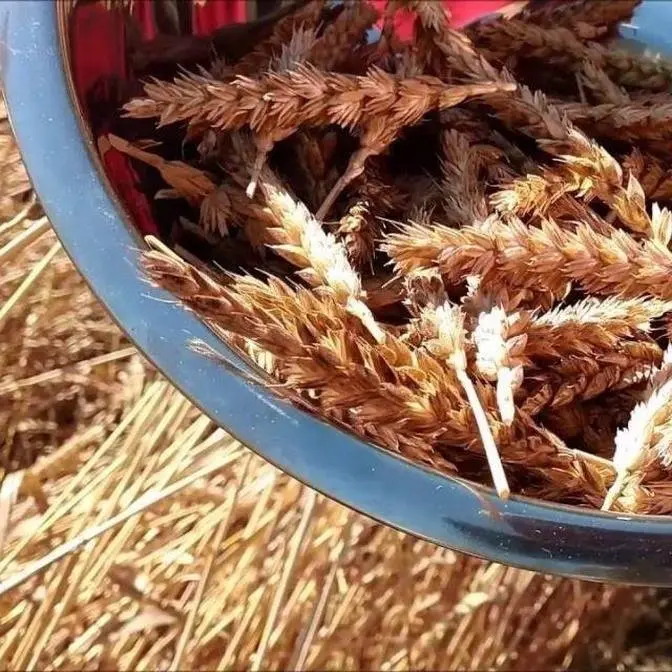
regular event. Okay what we're looking at here is uh one of the iconic grasses of eastern Australia
kangaroo grass thamater australis. So all of eastern Australia would have had this
and prior to European settlement if you looked across this landscape at this time of year when
it's in seed our landscape would have been orange but now that we've through overgrazing
and mismanagement most of this has disappeared you've now got a white landscape of the inferior
if you like lower succession native grasses. To me this is this is an absolute indicator
like a healthy pulse rate or whatever of an ecosystem coming back and we're now getting
lots of this kangaroo grass re-emerging. There's good regenerative farmers around the world that
I've seen it's not just something you pick up a textbook and you apply. If you're going to become
a really good regenerative farmer it involves a whole worldview change of how landscapes and
nature and the earth systems work. True shift to regenerative farmer is the mind and heart process.
A paradigm which is the whole construct within your mind and your neural cells is very powerful
and we all grow up in and to suddenly change and jump ship is not easy and it takes courage and
you can be isolated. So I went back to uni and did a phd in my late 50s asking that question
what's behind it this resistance to change but also why are these regenerative farmers
in a totally different paradigm and so I interviewed 80 of the leading regen farmers
in southern Australia and the key question was what made you change and in 60 percent of the
cases it had been a major life shock making them open to new ideas. For some it was a marriage
breakup others it was burnt in a bushfire others it was a big drought it was that sort of thing
made them sit down and say there's got to be a better way or a different way
and the other 40 percent of the cases it had been a series of little incidents or they were
already that way inclined to more natural way. When we first did holistic management we were
right out there you know we were probably frowned upon by the general farming community and they
probably thought we were mad and I'm sure that that was the case with many people who
back in those days started practicing holistic management. Today it's more mainstream and it's
accepted by the farming community as something different but still we're in the minority for
those people that manage this way. I think regenerative agriculture now it's not mainstream
but it's it's got past you know the early phase innovators and the early adopters I think we're
So we're standing in a paddock here that's called Brian's which is named after my father.
On Glenwood there's been a long history of saffron thistles in particular dominating
pasture over the summer period. With the change in our grazing management we've seen a
very visible decrease in the amount of thistles weeds in the landscape but after the drought
we've seen them come back with a vengeance in particular saffron thistle which makes it very
hard for stock to move around and for us to move around in the landscape. In the past we
might have sprayed those out but today with our change in the mindset and what we're trying to
do with the landscape we believe those weeds are there for a purpose so for instance saffron
thistle have a very long tap root so they're they're breaking up that ground they're a
successional plant so they're making making room and they're creating an environment for better
plants to come up behind them and if you look down here at the at the soil surface you'll see
that the saffron thistles are now dying and we've got a lot of warigo grass and other native
perennials coming up underneath it. The warigos come back because of our grazing management
but also because we've been able to maintain ground cover even through what's probably the
worst drought in my lifetime we've been through. That's one warigo plant. Shame you're tearing
the roots off underneath it isn't it? Yeah I guess why I spend a lot of time writing and talking
about regenerative agriculture is that those practices have terrific hugely important
implications for both family farms. It makes them more resilient and profitable in my view
and the implications for planetary health and human health are also enormous. So my experience
of looking at the best regen farmers is that their profitability's gone up. One big reduction
that we were able to find was labour efficiency as well as the way that labour is used on farms. So
in the past it was spraying weeds, pasture renovation, spreading superphosphate, ploughing
the land, that sort of stuff. Today we spend a lot of time on livestock management, moving those
livestock through the landscape as well as fencing and subdivisions. The other big cost reduction has
been around the inputs that we use such as superphosphate, chemical and pastures. So we do
none of that now and in in all of that our productivity hasn't changed. So we're still
achieving the same outputs as far as wool and meat and surplus sheep sales but our profit is a lot
bigger because and a lot more sustainable year in year out because we don't have those inputs.
If you clear country which is what industrial agriculture is based on, you plough or you spray
you can then control what you plant. What you're doing is releasing enormous amounts of carbon not
just in the chemicals and the fertilizer but once you you clear or spray you're letting carbon go up
because you've killed your plant photosynthesis. So regenerative agriculture is all about having
more plants on the ground for as long of the year as you can to keep pulling that carbon down
through photosynthesis and when you have healthy soil biology they're the critters that bury that
long-term carbon. I mean that's a direct example of where Regen Ag has the best solutions to
climate change but the other aspect that's not talked about enough is the role of the water cycle.
Now that what's called the hydrosphere, the amount of water in the earth's atmosphere and on earth
and stuff, it's probably about 80 percent the key player of regulating the planet's cooling
and the more we bear country, put up more carbon dioxide, interfere with water cycles,
the more we're negatively affecting the whole water cycle and the cooling potential
of what's called the hydrosphere of the planet. So the two big issues of healthy landscapes pulling
down carbon and then enhancing the hydrosphere, the cooling effect of the planet. Regen Ag by
a country mile is the best way to address those big issues that are threatening the planetary
survival. That so-called enlightenment process and the scientific revolution for all its wonders,
all that brilliant thinking and philosophers and stuff, what it did was separate us from Mother
Earth compared to an indigenous society whose societies are usually very sustained and long-living.
If you look at the modern human health diseases, in delayed fashion by about 10 or 15 years,
they show exactly the same exponential rise and we now know they are most of the cause of that,
not all the cause, is related to the chemicals we're putting into our food and our body, like
glyphosate, we know it gets in and the stripping out of the healthy nutrients that our bodies need,
replacing them with only a few simple man-made chemicals. We co-evolved in landscapes to have a
huge diversity, not just your minerals and all your, you know, 90-odd elements, but the tens of
thousands of phytochemicals that are in forage plants, which in a healthy landscape your animals
are eating, let alone what the biology is pulling out of the soil. One of the key soil biological
factors in a healthy soil are your root fungus. They're called microhazel fungi. In a healthy
soil, these guys have a really unique symbiotic partnership with plants. Their part of the bargain
in symbiosis is to go off and pull in all the nutrients and micronutrients, hundreds of them,
back to the plant. And if that's a forage plant for meat or a crop, those nutrients are into that
food. In a healthy cubic metre of soil with root fungus, those feeding tubes of the fungus,
bringing all those nutrients, could be 20,000 kilometres of them. If we come along and plough,
spray over graze, those root fungus go, and you've just got this drug-addict dose of a few
simple minerals. So a key factor that's just not discussed behind all that exponential rise of all
our modern diseases is what we're doing to our soil. So the importance of regenerative agriculture
is just, you can't even state it. It's the best solution to our planetary and human health crisis.
There's no doubt about it, the understanding of what industrial agriculture and modern
pharmaceuticals and stuff is doing to human health. It's opening up a greater awareness
amongst consumers that healthy food off healthy landscapes is the best medicine you can have.
And people have only got to taste food that comes from healthy biology,
what the microhazel fungi deliver and all the rest of it, and it's a totally different food.
The consumer around the world is now a lot more switched on to the way where their clothes are
coming from, where their meat's coming from, where their vegetables are coming from. So
there is a general shift in the world around sustainability and today regenerative agriculture.
Today the wool fibre which is processed into next to skin wear and garments and jumpers and
whatever else is probably the only natural fibre, when managed holistically, that can regenerate
the landscape. People in the city, young and old, can play a role here. You can shift where you can
if it's not too expensive to food that's full of, you know, organic farms or local food gardens.
We're really smart, well-researched consumer decisions and that applies to beautiful natural
fibre like wool off regenerative farms that doesn't use any chemical. Get informed about
if you go to one of the big supermarket chains just how crap some of that food is and it's
health-destroying. Experiment even if in a small way with growing your own and go to some of the
local food markets, the organics and just taste the difference. I'm friends from university with
some of the leaders in the world systems at ANU and elsewhere who work with Stockholm Resilience
Centre and the other and they are, if I can use plain language, they are shit scared about what's
coming and the leaders now, there's almost 90 something percent agreement amongst thousands
of scientists, which is very rare, that we may only have one generation, 25 years, to turn this around
or we'll have a runaway earth and humans will become extinct. There's so many scientists talking
about the bad news of the Anthropocene, the human-made next phase of earth, but I see the
regenerative ag story as unbelievably exciting because of all the solutions around regenerative
agriculture has some of the best, if not the best, solutions to those seven biophysical earth systems.
I suppose what we're doing here is a form of regenerative agriculture but
there's so many different ways that people are practising regenerative agriculture out there.
What we're doing is practising holistic management which does promote a regeneration of our
landscape and that's important to us because we want our future generations to be able to come
onto Glenwood and have a future, both a financial and a lifestyle future here on Glenwood and it's
also better for our animals and it's less stressful for us if we manage that way. We don't
want to revert our landscape back to what it was 200 years ago. We think we can improve on that and
we can have, by encouraging a diversity of perennial plants, we're going to have a very diverse
flora and fauna landscape. How do I see this farm in 30 years? Which I won't see. It's going to be,
I hope, quite different. You know, we've planted over 60,000 trees and shrubs into the over cleared
grassy woodland so by then it will be mature and diverse and we would have planted a lot more by
then so it'll look stunning in that respect. Going for a drive we're starting to see the original
beautiful perennial native grasses, kangaroo grasses, starting to come back.
I would hope in 30 years, as well as the grassy woodlands starting to come back
in big mosaics and patches, the grasslands would start to look predominantly orange.
Underneath that will be this huge diversity of what was there before.
Look at all the function that goes with it.