
Augustus and the Pax Romana
5 Video Views·Dec 27, 2022
From the Colosseum to the ancient Forum, Rome is known for its beautiful relics from a lost empire.
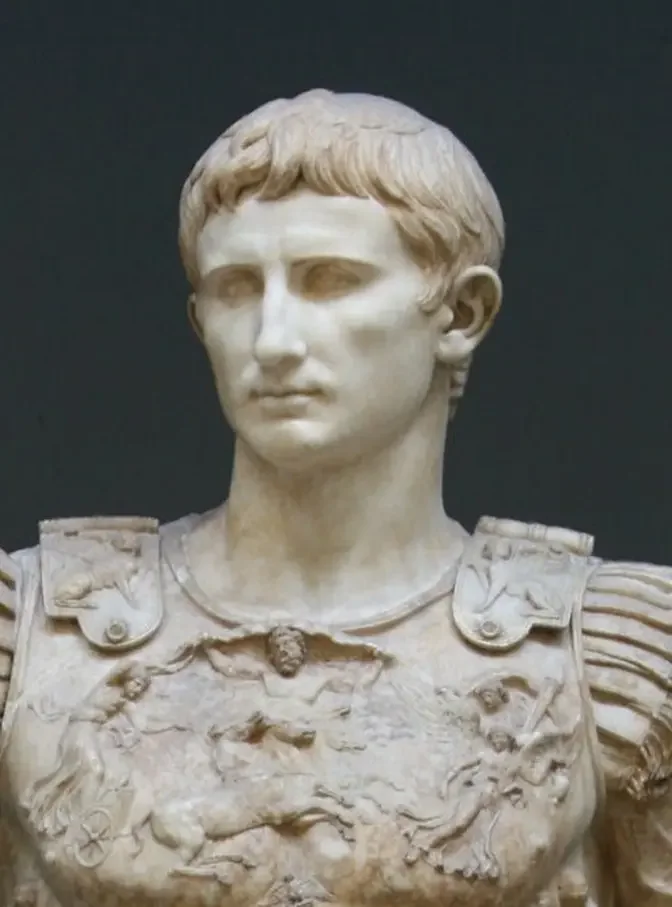
Among the ruins of columns and statues, one can still see the influence of Rome's first emperor,
Augustus. Augustus ruled for 44 years and his reign began an era of peace and prosperity
When Augustus came to power, he was 19 years old and still known as Octavian.
It was 44 BC, a time of civil strife in Rome. Octavian's great uncle, Julius Caesar,
was murdered by members of the Roman Senate who opposed his attempts to reform the government.
Taking command of Caesar's army, Octavian joined forces with Caesar's chief general,
Mark Antony, and together their armies hunted down Caesar's assassins. Octavian and Antony
shared power in Rome but soon quarreled. At the Battle of Actium in 31 BC, Octavian defeated
Antony and his powerful ally, Queen Cleopatra of Egypt. In 27 BC, as a reward for his victory,
the Senate gave Octavian the name Augustus, Exalted One, and the title of Princeps,
or First Citizen. With time, the importance of the Senate decreased. Augustus not only brought
an end to the era of the Republic, he achieved Caesar's dreams of government reform.
According to the historian Suetonius, Augustus said his goal was to establish a stable government.
May it be my privilege to have the happiness of establishing the Commonwealth on a firm
and stable basis, but only if I may be called the architect of the best possible government,
and bear with me the hope when I die that the foundations which I have laid for its future
government will stand firm and stable. To govern more efficiently, Augustus created a civil service
to enforce the laws. He also encouraged outlying provinces to rule by self-government,
freeing his armies to conquer more land and expand the empire. To help the economy and make
the tax system fairer, Augustus ordered a census or population count to gain an accurate sense of
who was taxed. Four times I came to the assistance of the treasury with my own money, Augustus said.
Under Augustus, writers such as Livy and Tacitus produced their histories of Rome. The poet Virgil
wrote the Aeneid, an epic poem that describes the founding of Rome. Artists and sculptors created
beautiful mosaics and lifelike statues. Craftsmen and architects erected palaces,
temples, and large public amphitheaters, and improved entertainment venues such as the Circus
Maximus. Noting his accomplishments during the Pax Romana, Augustus wrote,
I found Rome a city of bricks and left it a city of marble.