
Augustus, 2000 years after his death, still has impact on Rome - Ancient Rome Live
10 Video Views·Dec 28, 2022
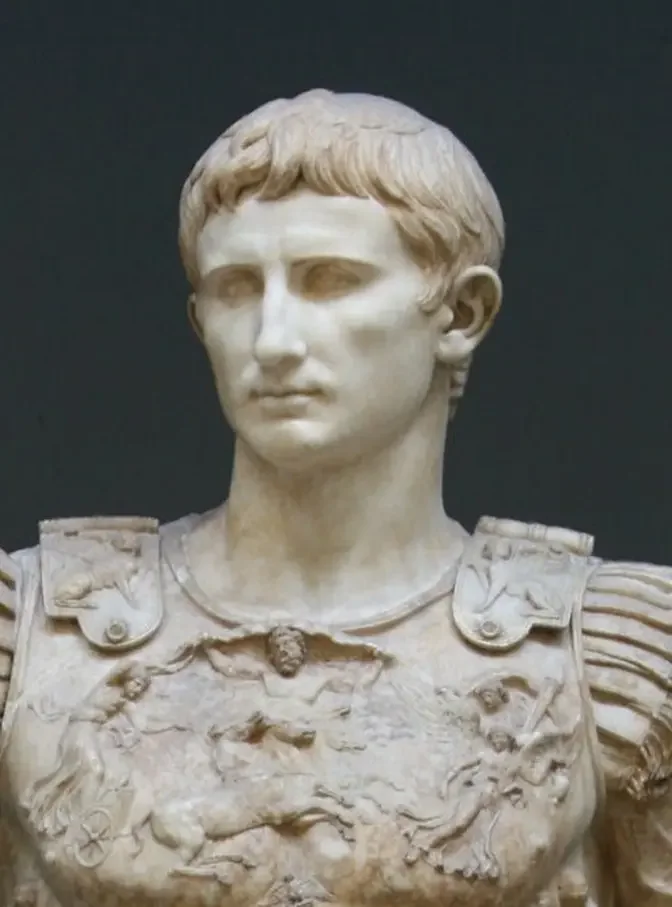
The Emperor Augustus was born September 23rd, 63 BC
and died August 19th, A.D. 14.
And this year, 2014, we remember 2,000 years since his death
and the lasting impact that he had not just on the city
but the entire empire of the ancient Romans.
Where did Augustus leave a lasting mark on the city of Rome?
Well, we can look at very many places.
Of course, we go to the Palatine Hill
where he had his house next to the temple of Apollo Palatinus.
We can go down to the Forum
where we can see his completion of a number of projects
started by Julius Caesar.
The Basilica Iulia, the Curia Iulia,
and, of course, he added other constructions as well.
We can go into the campus marshes sprawling from the southern end
in the Theater of Marcellus all the way to the north
where today's Piazza del Popolo is located
and nearby we have the monumental Mausoleum of Augustus.
The cornerstone project, of course, is the Forum of Augustus.
The Roman Forum itself was already overcrowded
and Julius Caesar started his own forum.
That's what Augustus completed,
but he also embarked upon his own unique creation
and that is the Forum of Augustus.
This is the Forum of Augustus.
It's one of the largest, most monumental constructions by the emperor.
Built between 42 BC and completed only in 2 BC,
it is one of the most magnificent constructions in ancient Rome.
We can see so much of it today.
It's still so well preserved.
The campus marshes was a large, sprawling area,
a floodplain that was largely unexploited
when Augustus arrived on the scene.
In the southernmost end, he defines it
by the construction of the Theater of Marcellus
and to the north he limits it with his massive mausoleum.
In between, there are many projects,
but one standout still today is the Ara Pacis,
which is dedicated in 9 BC
and you can visit it almost in its entirety,
still preserved today.
The Mausoleum of Augustus was one of the great projects of the emperor
and is where he was laid to rest August 19, AD 14.
Today, it is a project of restoration still waiting to happen.
Originally, Augustus placed his Res Gezdi,
or his autobiography, on the Mausoleum of Augustus.
Today, the Ara Pacis Museum boasts a copy of it on the outer wall
and you can come and enjoy and read about the history
and the life of Augustus according to the man himself.
What I absolutely love about this section
is you've got so many things that you can read about
and you can actually physically see within the city,
like the Theater of Marcellus
and the Temple of Apollo nearby.
And so many of these things that he's describing, that he builds,
we actually get to see still today, still standing.
Augustus reshaped Rome.
Augustus modernized Rome from the republican era into the imperial age.
And he didn't act alone.
He had many colleagues and supporters.
We can look at the projects of those allies all over the city.
Lucius Plancus rebuilds the Temple of Saturn.
Calvinus rebuilds the Regia in the Roman Forum.
In the Campus Martius, of course, the key figure is Marcus Agrippa,
who builds baths, who brings in an aqueduct into the Campus Martius area
and builds the Pantheon.
We can look to the work of Balbus,
who builds the third theater in the city of Rome.
The Pyramid of Cestius dates to the time of Augustus
and this is a monumental tomb
that would greet you as you made your way into the city.
Later in the sequel,
when the Aurelian Wall was constructed in the 3rd century AD,
it became incorporated and thereby preserved
by being part of that Aurelian Wall circuit.
And today it stands in all its majestic glory.
It's been restored, it's been cleaned,
and the water seepage has been resolved.
This is one great, spectacular monument,
particularly important as we celebrate 2,000 years
since the death of Augustus in 2014.
This Augustan monument, restored, stands out.