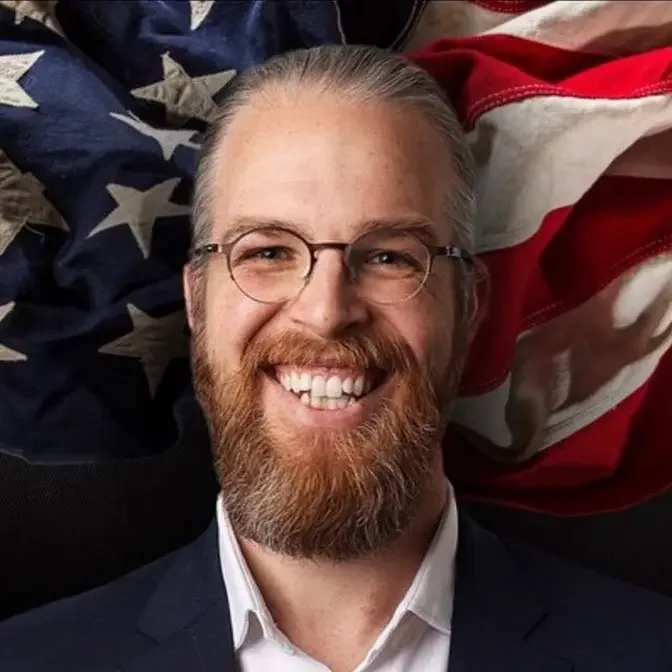
Technology is becoming the new battleground for privacy and liberty. Glenn Meder, founder of Privacy Academy, joins me to explain how biometric scans, digital identity systems, AI-powered scams, and new “online safety” laws could reshape how freely Americans live online.
To learn more about investing in gold & silver, visit http://goldwithseth.com, or call 626-654-1906
Check out water & air filtration products at https://airwaterhealing.com, and use code SETH for a discount and free shipping.
NMN-3 from Brightcore – Cellular Health 25% Off with code: MIA at https://brightcore.com/mia Or call (888) 575-6488 for up to 50% OFF and Free Shipping – ONLY when you call!
Go to https://nutronicslabs.com/SETH for 50% off with autoship + a FREE platinum bottle of IGF-1. Use code “SETH” for an extra 10% off.
For high quality storable foods and seeds, visit http://heavensharvest.com and use promo code SETH to save 15% on your order.
Kimchi One from Brightcore – Improve your health, improve your life. 25% Off with code: MANINAMERICA at https://mybrightcore.com/maninamerica Or dial (888) 575-6488 for up to 50% OFF and Free Shipping – ONLY when you call!
To learn more about Red Light Therapy, visit http://myredlight.com and use promo code SETH to save.
Seth Hullhouse and Glenn Meter discuss the rise of \"technocracy,\" where governments and Big Tech collaborate to implement mass surveillance and social control. They warn that child safety laws and AI are being used as pretexts to eliminate internet anonymity, mandate biometric verification, and establish a social credit system, urging citizens to reclaim their privacy through decentralization and local action.
We're in a battle right now for our privacy and our liberty, and technology is the battleground.
The thing is, most people still haven't seen it yet. They think that this fight is happening
somewhere else, in Washington, in courtrooms, in some far off place. But it's happening in
their pocket, on their phone. Every single time they scan their face just to check their bank
account. My guest today has spent over 20 years studying exactly how that happens. And here's
a bigger picture that we have to keep in mind. For almost a hundred years, there's been a plan
to take away our liberty, not by force, but by slowly replacing our freedom with technology
that watches, tracks, and controls. It's called technocracy. And piece by piece, that plan has
been built through companies that look private on the surface, but were actually funded and shaped
by the same government agencies that could never legally spy on you directly. The internet,
Google, even Siri, all of it traces back to defense and intelligence money.
So when a private company asks to scan your face just to open an app, that's not just a tech
company being careful. That's a piece of a bigger plan falling into place. My guest today is Glenn
Meter, the founder of the Privacy Academy. He watched what happened during the COVID lockdowns
and realized a lot of that control wasn't really about a virus. It was about using technology to
track and manage people. And that's what's pushed him to start teaching everyday folks,
not just tech experts, on how to protect themselves in this fight. So whether you're
comfortable with computers or you still ask your grandkids for help setting up your phone,
Glenn's going to walk us through why so many new online laws, ones that sound like they're
about protecting children, might actually be pushing all of us towards giving up our privacy
for good. Welcome to Man in America, a voice of reason in a world gone mad. I'm your host,
Seth Hullhouse. Now, before we start, please hit that like button. It really helps get this
information out to more people. Please subscribe, share this with someone that needs it, and leave
me your thoughts in the comments. Remember, every episode is done as a podcast and a video. So if
you'd rather listen than watch, just find us on your favorite podcast app. And if you're on Apple
Podcasts, a quick review helps us to reach even more people. All right, let's get in this
conversation now with Glenn Meter. Glenn, it's great to have you back on the show. Thanks for
giving us your time and being here with us today. Yeah, it's an honor to be here. Glad to talk about
this very important subject. It's kind of wild because I don't know the exact date we had our
last interview, but it might've been maybe a year ago or eight, nine, 10 months, something like
that. And I feel like the awareness and the threat of privacy and technocracy and this digital control
grid has just, it's amplified to something that I couldn't have imagined a year ago. And I think in
a good way, it's something that people are talking about, whether it's flat cameras or data centers
or AI. And so before we jump in, just give us a little bit of your background, because I think
that when we're looking at the idea of technocracy and a digital system that's a control grid,
a lot of it comes down to one thing, which is privacy, right? Which is they are able to rule
us off of the data they can collect from us. And so if we can limit the data they can collect,
we can increase our freedom and increase our privacy. And so I think your background really
fits into this. I'll let you just introduce yourself and we'll dive in together. Yeah.
So I've been an entrepreneur for a very long time and I have been, I love America. I've been a
student of the constitution, the founding fathers, and I've also been very involved in privacy and
security for 20 plus years. And I think I see things that a lot of people don't see just because
of the history that I have and the perspective I have. And one of the things that I saw with COVID
was this is not what they say it is. This is about locking people down, getting rid of their
rights and really controlling people on a technology basis. And that was really the first,
like the first shot across the bow, or maybe the first attempt or the first trial run or whatever.
So anyway, that's when we started Privacy Academy because I wanted to, I just think it's very
important that people understand how to protect themselves and their privacy moving forward,
because it is becoming very, very, I think technology and privacy is really the battleground.
I think this is the issue of our time. And this, you know, I was just at Freedom Fest
and it's, you know, it's a great, it's a great group of people. It's a great event, but I was
really kind of disappointed at the level of understanding that the people there have about
the attack on our liberty is coming through technology. I mean, I had to go through and
explain it to a lot of people and there were a lot of people that just didn't seem to
have any awareness of it, which is surprising to me. And we really do have to raise people's
awareness of this issue and we have to understand that this is how the attack on liberty is happening.
I think it's definitely caught a lot of people off guard.
And I think there's also a lot of people that really believe that getting Trump back in,
especially for his second term, that he was going to really work to bring America much,
much closer to the constitution. And I think there's certain ways that he has.
However, when you're looking at the fourth amendment, you're looking at freedom of speech,
you look at some of those core principles, there's some pretty blatant things going on.
I think that from what I've kind of come full circle to is, I really think that if you look at
how all the tech bros in the Silicon Valley figureheads, Zuckerberg and Bezos and Palantir,
a lot of these companies, how closely they aligned to Trump right as he was approaching
the election for this second term. And what I think that we're witnessing, and then Musk
obviously is being central to this, is I think that what we're witnessing is a technocratic coup.
I think that we're witnessing our government going from whatever system it was before,
moving into a very digitized system. And alongside of this, we're seeing the data centers going up
everywhere, the flock cameras, the AI, just completely everything booming in this particular
sector. And so, coming from your background in online privacy and trying to counter the
digital overreach of a government, what do you see? Do you see any red flags under the
current administration? What are you watching and what's standing out to you as a concern?
Yeah, I think what you're saying is right. The thing that bothers me is that
MAGA had a lot of really good ideals and then it was just bent. It's always spun different ways.
And the people that follow Trump just bend with him. And that's really disappointing. And I think
one of the problems with Americans is that our fight for liberty is really our fight for our guy.
And I don't think that's how it should be. We need to stand up for liberty ourselves
on a local level and on the state level. And that's how the Constitution is written,
the Constitution, 10th Amendment, decentralized power structures.
We have to take care of this ourselves and stand up for this ourselves and not just rely on our
guy. There's no one that's going to save us from this. And maybe this is a good transition into
another topic here, but one of the things that's really blown me away is how people
are buying into this story about the online child safety law. And so these online child safety laws
are coming in in all states, all states are passing these laws, but it's also being passed
by Congress and Senate and Trump will sign it. And it's a really very dangerous law. It's not
about protecting kids. And the thing that blows me away is just, okay, we've just gone through
this whole Epstein thing, and we can see that these people are hiding. I mean, they're just
hiding in plain sight what they do. They're not getting prosecuted or anything like that.
These people in Congress are either hiding them or they are the Epstein perpetrators, right?
And then we're trusting them to pass these online child safety laws. They don't care about our kids.
You know, they don't care about that stuff. It's not about protecting kids. And so it's a little
bit disappointing to me that people through it all are still looking to the government to solve
these problems. Because I was just talking to at Freedom Fest, actually, I talked to Rand Paul for
a few minutes, and I talked about this. And he said, the problem is, if you go against you being
him, if a senator or a legislator goes against the online child safety law, he says, we get a
flood of calls from organizations and people on the ground saying, you know, don't you care about
kids? How can you not pass this, all of that stuff? And so that's on us. We have to really,
we have to learn about this stuff and what it really is and we have to stop it.
Here's an uncomfortable question. Why should your messaging app need to know anything about you?
Most of us have already accepted that technology companies collect enormous amounts of information,
what we click, where we go, what we buy, and who we interact with. That information is valuable
because your attention is valuable. Keet takes a radically different approach. So Keet is a
free messaging, file sharing, and video calling app built peer-to-peer. So there's no centralized
company database that's holding onto your conversations. There's no metadata tracking
and no phone number or email are even required to use it. Your messages are end-to-end encrypted
and move between the people in the conversation. Your private life shouldn't be another crop in
someone else's data farm. So to get this today, visit keet.io man in America. That's Keet,
which is K-E-E-T.io forward slash man in America. So download it free and write one person that you
trust and start a conversation that belongs to you, not some big data harvesting company.
One thing I'd also like just to throw out, and I want to continue down the line of the child
safety law, is that you're talking about the constitution and what it means to basically to
take responsibility for our own freedom and liberty and independence. And one of the tricky
things that I've seen happening is that the constitution clearly limits the powers, especially
of the federal government, with surveilling its citizens, etc. Yet what I see happening is that
there aren't really private companies. I think that they're just fronts for the military-industrial
complex, whether you're looking at the internet itself, which came out of DARPA's own labs, or
Facebook. Is it LifeLog from DARPA? You look at In-Q-Tel, CIA, the funding going into
these massive companies. And so I think that this is the tricky part of where we're sitting
in history, is that it's not that necessarily the government itself is building a surveillance
network, but it's that this front of companies that we're knowingly using and signing every
terms of agreement update. Who's reading through those things? Hey, new update to your Facebook
terms and conditions. Okay, check. Where do I sign? So I think that's the tough part, is that
in essence, we're voluntarily handing over all this data and information to these companies,
which are really just, it's a wolf in sheep's clothing, right? It's a government pretending to
be a sheep, where it's actually, oh, we're a private company. And that gets us in a really,
really difficult place constitutionally. And I think it really is a crisis.
Well, I think it's pretty clear what we need to do is we need to say any company that's colluding
with the government should be considered part of the government. I mean, that's something that we
can do on the state level. But what you're saying is exactly right, because this happened in England
actually recently, a couple months ago, Apple initiated on its own, it initiated biometric
verification, basically the online child safety law, which is basically biometrics,
biometric verification, or you are locked out of the internet. And this happened a couple months
ago. And that was not actually an order, at least publicly, it was not in any law,
or anything like that. At least publicly, the government did not give Apple any order to do
this. There was no law that says, okay, Apple has to do this. So Apple did it on their own to
force its users to have biometrics. And so yeah, it is absolutely a collusion between big tech
and big brother. And I just think that we have to, I think it's just a very simple thing.
If it's a company that is being paid for and working on behalf of the government,
they should be considered part of the government. And they should be held to that standard on the
state level, on the local level. And yeah. So these child safety laws, and I want you to
explain this more in detail, but am I correct in understanding that one of the holy grails
of a technocracy would be to completely eliminate anonymous usage of the internet,
right? Where right now I can go and I can open up, I'm sure it's still being monitored,
you know what I mean? But I can open up a private browser. I don't have to verify my ID before I go
on there. And I can go on there and I can search for things, whether it's political stuff or
who knows what, alternative health, et cetera. And so do you think that it's a central part of a
technocratic control grid to basically do what Apple has just done, right? To force people to
remove any element of anonymity when they're visiting the internet. Is that correct?
Yeah, absolutely. I mean, they do not want us to be anonymous. They do not want us to be private.
They want total control, total surveillance, and well, total surveillance and then total control.
And this is what gives it to them. And so they have to see what we look at. They have to see
what we read, what we post on, everything that we do, which then allows the AI to then control us.
So what these online child safety laws is, it's basically the cover is, okay, we want to protect
kids from porn or we want to protect kids from social media, whatever. Again, they don't care
about kids. It's not about that. But in order to verify that you're under 16, everybody has to
verify who they are. And they want it done biometrically. What is not being said is what
they're doing is they're behind the scenes, they're rewiring the internet. And they're putting gate
keepers in the internet. And so what's going to happen is Apple biometrically verifies, okay,
this is Glenn Meter. And he goes to this site. And what he's going to do is he's going to,
Apple will then rubber stamp, okay, this is Glenn Meter confirmed. Going to this site,
this is the article he's looking at, this is how much time he spent on it, this is where he
commented on it. Every single thing will be tracked and verified to my biometrics that this is me
on the web. And so if you think about it, what relies on anonymity and privacy? Well,
we need to be able to research whatever we want to research without concern of
repercussions coming to us. We need to say what we want to say without fear of repercussions.
If there's a whistleblower, that whistleblower needs to know that they can communicate or
release stuff anonymously without reprisal. That's the core of freedom of the press.
And so all of these things, freedom of speech, freedom of thought, freedom of research,
freedom of press, all of these things rely on our ability to be anonymous and private when we do
things. Plus our ability to transact with other people. We don't need approval. We don't need
anyone seeing what we do. That's our business. If I interact with you, if I transact with you,
that's my business. That's mine and your business. That's not the government's business.
It's not a permission-based thing. But they're turning our rights into permissions and controls.
And it's just going to be hardwired into how we live our lives soon. And so it's not going to be
based on laws. It's going to be just based on this is how it is. And so we have to stop this.
In addition to that, what role does this play in some sort of social credit system?
Because I know that in China, for instance, when everything is done through your WeChat app
that is tied to your banking, tied to your social credit system, obviously you have to verify that
you're the person using it. They can programmatically adjust whatever they want to.
They can say, okay, well, Glenn, you're no longer allowed to buy train tickets because you're
on a non-travel type ban. Or they might say, well, Glenn, you're not allowed to look at
those websites about the failures of communism or whatever it is, because we've been flagged
as having this kind of activity. And so do you think that that's part of this
stage of hiding with the good intentions? They do it all the time, right? Oh, this is to protect
kids. Everyone, hey, you all love talking about how important the kids are. You love calling out
the Epstein stuff. So hey, everyone should get behind this act, right? This is for the kids.
But of course, there's Trojan horses everywhere with what they do. So do you think that the
forcing the verification to even access the internet, do you think that plays right into
a social credit system? Absolutely. It is absolutely essential. And what we do is,
how they're presenting this to us is pieces of the puzzle. So there's flat cameras.
There's this new thing with the cars where they have the automatic shutdown. But it's not just
automatic shutdown. It's total surveillance internally in the car. They're able to track
everything that we do, everything we say. They're able to watch us. They're able to limit
where we go, how far we go, all of that stuff. The controls that are in cars now,
they have total control over us now. So anyway, my point is, these are all the pieces of the puzzle.
And we fight back against Flock. But then they come back with another name of a camera. It's a
different name. It's a different type of surveillance, whatever. So we're fighting
the pieces instead of the whole picture. We have to look at what the whole picture is that comes
together with this. So basically, what it comes down to is digital ID combined with online digital
ID. Those are the anchor points, right? And then you have AI. AI is the management of the whole
social credit system. So in the past with tyranny, what you've always had is the bottleneck of
tyranny has always been the enforcement. The number of people that are required to enforce people,
it always makes communism and tyranny top-heavy because you've just got so many people for
enforcement that they just get top-heavy and fall over. But now they have AI. AI will enforce it
with everybody all at once with no manpower. It'll be instantaneous. And then you add in CBDCs,
which is our programmable money. And so they can penalize or reward us anytime they want to.
Then you've got the control aspect of the cars, the ability to travel, the ability to pay for
whatever. All of that together is what the social credit system is. And then they can totally
control you. They can say, okay, well, okay, you're listening to, you're watching, you're
getting your news from so-and-so, so-and-so podcaster, Seth Hullhouse. So you're going to
get penalized for that. And so they have all of these controls. They're just building them all
up. And we don't see the whole pieces. We see the pieces of the puzzle or some of them, but we don't
see what they're all coming together for. And that's an important thing because I think they
want us to focus on the pieces. They want us to focus on the tree so you don't see the forest.
And so now looking at these online, there's various terms for them, the Kids Online Safety
Act. There's been a variety of these that have happened both at the state level and at the
federal level. So my correct understanding that basically the idea is the internet can be a
dangerous place. And we want to protect the children that might just walk in. And before
you know it, they're at some dangerous location. It's kind of like Times Square after midnight.
You don't want kids wandering around there because there's the hooker on the corner and
there's the crack dealer over there. And so they're framing it, okay, well, there's a lot
of bad stuff on the internet that they've allowed and propped up, which is that's a different story.
But are they saying that we need to verify every user on the internet because we can't just say,
okay, if you're a kid, you need to be verified, right? There's no way, how do you know they're a
kid? It's like, well, they're going to force you to upload your ID or whatever. And so do you think
that they're using this as a way to basically bring in something like what you mentioned that
happened over in the UK, where to protect the children from bad things, we're now going to
require every adult to biometrically verify through fingerprint, through face scan, et cetera,
that we're going to basically do away with anonymous access to the internet,
because that's going to help the children. Is that kind of what it is?
That's coming. And and they're doing it so that it will be on the device level. So the devices.
So this is, again, where they're working with Google and Microsoft and Apple to to do this.
And yeah, it's, it's, it's very sneaky. It's very devious. And that's exactly what they're doing.
And and really what it comes down to, you know, I was just at the at G. Edwards Red Pill Expo.
And if you look at G. Edwards writing, he's got a book called The Chasm. And The Chasm is a free
ebook if anyone wants to look it up on online. But it talks about forget about Republican, Democrat,
conservative, progressive, all of that stuff. It's it's all about individualism versus
collectivism. And the collectivists believe that we have the excuse for capitalism is always the
greater good. We have to do this for the greater good. And there's always this group supremacy
where you have to sacrifice your rights for the for the good of, you know, some group.
And that's really what we have turned into as a society or what they're trying to turn us into.
We have to stand up for liberty and the principles of liberty and the principles
of individual liberty. And one of the other differences between collectivists and individualists
is that individualists believe that our rights come from God or that our rights are inherent.
If you don't believe in God, at least our rights are inherent in who we are,
which means that the government doesn't have the authority to infringe upon those rights.
The collectivists believe that our rights are granted to us by government and they can be taken
away by the government. And it's all everything can happen for the greater good. And this is
this is if you look at communism, how they you can justify anything with a greater good argument.
You can justify killing groups of people, enslaving groups of people.
You can justify anything with the greater good argument. And so we have to stand up for the
principles that America was based on, which is the individual liberty.
And so in terms of how to actually stand up, it's been encouraging to see
these city council meetings where all the residents are there opposing a data center
or opposing flock cameras. And you've seen that that's actually had an effect. It's not just
some charade. It's legitimately stopped billions of dollars in data center development. It's
removed flock cameras and even any other axon or any other kind of license plate reader cameras.
And so that has an effect. But I also think that you can be missing the point with that. You can't
see the forest through the trees. So you might get really focused on flock cameras, but then
realize that you miss the fact that every flock camera that gets is being replaced by an axon
camera. And they do that all the time. It's a very simple human control tactic. Hey,
focus over here while I move in behind you and flank you from the side.
And so when it comes to this, in particular, say like the online safety acts for this,
which seems to be a very well thought through mechanism for bringing in a mandatory
verification, ID verification for internet usage. How do you fight back against this? How do you
resist this? What can you do? Yeah. So the first thing is to become aware
and become aware. And so we have a five step plan for fighting back. So step one is to become aware.
And so that is become aware of what the real issues are. Also, but part of becoming aware is
making sure that you're not being controlled. Because if you search the web on Google,
well, Google is controlling what you are seeing. And so you have to de-Google yourself. So that's
part of the whole become aware thing. The second point is get your own house in order.
Get your own privacy, all of that stuff in order. Really understand what it means,
the constitution, the declaration of independence, the founding father's writings.
But then the third point is share, share, share. Fourth point is act locally. We have to act
locally for this stuff. And then the fifth point is to, after we've done everything we can do,
just trust in God and just live your life, the best life you can live. Don't live in fear.
And so when, so going back to your point there, I love that people are standing up to flock
and the AI data centers. And I think they're doing a great job. I think there's just one
slight change that I would make to the way people are doing this. And that is,
it's not about, we can't just focus on the individual issue. We have to also focus on the
principle of liberty and the principles of liberty, the principles that privacy is essential
for all of these other rights that we have. And so when you're standing up for a flock,
also stand up for our right to privacy and really educate yourself. Because one of the things that
I would recommend is that people look up the story of the writ of assistance, because the writ of
assistance, going back to the founding of the declaration of independence, this was one of
the core reasons that we, that the declaration of independence happened is the writ of assistance,
which is, Sam Adams was in a courtroom watching this argument. It was Otis, James Otis stood up
for five hours arguing against what was called the writ of assistance. And the writ of assistance was
a blanket warrant that the British soldiers had to search anyone at any time for any reasons
without cause. And James Otis stood up there for five hours arguing against this. And Sam Adams
said that this is where the child independence was born. And this was really the core thing that set
off the whole thing about the need for the revolution, actually, is this search warrant
that they could inflict upon us at any time. And that's what we have now. These online
child safety laws, the online surveillance that they're doing on us, the other types of surveillance,
going back to the beginning of the founding of the US, this is what really spurred the revolution.
And so anyway, that was, I go on these rants, but that was, I think people have to keep that
in perspective when they stand up against flat cameras, data centers, all of that stuff.
I'm really glad that you brought this up because this is new to me.
And so right here, this is just a Britannica summary, the writ of assistance. It says that
in English and American colonial history, a general search warrant issued by superior
provincial courts to assist the British government in enforcing trade and navigation laws. Such
warrants authorized custom house officers or with the assistance of a sheriff, justice of the peace
or constable to search any house for smuggled goods without specifying either the house or the
goods. And so you can see that it's the same thing, basically, right? Where here, I'm guessing
that this was born out of a reaction to people trying to evade taxes, right? So the import taxes
that were, again, it led to the Tea Party and some of these things, but that people were saying,
okay, well, there's this tyrannical system that's forcing me to pay these taxes, yet they don't
deserve this money. And so I'm going to get outside that system. And so they then use that
as an excuse for some blanket search warrant. Basically, as you can see what it says there,
I can imagine it. It's like, oh, well, hey, old Billy over there, I think he's got a couple of
muskets. He might be a threat. He's part of that militia. He might have some muskets. It's like,
okay, let's get the local sheriff or whatever it is. Let's go do a search and we'll say, hey,
we're going to look for the fact that you're smuggling sugar, right? And again, that might
be their same excuse. And what we're seeing here is it's the same thing. It's just in the future
where you look at flock cameras. It's like pre-crime almost, like what they're getting into.
It's like, oh, well, they're arresting people. They're pulling them over at gunpoint
because their camera might've thought that that person's license plate was for a stolen car.
But how do you know? What if this person was an online commentator and he was questioning the
government too much? And so then they pull them over because of a flock camera supposedly,
and they can use it to target him. But it's interesting what you kind of mentioned,
that this writ of assistance was that that was part of the foundational things that led to
the revolution. And I feel like that now we've almost got rid of assistance for every single
thing possible, that they're reading our email, they're reading our text messages,
they're listening to our conversations through our phones, through our cameras,
they're tracking our GPS movement. They're using things like signal trace that can detect,
oh yeah, this person who has these AirPods and that smartwatch just drove by this location.
I mean, it just seems like the amount of invasion into our own privacy has become
so exponentially out of proportion, I think than what the founders would have ever imagined
possible. If you could go back in time and buy oil before the world relied on it, would you?
Of course you would. Anyone would. So why aren't you buying silver right now? You see,
the people who recognized oil early didn't just make money. They got ahead of one of the biggest
economic shifts in history. And today, a similar opportunity is unfolding with silver because
silver is a lot more than just a precious metal. It's a critical resource used in solar panels,
electric vehicles, defense systems, AI infrastructure, and even these massive
data centers that are powering our digital world and the surveillance grid. So while demand keeps
growing, it's actually still affordable enough that the average American can start accumulating
it right now. And that's why investors are turning to silver to protect against inflation
and own one of the world's most important strategic resources. Don't be the person who
looks back in 10 years and says, I saw it coming, but I just didn't act. I'm sorry.
So visit goldwithseth.com and learn just how easy it is to own physical silver. Again,
that's goldwithseth.com. And here's something a little extra. If you just mention my name,
when you reach out to Noble Gold, they're going to send you a one-tenth ounce of gold coin
just as a thank you when you open a new qualified account. So again, that's goldwithseth.com.
What we're in right now is basically that point where we were before the revolution where,
you know, like I said, with the writ of assistance, they didn't even need an excuse
to search you. I mean, they could just come in your house and basically tear apart everything
and they didn't need a reason. They didn't need anything. And this is what I'm saying is
one of the core principles of our society is we believe that you're innocent until proven
guilty. And mass surveillance flips that on its head. One of the other principles is that
we own this country. Our representatives answer to us. We don't answer to them. They're not our
rulers. And so really what we should do, I saw something funny on Twitter the other day or X,
where somebody said, you know, we should have flat cameras watching the legislators,
the governor of the state, all of this stuff. They should be the ones under surveillance,
not us. We're their boss. And so that's another principle that we have to stand up for
and yeah. And so in terms of the more practical how-tos, I know that you've,
you know, literally you have an entire academy in teaching this. What can people do? I mean,
it seems like, I mean, look, if you're over in the UK and all of a sudden you see a pop-up from
your phone, your iPhone updated overnight, and you now have to use facial recognition to access
the internet app, you're kind of up the creek without a paddle. But what can we,
like, what are practical things that people can do to resist this?
Yeah, there are very real things that you can do to get private. That's what I want to say,
first of all, because a lot of people just say, our privacy is gone. Let's just, I mean,
there's no way to fight it back. But that's not true. There are definite ways that you can fight
back to this and keep yourself private and secure. De-Googling yourself is one of the
very important things. You know, anything Google, get it out of your life. Stop using the Chrome
browser. Stop using Google search. Stop using an Android phone. But iPhone's not the solution
either. I guess one of the other points that I would make is one of the things that people do
when they decide to get private is they just kind of go head first into this and dive into it.
And then they realize there's a lot to do, actually. And they get overwhelmed with,
you know, do I do this and this? And how do I do this? And they just say, they just kind of throw
up their hands and say, I can't do this. I'm not tech enough to do this. But that's not true.
It's just that they have done it the wrong way. And they're trying to do too much too fast. And
so what we do with Privacy Academy is, okay, do this. Just this one thing. So we break it down
into a bite-sized piece. Don't look at anything else. Don't think about anything else. Just do
this. And then once you do that, okay, now just do this. Now just do this. And just keep moving
forward. And don't try to do too much at once. Just have patience with yourself. Move forward,
and you will get to the point where you are really quite private and secure. And that's
really the best formula for this is just take your time, but keep moving forward and just do
the things the right way. And so you've also you give a lot of free webinars, right? There's a big
part of I think of what you do is you obviously this conversation is meant to educate people,
we're kind of hitting that point one, right? Just be aware of what's happening.
And that's a lot of the purpose. That's a lot of why I'm doing what I'm doing,
is I'm trying my best just to kind of be the watchman on the wall and saying, hey,
there's a problem coming, okay? Like, look, there's a problem. We can do something about it.
Whereas most people are just, I guess, kind of blind to a lot of the problems. I think these
days less so. But walk us through, because I know that you've got a webinar coming up.
It's a free webinar, right? Walk us through. Actually, I'll pull up the page for it.
And the link will be in the description as well, which is privacyacademy.com
slash man in America. And again, that link will be in the description as well. But
what will this, what will people walk away from after going through this free webinar?
Yeah, so what we do is it is an educational webinar. And so the first thing that we do is
we talk you through really what's going on and really kind of frame it in a way that you
understand what's coming your way. But also frame it in a way that, yes, this is something that we
can stand up to and we can protect ourselves from. Then we go through five things that you can do
right now. And they are really powerful things that you can do right now to get private and secure.
And then we go into a section where I kind of, I show that there's a bigger perspective here
about what's going on. We talk about the three threats. So there's really what you and I have
talked about today is Big Tech and Big Brother and how they're colluding. But there's another
threat there, and that's hackers and scammers. Hackers and scammers are really dangerous.
And I'll just tell you, last week I stopped my father from getting scammed.
It was just coincidence that my wife went over there at one point, he's 85, my wife went over
there to pick up our nieces to take them out for ice cream. And she heard him on the phone
with support and he had been hacked and he was very anxious and very upset. And he'd been on
the phone for apparently over an hour. And she called me and said, you got to call your father
because something's up. And I called up my mother. She was right there. And I said, what's going on?
And she said, he's on the phone with Apple support. And I said,
no, he's not. Hang up. Hang up the phone right now. And he was in this bubble. He was talking
to them. So he didn't hang up right away. So I just said, put me on speakerphone. Let me hear
what he's saying. And he was talking about, you got to go down to Home Depot and buy some gift
cards, $14,000 worth of gift cards, and then send them off to wherever. And when you hear that,
that's ridiculous. How could anyone think that that is real? But when you're in the moment with
these scammers, they create this bubble of illusion that you get stuck in. It's kind of
like the whole COVID thing where they get your emotions worked up so that your brain doesn't
think. And so anyway, I mean, I'm going off on another rant here, but I basically just said,
hang up. Hang up the phone right now. You've got to hang up because these are scammers. They've
got you on the line. And I could tell that he was very agitated with this afterwards.
But this is very real. And they're being super powered by hackers, by AI. Scammers and hackers
are being super powered by AI. Very, very dangerous. And not only that, but the more
information that the big tech and big brother collect about us, that means that scammers and
hackers, that's a great honeypot for the scammers and hackers to get information about us. And so
the scammers and hackers love it when these government and big tech collect more data
about us. So we've just got to, it's a whole thing that you've got to protect yourself from.
This is a new world. And this is really the thing that we've got to,
this is a very important part of our world that we've got to protect ourselves from.
Yeah. It's almost like it's a new battlefront. I mean, it's like if you're living in a certain
region and there's a neighboring tribe that can come attack you at night, then you put out
watch guards and you fortify your defenses for that. But now there's a war being waged over this
little screen. And like you said with your father, and I'm quite sharp at avoiding online
scams and everything, but even me, I'm surprised sometimes at just how advanced they've become.
And I think we're just seeing the beginning of it. I mean, you're going to get a call from your
wife one day. It's going to sound like her, come from her phone number. And she's like,
hey Glenn, honey, I forgot. What's the ATM passcode again? I'm in a little bit of an issue
right now. And you'll think you're talking to your wife. I mean, these things, I'm already
seeing stories of this, the same exact stuff happening. No, that's exactly right. And that's
called the deepfake scams. And that is AI powered. And it is, like I said, it's changing the whole
scammer landscape and it will never go back. I mean, this has changed forever, forever now on.
And what it does is, and these deepfakes can be video calls too. So it can be a video call of me
or you or whatever. If I'm doing a video call with you, how do you know it's actually me?
And there's been a lot of businesses that have been scammed out of a lot of money. There was
a Hong Kong bank that got scammed out at $25 million because of a deepfake video conference
call with their client. It wasn't their clients. It was the CEO, the CIO, the CFO, and CTO,
and all that stuff on a conference call with this bank. And it wasn't any of them.
Crazy. It's crazy. Yeah. So let me bring up the webinar one more time. So the link,
it'll be in the description, privacyacademy.com slash man in America. And how does it work? You
select the time, right? This is the time it's at. And you just drop your name in there and
that's it, your name and your email. Yep. And then we'll send you a link to that. And
yeah, it'll be a good training class. And I think you'll learn a lot from it. And when you get the
link for it, I would please share it with other people. Please share it, have other people.
We got to raise the awareness of people. And so anyone that you know that would be open to this,
please share that with them. Okay. Well, good. So there's the homework for those of you that are
watching and listening. Well, Glenn, thank you again for giving us your time today. Thank you
also for doing a lot of the educational stuff that you're doing. I've heard feedback from your
classes and it's real actionable information and it's taught to be accessible. It's not
overcomplicated for people. You're really kind of meeting people where they're at and walking
them through in a way that's not overwhelming, which is important, especially for people that
are already overwhelmed by technology, like your father and the older generations that are already
feel like they're just, they've got nothing in this battle that is advancing so quickly.
Yeah. So that's our specialty is to really talk to non-techie people. And I was doing a one-on-one
with one of our clients a couple of weeks ago, and she's a lady, she was like over 70 years old.
And she just wanted to have a one-on-one to talk about a specific issue. But then before we got
off, I said, okay, now let me just give you a quick quiz. Are you doing this? Are you doing this,
this, this? And we just went through a whole list of things that we talk about. She said, yes,
I'm doing that. I'm doing all of those things. And I said, that's awesome. You are more private
and more secure than 99.999% of people on the planet. And I would even include a lot of people
that are, that are IT people don't necessarily know this stuff. So, you know, they really,
and she says, wow, I had no idea that I have, I have done all that much. So it was pretty cool
to see just this regular lady that really had mastered this stuff. So.
Which that's encouraging. Yeah, that's really encouraging. Well, Glenn, thank you again.
Enjoy, always enjoy talking to you. And I encourage people again to make sure you register
for the free webinar. You've got, you know, I think within the day that we're publishing this,
I'm not sure how soon, but it'll be within a week or so of the class, you've got time to set aside
that window. If people miss the actual webinar time itself, is there a way that if they sign
up ahead of time, they get a replay access to it? Sure. Yep. Okay. Yep. We will have a replay. Yep.
Okay. Great. All right. Great. Well, I guess no excuses then. Yeah. I do encourage people to
join us live though, because then you can ask us questions. We'll have a whole Q and A section
and just ask us any question that you want to ask us and we can answer that.
Okay. Perfect. Perfect. Well, Glenn, thanks again. It's good catching up with you again.
Thank you for what you're doing and yeah, take care. All right. Take care.
I recommend that right now, literally right now, go to preparewithmia.com. So prepare with MIA,
a human in America, preparewithmia.com. Here's why. So with all of these news headlines that
are distracting us, which not what I'm trying to cover, but a lot of us is being covered in the
world, there are some really real problems that are happening, right? So just looking at the story
of the conflict in the Middle East right now, it's genuinely threatening the global food supply with
fertilizer shortages, spiking energy and transportation costs. And we haven't really
felt the impact, but when it hits, it'll be too late to react then. Look, I'm a big believer in
preparing now for what the future might bring. I'd rather be five years early than one day late
with these kinds of things. And that's why I've always talked about the importance of preparing.
And so I've partnered with My Patriot Supply, which you see here on the website, because they're
fantastic. One of the best in the business. They've helped millions of Americans prepare
for almost 20 years now. And I want you to join them by picking up one of their best-selling
four-week emergency food supply kits. It's at preparewithmia.com. Again, it's just a four-week
supply. If this is the only thing you have, if you can just get this four weeks in, you're good.
Of course, it's better to have eight weeks or 12 weeks, but let this be like your baseline,
hit that four-week number. And to say thank you, My Patriot Supply is offering you a second kit
at half the price. So it's buy one, get one 50% off. So these kits deliver 2,000 calories per day
with long-lasting shelf-stable meals. They're easy to store, simple to prepare. And look,
I know it's easier to just ignore what's going on in the world, but if you think about how much
you're going to feel better knowing you're prepared instead of hoping that everything
will turn out fine, it's a much better place to be. So don't wait. It's preparewithmia.com.
Go check it out today. Get one of those food kits. Get the second one half off.
And now you've got eight weeks for the price of one and a half kits.