From early river routes to coast-to-coast rail, infrastructure has always served as the engine powering American economic strength, independence, and growth.
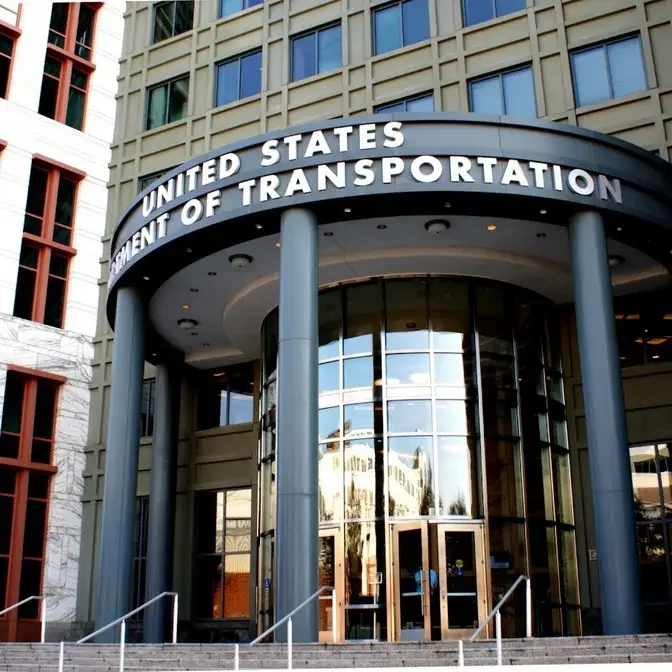
Starting with Alexander Hamilton’s early blueprint and Henry Clay’s "American System," visionary leadership consistently prioritized national connectivity. Abraham Lincoln’s transcontinental railway bridged the continent, while Dwight D. Eisenhower’s Interstate Highway System revolutionized defense and commerce. Today, that legacy lives on through the U.S. Department of Transportation as it modernizes networks coast-to-coast to keep modern trade moving.
This video traces the evolution of American infrastructure from the nation's founding to the present. It highlights how leaders like Alexander Hamilton, Henry Clay, Abraham Lincoln, and Dwight D. Eisenhower viewed transportation and economic systems as essential tools for national unity, economic strength, and defense, leading to the current modernization efforts by the U.S. Department of Transportation.
250 years ago, our nation fought for independence.
But building a new nation required more than independence.
It required moving people, supplies,
and resources across a still-fledgling country full of promise.
Through the many trials of the Revolutionary War,
a distinctly American identity took shape,
fiercely independent, united in purpose.
From the dawn of the Republic, Alexander Hamilton understood
that lasting independence also required economic strength.
His vision laid out a blueprint for American growth,
trade policy including tariffs that supported vital industries,
a strong national bank to fund domestic growth,
In what he referred to in his 1791 report on manufacturers as
internal improvements or transportation infrastructure,
which he considered the greatest of all improvements.
In 1824, Henry Clay championed that same vision as the American system,
linking a strong economy with strong national infrastructure.
Decades later, drawing on the lessons of the Civil War,
Abraham Lincoln, a long-time admirer of Clay and the American system,
signed the Pacific Railway Act, helping connect East and West by rail.
As America expanded, so did the systems connecting it.
Infrastructure repeatedly demonstrated its vital contribution
to both economic growth and national defense.
In 1956, General-turned-President Dwight D. Eisenhower signed
the Federal-Aid Highway Act,
launching the modern interstate highway system
and a new era in American transportation.
Today, that work continues.
A renewed American system is focused on domestic growth,
fair trade, and the infrastructure that
keeps America moving. At the U.S. Department
of Transportation, we're building on a legacy
centuries in the making,
modernizing both the hard and soft infrastructure that strengthens
the connections that bind our nation together
while building gateways to the world.
And ushering in a new golden age of transportation worthy
of this country still full of promise.