
The Fermi Paradox Is NOT One Mystery — It’s a Chain of Missing Signals
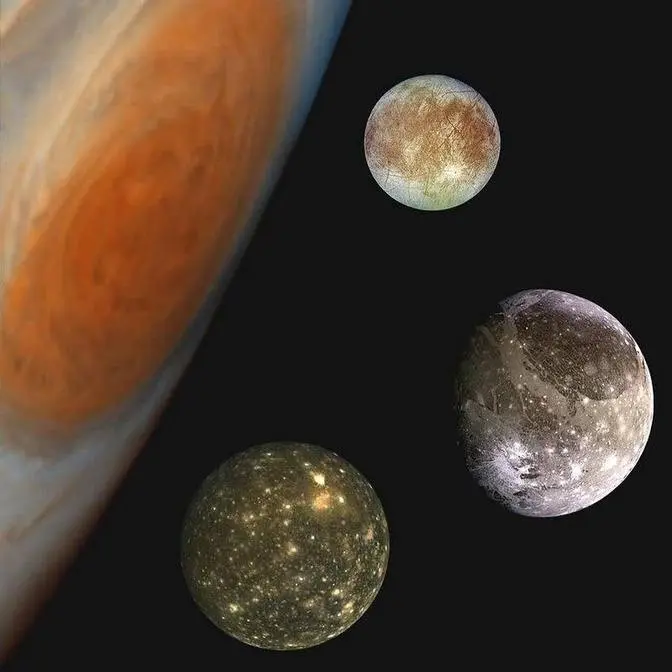
Why has humanity still found no confirmed extraterrestrial civilization?
The usual answers are dramatic: perhaps intelligent life is extraordinarily rare, perhaps advanced civilizations destroy themselves, perhaps everyone is hiding, or perhaps the Milky Way is already filled with machines we simply cannot recognize. But the real Fermi paradox is more complicated than any single story.
This documentary begins with one of the most famous modern SETI false alarms: BLC1, a narrowband radio signal detected in the direction of Proxima Centauri. For a brief time, it looked like the kind of signal a transmitter on another world might produce. After years of analysis, researchers found that it was almost certainly terrestrial interference. The nearest star had not contacted us, but the episode revealed something more important: an alien signal must survive an extraordinary chain before humanity can confirm it.
First, a suitable planet must exist. Then life must begin. That life must survive long enough to become complex, develop technological intelligence, produce a detectable signature, remain detectable for long enough, send that signature through the part of space and frequency range we are observing, and finally survive our own interference filters and natural astrophysical explanations.
Break any one link and the sky looks silent.
Exoplanet astronomy has already removed one easy explanation. Planets are common, and potentially temperate rocky worlds do not appear to be extraordinary. But the probability that life actually begins on those worlds remains almost unknown. Earth proves that abiogenesis can happen once; it does not tell us how often it happens across the Galaxy.
The next uncertainty may be even larger. For most of Earth's history, life remained microbial. Complex cells, multicellular organisms, large brains, cumulative culture and technological intelligence appeared much later. We do not yet know whether those transitions were extraordinarily improbable or whether they depended on environmental conditions that simply took billions of years to develop.
Even a technological civilization may remain almost invisible. Efficient communication can use narrow beams, fiber-like networks or other methods that leak very little energy into space. Powerful planetary radar could be visible across interstellar distances, but only if its beam happened to point toward us while we were listening.
And humanity has searched only a small fraction of the possible technosignature space.
Radio surveys constrain specific frequencies, power levels, targets and observing times. Infrared searches test for persistent energy use such as Dyson-like waste heat. Solar System searches test another possibility entirely: durable artifacts that could survive far longer than a radio transmission.
Each null result matters, but only inside the region it actually tested.
That is the central lesson of the modern Fermi paradox. Silence is not one observation. It is a collection of incomplete null results spread across astronomy, biology, engineering and observational science.
The Galaxy may be quiet because one enormous Great Filter exists. It may be quiet because several moderate bottlenecks multiply together. Or part of the silence may simply come from how little of the relevant search space humanity has examined.
The next confirmed biosignature, technosignature or artificial artifact would not merely give us another interesting discovery. It would move probability through the entire chain and tell us which doors are easier to pass than we thought.
Until then, the most scientifically honest version of the Fermi paradox is not a dark forest.
It is a long sequence of doors between chemistry and a telescope receiver — and we still do not know which door is hardest to open.