Can a ketogenic diet really reduce liver fat by 67%? A new clinical trial found that people with obesity, prediabetes, and fatty liver experienced a 67% reduction in liver fat on a ketogenic diet over roughly 4–5 months. Interestingly, the keto, Mediterranean, and low-fat groups lost a similar amount of weight, but the keto group experienced a substantially greater reduction in liver fat.
But there’s another side to the story: cholesterol. While keto may improve insulin sensitivity and liver fat, some people can experience significant increases in LDL cholesterol and ApoB—especially when the diet is built heavily around saturated fats.
In this video, we break down:
Why keto reduced liver fat by 67% in this study What happens to insulin, glucagon, and fat burning on keto Why keto may affect LDL cholesterol differently from person to person Saturated vs. unsaturated fats on a low-carb diet Why LDL, ApoB, triglycerides, and other markers matter How to build a smarter, more heart-conscious low-carb diet What this study can and cannot tell us about long-term keto use The study was small and short-term, involving 42 participants, so the results do not mean that everyone should follow a ketogenic diet indefinitely. The bigger takeaway is that macronutrient composition may influence liver fat and metabolic health beyond weight loss alone—but individual responses matter.
Have you tried keto? What happened to your cholesterol and blood sugar? Let us know in the comments.
Looking for expert guidance on thyroid health, hormone balance, metabolism, and related symptoms?
Visit our dedicated thyroid and hormone YouTube channels for practical, physician-led education:
Subscribe to both channels and turn on notifications so you do not miss our latest videos on thyroid disorders, Hashimoto’s disease, hypothyroidism, hormone replacement, menopause, testosterone, fatigue, weight management, and metabolic health.
These channels provide general education and are not a substitute for personalized medical care.
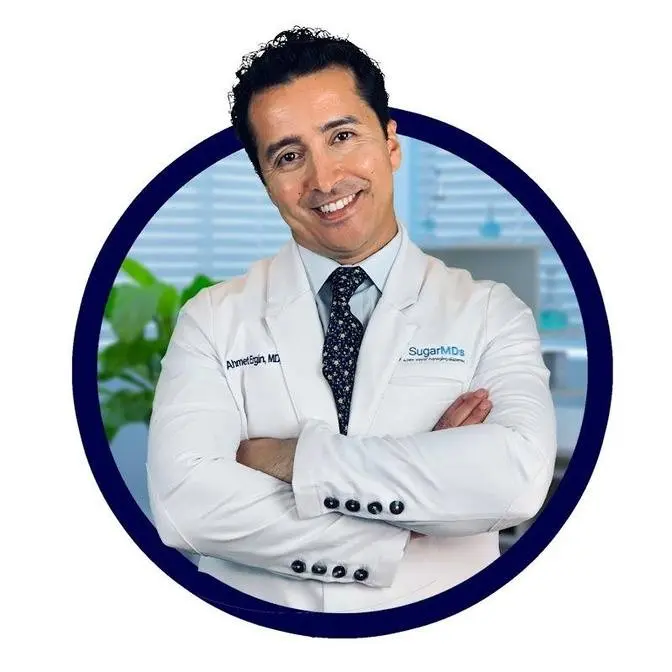
Dr. Ahmed Erdogan discusses a clinical trial demonstrating that a ketogenic diet reduces liver fat by 67%, significantly outperforming Mediterranean and low-fat diets. While highly effective for reversing fatty liver and prediabetes, he warns against \"dirty keto\" and emphasizes prioritizing unsaturated fats to avoid increasing LDL cholesterol and cardiovascular risk.
What if I told you that in a new clinical trial, people following a
ketogenic diet reduced the amount of fat in their liver by 67%.
You heard me right, not 6.7%, it is 67%.
And here's where it gets even more interesting.
The people following a Mediterranean diet lost about the same amount
of weight in the study.
And the people following a low fat diet, right, which is opposite of
keto, also lost about the same amount of weight, but, but the keto group
lost considerably more liver fat.
And about half of the people in the keto group no longer met the criteria
for prediabetes after only four to five months, that's it.
So should everybody throw away their bread, buy a 48 pack of bacon and start
putting butter in their coffee tomorrow morning, what do you think?
Is that what you're doing?
Well, maybe not so fast because there is a big difference between a well-designed
ketogenic diet and what I call the internet keto diet or the dirty keto,
some people call it, right?
And that difference may explain why some people on keto dramatically
improved their metabolic health.
While somebody else walks into saying, you know, my office, for example, they
come and say all the time, Dr.
Erdogan, I lost 25 pounds.
My triglycerides are fantastic.
My sugars are down, but my LDL cholesterol is 220.
What happened?
Well, today we are going to talk about exactly that.
I'm Dr.
Ahmed Erdogan.
I am an endocrinologist.
I practice in Port St.
Lucie, Florida at Diabetes, Thyroid and Hormone Center of the Treasure Coast.
And let's look at what this new study actually found, right?
Researchers took 42 people with obesity, prediabetes and fatty liver disease,
right, which I deal with, you know, every day, fatty liver disease.
They randomly assigned them to one of these, you know, one of these three
diets, a ketogenic diet, a Mediterranean diet, or a low-fat diet.
The low-fat diet was more plant forward diet, right?
Plant-based.
And this wasn't one of those studies where researchers say, here's a diet
pamphlet, good luck, see you in six months.
The researchers actually provided the food.
So participants also met with a dietician every week.
And that's important because when someone tells me they're doing keto,
that can mean almost anything, right?
One person's keto is salmon, olive oil, avocado, eggs, nuts,
vegetables, and chicken.
Another person's keto is bacon wrapped around cheese dipped in butter.
Now those are not metabolically identical diets.
In this study, the keto diet was very low in carbohydrate.
Only 4% of calories came from carbohydrates, while 73% came from fat.
The Mediterranean diet contained much more carbohydrate and low-fat
diet contained even more.
But here's the clever part.
The researchers adjusted calories so that all three groups lost approximately
the same amount of body weight, about 10% of their body weight, that allowed
them to ask a fascinating question.
If weight loss is similar, does the type of diet still matter?
Age old question, right?
Apparently, yes.
67% number is an important number.
Now let's talk about this from a weight standpoint, all three diets worked.
And let me emphasize that, right?
But this wasn't like saying keto works and everything else fails.
All three groups lost weight when it comes to losing weight.
All three groups lost body fat and insulin sensitivity improved
across all three groups.
So just to clarify that, now weight loss itself is powerful medicine,
but here's a big difference.
Liver fat is different.
Liver in this study, especially liver fat was different.
The ketogenic group reduced liver fat by an average of 67%, right?
By eating more fat, interestingly, right?
The Mediterranean group lost around 45%.
That's not bad, but not as good as 67%.
The low-fat plant-based group also lost around 45%.
So even with similar weight loss, keto appeared to have an additional
effect on liver fat.
So let me tell you something.
If you are pre-diabetic or diabetic, please get a liver ultrasound.
If possible, get an elastography to see if you have fatty liver.
I diagnose fatty liver every day and people have no idea.
And it's the most common reason of end stage liver disease or cirrhosis.
And by the time it is end stage, you have pretty much have zero symptoms.
It's not like acute hepatitis where you will have right upper quadrant pain,
nausea, vomiting, fatigue.
It's not like that.
It's very slow insidious disease.
But this finding of reducing liver fat was very interesting in this study for
with keto, especially.
And biologically, it makes sense, right?
So how does really keto empty out the liver fat?
I mean, think of your liver as a metabolic warehouse, right?
So when you are insulin resistant, that warehouse can become overloaded.
The liver receives fatty acids, okay?
Because your body breaks down fat into fatty acids to transport it in your blood.
Now it can make new fat from excess energy.
It could be from the glucose, from carbohydrates, from fat, whatever.
Particularly when carbohydrate availability and insulin signaling favors
lipogenesis, meaning that you're eating a lot of carbs, you're secreting a lot of
insulin, and it's going to promote liver accumulation.
And eventually fat starts accumulating inside liver cells.
So that's important.
Insulin is the main driver of fat accumulation, not the fat itself.
Now that is metabolic dysfunction, right?
Associated with steatotic liver disease or MASH or M-A-S-L-D,
whatever you want to call it.
Uh, well, we call it in folk language, I guess, fatty liver, right?
If I tell somebody that you have M-A-S-L-D, patients will be like, uh, what is that?
Now, dramatically reduce the carbohydrates, right?
Then insulin levels will generally fall if you reduce insulin
levels and glucagon will rise.
Your metabolic machinery starts shifting away from carbohydrate utilization and
toward greater fat oxidation and ketone production.
Now in this trial, the ketogenic group had the largest reduction in insulin and
the largest increase in glucagon.
That explains it.
Now that hormonal environment favors mobilizing and burning stored fuel,
which is fat, rather than continually storing it.
Now, other recent mechanistic research also shown that, um, ketogenic weight
loss can reduce or produce, I'm sorry, a greater short-term reduction in
intrahepatic triglycerides than a non-ketogenic diet, despite similar
energy deficits and fat loss.
So here's the deal.
Keto is not magic.
It is physiology, but physiology gets more complicated
when we talk about cholesterol.
But Dr.
Ergen, my cholesterol went up, right?
This is where keto becomes controversial because I
see this clinically every day.
Someone starts keto, they lose weight, their glucose improves,
their triglycerides drop.
Their HDL even may increase and they feel fantastic, except they
miss their carbs, that's a different story.
But then they get blood work and their LDL has gone through the roof and
they may already have heart disease.
They may have history of family history of heart disease.
Uh, if they already have inflammation, again, I'm not saying LDL is bad.
LDL is just a lipoprotein that carries cholesterol from one space to another.
But the problem is if you have a lot of pots and holes on the road, you know,
those LDL will tumble and create accidents.
That is what I'm talking about.
People who already have inflammation, who already have baseline
undetected endothelial disease, those LDL particles, the small
ones, they go under the artery.
They start creating inflammation and they clot, they clot, they
create a clotting in the artery.
So it's not that LDL is bad.
It's just the underlying inflammation, which creates oxidized LDL, right?
So, but people get confused and they say, I stopped eating sugar.
Why is my cholesterol higher?
Because you know, they want to have simple explanations.
But body is very complex.
And that's why I'm making this video.
So you can understand better because carbohydrates and cholesterol really
are not the same metabolic variable.
And a low carb does not automatically mean heart healthy either.
A major issue is what you are eating instead of the carbohydrates.
If you remove bread, pasta, rice, cookies, soda, and potatoes, what replaces them?
Is it olive oil?
Is it avocados, nuts, seeds, fish?
Now I live in Florida and the amount of people who hate fish is over 90%.
I can't fathom that.
I mean, how can you hate fish and expect to be healthy?
It's, it's mind blowing.
Anyhow, and butter, coconut, you know, if you're doing the type of person that I
see every day, you know, the butter, coconut oil, bacon, I mean, coconut oil
is not terrible, but especially bacon, sausage, um, fatty red meat, heavy
cream, cheese all day long.
Well, that matters because we are talking about saturated fat, right?
And saturated fat, I don't care what people say on YouTube, they can be
professor or whatever they can be.
Most of them are chiropractors and ----, but I'm sorry.
Um, the thing is, you know, if you ask 99% of professors in cardiology,
they're going to say saturated fat will raise your LDL cholesterol will
raise your cardiovascular risk, especially under the setting of
inflammation and a few false prophets will not change that.
And replacing saturated fat with unsaturated fat, actually
what really lowers the LDL.
Right.
And recent randomized evidence continues to support this distinction.
So I don't like talking about keto as though it is just the diet,
just the one diet you should be on.
There are many versions of keto as well.
Mediterranean diet has been proven to reduce cardiovascular disease.
So if you are listening to someone who says you have to be on keto,
otherwise you're doomed.
Well, that's not true.
How can it be right?
It's like saying you're either my religion or you're doomed.
Good luck with that approach.
Keto is not a license to eat unlimited saturated fat.
This is probably the biggest mistake I see.
People here, fat is okay.
And somehow translate that into all fats are unlimited.
No brother, no sister, olive oil and butter are both fats.
Salmon or salmon and bacon both contain fat.
Walnuts and processed sausage both contain fat.
Metabolically, they're not interchangeable.
If your ketogenic diet consists primarily of butter, cheese, processed
meats, and fatty red meat, don't be shocked if LDL cholesterol increases.
Current cardiovascular nutrition guidance still recommends emphasizing
unsaturated fats and limiting saturated fats because saturated fat can
increase LDL cholesterol, which may increase your small LDL
particles along with that as well.
That doesn't mean keto automatically causes high LDL.
In fact, the participants in this new clinical trial did not experience
an overall increase in blood cholesterol despite eating highest fat diet.
And that's fascinating, but it also does not mean LDL cannot increase
dramatically in an individual person.
The response is going to be highly variable based on genetics as well.
Some people are really hyper responders, right?
And this is another fascinating part of the keto story.
Some people can eat a low carbohydrate diet and their LDL barely
changes and others see that it decreases.
And some people experience enormous increases as well.
Now research examining randomized low carbohydrate trials found
something particularly interesting.
People with lower body mass index tended to have much larger LDL increases.
In trials where average BMI was below 25, LDL increased substantially
on low carbohydrate diets.
Meanwhile, trials involving people with higher BMI, body mass index,
showed much smaller increases or even reductions.
So two people can eat similar diets and have completely
different cholesterol responses.
Remember genetics matter.
Baseline metabolic health matters.
Body composition matters.
And the actual composition of the diet matters too.
And that's the most important matter, I think.
And this is why I don't treat nutrition like a religion.
I treat it like medicine.
You measure the response.
That's it.
And here's the biggest mistake I see.
Please don't just look at the total cholesterol.
That is a very common mistake.
You know, a lot of people say, Oh, my cholesterol is 240.
Is that okay?
But that tells me really nothing.
At least it's not enough.
I want to know the whole picture.
What is your LDL cholesterol?
What's your HDL, triglyceride, non-HDL cholesterol?
In selected patients, we look at ApoB, lipoprotein A, even some
other cardiovascular markers, because cardiovascular risk is way more
complicated than saying, Yeah, HDL went up and therefore everything is fine.
Or, Oh, LDL went down.
I'm good to go.
Triglycerides are down.
Therefore LDL doesn't matter.
Yada, yada.
That's not how I approach cardiovascular prevention.
And none of the sane cardiologists will do that.
And there are some cookies out there that say and do whatever they want.
But they're, like I said, I think false prophets.
Now, very high LDL and ApoB should not simply be dismissed because
somebody is in ketosis.
Okay.
There is ongoing research examining keto associated LDL elevations and coronary
plaque, including studies of the so-called lean mass hyper responder phenotype.
Those studies are scientifically interesting, but they do not yet
establish that very high LDL or ApoB caused by a ketogenic diet is harmless.
Now that is an important distinction, right?
Because the cardiovascular disease doesn't happen overnight or during this study
period, which can be a year or two.
Most of the time you need years to see outcomes.
So what would I actually do?
If somebody wants to use a lower carbohydrate or ketogenic approach for
obesity or insulin resistance or prediabetes or fatty liver, I don't
actually tell them no, but I want them doing a smarter version of this keto.
Build the diet around real food.
Use olive oil, avocado, nuts and seeds.
Eat fish and get adequate protein.
Eat plenty of non-starchy vegetables because you gotta get your fiber.
Don't turn breakfast, lunch, and dinner into a butter and bacon festival.
And then, you know, check the metabolic response because your body gets a vote.
If your weight drops, glucose improves, triglycerides improve, liver fat improves,
but LDL and ApoB explode upward.
We shouldn't pretend that the lab results don't exist.
We modify the diet, sometimes simply replacing a large amount of saturated
fat with mono-unsaturated and poly-unsaturated fats can improve the
lipid profile while preserving much of the carbohydrate restriction.
Also, remember to stay away from seed oils.
Seed oils are not going to be good for you for a keto diet either.
When I say seed oils, I'm not talking about the cold press ones.
I'm talking about the ones that you find on the shelves that are, you know,
produced in a high heat environment.
What about prediabetes?
Well, this may be the other headline from this trial.
After approximately four to five months, around 50% of participants in the keto
group no longer met the criteria for prediabetes.
The numbers were lower in the Mediterranean and plant-forward groups, right?
So again, Mediterranean and plant-based groups also did well, but not as well as keto.
Again, it's pretty impressive, but be careful with the wording.
That does not mean keto permanently cured diabetes.
The moment these participants go back to their diet that is non-ketogenic,
their prediabetes will come right back.
Now, these participants had prediabetes, not established type 3 diabetes either.
And this was a relatively small short-term study.
So you have to keep that in mind.
If somebody returns to the lifestyle that I, like I said, produced the
metabolic dysfunction in the first place, the problem can return.
Metabolic health isn't a diploma.
You're a thief, right?
And hang on the wall.
You have to maintain it.
The most important lesson here is that what I think this study actually teaches
us, calories matter, weight loss matters, but macronutrient composition may matter
too.
All three diets produced approximately 10% weight loss.
All three improved metabolic health.
The ketogenic diet produced a much larger reduction in liver fat in this trial.
And that deserves attention.
At the same time, this was only 42 people followed during a controlled
intervention, lasting roughly four to five months.
That's excellent for studying metabolic physiology.
It is nowhere near enough to tell us that everyone should eat keto forever.
And it certainly does not prove that keto prevents heart
attacks or expands lifespan.
Nutrition science becomes dangerous when we take an interesting short-term
metabolic finding and turn it into a universal lifetime prescription.
Now, what is my takeaway?
If you have obesity, insulin resistance, prediabetes or fatty liver, carbohydrate
restriction can be a very powerful tool.
For some people, ketogenic nutrition may produce remarkable improvements, but the
goal is not to win keto.
The goal is to improve your health.
If your liver fat drops, your waist shrinks, your glucose improves, your
triglycerides improve, and the diet is sustainable.
That is meaningful, right?
That is meaningful.
But if your LDL or ApoB skyrockets, don't ignore it because someone on social media
told you cholesterol doesn't matter when you are in ketosis.
Look at the whole patient, right?
That's the problem.
As a patient, you are different from your wife, your husband, your, uh, even people
sharing same genetics, you're, you're different.
So listening to someone online and hoping that what they are saying applies to
everybody is a little naive to think.
And I would say, look at the whole metabolic picture too, because the best
diet is not the diet with the coolest name.
It is the diet that produces the best overall health profile and
that you can actually maintain.
That's an important distinction.
I'm Dr.
Ahmet Ergin, endocrinologist.
If you found this useful, please subscribe to the channel and comment below and keep
your comments, please.
Respectful to the community.
Have you ever tried keto?
Well, let us know.
And here's what I really want to know.
What happened to your cholesterol and what happened to your fatty liver?
Thank you.
I'll talk to you in the next video.