
Joseph Woelfl/Masi - Symphony No. 3, Op. 45 arr. for Flute Quintet (1825)
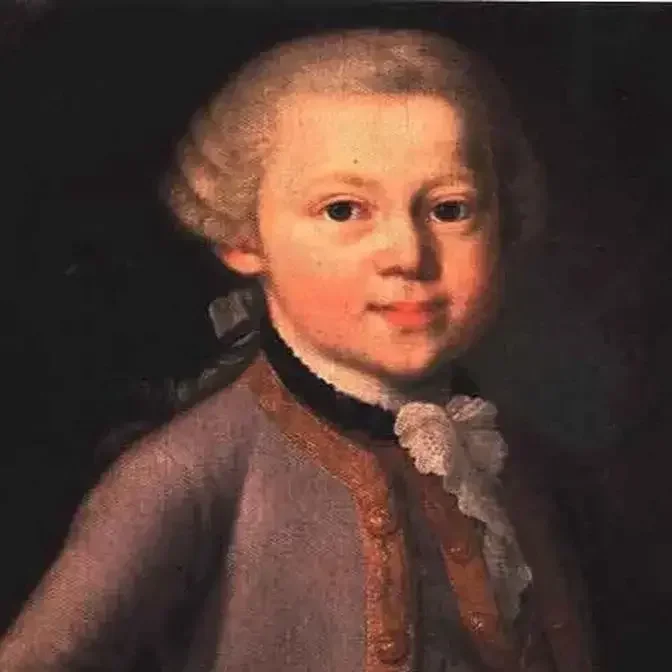
Joseph Johann Baptist Woelfl (German spelling:) Joseph Wölfl (24 December 1773 - 21 May 1812) was an Austrian pianist and composer.
Please support my channel:
https://ko-fi.com/bartjebartmans
Symphony No. 3 in D major, Op. 45 (August 7, 1807)
Arr. by G. Masi for Flute and String Quintet (1825)
1. Adagio - Allegro (0:00)
2. Andante
3. Menuetto. All[egr]o
4. Finale. Presto
Ensemble "Altera Pars" (Oldenburg)
Polina Gorshkova, traverso
Martyna Pastuszka and Adam Pastuszka, violin
Florian Schulte, viola
Pavel Serbin, cello
Giso Grimm, double bass
Live recording at a concert in Oldenburger Schloss, 1.12.2018
https://youtu.be/7f6MVacpeKs?si=muufgHgPSCDf85SN
Woelfl was born at Salzburg, where he studied music under Leopold Mozart and Michael Haydn.
He first appeared in public as a soloist on the violin at the age of seven. Moving to Vienna in 1790 he visited Wolfgang Mozart and may have taken lessons from him. His first opera, Der Höllenberg, appeared there in 1795.
Woelfl was very tall (over 6 feet), and with an enormous finger span (his hand could strike a thirteenth, according to his contemporary Frantisek Tomasek); to his wide grasp of the keyboard, he owed a facility of execution which he turned to good account, especially in his extempore performances.
Although he dedicated his 1798 sonatas op. 6 to Beethoven, the two were rivals. Beethoven however bested Woelfl in a piano 'duel' at the house of Count Wetzlar in 1799, after which Woelfl's local popularity waned After spending the years 1801 - 1805 in Paris, Woelfl moved to London, where his first concert performance was on 27 May 1805.
In England, he enjoyed commercial if not critical success. In 1808 he published his Sonata, Op. 41, which, on account of its technical difficulty, he entitled Non Plus Ultra; and, in reply to the challenge, a sonata by Dussek, originally called Le Retour à Paris, was reprinted with the title Plus Ultra, and an ironic dedication to Non Plus Ultra. He also completed for publication an unfinished sonata of George Pinto.
Woelfl died in Great Marylebone Street, London, on 21 May 1812.
G. Masi was a 19th‑century flutist and arranger whose work is preserved in transcriptions of classical pieces for flute and other instruments, such as a 1825 arrangement of Joseph Woelfl’s Symphonie no. 3, op. 45 for flute and string quintet.
While detailed biographical records of G. Masi are scarce, the available evidence shows that he was active in the early 1800s, a period when the flute was transitioning from the older “simple system” to more advanced keyed instruments. His name appears in the title of a transcription published in London in 1825, indicating he was a composer/arranger rather than a professional concert flutist in the modern sense.
Masi’s known work is an arrangement of Woelfl’s symphony for flute and string quintet. This type of transcription was common in the early 19th century, when arrangers adapted orchestral or chamber works for smaller ensembles, often to showcase the flute’s expressive capabilities. Such arrangements were popular in salons, private concerts, and educational contexts.
In the 1800s, the flute was still evolving:
Early 19th century: The “simple system” flute with a few keys was in use, but players were also experimenting with new key systems.
Performance life: Flutists often doubled as arrangers, adapting works for smaller groups or for teaching purposes.
Repertoire: Works by composers like Woelfl, Mozart, and others were frequently transcribed for flute and small ensembles, making arrangers like Masi important figures in preserving and disseminating classical music.