
Willem Pijper - 6 Adagios (1940)
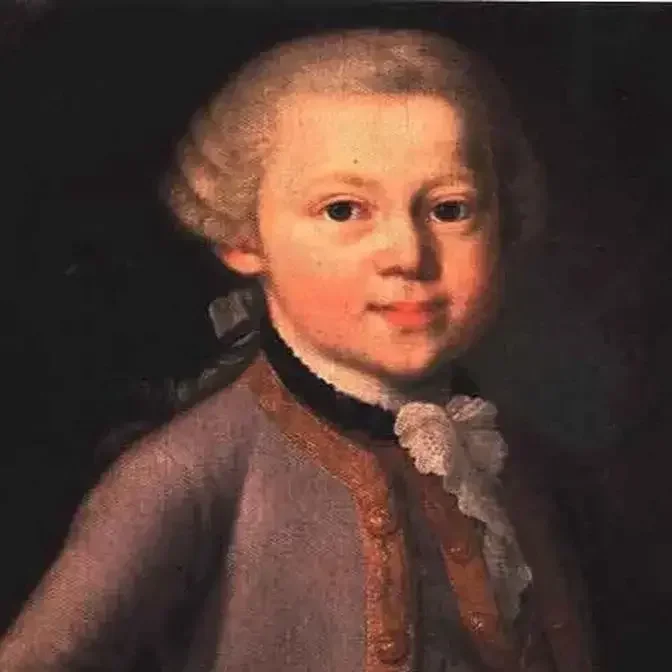
Willem Frederik Johannes Pijper (8 September 1894 – 18 March 1947) was a Dutch composer, music critic and music teacher. Pijper is considered to be among the most important Dutch composers of the first half of the 20th century.
Please support my channel:
https://ko-fi.com/bartjebartmans
Six Adagios for Orchestra (1940)
1. Grave (0:00)
2. Adagio (lento assai) (2:49)
3. Adagio (quasi un poco meno lento) (4:25)
4. Adagio, un poco più andante (5:57)
5. Largo (7:33)
6. Grave (9:43)
The Live performance (12:36)
Radio Philharmonic Orchestra conducted by Edo de Waart
Live, Sunday April 23, 2023, in Het Concertgebouw Amsterdam.
The 6 Adagios were commissioned for the student initiation of the Order of Freemasons, of which Pijper was a member. Each Adagio was intended as “temple music” for a given stage of the initiation ritual.
Departing from his usual polytonal and polyrhythmic language, Pijper returned to a “familiar” tonal style, writing in C major and C minor. The result is melodic, gently harmonized orchestral music, shaped by the timbres of the instruments.
Pijper quickly chose his own path as a composer. The difference in style between his First Symphony (Pan; 1917) (in which Mahler's influence is evident) and the Second (1921) is significant, and between 1918 and 1922 he grew into one of the more advanced composers in Europe. In each successive work he went a step further, starting from his conception that every work of art arises out of a number of "germ cells" (somewhat akin to Igor Stravinsky's early "cell technique").
From 1919, Pijper's music can be described as polytonal. Yet there is no question of Pijper's consciously abandoning tonality; rather his polyphonic way of thinking and his sense of counterpoint made his harmonic style evolve in that direction. In that sense, he stands quite close to the music of his contemporary Matthijs Vermeulen, but his music does not quite reach the ecstatic level of Vermeulen's. Nonetheless, Pijper remained a composer of strong emotional character, to which his Third Symphony (1926) bears witness. In Pijper's later works the harmonic expression seems at times to approach monotonality.
The octatonic scale has been called the "Pijper scale" in Dutch. As a teacher, Pijper had a great influence on modern Dutch music, teaching many prominent Dutch composers of the 1950s, 1960s, and 1970s. He was senior teacher of instrumentation at the Amsterdam Conservatoire, and from 1930 until his death in 1947 he acted as principal of the Rotterdam Conservatoire.