

Alfredo Casella - Cello Sonata No. 2, Op. 45 (1927)
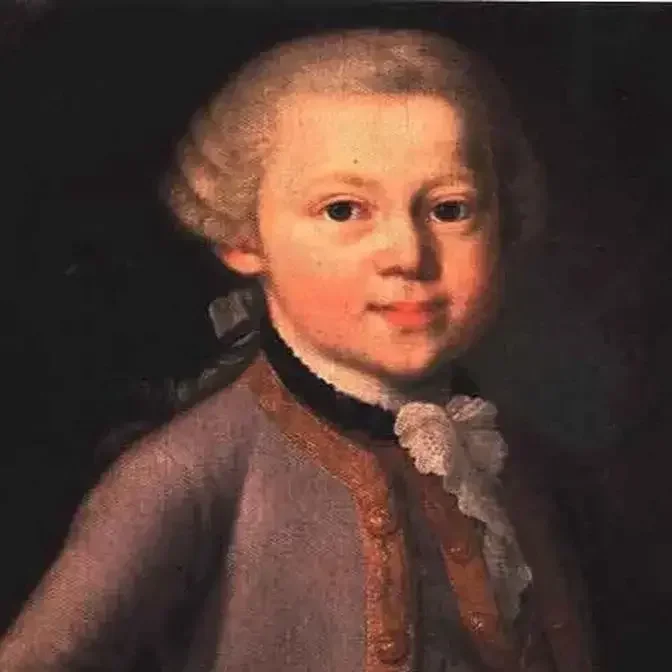
Alfredo Casella (25 July 1883 – 5 March 1947) was an Italian composer, pianist and conductor.
Please support my channel on
https://Ko-fi.com/bartjebartmans
Cello Sonata No. 2 in C major, Op. 45 (1927)
Dedication: Elizabeth Sprague Coolidge (1864-1953)
1. Preludio (Largo molto e sostenuto) (0:00) - Bourrée (Allegro molto vivace e scherzando) (10:06)
2. Largo (14:04) - Rondo (Allegro molto vivace, quasi “giga”) (22:11)
Andrea Favalessa, cello & Maria Semeraro, piano
Casella was born in Turin, the son of Maria (née Bordino) and Carlo Casella. His family included many musicians: his grandfather, a friend of Paganini, was first cello in the São Carlos Theatre in Lisbon and eventually became soloist in the Royal Chapel in Turin. Alfredo's father, Carlo, was also a professional cellist, as were Carlo's brothers Cesare and Gioacchino; his mother was a pianist, who gave the boy his first music lessons.
Alfredo entered the Conservatoire de Paris in 1896 to study piano under Louis Diémer and composition under Gabriel Fauré; in these classes, Lazare Lévy, George Enescu and Maurice Ravel were among his fellow students. During his Parisian period, Claude Debussy, Igor Stravinsky and Manuel de Falla were acquaintances, and he was also in contact with Ferruccio Busoni, Gustav Mahler and Richard Strauss.
Casella developed a deep admiration for Debussy's output after hearing Prélude à l'après-midi d'un faune in 1898 but pursued a more romantic vein (stemming from Strauss and Mahler) in his own writing of this period, rather than turning to impressionism. His first symphony of 1905 is from this time, and it is with this work that Casella made his debut as a conductor when he led the symphony's premiere in Monte Carlo in 1908.
Back in Italy during World War I, he began teaching piano at the Conservatorio Santa Cecilia in Rome. From 1927 to 1929 Casella was the principal conductor of the Boston Pops, where he was succeeded by Arthur Fiedler. He was one of the best-known Italian piano virtuosos of his generation and together with Arturo Bonucci (cello) and Alberto Poltronieri (violin) he formed the Trio Italiano in 1930. This group played to great acclaim in Europe and America. His stature as a pianist and his work with the trio gave rise to some of his best-known compositions, including A Notte Alta, the Sonatina, Nove Pezzi, and the Six Studies, Op. 70, for piano. For the trio to play on tour, he wrote the Sonata a Tre and the Triple Concerto.
The resurrection of Antonio Vivaldi's works in the 20th century is mostly thanks to the efforts of Casella, who in 1939 organized the now historic Vivaldi Week, in which the poet Ezra Pound was also involved. Since then, Vivaldi's compositions have enjoyed almost universal success, and the advent of historically informed performance has only strengthened his position. In 1947 the Venetian businessman Antonio Fanna founded the Istituto Italiano Antonio Vivaldi, with the composer Malipiero as its artistic director, to promote Vivaldi's music and put out new editions of his works. Casella's work on behalf of his Italian Baroque musical ancestors put him at the center of the early 20th-century Neoclassical revival in music and influenced his own compositions profoundly. His editions of Johann Sebastian Bach and Ludwig van Beethoven's piano works, along with many others, proved extremely influential on the musical taste and performance style of Italian players in the following generations.
The generazione dell'ottanta ("generation of the '80s"), including Casella himself, Malipiero, Respighi, Pizzetti, and Alfano—all composers born around 1880, the post-Puccini generation—concentrated on writing instrumental works, rather than operas, which Puccini and his musical forebears had specialized in. Members of this generation were the dominant figures in Italian music after Puccini's death in 1924; they had their counterparts in Italian literature and painting.