
Why Space Isn’t Actually Cold — The 2.7 K Secret of the Universe
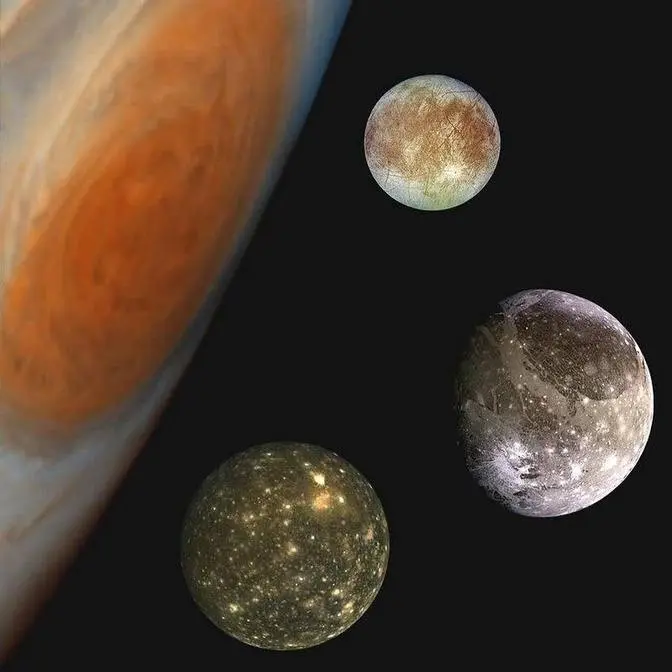
Is outer space really freezing cold? The answer is far stranger than the familiar image of an astronaut instantly turning into ice.
This science documentary explores the true temperature of space, beginning with the famous discovery by Arno Penzias and Robert Wilson of the faint microwave radiation now known as the Cosmic Microwave Background. That ancient afterglow of the early universe surrounds us today at roughly 2.725 Kelvin, giving the cosmos a measurable thermal background rather than leaving it at absolute zero.
To understand why this matters, we first examine how heat actually moves. On Earth, conduction and convection rapidly carry thermal energy away from warm objects. In the near-vacuum of space, those mechanisms become extremely inefficient. A warm object mainly cools by emitting electromagnetic radiation, which is why exposure to vacuum does not produce the instant freezing often portrayed in science fiction.
From there, we descend toward absolute zero, the thermodynamic lower limit at 0 Kelvin, and explore how quantum mechanics complicates the classical idea of completely motionless matter through zero-point energy.
The journey then moves into some of the coldest environments in astrophysics: dark molecular clouds where complex chemistry can continue despite extremely low temperatures. Quantum tunneling and reactions occurring on microscopic dust grains allow molecules to form under conditions where classical chemistry alone would predict very little activity. These processes help produce water, methane, organic molecules, and other material later incorporated into stars, planets, comets, and potentially prebiotic chemistry.
We also examine frozen worlds such as Pluto, where substances familiar as gases on Earth can become solid geological materials, and ask how extreme cold preserves ancient chemical information across billions of years.
Finally, the documentary connects cosmic temperature to the larger laws of thermodynamics and entropy. Earth remains dynamic because it exists between a hot star and a much colder cosmic environment, allowing energy to flow and useful work to occur. Extend that logic far enough into the future and it leads toward one of cosmology’s most profound possibilities: the heat death of the universe, when usable energy gradients may eventually disappear.
Space is not simply a giant freezer. It is a thermodynamic environment shaped by the Big Bang, radiation, quantum mechanics, chemistry, and the long-term evolution of the cosmos.
#Space #Astrophysics #CosmicMicrowaveBackground #AbsoluteZero #Thermodynamics #QuantumPhysics #Universe