
Why Nothing Can Break the Speed of Light — The Physics of Causality
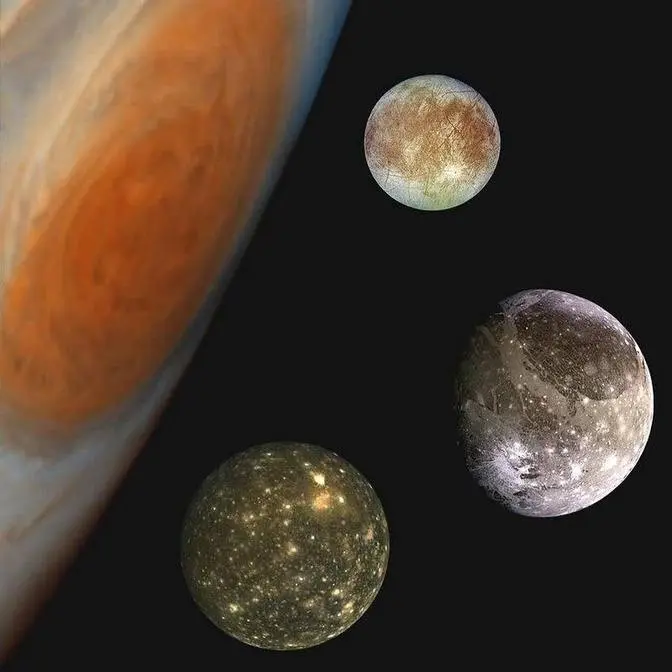
Why can nothing with mass reach the speed of light—and why does physics treat faster-than-light communication as something far more serious than simply “going very fast”?
This documentary explores the deeper meaning of the speed of light, showing why the constant we call c is not merely the velocity of photons. In modern physics, it acts as the invariant speed of spacetime and the maximum local speed at which causal influence and usable information can propagate.
The story begins with humanity’s first attempts to measure whether light had a finite speed at all. From Galileo’s lantern experiments to Ole Rømer’s observations of Io, scientists gradually discovered that light takes time to travel. Later, James Clerk Maxwell showed that light is an electromagnetic wave, while the Michelson–Morley experiment helped undermine the idea of a luminiferous ether.
Then came Albert Einstein.
Special relativity revealed that all inertial observers measure the same vacuum speed of light. To make that possible, space and time themselves must behave differently from everyday intuition. Moving clocks experience time dilation, lengths contract along the direction of motion, and simultaneity becomes relative.
As a massive object approaches light speed, its energy and momentum increase dramatically. Reaching the invariant speed would require unlimited energy, making light speed a true physical boundary rather than merely an engineering challenge.
But the deeper reason the limit matters is causality.
In relativity, spacetime is divided by light cones into regions that can and cannot influence one another. Faster-than-light signaling could allow different observers to disagree about whether a message arrived before it was sent, opening the door to causal paradoxes.
The documentary then moves into quantum field theory, where Richard Feynman’s path integrals and Feynman diagrams helped physicists describe the quantum behavior of light and matter. Quantum mechanics permits strange effects—virtual processes, tunneling, and entanglement—but observable information remains constrained by relativistic causality.
We also examine common apparent loopholes: quantum entanglement, tunneling, tachyons, warp drives, wormholes, Cherenkov radiation, superluminal galaxy recession, and laser spots that appear to move faster than light.
The journey continues through black-hole event horizons, gravitational waves, GPS satellites, cosmic rays, particle accelerators, and the observable universe itself.
The central idea is simple but profound:
Light does not own the cosmic speed limit. Light reveals it.
The speed of light is the boundary that separates histories that can influence one another from histories that cannot—and that boundary may be one of the reasons reality remains causally coherent at all.
#SpeedOfLight #Relativity #Physics #Einstein #Causality #QuantumPhysics #Spacetime