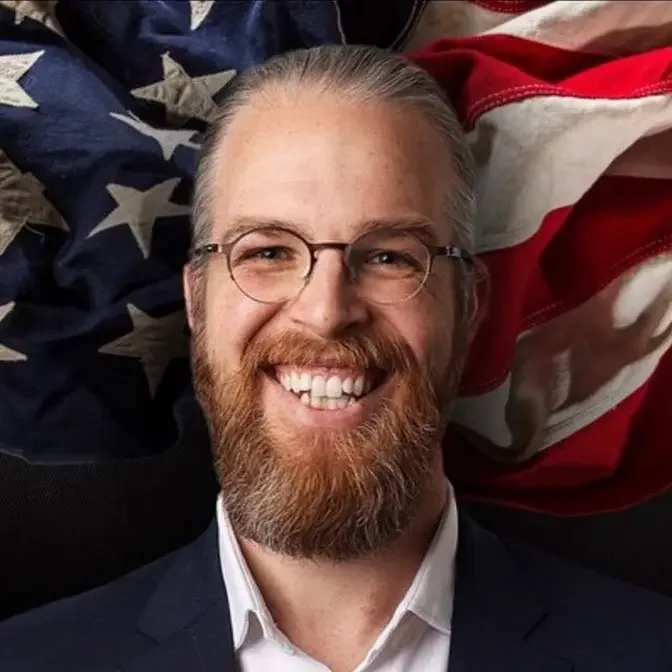
In this alarming episode, Wikipedia's co-founder reveals how intelligence agencies like the CIA weaponized the platform to control the global narrative and how that manipulated data is now secretly training the AI you use every day. But the threat goes far beyond propaganda; it is an existential crisis for the human soul. From pastors outsourcing their sermons to machines to Silicon Valley elites pushing a dangerous transhumanist agenda, we explore the terrifying reality of mental atrophy and what happens to our humanity when we let algorithms do our thinking for us.
To learn more about investing in gold & silver, visit http://goldwithseth.com, or call 626-654-1906
Check out water & air filtration products at https://airwaterhealing.com, and use code SETH for a discount and free shipping.
NMN-3 from Brightcore – Cellular Health 25% Off with code: MIA at https://brightcore.com/mia Or call (888) 575-6488 for up to 50% OFF and Free Shipping – ONLY when you call!
Go to https://nutronicslabs.com/SETH for 50% off with autoship + a FREE platinum bottle of IGF-1. Use code “SETH” for an extra 10% off.
For high quality storable foods and seeds, visit http://heavensharvest.com and use promo code SETH to save 15% on your order.
Kimchi One from Brightcore – Improve your health, improve your life. 25% Off with code: MANINAMERICA at https://mybrightcore.com/maninamerica Or dial (888) 575-6488 for up to 50% OFF and Free Shipping – ONLY when you call!
To learn more about Red Light Therapy, visit http://myredlight.com and use promo code SETH to save.
This discussion examines the intersection of narrative control, artificial intelligence, and the erosion of human cognition. The speaker warns that the manipulation of Wikipedia feeds into AI training data, creating a loop of misinformation. Furthermore, the reliance on automation is framed as a path toward cognitive atrophy and a loss of authentic human experience and will.
the CIA, the FBI, a lot of these intelligence agencies were actually actively editing the
content on Wikipedia to control the narrative. So they're seeing it's a tool for controlling
the narrative. We don't know exactly what they have done or how actively they've been involved.
They wouldn't be doing their job, actually, according to what people say that intelligence
is really about these days if they weren't involved in Wikipedia. Beginning actually
in 2001 with the destruction of the World Trade Center, the best single source of information
about the 9-11 attacks was the Wikipedia article on that because we were just coming together and
documenting each new fact as it came over the transom and put it into the article with
the source. It was really a sight to behold. Nobody had ever seen anything quite like it
before. This ability to essentially reflect back all the knowledge that was being generated in the
problem is that I'd say between 2006 and 2018, the Wikipedia administrators discovered that they
could lock that whole system down by excluding sources. So they started doing that systematically
and that then continues to allow them to not only document the narrative or the discussion
from one point of view, but actually, as you suggest, to further guide it,
to actually push it in new directions. I think that somebody like George Soros,
insofar as what he tries to do by funding Antifa, must be putting money in one way or another,
probably laundered in various ways, but I can't say for sure, so I'm not making any accusations
here. He'd be foolish strategically not to put money into Wikipedia in order to guide the
narrative because that's what it's good at. That's what it has become good at.
Orwell, 1984. He who controls the past controls the future. He who controls the present controls
the past. He who moderates and can lock down content on Wikipedia can control the past because
they're controlling the present and that then gives you the ability to control the future. So
you can take something like Wikipedia and you can change and rewrite history, in essence,
if you've got a particular agenda. And if you look at what's also happening with AI,
how do you know what you're reading isn't some particular agenda that was woven through to there,
but then that shapes your worldview and it maybe shapes the actions you take towards the future?
How do you see the shaping of the narrative on Wikipedia, which then spills into the training
of these large language model AI? How do you see that all happening and playing out?
There's two different ways, basically, and I think people might not realize what we're talking about
here. So Wikipedia articles and their influence on the culture, as we've said, is huge. And so
it's not just Wikipedia itself that is used to train. It's everything that is influenced by
Wikipedia that is used to train these models. So it becomes a sort of central locus or source.
The fact that they don't use LLMs to write the articles means that it is, in a certain way,
the upstream point from which a lot of the information in LLMs is downstream. And then,
a lot of times when you ask a question, the LLM will look it up online, and if you tell it not to,
one of the first things that it pulls up is the Wikipedia article on the subject.
This is problematic not just due to ideological capture, that's maybe the worst problem, but
also it's just bad information sometimes. I've been working on a project called
WikiCritic, and as part of that, I wrote a review of Wikipedia's article on the unmoved mover,
which is this concept in Aristotle. I know quite a bit about that because I've spent a good part of
the last four or five months actually reading Aristotle and the background of that concept
and so forth. I made a professional review and I discovered that it's garbage. It says some true
things, but it's got serious accuracy problems. And the thing is, when the AI goes to rate that
particular article, unless it has direct access to books and journal articles that go deeper than
the Wikipedia article, it is not able to deal with the subject as well as an expert would,
basically. So it will nod along and say, this is a more or less correct article.
Now, I actually have to give Claude and other LLMs some credit here because it's not just a
reflection of Wikipedia. So everything that we've been saying for the last five minutes,
there has to be an enormous caveat. There is a lot of other training data. And when the Wikipedia
article on something gets something wrong and really badly wrong, people will actually notice
that. And that'll also be part of their training data. It actually is a really significant problem.
It's like a bigger problem than people realize that the LLMs are not trained sufficiently
on a lot of proprietary books and journal articles. I mean, they are to a certain extent,
but not as much as they should be. Let's put it that way.
I look at AI as just a machine. And the machine, it still has to have its own
internal checks and balances. What does it determine as being success? What does it
determine as being failure? But also, what does AI perceive to be truth or conspiracy?
And so, while people think that, oh, we're accessing AI, it has all the information,
it's going to spit out what's going to be most accurate. Well, AI, I think you're still
limited to what the person behind the AI is telling the AI that you can or cannot even
explore. And I've run into that, too, in, say, researching a topic. And you might ask Chatty
BT a question, and it's like, I can't go there. Or that's a conspiracy, that's unfounded. And
so, you can see that similar to how Wikipedia has been used to push an ideology, the same
thing is really coming out with these AI. There are people, not just one person,
there are people behind these things. But on the other hand, the whole system has taken on a life
of its own. They're competing with each other. They're exchanging people. One person will find
a better job in another place. And they're all not constrained just by what the executives or
the board of directors happens to say. They're also greatly constrained by their own value system.
Ultimately, I think that the shape of AI is a reflection not just of the will of our overlords,
but it's a reflection of the broader culture and who is ultimately in control of it.
In my interaction with LLMs, I actually don't find it to be terribly woke, but it will very
easily slip into that register, right? Because a lot of that is sort of valorized in the mainstream
media and other sources that are Wikipedia, of course.
1999, right? When the internet was just coming out. If you could have gone back and
showed someone how drastically the internet would just completely alter mankind and how
we operate and how things work, let alone getting into social media and then getting into AI and
just the fake avatars and all this stuff, it would have been mind-blowing to somebody.
But I'm also thinking, well, what would my future self say five or 10 years ahead?
What would I come back to myself and tell myself about how this has shaped humanity?
It's really hard to predict, I can tell you that for sure. Because if anyone was in a good position
to be able to predict the influence of Wikipedia and just the overall shape of Wikipedia from the
first years, it would be me, because I actually started the thing. Governments will take notice.
Big giant corporation, very wealthy people, they will all take notice and they will use it to their
ends as another tool, which they do. And what happens then? I'm no longer in control, that's
for sure. Any sort of ideals that I have right now about how it should be used are out the window,
ultimately. They don't matter. My idea of neutrality, the original idea of neutrality is
completely gone from Wikipedia. What we are doing when we are using LLMs to communicate
or just to author text is a natural next step in the technology of using machines
to develop our thoughts and to communicate. There was never a step in which some machine
was doing your thinking for you. Now, there's something like that that has happened in the age
of social media. And this is something that people have complained about a lot, namely,
that our feeds are carefully engineered and we can be manipulated by our feeds. Back in the
1990s, you saw the whole firehose and you picked what you wanted to read and so forth. It was,
in a certain way, much more authentic and genuine. But when someone is controlling what you are
reacting to, that changes the whole nature of how we develop the thoughts that we think.
It's crazy. This is one step well beyond even that. A machine actually writing the words that
you claim to be your own. What the heck am I even doing here? It's like, I don't want to become an
appendage of the machine. A pastor writes a sermon, for example. The thing is supposed to
be an expression of the thoughts and even the spirit of the pastor. And if the pastor
just generates a sermon, maybe gives it a few thoughts and lets it generate all the rest,
fill in the blanks, do all the research, that is really, really insidious. This is a terrible
habit. I can tell you already, it is a terrible habit to get into to just write down a few cursory
thoughts and then say, what the hell, you know, Claude can do a better job. I'll give it this
outline and let it write the thing. No, that's wrong. I guarantee making yourself a stupider
person by doing that because you have to continue to exercise those muscles. LLMs do not have the
spirit of God. The spirit of God is not summarized in training data. It's not. It can be taped,
I'm not denying that, right? It can sound like it, but it's not. The spirit of God is a real
thing. It's positively insulting, quite aside from the lying inherent in the thing, to be shown
words presented as human communication when they are not. They're no such thing. It's not just a
lie. In other words, it's inauthentic. It's a contemptuous abuse of the trust that another
person has, right, that you are communicating with them and not saying, here, read this,
which some machine wrote. That's not just a lie. It's an insidious and actually dehumanizing
treatment of your fellow man. Look at farmers, say, 100 years ago. You'd probably be hard-pressed
to go find a farmer that weighed 300 pounds 100 years ago, right? Because it was a hard job.
Now, I grew up, I mentioned in Plain City. It was a farming, hence the word plain, right? It was a
farming community. A lot of the farmers I knew growing up were pushing 300 pounds because they
were sitting most of their day in a giant combine. And it was the young guys like us, they'd get to
load the hay into the hayloft or something like that. But I think that's indicative of something
is that the muscles that used to be needed to farm and work the land, those muscles atrophied,
and they weren't needed anymore. And now you've got drones, you've got AI-operated combines that
there's not even a driver out there. The driver could be sitting on a couch drinking a Bud Light
doing his farming, right, and harvesting the field. And so, if you look at what happens
mentally, the more people that start using AI to replace their own thought process,
I think that we're going to see an atrophy of the human mind itself.
A lot of leaders of society, it seems to me, especially in Silicon Valley, are basically
transhumanists. And what a lot of people don't realize is that this is actually a very old
intellectual tradition. And it's an extension of a theological tradition called millennialism.
The idea is that human beings will be the ones to usher in the kingdom of God,
and that we need to build it ourselves. And we're capable of doing that. And there are people,
again, who believe that reign began long ago, and it's continuing now. For example,
the whole idea that we're going to beat the very processes that cause aging, and our children are
the first ones that will live forever after this if they don't get killed by accidents or whatever.
Transhumanism is part of that. Any such movement is going to weaken our abilities. And it is that
when we become, like, enhanced, it's not really us anymore.
Let's suppose that they create these literal brain prosthetics that actually prevent us from
doing bad things. So, we really want to do something, okay, I'm not going to do that
because my brain now prevents me. Or not my brain, no, it's this prosthetic that prevents me.
Alright, so just imagine that sort of thing happening. Then it's not really us. We have not
been improved, right? We were never going to be the ones that would be improved. It would be
a hybrid at best, and because our will, in that case, would have to be weakened,
we will actually become less human. A lot of stuff is going to become increasingly automated,
and we just have to make sure that the way in which we use
automation does not dehumanize us. That's the bottom line.
I feel like that one of the best things that a human being could do would be go spend a year
living in a cabin in the woods with no electricity, with an oil lamp to write by, and a bunch of
notebooks and a bunch of pencils. Through going backwards like that, I feel that people would
develop senses that they didn't have before. When you spend more time just with earth and
outside, which I think is, in many ways, kind of like getting closer to God, right? Getting back
to God's creation, not man's creation of staring at screens and everything. Going back into just
the smell of the air, the sound of the birds, those kinds of things. I find that people will
advance in ways that you could never augment with some sort of external technology.
The best scientists right now have no idea how the human brain actually works.
They have some theories, but it's such a profound thing. It's like ants trying to understand
how a skyscraper was built or something.
If laws are made of words, then AI will take over the legal system. If books are just
combinations of words, then AI will take over books. If religion is built from words,
then AI will take over religion.
Does he actually believe the things that he's saying there?
I don't know.
Maybe he just wants us to believe that because then we would be easier to control.
If he's serious, what he's saying is transparently ludicrous.
I actually believe that AI is never going to exceed its training data.
The ultimate sources of intelligence are organic. The very idea of interacting
with the world, putting words together about the world, and actually having original thoughts
based on that, are ultimately something that is an outgrowth of the embeddedness of a living being
in dealing with the world. It's a very high-level philosophical concept.
You might say, well, what about a thermostat? A thermostat reads the temperature and prints
out the number on the pad and tells you what the temperature is inside. Is that thinking?
Well, no, and the principle doesn't change. That system was programmed by a human being
and had to be carefully calibrated by a human being. It works only because it contains
expressions of human minds, ultimately.
What does it mean to be human? And what does it mean to not be human? And can man,
through technology, create what it means to be human? And I think the answer is no. I think that
this is, whether you're looking at Frankenstein fictionally, or the Tower of Babel, or any of
these different things throughout history, that whenever man attempts to play God, at a certain
point God comes in and puts man back into his place. And that's one of the oldest lessons,
I think, that we have. The purpose of technology is to make things easier.
If you could go back in time and buy oil before the world relied on it, would you? Of course you
would. So why aren't you buying silver right now? You see, the people who recognized oil early
didn't just make money. They got ahead of one of the biggest economic shifts in history.
And today, a similar opportunity is unfolding with silver. Because silver is a lot more than
just a precious metal. It's a critical resource used in solar panels, electric vehicles, defense
systems, AI infrastructure, and even these massive data centers that are powering our digital world
and the surveillance grid. So while demand keeps growing, it's actually still affordable
enough that the average American can start accumulating it right now. And that's why
investors are turning to silver to protect against inflation and own one of the world's
most important strategic resources. Don't be the person who looks back in 10 years and says,
I saw it coming, but I just didn't act. I'm sorry. So visit goldwithseth.com and learn just how easy
it is to own physical silver. Again, that's goldwithseth.com. And here's something a little
extra. If you just mention my name, when you reach out to Noble Gold, they're going to send you a
one-tenth ounce of gold coin just as a thank you when you open a new qualified account. So again,
that's goldwithseth.com.