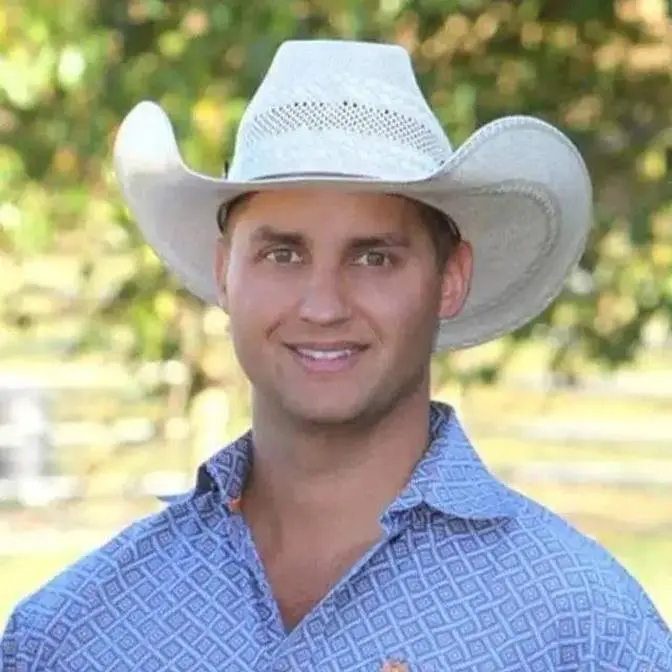
On day 2 of taming the wild mustang we got for the Mustang Magic competition, my assistant trainer, Jake, and I start to introduce touch and how to follow a feel with a rope and a halter. Wild horses can be tricky to train, but this horse keeps surprising us!
💼 Learn the business side of horses they never taught you in the arena. Join our Skool community to learn marketing, business systems, and proven strategies to help you grow in the horse industry. 👉 https://www.skool.com/horsemanshomepage/about
🤠 Take your horsemanship to the next level by joining our Patreon! Get exclusive training content, behind-the-scenes videos, and monthly giveaways! 👉 https://www.patreon.com/ryanrosehorsemanship/
This video documents the second day of training a young Mustang, focusing on building trust, managing nutrition, and establishing boundaries. The trainer utilizes tactile desensitization and progressive learning techniques to transition the horse from a defensive state to accepting a halter, emphasizing the importance of reading body language and avoiding plateaus.
This is a lot, a lot for him to take in.
You know, his life just changed pretty dramatically.
He strikes me as a horse that's really looking for a friend.
He's just trying really hard to connect to me.
They just have no good reason to trust us, but it's amazing that they're willing to.
I think we picked a good one.
Yeah, I think we picked a good one for sure.
All right guys.
So today's day two, super, super happy where day one finished up.
Did a couple more little sessions, 15, 20 minutes long with him, kind
of petting him with the stick.
And he got really comfortable with that.
And then he even started to let us get the flies off him a little bit with the stick.
So that worked out really good.
I think we're ready to put a halter on today because there's a couple
of things that we need to have in store.
So that's going to be the main goal of if we could put a halter on him.
Well, actually he's got to follow a feel.
Then we want to be able to put a halter on.
So the big thing, limiting factor for me of putting a rope on it.
It's a huge step.
You want to get to that step, but you're committed once you got a rope on them.
And so you don't want to mess that up.
If worst case scenario is, and we need to go to lunch, I don't like to miss lunch.
And we got them.
We could get, as long as we could get close enough with this stick that we
could hook the rope and pull it off him to reset, that'd be great.
I think that's going to go really easily.
And we might be able to start thinking about putting a halter on pretty quick,
but that is one caveat.
So I would not put a rope on unless you're ready to be committed and stick
with it until you can get the rope off and all that, but usually they turn
loose a lot once they follow a feel.
Awesome.
So you ready?
I think we should go ahead and try it today.
I'm always ready, Ryan.
All right.
That way I don't have to get ready.
All right.
Let's jump in there and see what we get our, get ourselves into.
So I'm going to clear out the rest of this feed feed here.
We're giving him some Montana premium forage, alfalfa pellets and senior feed.
And it looks like he actually ate a bit, quite a bit of it today.
And, uh, what's interesting is this was like two thirds Montana premium
forage, one third, uh, senior feed.
And it looks like he left the senior feed and ate the Montana premium forage.
So whatever he'll like, we'll go with that.
Cause you want to keep weight on these guys.
He's going to be getting worked with quite a few times a day.
He's slightly underweight to me for my liking.
And usually for the magic competition, we want them full weight.
So he's going to be getting a ton of feed.
Montana premium forage is going to help us get there.
So Montana premium forage for the win.
All right.
So I'm going to switch over to this buggy whip.
It's got this little, uh, firm tassel here.
It's just a little less.
If that flag blows or something on them, you know, that one works good to
me when you're at a big distance, but we'll see if we can get close enough
that we can touch them with this.
The poor guy's got flies all over him.
So I can't wait till we can get close enough that we could maybe
put some fly spray on him.
And the other thing is he has a hard time standing still.
And so we could spend a couple of days just doing Liberty and maybe
have maybe eventually get a halter on him.
But my, the reason I don't love that approach is you can end up teaching
them to leave you a lot in that process because there's nothing attached to
them and then they leave and then you move them around and stuff like that.
And it can end up being more, a little bit more work, maybe not stress.
Maybe, maybe stress.
I don't know.
Depends how you set up the, um, handling them with a rope, but, um, I'm a pretty
big believer in once you can kind of get around them on all sides, like we
can here with the, with the stick, I'd love to help get these flies off you.
Atta boy.
So if he can figure out this, what he was starting to figure out yesterday
is that this, this stick could help keep the flies off of them, but we got
where we could touch him yesterday in those other sessions again, just kind
of like this, and this is all about just getting them in a good frame of mind.
And then touching them in a way that's acceptable to them.
And, you know, we can always kind of start on the withers and
work our way back and down.
Oh, look at you.
You're so brave.
Nice.
He's very curious just by nature.
Sometimes they can lurch at you though.
So just like to be a little bit ready, but that was great.
He even came up and made contact.
Super.
I'd love it.
If he could figure out that my hands could keep the flies off him,
that would just be like fantastic.
Let's see if we can set that up again.
Keep those flies off you for you.
If you let me, but see, even here, like a lot of people would be like, Oh,
this isn't good, you know, he's turning away, but I'd rather him get comfortable
with me all the way around them than just, just glued with two eyes.
So to me, I think we found a really good, uh, balance of things here.
Wow.
He's kind of makes me a little nervous though.
How bold he is at a boy.
You're so confident.
I think you got a good one here, Jake.
I think so.
Oh, he goes, that's enough of that.
Okay.
So that gives me full confidence that we can go ahead and put a rope on him so we
can spend some more time messing around with that.
But one really important tip to understand about horse training is that a lot of
people, like, let's say you grade what you're doing with, um, one to 10 and you
can go from zero to six with things pretty quickly.
So I would say that's what we accomplished with delivery.
So we went from barely can be around him, touching him yesterday, or, you
know, just in this space to now I can like pet him with my hand.
Like that's pretty big improvement.
One, one day.
Zero to six.
The journey from a six to an eight is a lot slower.
It's like 6.1, 6.2 and somewhere in there you're apt to plateau and it
just kind of gets stuck right there.
So what usually is better with horses is once you get some results going forward
is go ahead and move on to the next thing.
Don't get stuck doing that same thing for a super, super long period of time.
And then when you come back to the other thing, it don't be surprised when it's
now a seven instead of a six anymore.
And so I think a lot of people are trying to perfect a skill that they got started.
And it's like, no, just move on to the next thing and challenge them in a
new way and keep being progressive.
I like to compare it to like weightlifting training.
It's like, you wouldn't want to just go into the gym and do the exact same.
I'm going to do three sets of 10 with this exercise and this exercise
every day and do that for a year.
It's like, you're going to plateau pretty quick.
You got to kind of challenge things in different ways.
So now before I just try to toss this on, there's a couple of ways to do this.
Um, I like to see if I can get them used to me swinging it.
Um, and I'm going to teach him to look at me when I'm swinging it.
Like there, he looked at me.
I'll quit swinging it.
But the fact that we have a little bit of draw of him coming
towards us is going to be huge.
And again, that got peppered in with everything else.
Yesterday we released on the head would go down.
We'd take, we'd take pressure off.
He would stand still.
We'd take pressure off.
He stepped towards us.
We'd take pressure off and we just kept building on that.
Nothing real trick and fancy about it.
Uh, just kind of layering in good stuff and I'm not the best roper in the world.
So if I can get real close and swing this and have them look at me.
So here he thought about stepping away.
So I'll keep the pressure.
He checked back in, take it away.
Once I get a rope on him, my number one goal is rope management, keeping
it from getting around his legs.
Cause you can get them to really be kicking at a rope when they're this,
this fresh off the, off the Mustang pens.
The other thing I'm not trying to do is I don't want to throw it fast at him.
I'd like to kind of set it there.
One of my favorite ways to rope them.
If they'll stand there is to stand right here and just do a toss, but it's slow
and you only have one chance at it.
And then they kind of learned to duck their head.
So that's, what's hard about tossing it.
Cause it's slow compared to this.
So what I try to do is if he's, I put a little feel here and if he's
going forward, kind of go with it.
So again, here I'm putting a feel on a field.
Look at me.
So if he doesn't there, so pressure goes off when he looks, or if he's kind
of working that direction and kind of go with it.
So here he's kind of walking this way.
So I'll just put a feel and just kind of go with it, but it's like, you just
don't want to act like you've owned them.
Cause he could still pull this rope through my hands really easily.
So there he's looking away.
Put a little feel till he looks this way.
Again, just trying to be in front of him here.
And again, if he'll look when I first did this, I really screwed up the first
one I did a lot, cause I thought I got to get a foot to take a step towards me.
And I basically got them into fight mode and just kind of rearing
up and pulling away from me.
Since then I've learned if you can just get them to tip their nose towards you.
Yeah.
And then the next goal is for him to be on the inside of the pen and me to be on
the outside where I'm yielding his hindquarters and he's facing me.
Oh, I got a little step of it there.
And then you got to make sure you work both sides.
You can't just do everything on one side.
Now there he went to leave.
I'll just go with him.
Not a good time to just set a boundary yet.
Yeah.
You know, just go with it.
See there.
He checked back in.
That was a good time.
Put a little feel.
See, cause he's coming towards me with the feel on.
So I'm just shaping that life.
That's already in his feet versus just going from cold Turkey stance to like
right now, because he's standing still, I have a chance of getting flexion.
Now I'm going to start looking for a step.
There's a step.
Same thing here.
He's coming this way.
So I'll just put a little feel and just be like, that's a great idea.
There it is.
That's a great idea.
And so I basically, if I'm going to alternate a little bit between, so there
he didn't try to leave out very strong.
So I just set a boundary there and he was like, okay, I can handle that.
And I'll alternate once I get a little bit more of the yields going on here,
then I'll pivot to trying to work my way in closer to him to do some more petting.
But again, to me, this is a big goal.
When you get the horse on the inside of the pen and you're on the outside, I
always tell people at clinics to help a horse, relax, get them to yield their
hind quarters to show a horse that you're kind of more of the leader, get
them to move their four quarters.
And one, most sources are a little easier.
One of the other, and the Mustangs to me are the epitome of this.
Cause a lot of horses will yield their hind quarters easily.
So you can't really see, you can't really see that idea.
Um, very clearly, but with the Mustang, I think it's a lot clearer because you
can see that he's walking his front end around and not moving his hind quarters
yet, but I want to try to get him to turn his feet loose there a little bit.
And there's just, there's going to be some of those moments right there
where you've got to kind of set a boundary and have them yield, but
you've got to pick your battles.
Cause if he would have pulled the rope through my hands there or drug
me around, then I would have taught him to push into pressure.
Like here's not the time.
He's pretty committed to walking over there right now.
Now he stopped.
Now I'll see if I can get him to step away.
But what I got to get is these front feet to turn loose here
and start following me again.
And that's where all the good things will start to happen.
There we go.
That was a big move right there.
I'll let him think on that one a little bit, but it's like I'm
teaching him to follow a feel.
He kind of knows the answer here at times, but he's now like,
kind of just deciding like, wait a minute.
I don't know if I want to be committed to this.
Very few horses.
Are you going to be able to work through this without them
ever testing the boundaries?
Right.
You know what I mean?
They're gonna go through this.
And to me, he's testing it very little compared to what a lot of them do.
Cause you got to remember he's four years old, never been
asked to follow a feel ever.
There we go.
So once he, once he connects the dots that he can step towards me and follow me.
Plus the other thing that's working against us a little bit is he,
he's pretty happy to move his feet.
He doesn't like to stand still.
And so we're asking him to have a little bit longer
attention span on something.
And that's also going to be a little bit challenging for him.
Again, I just keep shaping those feet towards me.
Atta boy.
There's a little change right there.
I'll stay connected here.
So that's again where he gets distracted easily and he used to be able to just
kind of wander around wherever he wanted to.
And now he's, he's running into a boundary.
There we go.
That's really good.
So we'll just let him soak this up and let him feel good about me being in with him.
And then when I step away from him, now I'm at a distance and he's having
to learn to yield to pressure more.
So I am releasing him to me, petting him.
So we can take this part to the next level.
I think he's enjoying the little fly relief right now.
It's amazing how much the flies really, I mean, we have quite a bit of flies,
but not this bad, but when an animal is stressed, they, uh, they really go for them.
So to me, we just got past that little, that initial like defensiveness
about asking him to follow a feel.
Now we can go back to having this conversation a little more.
So in other words, what they, what you saw a minute ago, this is now yields.
This is when I'm instigating it a minute ago, I was having to manage the rope
and do a lot of little blocks and what I called setting boundaries.
But look how good he's learning to stand still.
Now I had a boy super, I'm amazed at how easily he's accepting humans touching him.
But again, in this regard, I think the flies are helping us out, man.
Well, he turned blue so quick.
He did.
That's really exciting.
So what I look for once they start moving their hind quarters.
So it's like my first goal is actually to get a, not really to get a front foot,
but to get a hind foot to step away from me.
And then once they start stepping their hind feet away, I'll keep
stepping their hind feet away.
Cause that tells you they're not in a real defensive frame of mind.
Yeah.
When he's pivoting on his hind and moving his front end,
he's still a little defensive.
And then once the hind feet break loose and they'll follow you, then
I'll keep moving the hind feet until a front foot steps towards me.
The next thing you know, they're, they're leading around like a, like a champ.
Oh, we might have our little circle here.
Do we have it?
Oh yeah.
There it is.
But to me, that's a milestone when you can get all the way around them.
Now I'll come back up and give him a little break.
And again, the break is now releasing him towards petting him and see
how he stepped into me there.
Really cool.
Licking and chewing saying, Oh, this guy helps keep the flies off me.
He's getting used to my hands being up here.
What a superstar.
I know Jake has tried chomping at the bit to be the one in here,
but I'm kind of having fun.
So let me just mess a little bit more and then it's your turn.
Oh, here we go.
Here we go.
Yeah.
He's really unlocking now.
Man.
That's so fun.
So exciting.
Look at that.
Just keep taking it.
It's like, thank you.
I love how he just hangs his head down.
When I was doing this with Marley, she would just stand there kind of
braced up the whole time and just skeptical.
She didn't really have these big turn loose moments of yawning
and licking and chewing.
Don't push into me that much, buddy.
So go ahead, Jake.
Come on in.
So I would just work this a little bit and just get a connection,
doing exactly what I'm doing.
And then pretty, as soon as you feel comfortable with it, I want to pivot
it to petting him around his body and getting, getting everything
tamed for the, um, prep prepping for the halter lawyers.
Okay.
Thank you.
Good luck.
And again, if you're joining us for the first time, Jake has
trained several Mustangs already.
So he already knows the deal and he was, he had already like followed my,
my Mustang series on my Patreon page.
And so, um, I did my last one.
I would watch the Marley videos.
Then I'd go out and try to replicate it.
And so I just wanted to share with you guys a little bit how I do it.
This is kind of a joint venture between Jake and I just
to train a Mustang together.
He's kind of my right-hand guy.
And so whenever I need him to do a job, you know, sometimes I get called to go
work with difficult horses from different places and as I, we do different things
together, I kind of tick them off.
So, so to speak in my mind, where then I can send him to go do that same job.
Whether it's a difficult trail loading horse or a difficult Colt, uh, except
a saddle or the rider or a Mustang.
And then, uh, he can be really handy in any situation.
Long story short, he already knows what he's doing.
So this isn't his first time.
You know, when I have to start to think about getting a halter on him, my hands
are going to have to go up above his pole.
So I'm just kind of peppering that in here.
I'm starting to work my way into that position to where I could maybe think
about getting a halter on him, getting behind the eye a little bit, just start
to sensitizing him to the end of this rope and see if I can think about, try
to replicate that halter as best I can.
Another thing with putting a halter on is you have to use both hands and
we've only rubbed them with one.
So I'm going to see if I can keep my hands close together, just
start incorporating my other hand.
I'm going to rub his nose with the rope like this there.
The other thing is this hand will have to go under his neck to the other side.
Make sure that we can start to come under him a little bit.
And see me out of that other eye.
And when I do that, I'm making sure I'm off to the side enough that if he gets
spooked or scares himself, then I'm out of the way.
Really good.
Is it alright if I just start doing it with the halter?
Yeah.
He looks more than ready.
Look at that.
I like that he's comfortable to go eat over there.
Yeah.
He wants to be really left-brained and gentle.
I feel like you need three hands when you have the rope and the halter.
Yeah.
That's the tricky part.
Sometimes I'll just put the layer of rope between my legs.
Yeah.
So again, if you hold that other part in your right hand, it
can just go around there.
So you don't have to be quite that close.
You can kind of do it out from here a little bit more.
I'm actually trying not to be that close.
He just likes to be in your pocket.
Okay.
But you had him prepared so well, you made that look easy.
Okay.
He's broke.
Wow.
That's money.
It's not supposed to be that easy.
No, that was money.
That was money.
That's a good horse.
You could have tricked somebody that he was a tamed Mustang.
Let me grab you a longer lead rope.
To attach to the halter.
And then I would just get him a little bit used to the feel
around his nose with it before we cut them loose.
Would you take the rope off now, Ryan?
You got them all hooked up there.
Yeah.
I would take the rope off gently.
Yeah, man.
He really wants to be gentle.
Like even that for most of them is a big deal.
That would be a big thing.
Yeah.
We're earning a lot with him and he's giving you a lot.
Yes.
You know what I mean?
Like Marley, every millimeter was earned.
There was like no generosity on her end of like, Oh yeah, I'll just
turn loose to you here and there.
Right.
What's cool is if he gets gentle enough where you're not stressing
him out just by being there, hanging on the halter, the lead rope.
It's like, great.
You can stand there and eat.
I just thought it'd be good for him to get a little bit of a feel of
the halter before we quit, but like that's about as smooth of haltering
as I've ever seen in this amount of time.
And I think that speaks to why it's like, it's helpful to just, because
how long would that have taken us if we stayed at Liberty?
A while.
And I thought roping him, we'd get to him a lot faster.
I think I'm going to get a little rag too and put some flash spray on it.
Yeah.
And you can just have it in your hand and kind of just keep rubbing
him and not let them know it's there.
It might be time to start bringing it, working with a stick too.
Yeah.
I'm pretty impressed.
You got all that done without using the stick.
Yeah.
To me, you were a little bit close to him where it was a bit of a risk for your
safety and that close with him being a little pushy still, it worked out just fine.
He stayed really calm and gentle with it, but it was a little bit
of a, more of a risk on your end.
Yeah.
You felt it a couple of times.
Yeah.
I just felt like he just pushing that bubble a little bit.
Yeah, exactly.
I think he's testing that leadership just a little bit.
Yep.
It is amazing how quickly it switches.
I don't think it'll be very long.
Well, actually I think he's ready for it now to start asking
him to back office a little bit.
Yeah.
I think instead of leading him some more, I'm just going to work on the rubbing
cause I kind of like to have a stick for more leading and stuff.
Yeah, I agree.
Yeah.
And even just that, just redirecting his nose a little bit versus doing nothing.
Right.
Start setting the tone a little bit of like, no, you can't, you can't push into me.
But man, he's just doing great.
He is.
How excited are you?
I'm very excited.
It's really nice when they meet you.
He's meeting us more than halfway.
Yeah.
I think once we get the hindquarter yields down, I think there'll be plenty
of shoulder yields in his future.
Hopefully we can rub some bug spray on him.
So I'm going to take one of these little rag shop towels and soak it with fly spray.
And then you can just kind of try to wipe his face down with it.
Help them out a little bit.
That should help.
Yep.
Perfect.
So we don't really like to leave halters on horses, but he has a zip tie on it and
it has a five pound breaking capacity.
So if he goes to pull or get a foot in it or something, it'll break right off.
So we've got to switch it to that, but it's a lot less stressful than having
to come in here and rope him again.
So we'll just switch that over and then we'll call it a session.
To me, you can see where he's kind of timed out a little bit.
Like we lost his attention.
We were at a great spot and now he's a little distracted.
And so this is why it's kind of a good time to quit him and just come back.
And then what, what the video can't see is the horses are horsing around out in
the pasture and he's being distracted by them.
Yeah.
It's a really small zip tie too.
So you just make sure it's all the way around the zip tie.
Perfect.
Great job.
Very nicely done.
Great job, man.
All right.
That was a big time session.
That was fantastic.
Look at him falling out of the gate.
He's going to need some shoulder yields.
Yeah.
He is a confident little booger.
Yeah.
Oh my gosh.
I I've never, cause I haven't worked near as many as you have, but I've never had
one that confident right off the get go there where he's already like pushing on
you a little bit and usually like one or two out of 10 are about there.
Um, but that, that's about as slick and easy as it goes.
You know, I'll be, yeah, some of them are really left brain and pretty
confident because I, you know, I think from a survival standpoint, they got to
be more left brain, I think, than people realize if they get scared of something,
they just run for days, they're going to die.
Right.
So they got to get scared and run away a little bit and then turn around and look
at it and make sure it's okay.
And then go back to eating and drinking.
Yeah.
You know?
Yeah.
He's super cool.
Well done.
Thank you.
All right.
Stay tuned for tomorrow's festivities.
It feels like there's a little kink in it.
There's a little kink in this rope, but I don't love, it's got like a
little bit of a twist to it.
Now let me get the rough off him for you.
That'd be great.
Well, he's a smart one, Jake.
Don't they say horses are a reflection of you or something like that?
Know what they say?
Your horse is your mirror?
Yeah.
I think he likes you more than me.
It actually kind of works out the way we're doing it, where we're almost
setting it up a little bit of like.
Little good cop, bad cop.
And then you can come in and be the good guy.
I'll take that all day long.
He's in on this petting deal.
He likes that.
Confident little booger.
Very confident.
Let's make sure at the end of the video, uh, to Rachel, we say, let us know what
you think about Jake in the comments.
Oh God.
Be nice to me.