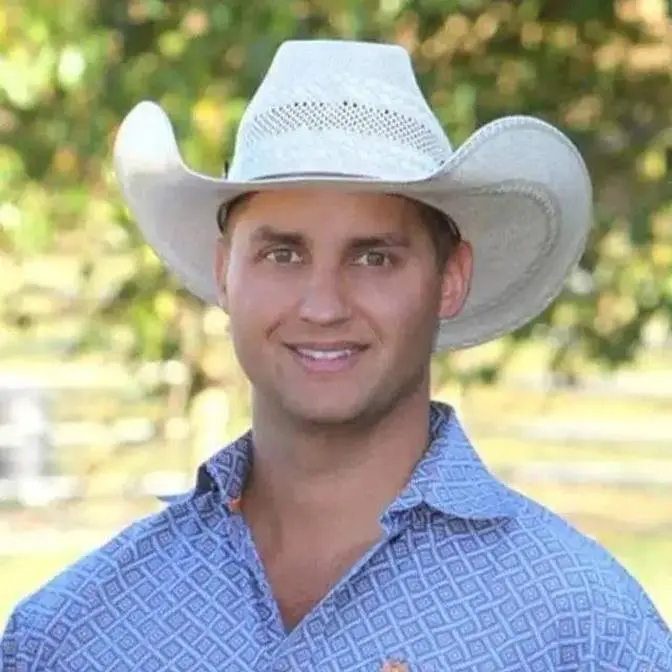
Ryan Rose works with a pushy yearling that has developed a long list of bad habits. The young horse bites the lead rope, pulls away from pressure, kicks out, pushes through people, and is difficult for the farrier to handle. Throughout the session, Ryan explains why these behaviors develop and begins teaching the horse to respect pressure and personal space.
💼 Learn the business side of horses they never taught you in the arena. Join our Skool community to learn marketing, business systems, and proven strategies to help you grow in the horse industry. 👉 https://www.skool.com/horsemanshomepage/about
🤠 Take your horsemanship to the next level by joining our Patreon! Get exclusive training content, behind-the-scenes videos, and monthly giveaways! 👉 https://www.patreon.com/ryanrosehorsemanship/
A professional trainer works with a horse named Mo to correct behavioral issues like biting and crowding. By utilizing ground work, spatial boundaries, and various yields, the trainer shifts the horse from a reactive state of \"commotion\" to a cooperative state of \"motion,\" establishing a clear leader-follower relationship to ensure safety and manageability.
I just don't want to see you get hurt with him.
You can see how little he wants to step off that pressure.
And then he thought about striking there a little bit with his left foot.
He would be a lot of horse for a lot of people on the ground.
He did get me one time.
He kicked me when I first got him.
Boy, what a difference.
All right, so I'm here with Ken and Mo
and having a little bit of challenges with a few things.
Can you just tell me about why you asked me to come out here and help?
So on the way home,
we don't know if he maybe splayed out in the trailer or what,
but we had to, you know, we had our veterinarian
and the UW veterinarians looking at him a lot
and they were handling his feet a lot.
He was very good for all that,
but over time he has gotten really bad.
I'm trying to control his head because he likes to bite.
The farrier's trying to control his feet and it's just not working.
We've had to kind of have him really close to one of the stalls.
Oh, as he moves around?
Yeah.
Okay.
Well, let's go in the indoor and we'll take a look.
Okay.
Yeah, buddy.
A lot of times when people email me questions about their horse,
I'm like, you should start with my fundamental series on the ground
and focus on that.
I think overall he needs to see you as the leader a bit more
and just get in a better frame of mind.
Yeah.
Do you see where I'm going with this?
I think if we can work with him in the indoor
and get him in a better frame of mind,
seeing us as the leader and having some more boundaries,
that these other things will get better.
I even, when I was standing there holding him
and he tried to bite my hand,
I just moved my hand like that and I kind of bumped him
and he stopped like right away.
So right away, to me, that's indicating that
maybe you're not setting enough boundaries with him.
And so like even here, he's wanting to roll or look around.
To me, I don't think it's that much to ask,
to ask him to just have a little attention.
So I'm just going to tap him on the butt here and say,
hey, could you have a little focus?
But when I tap him, he needs to yield and stay out of my space.
But even the fact that he banged his head on something there
tells me he's not being super aware of just boundaries.
And so far, he hasn't really yielded at all, okay?
And what I mean by that is he's moving around,
but it's all reactions to things.
But I want him to disengage his hindquarters
and he's not really giving me that.
There he did, there he did.
Do you see the difference?
That was a yield crossed over.
He actually said, okay, I'll try to do the yield versus before.
He was moving around and I was controlling him,
but he was doing it in a way that was just him
doing kind of what he wanted to do.
And this is where horse training gets messy for people
because they see me tap him with the stick or set a boundary
and it could look like, oh, I'm being too firm with him
or I'm being mean or aggressive with him.
And I don't think I've done that at all so far, right?
I think everything I've done has been very fair.
So even here, when I step around,
I'm blocking him with my hand
and there we got a nice little yield and step over.
And so when he's worried, this is a tool that we're gonna need.
See, I don't like that right there where he steps into me
because he's big enough, like it would be unsafe
if he just crowds through you and steps on you
or something like that.
So when I asked for this yield,
I need him to be able to yield his hindquarters away
without crowding into me.
That's where you see me block him.
Whenever I'm getting bigger with him,
it's when I'm setting a boundary saying,
no, you can't just crowd through here.
And so I'm avoiding not scaring him,
but I gotta be slightly above his intensity level
to be effective.
Or another way to say that is to be understood.
Otherwise, he'll just blow you off.
Then the other thing is I'm trying to talk and explain this
so he's getting impatient.
Most young horses are just have a little extra energy
and are playful, but it's like, it's funny.
Even when I just stand here
and don't give him something to do,
he starts digging a hole and giving us something to do
because we'll have to go fill it in later.
It fits the analogy to a tea
that if you don't give him something to do,
he'll give you something to do.
And so I'm just going to drive him around a little bit.
And every time, every single yield that I've asked him to do,
he's had resistance to it,
where his first response to that pressure is to say no.
He gets a little worried,
like he doesn't fully understand it as well.
But the worry that he has is definitely secondary
to the resistance that he wants to do his own thing
and doesn't want to be told what to do.
And so he just needs a little bit more,
you know, some boundaries and some guidance in his life.
It's also common that when you take a horse
that's used to not having boundaries
and you give them boundaries, they get worried.
Then they get through that very quickly.
But that is a common thing
that he's confident when he's in charge.
And what'll happen though,
is he will be the most confident
when he's looking to you for leadership.
That will be the most confident horse you can have.
If you had more of a right-brained horse
that was naturally afraid of, just generally speaking,
they're innately afraid of things.
If you go slow and you show them things
and build their confidence,
they get to a level of being okay,
but it won't take too much to scare them.
I've not totally decided yet
if he's more right-brained or left-brained
because he was acting more left-brained
when he was in charge.
But now that I'm kind of giving him some leadership
and some boundaries,
he can get a little worried about things.
And you can hear it.
There's like a sheath noise.
Do you hear that tension that he has?
And that's tension.
And so that tells me that he got a little worried
with the idea that he's no longer in charge.
You hear that noise?
I think he's kind of in between right-brained
and left-brained a little bit.
But I think his true nature will come out more and more
as he gets older
and as we get him to not be taking over so much.
He strikes me as a horse that needs to move his feet,
but be aware that he would probably kick out pretty easily.
So I'm being very aware of space.
And when he gets too close,
I bring the stick out
so that I'm keeping myself out of kick range.
And like, see there, he stopped
and he checked in with me
and he respected the boundary there.
He's still creeping in a little bit,
but it was in a more respectful way.
He didn't just barge through my space there.
So here I'm just trying to get a little bit of a sideways
kind of move.
So I'm just setting up situations
where he has to kind of think through it a little bit.
There we go.
And essentially what's going to hopefully happen
is what I'm asking for him in here
is a little more tricky,
more challenging to him
than asking him to stand still
to pick up his feet in the aisle way.
And so if he was my horse
and it's farrier day,
I'm going to come in here
and do a lot of this 20 minutes
before the farrier gets here,
you know, and kind of time it
where he's ready to go when the farrier arrives.
And again, you also see,
I'm asking him for something,
go on a circle,
yield your hind quarters,
yield your four quarters,
move sideways.
As soon as he gives me a little try,
then I leave it alone.
I say, okay, that was good.
So I'm not demanding perfection,
but it's like the goal would be
that each day you expect a little bit more.
So my expectations are kind of at the lowest today
and they're going to go up a little bit each day.
As far as how many steps he gives me,
how cooperative he is to say yes.
You can see how little he wants to step off that pressure.
There we go.
And then he thought about striking there
a little bit with his left foot.
And I don't know if he's a little bit leery of this corner.
So I'm going to give him the benefit of the doubt that he is.
We got a lot more.
It's a little easier this way.
Now sideways the other way is going to be a little harder
going away from the gate.
But that again fits into his willingness.
He's like, well, I'm willing to go towards the gate.
I'm not so willing to go away from the gate.
It ends up being all about his level of resistance
and willingness to cooperate.
So backing up and side passing are going to be two of your,
we need to get them to be two of your favorite go-to moves
with him backwards and sideways.
Cause they're hard.
They're like big, big point maneuver moves to do.
We only get a little,
we only gain a little bit from doing the hind quarter
and forequarter yields,
but we gain a lot from doing the backwards and sideways.
So he needs a little bit of practice with these to get better.
There we go.
And then when I, when he's, when I'm doing the stick here,
I'm thinking of that as more of a block and a boundary
than I am a yield.
When he steps into me,
he runs into pressure with the stick because he started it.
He came into my space when I didn't ask him to.
He knows if he's with other horses,
that that's rude to do with other horses,
but he needs to know that that's also unacceptable to do with people.
That was a better response to forward.
I like that one.
Something I feel like I should just say is like,
I'm really comfortable with this situation right now.
I do this all day, every day.
Like it's just not, not a big deal to me,
but he could very easily,
somebody that's less experienced on the ground
could kick, kick them or strike them or something.
He'd he, cause he'd be willing to rear up and strike
or he'd be willing to kick out.
He hasn't really kicked out yet,
but he would, it's right there.
And he's not kicking at me yet,
but he's setting it up and I keep redirecting it
before it gets more so.
So just something to be aware of.
He would be a lot of horse for a lot of people on the ground.
He did get me one time.
He kicked me when I first got him
and was working with him out here.
Okay.
And I, I kind of learned, hopefully learned my lesson.
Yeah.
Let's see, like right there when he crowds,
I stepped back so that I was stayed safe.
And then he ran into the stick.
So right here, he's respecting my space.
There he's crowding through me.
I would step back and put pressure.
I'm back.
So I'm out of the way if he does kick,
especially when I add pressure with a stick and string.
So we're here, I stepping back
and then I'm tapping him saying,
Hey, you need to not crowd through my circle right there.
And right there, he didn't, it was better.
It wasn't perfect, but he, he didn't crowd through as hard.
It's like essentially what I'm doing with him.
It's on one hand, it's very simple
because I'm asking for some basic yields,
but on the other hand, it's not so simple
because he throws a lot of wrenches into the plan
of what you're trying to do.
And he moves around a lot, like right there.
See, that was a great example of,
I really had to step out of the way
and he really pushed through there.
Like he really tested it.
He's like, I'm, what if I really commit to it?
And so I had to tap him even firmer that time,
but I'm bumping on the halter
to keep his nose shaped towards me
as I'm getting out of the way,
as I'm also tapping him.
So it was like, that's where it's a little complicated.
And like, I just don't want to see you get hurt with him.
So I just want, I don't want to like understate it
because I'm so comfortable with it.
And so I could see where you were trying
to have some boundaries and to teach him these things,
but you can see also where he's pretty committed to his idea.
That was the first time he stepped over softly.
And that's part of it with a horse like him
is you have to play through the commotion
until it turns into motion.
And you could see that with him, right?
Where a lot of what he was doing was all commotion
and I'm just having to change angles and positions and feels
how much rope, how much stick.
But now it's softening a little bit.
He's starting to get into a little better frame of mind.
I really would like to get through this step with him though.
He really would be nice if he could go out in circle
and give us some space.
So like, that's fine.
That was the first time he went out there and stopped
instead of trying to just crowd through.
Now, did you see what he did there?
He just went, I'm going and he got really committed.
Am I right?
And so then I responded accordingly.
I want to help other equine professionals grow their businesses
and be more profitable and run just an overall
more successful equine business.
So if you're thinking about becoming a trainer
or you already are a trainer
or you want to teach lessons, that sort of thing.
I want to show you how to run a successful business
in the equine industry.
There's a big need for it out there.
There's a lot of horses that need to be trained
and a lot of people that need coaching.
And so if you're interested in getting started
I'm going to be launching a program on school
where I show you all my playbook
on how to run a successful equine business.
And so if you're interested to get started
there'll be a link in the description below
and in the comments
and I'll look forward to seeing you on there.
That was the biggest I've gotten with him
where I tagged him the string
taking him with the string means a lot more
than taking him with the stick.
And so when he just went, I'm just going
and he just kind of tucked his head a little bit
and just ran straight at me, straight through me.
It was like, no, we're not doing that.
So he ran it even more pressure
but that's where it's like
I hope that you could see very clearly
like he's pretty committed to his idea there.
And so I don't like to get stuck
on any one of these things
but out of everything I've done with him right now
this feels like one of the ones
that's really important to stay with it
until he makes a change and can kind of just come.
I'm just asking him to walk around me and give me space.
And we've already been over there by the wall.
It's not like he's afraid.
Thank you.
That was better.
And it's also ironic.
Sometimes the biggest changes happen
after the biggest corrections, you know
but that time he'd maintained it.
But also I think you can see
I'm making a big deal about these things out here.
And to me, that's horse training, you know
it's like, how can I release them to my goal?
Do you see this?
Circled around, he was soft off the halter
and he had his ribs, everything.
Could you see it?
Yeah.
There's different, very different
than how he would turn the opposite way
and run towards the door.
Let's do it one more time
just to be sure we're sure.
So that one wasn't as pretty
but he didn't test it.
He didn't try to commit to bolting.
So we'll release on that.
Good boy.
When I set a boundary with the stick
in my mind, this is gilding from pressure.
There's pressure in front of him
and he's choosing to back up off of it.
So there's pressure here.
He's yielding from pressure.
If I pull on this halter here
this is giving two pressure.
It makes a little more sense with a rein
if you're turning left
and you pull on your left rein
giving two pressure.
If you're yielding from a stick
over here on the right side to go left
they're yielding from pressure.
There is a very big difference to a horse
one or the other or understanding both.
Giving two pressure is critical
for safety and for control.
Like they have to learn to give two pressure
so that they can just be safe to be around
and that they're not out of control.
If you don't have a tame horse
if you've not put a halter on them
and taught them to yield to steady pressure
or putting ropes on them
some from around their body
and yielding to pressure.
Now I also part of how I know
he's a little more right right now
granted it's really hot in this arena
but he's pretty sweaty right now
and in my mind that wasn't that much work
like he didn't canter that many circles
or you know we just did a few little things
but there was a quite a lot of stress there for him.
He will become more left brained
and more confident as a whole
if you can set boundaries for him
and I want to test that theory now
with taking him in there.
Okay and so also notice we're standing here
and we'll just see how long it takes
like you see the mouthiness is
it's not probably perfect
but it's a little better
not trying to chew on us quite so much
and if he does
we're going to back him up
and put a little pressure on
and so this is where we find out
how committed he is to the feet thing
so if you can hold him for me
if he pulls his foot away from me
you're going to back him up abruptly
like rope up making it
it's not about the backing
it's about making it uncomfortable for that idea.
So just stay nice and relaxed with him right now
I'm going to help you with this
so we're going to do this a little bit more
and I think for today we'll just do one side
but the goal would be take him out
and do another groundwork session
then the next day
and then do the other side
but just because he's a yearling
and you don't want to camp out on the idea too long
I could definitely work with that
yeah that's definitely looking better
so again I could work with that
that's nice
and so I think it had quite a bit to do with just
he had a little bit of attitude and resistance
to kind of anything and everything
you can see he's standing a lot quieter now
he's in a better frame of mind
yes
and then with the chewing on the rope
again some of that will disappear
as we get his mind to focus a little better
and give him something to think about
but another thing that I would do
whenever he has the rope in his mouth
is I like to over agree with him
and say like
oh let me help you have the rope in your mouth
oh you don't want the rope in your mouth
but it's like all of a sudden
it wasn't as fun as he wanted it to be
and you just practice this a few days in a row
and then he learns that it's more pressure than what he thought
then you can kind of forget about it
but when he grabs the rope and you're not paying attention
then you do that again
he'll go oh yeah I remember that
but when you're first teaching it
try to have that be the only thing that you're working on
so that you're fully prepared to to work on it
I would like to have you work with him
but I feel like he's kind of good
like I feel like we've done
had to do it kind of a lot with him
and since we don't live far away
I think we can make a plan
when I was you know
I was thinking I was getting him to yield
he really wasn't yielding
he was just moving like you were saying
okay moving where he wanted to
okay get a little more particular
like around in a circle
and yeah he wasn't crossing over anything
so I see now more what needs to be done
I think my recommendation would be that this evening
bring him out and work with him again
and kind of do it
try to do a similar things that I did
the baseline has got to be the hindquarter yield
and then blocking him from going forward with the stick
but he was ready to be done with the session
he didn't need any more now
but I think the session will go pretty well for you tonight
because he's already been worked with today
and so it should go pretty smooth
and give you a chance to kind of play around
with having a little different approach to it
and then I think from there let me know how it goes
and then we'll see if we need to set up a few more sessions
to kind of get over the hump with it a little bit or not
because I just want to make sure you don't get kicked or something
yeah that'd be great
all right well thanks for having me out Ken
well thanks so much for coming out
I sure appreciate it
and boy what a difference between the beginning and the end here
yeah awesome
hey thanks for watching
if you guys want to see more detailed training videos
and be able to have me answer your questions about your horses
check out my Patreon page
there's a seven-day free trial
I'll leave a link in the description below
hope to see you there