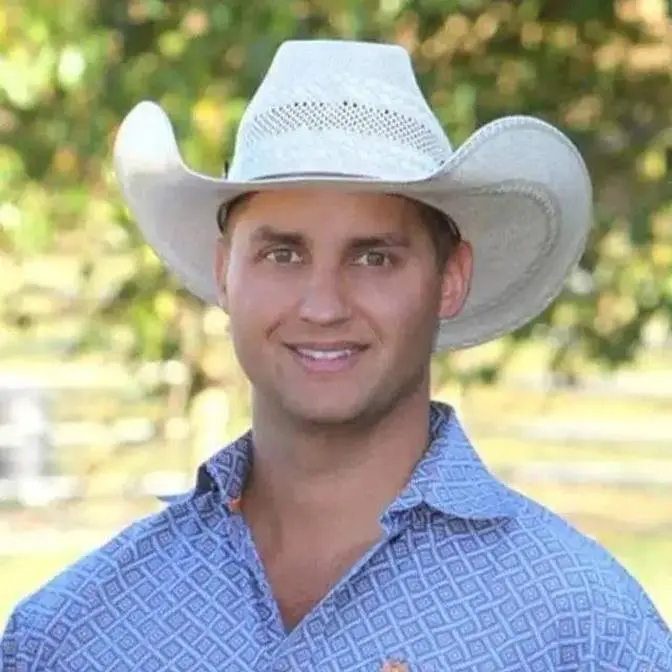
Ryan Rose teaches effective horse training techniques to manage resistance during mounting. Master the mounting block and improve your horse handling skills.
In this session I work with a horse that doesn't want to stand at the mounting block. I wanted to give the owner a few different exercises to try to prevent this horse from spinning and refusing to stand and also give both her and her horse more confidence at the mounting block.
Whether you are working with a young horse or refining your horse riding tips, these methods provide a solid foundation for safety and cooperation.
Subscribe for weekly horse training breakdowns, and comment below if you want to see more exercises for handling mounting issues.
💼 Build a better horse business. Join our Skool community to learn marketing, business systems, and proven strategies to help you grow in the horse industry. 👉 https://www.skool.com/horsemanshomepage/about
🤠 Take your horsemanship to the next level by joining our Patreon! Get exclusive training content, behind-the-scenes videos, members-only Q&As with Ryan, special training opportunities, and access to exclusive merch. 👉 https://www.patreon.com/ryanrosehorsemanship/
This video emphasizes the critical role of groundwork in horse training to establish leadership, safety, and emotional fitness. By focusing on boundaries, yielding exercises, and consistent pressure management, the trainer transforms a defiant horse into a composed partner, ensuring the horse respects personal space and remains focused both on the ground and under saddle.
We're missing out on like a huge chunk of foundation.
Even though it looked like I was being really big with her,
I was only just slightly above her level of commitment. So in my opinion,
we kind of timed out a little bit. She's kind of like, okay, I'm done.
You're a good girl. You're just a little bit sneaky.
So I'm having issues with not standing still at the mounting block.
It's like a game to her.
She likes to spin around and look at me whenever I try to get up onto the
steps.
And how long does that usually take before you can get her to stand there for
you to, you know, it can take anywhere from like a minute, but I've,
I've been doing like I've been there trying to do it for like at least 30
minutes before. Wow. I have dedicated some days of just doing groundwork,
but usually when I do that, she just,
she just tends to get really frustrated and I don't really feel like our
sessions get anywhere. And then once you get on her, the ride goes pretty well.
Yeah, she's absolutely fine. It's just the hump of actually getting on her.
But when you do groundwork,
it sounded like you have some other issues that come up sometimes.
Yeah, she can get kind of aggressive. And, um, what does that,
what does that look like? What is she doing that you can kick at the whip?
She can kind of turn towards you and try to pin her ears and kind of act like
she's going to bite. Um, she's very opinionated. If you feel,
if she feels like she doesn't know the answer and, um,
sometimes it's a little bit dangerous for the most part. It's,
she's better like in the tack up space,
but I feel like groundwork in the arena is a lot,
a lot harder for her cause she is,
she doesn't really understand her expectations.
Okay. I was wondering if that's what you were thinking.
Cause it sounds like she went to some training and they probably rode her
mostly. And so the riding is going pretty good, but the groundwork,
she probably just hasn't had much of it.
I think it was more like, Hey, here's how to be tacked up.
Here's how to pick your feet. And then, okay, let's go ride. You know,
I don't think she was really introduced to like, Hey,
I don't want you in my space. Like all that kind of stuff.
So my perspective on this is if those, those issues are on the ground,
like this mounting block issue is like the first one that's coming up.
But I think if you continue to skip over groundwork when there's some holes
there and I understand you can ride her. Okay.
But I think this happens quite a bit there.
We're missing out on like a huge chunk of foundation of just her
seeing you as the leader and stuff like that.
Like there's a lot of horses that people don't do much groundwork and then they
get them riding and that's okay until it's not.
But I feel like you're, you're just missing out on like 50% of the training.
If you, if we skip over groundwork. So we're going to address the mounting block
issue, but we're going to do that secondarily to some groundwork.
The mounting block today for me is the maneuver. Okay. I could get,
I could find ways to make her stand still there.
But to me the goal is for her to see the mounting block as stand still and get
relief standing still. Okay.
Because even how she's just a little bit pushy here with you on the ground and
she keeps creeping forward and moving around,
there's definitely a little bit of ground manner stuff that if we don't,
it's not bad yet, but I think if we let it keep going, it'll,
it'll go the wrong direction on it. Yeah, for sure.
Have you ever used a rope halter before? Uh, yes.
I am just a little unfamiliar in how to tie it. Okay.
So you would normally do groundwork in your regular halter? Yes. Okay.
So the rope halter,
the reason I like it is because it's a little bit thinner and so she's less
likely to want to lean on it.
And then it's got this nice little ring on the bottom.
Now like here when she wants to put it in her mouth,
what I would do with her is put it in her mouth more.
So you can see I'm going to pull up on it more and I'm going to do this until
she, she actually put her head down and wanted to spit it out.
So instead of me trying to pull it out of her mouth, I just said, Oh,
let me help you. Let me help you put it in your mouth.
And so I'm just lifting my hand up until she doesn't like it.
So I'm saying to her,
her idea was not as fun as she maybe thought it was going to be.
We've been standing around quite a bit for a three year old.
Like it'd be better to get things moving a little quicker.
And that's where it'd probably be beneficial to when you take her out of her
stall or the pasture to do some groundwork before you tack up,
before you brush her, before you do anything.
That's what I would normally do.
Once you're in the routine of working with her pretty consistently. Um,
then I would, you could start skipping that, but you see,
I have to do that fairly firmly with her because she's,
she's pretty happy to have it in her mouth. All right.
So instead of messing with the mouth thing this whole time here,
we're going to go ahead and get her busy a little bit.
So the first thing I'm going to tackle is just her moving her front end around
her hind end.
And I'm going to try to do it a little bit off the halter and a little bit off
the stick.
So yielding to steady pressure is like the halter there,
but like with her pinning her ears at you and being a little bit dominant,
getting this front end to step over is going to be key.
And you can see how she's trying to avoid it pretty good compared to if I
focused that was on those a little bit better compared to watch when we go to do
the hind quarters, like how easy this one is.
And I'm going to block here too.
I don't want her to walk forward when I do this yield.
I want her to step her hind end over.
And so what I'm going to try to do with her is kind of kind of flow between the
two of them a little bit quickly. Like she's,
she doesn't want to move her front end like at all. Um,
but we're just going to keep loosening it up a little bit for me,
her way of avoiding it is kind of lifting her head up.
And so I'm going to keep moving the stick and just letting her know there's no
relief up there for moving it away. And so watch,
I'm going to keep moving this. Then the head came down and then I'll take it away.
So it looks really ugly right now, but if you keep working on it,
eventually she figures out that she can yield to pressure because she,
she understands steady pressure. She doesn't understand driving pressure.
And then I'll come back and rub her with it. Make sure she's not afraid of it.
So you can see she's not afraid of it at all because I'm not going at her.
I'm putting a boundary here and saying, this is coming closer to you.
And eventually it will tap you if you don't move out of the way.
And so the backing up in the front end is me speaking directly to her left brain
nature of saying,
I'm in charge of you because I can move you backwards and your front end around.
If I came out here and I just led her around and I moved her hind quarters,
I would get like 10% of the like, I'm the leader.
See how she kind of stands settled and isn't challenging me and isn't chewing on
the rope. I went right for where the sticky spot was,
which is the front end with her.
Yeah, they're more aware of who's in charge.
A right brain horse cares more about feeling safe and comfortable.
She's very safe and comfortable.
I could change directions with her by doing this and she's yielding her hind
quarters. And then if I step out of her way, now she's going forward.
And I got zero front end yield in that.
And so that's not going to move the needle of her thinking she's a little bit in
charge on the ground.
And the way I'm wording that is kind of for lack of better words to say it,
but she does a more general way to say that she doesn't understand the yield to
pressure from her front end. But it does,
it does lend itself to a little bit of the leadership.
Like that one was really nice.
And then also notice one of the techniques I'm using here is I ask like here,
I'm pointing, I want her to go faster. I lift the stick up,
I touch her and then I reset. Okay.
I don't just go tap, tap, tap, tap, tap, tap, tap until she goes.
That really irritates them. A more left brain horse.
I'm just saying I'm going to ask you to go nicely.
So there's that little bit of attitude resistance. And so again,
we'll reset it. Okay. We'll try that again. There it is.
So that was the first yes answer. She trotted a couple times,
which essentially is like did what I asked her to do, but she didn't.
It would be like a mom and daughter, right? If you asked her to pay, Hey,
can you hand me that laundry basket? And she went, looked at you and went, no,
that's essentially like what she's doing. It's like, well,
that's going to be a different response.
You should theoretically would have a different response to her than if she had
said yes. So there's different qualities of response here.
Now you notice how much lighter that is than when we started.
And then we, then we hit a block.
So she was able to give me a couple of steps. And again,
I'm going to keep the stick up now.
So I got my backup and now I'm going to keep the stick up and I'm going to be
annoying until the head goes down. And if she doesn't help me,
then I'll ask her to lower it with the halter. And again,
it's just that little yield.
But the reason I'm not stopping when she puts her head in the air,
imagine if every time she sticks her head in the air,
I quit doing what I'm doing. What would I be teaching her? I'd be like, yeah,
just stick your head in the air to avoid it. Cause she's avoiding moving her feet.
That's why the head's going up.
And so as long as I get the feet to move and then I wait for the head to come
back down,
eventually she'll be able to back up without elevating her head.
If the horse says she was afraid of the stick touching her and I lift the stick
up and she, she runs away. Well,
if I put the stick away and I go that scared her, I'm just training her,
be afraid of something and run away and it'll stop. Well,
if you're sitting on her and the lawnmower scaring her,
but the lawnmower is not going away, it's like eventually that's going to get bad.
So we've got to teach them to be able to handle pressure and be,
that's where we're kind of building that emotional fitness. Thank you.
And now there, I didn't ask her to go forward,
but because she's been hard to get forward, I'll just say yes there and be like,
that's fine. Now there she crowded me with her rib cage.
And so I give her a little boop with the stick there because I want her to learn
to respect my space at all times. So like there she crowded through.
So I'll give her a little, little boop. It was like, wow,
this guy's got a lot of moves. Now that time she really yielded it away.
So I'll give her a little break and she's having a lick and chew and taking a
deep breath. And so I'm managing her not getting too emotional.
If I was just going like if I had in my mind,
the more yields I make her do today,
the better result then I would keep going. Right. And I'd be pushing her.
And she would just elevate and elevate and elevate.
But because every time she tries to get on board with my idea,
I give her a little break.
She's staying more composed because I'm probably being a little firmer than what
you guys have been. Right. I'm only being as firm with her as I need to be.
See how polite that's getting now.
But so she dictated how firm I got and meaning we're going to make it a little
bigger deal when she steps away. Not the first time,
but the second time it's going to be 5% more.
The third time it's going to be 10% more and it's going to keep going up.
And it's her choice when she wants to just stand there.
So as long as you always offer the horse a good deal,
you take whatever level of pressure they're committed to and you increase it
just slightly above them,
which even though it looked like I was being really big with her,
I was only just slightly above her level of commitment.
It's hard for people to see,
but I think now you can see how much lighter she's getting.
As you guys were telling me,
like all the terrible things she's doing,
you were also telling me how wonderful she is. And I'm in total agreement.
I think she's got a really wonderful disposition.
I think she just hasn't had much groundwork,
but it's really good that you brought me here to nip this in the bud now,
because these are little things that build into bigger things.
If you let it go earlier, when we were here, we didn't say it on camera,
but off camera, you were telling me that when you try to be effective with her,
she gets emotional and she gets bigger and she starts moving around animated.
But we manage that here today. And so I use,
we also said I was bigger than you guys have been with her,
but she's getting calmer and she's blowing out and she's relaxing.
And it's because I'm doing it in a way that's fair,
which is why she's not afraid of me and why it's still,
it's still working and why she's relaxing.
Now I said hi to her when she came in, but I didn't ask her to come in.
And so I'm going to tap, tap her there and say, excuse you.
So in horse language,
a good safety habit is whenever I ask her to stop,
I want her to stop at the end of my arm from here.
I want to be the one to go into their space.
If they come into my space closer than this,
I want it to be because I asked them to,
but I don't ever ignore when they do that. When I didn't say,
when I get into this close to them, I ask for permission to touch them.
Like I wouldn't just walk up and be like, nice horse, you know,
and just be rude about it. But I'm going to expect the same from her.
I don't want her to barge into my personal space uninvited. Okay.
So I'm going to teach her something that I think should be kind of fun.
So this little bonus, we're going to say,
not only do we want her to stand still at the mounting block,
we also want her to come pick you up from the mounting block.
So before you would ever teach a horse to come sideways towards you,
you would want to get them to go side passing away from you.
So this one is a lot harder than some of the other things I was doing.
And I'm just going to get the thought of it in there.
So what I'm trying to do is I'm trying to pretend like I'm on the sidewalk here
and I get her to go out ahead of me.
And then I'll just tip her nose in a little bit and just get a few steps kind of
lateral here. Because if you only do sideways towards,
she'll start using it against you.
You'll be standing somewhere and she'll start bringing her hip in towards you.
And you didn't say before you ever teach a horse to go sideways towards you,
you want to make sure that if you walk towards them with your stick down like
this, that you can get her to step off.
See how we're getting her to kind of step off that pressure. Okay.
And this is also a, like a, a bigger yield. This one's kind of hard.
They have to think more about what they're doing to give you that yield.
And so this one's worth like a lot of points. There we go. Okay.
So you saw the start of it there, right? Now, again,
this is just going to be the very beginnings of it.
So if you want it to get better, you'll have to practice a little bit,
just to keep it a little simple for today.
I'm only going to teach it to her on the side that you want her to pick you up
from. So it'll be her left side.
So all this is going to do is give me a little starting point that if I'm on the
mounting block and she steps over, I could ask her to bring her hip over,
but I'm going to show you two different ways to address the, her,
her little move on the mounting block. There it is.
So that was the first time she said two plus two equals four.
So we'll just let her sit and think about that for a minute.
She actually gave me a couple little tries and I got a little greedy and I was
kind of thinking she would do this. So again,
we're going to walk really slow and the first cue is actually I'm going to bring
the whip back. So if you were standing on the mounting block,
you would lift your hand up in the air like this. That's kind of the cue.
And now because she didn't bring her hip over,
now I'm going to reinforce this cue with the stick,
but I'm still walking backwards there and we got one step there.
So we'll take that. Ah, you see it? So I didn't even tap her that time.
What I would recommend you do is you work on this five days in a row and you do
it with a halter and lead rope on because you have a lot more options of things
that you can do when you're set up like this.
And if it takes 30 minutes and we don't ride, Oh well,
like this is what we're focusing on.
But if you just kind of do it casually and sometimes you tolerate some of it and
some days you don't, it'll, it'll just kind of be a nagging issue there.
So what I'm going to do is lead her up into position and I'm going to expect her
to stand still. Now keep in mind,
I was just asking her for a lot of different yields. Um,
so she may fidget a little bit more. So there I'm going to say, whoa,
and I'm going to start petting her now and I'm going to drop the,
kind of give her a lot of slack.
So I make sure I don't pull on her nose and we'll go to step up here.
And then once I get up here, I'm just going to pet on her now.
So there she backed up a little bit, but I'm going to do what I call sign them up.
If she wants to go that way, I'm going to like over agree with her,
but I'm not going to nitpick every little thing.
So if she just takes a couple of steps,
I'm just going to come up here and rub on her. No big deal.
So isn't that interesting after doing some groundwork with her that she stands
here. So in other words, this was not about the mounting block.
So now I'm going to bring her off it. And again,
just because she did that does not mean we've trained her.
She's trained to surface level right now to stand still at the mounting block.
So what I'm going to do is I'm going to come on her off side and I'm going to
work a little circle here. She's getting a little sticky with me here.
So my opinion, we kind of timed out a little bit. She's kind of like, okay,
I'm done, you know?
And so it's good to get to those spots with a horse and just work through it a
little bit. Okay. So I worked the off side of her.
Now I'm going to bring her back and work on the good side. So again,
whoa,
start petting her and try to be really consistent about this part.
And I don't want to camp out in front of her.
I want to get where I'm up here rubbing on her,
but I've kind of made contact the whole time. Now there she pivoted away.
So I'm going to say, let me help you. Let me help you go over there.
And this time, because she stepped away over here,
I want to show her what it looks like when I ask her to yield from this
side.
And I think we're getting to that spot that you were talking about where she
kind of gets a little bit like, um, no, we're done with this.
So again, instead of just putting her right back,
I gave her a little bit of a hard time there.
And now I'm going to come back up here and do some petting.
And so now she can really feel the difference between this is what petting and
showing you where the relief is looks like.
This is what it looks like when I'm asking you to move. Cause I'm kind of going,
Oh, maybe you thought I asked you to move, but that's not what it looks like.
So you're going to put her right in exact position and then start petting her and
slowly walk up on the mountain block. Boy, even that,
do you see how she kind of walked up there in position nicely and I'll pet her.
Yup. And keep petting her and work your way on the money block.
Let the rope go. Yeah. Really nice.
Usually horses don't like to be padded. I wouldn't pat her. I would just rubber.
That can feel a little bit like driving pressure to her. Okay.
Now come back down and I want you to just do that little hind quarter yield from
her right or her right side, uh, way from the Monte block.
Now drive the hind quarters around and make sure her nose is tipped towards you.
When you do this, tip her nose this way. Yup. And drive that hind end around.
I want you to tap her with a stick. Yup.
So sometimes you need to gather up the string when you do this. Yeah.
Really good. Really good. Head back to the money block. Keep petting her.
Really good. Feels different, doesn't it? It does. Yeah.
I want to help you get started with getting her to pick you up at the money
block. It's a super handy, great move to have.
And so I'm just going to get her started with it so that it'll be something that
eventually, again,
I would do at least five days of this and have her to where you know,
she'll stand there for you. And now it's like, okay,
now I'm going to take it to the next level where not only this,
I could go stand on a picnic table and lift my hand up and she'll just come pick
you up. And it's, it's actually quite easy.
I'm kind of surprised more people don't do it. So this time notice,
I'm going to lead her straight up to the money block and I'm going to teach her
this as a pattern. So it's like, this is how we do the money block.
We go straight towards it like this. And then I'm going to get up here.
And you can see she's already kind of helping me get in position here a little
bit. And so because she kind of put effort into getting there all on her own,
like she knew what was expected. We're just going to pet her here.
I don't need to tap. I don't need to say one step closer.
Like just be happy that she put effort in there. Okay.
So I'm going to make it a little bit harder this time.
And I'm going to bring her up on this side so that I have to bring her over
because it's either going to work out pretty easily from the prep we did,
or it's not going to work good at all. And if it doesn't work good at all,
I just want to work through that myself.
So to set you up for success next time you try it.
So I'm going to make it harder.
I'm going to come over here at this angle this time.
Can't argue with that. That was pretty good. Again, she's not perfectly there,
but don't be too picky. It's the first time, right? Like she tried,
she put some effort in. Pretty slick, huh?
I think I need to have you try that now.
So you're going to push her head away from you with the halter and lead rope.
Yup. And you tap over there. Go ahead and hold the stick on the handle.
Yup. Push her nose away from you as you do that.
Yeah. And pet her. Pet her with it. Really good.
Let's see if you can get one more step. Let's get it.
Let's get a little greedy here. Oh, you got serious about that one.
She's like, Oh, she's not messing around. I think they're going to be just fine.
Was that the right thing to do? Yeah. Cause she was wearing it.
It was a little bit high risk.
Like you could have startled her and had her kind of leave,
leave the whole situation. And if that happened,
you would just bring her back and start again. Um,
but it proved that she was kind of sandbagging you a little bit.
She was kind of like, man, I don't really feel like it. Um, yeah. Great job.
I'm really glad that you ended up coming out.
Cause it was a lot of what I need to hear. And I think it was definitely,
I was kind of scared to get started with groundwork because I was scared someone
was going to go wrong and I was scared. I wouldn't know how to deal with it.
But after you came out,
I feel like I have more tools to be able to combat what whatever happens with
her. Yeah.
And can you start to see the value of doing the groundwork besides the riding,
even though the riding's going well. Awesome. Well, I think you did great.
And again,
I would recommend you join the Patreon page and just go through the fundamental
series that will, that will really set you up for success.
I teach two or three yields in each one of the videos.
And it's like watch the video, come out and give it a try. Um,
you know, write some notes down on what yields those were.
A lot of them will be familiar to you already from this lesson. Um, but yeah,
I think that would really seal the deal. It would make it,
make everything go pretty smooth for you. Awesome. Well,
thanks for having us out. It's good working with you. You're a good girl.
You're just a little bit sneaky. Can you imagine too, as a person,
like if this was you and I just walk up and I'm like,
I'm just like right in your face and be like, dude. Hey, thanks for watching.
If you guys want to see more detailed training videos and be able to have me
answer your questions about your horses, uh, check out my Patreon page.
There's a seven day free trial. I'll leave a link in the description below.
Hope to see you there.