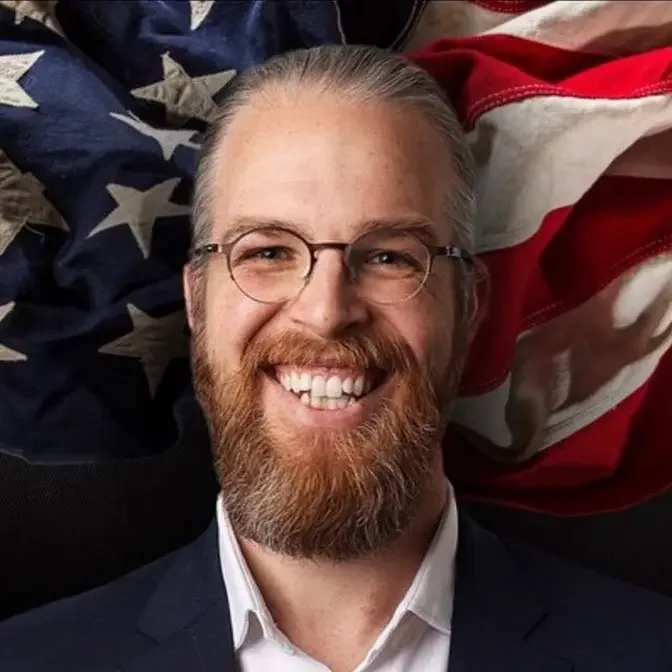
I sit down with Jack, a retired military veteran, to talk about EECP, a little known heart treatment that helped him avoid major surgery. We explore why this FDA approved therapy is barely used in America, despite being standard care elsewhere. A hopeful, eye opening watch for anyone facing heart issues.
For high quality storable foods and seeds, visit http://heavensharvest.com and use promo code SETH to save 15% on your order.
To learn more about investing in gold & silver, visit http://goldwithseth.com, or call 626-654-1906
Kimchi One from Brightcore – Improve your health, improve your life. 25% Off with code: MANINAMERICA at https://mybrightcore.com/maninamerica Or dial (888) 575-6488 for up to 50% OFF and Free Shipping – ONLY when you call!
To learn more about Red Light Therapy, visit http://myredlight.com and use promo code SETH to save.
Every year, more than 500,000 Americans undergo open heart surgery, and heart disease is the
number one killer in this country. Nearly 2,500 Americans die from it every single day.
And yet there is an FDA-cleared, Medicare-covered therapy that grows new blood vessels around
blocked arteries without a single incision, and fewer than 150 doctors in all of America offer it.
My guest today almost became one of those 500,000 people.
Jack Clifford is a retired U.S. Coast Guard Master Chief with 21 years of service. He's
also the author of EECP, the most underutilized therapy in medicine.
While most heart patients get handed a consent form for bypass surgery and told there's nothing
else on the table, Jack was handed that same form with a 100% blocked widowmaker artery,
and he has walked out. He found the therapy that his cardiologist never even mentioned,
and he logged over 700 hours on it himself. And now he's dedicated to making sure that no one
has to find out about this the hard way. So in this interview, you're going to learn exactly what
EECP is, how it works, why the medical system keeps it buried, and what you can do right now
if you or someone that you love has heart disease, stroke, long COVID, or cognitive decline. This is
the kind of conversation that could literally save your life or the life of someone sitting
across the table from you at dinner tonight. Welcome to Man in America, a voice of reason
in a world gone mad. I'm your host, Seth Holhouse. On this show, I talk to real Americans with real
solutions to the real problems that we're facing today. I help you to connect the dots between the
problems that we see in the present and the powerful decisions made by people in the past.
Because once we understand how we got here and what the real history of America actually is,
we can remember where we came from. We can learn from the past and we can make real change for a
better future. Now, before we start, please make sure you hit that like button. It helps a lot
with the algorithms on whatever platform you're tuning in from. It just helps get this information
out to more people. Also, please subscribe and share this with someone who really needs to hear
about it. And let me know what your thoughts are in the comments. Honestly, I love reading your
comments. And remember, every Man in America show is done as a podcast as well. So if you want to
listen instead of watch, just go to your favorite podcast app. But if you use Apple Podcast, it will
be a real favor. Just leave a review on there. Apple really prioritizes the podcasts that have
those reviews. So if you like the show, leave a review and it'll help me reach even more people.
All right, let's get started now with my interview with Jack Clifford.
Jack, it's great to have you on the show. It's nice to meet you. And I'm really looking forward
to this discussion. And I'll get into a few reasons why, but just starting off, thank you
for being here. Yeah, my pleasure, Seth. Thanks so much for having me. It's such an important topic
and you're just like the perfect guy to let all these folks know about it because I know you get
it. Yeah. And I'll let you introduce it properly. So we're going to be talking about something
called ECP and I'll let you kind of describe what it is. But I'll start by saying that
I'm not going to say that I know everything about alternative health or medicine. I absolutely don't.
However, if you put all the doctors and people that I've interviewed together,
they kind of know a lot. I've never come across this treatment before, which is really surprising
to me, which means it's probably really suppressed. Maybe it's new. There's probably a
few different reasons. But it's really interesting to me. It's like when I first discovered red light,
I was like, oh my goodness, red light therapy, this stuff is amazing. Anyway, I guess I'll let
you tell your story because a lot of the great stories of discoveries and finding these new
things, it comes through the personal journey of kind of turning up and looking under every rock
to find the solution. And if I remember correctly, you've got military backgrounds. I think you've
got some sort of a discipline that I think a lot of us maybe don't have in terms of seeking out a
target and finding something. So I guess, yeah, I'll hand it to you and you can walk us through
however you want to. Sounds great. I appreciate it. Thanks. So kind of the condensed version of
story, which got EECPbook.com is where folks can go and take a look at that if they want.
I titled the book EECP, the most underutilized therapy in medicine. And that is,
I think at the heart of the matter here. Thank you. So EECP, you mentioned maybe it's new. Well,
it's the furthest thing from it. It's over 30 years old. It's been FDA approved since the
late nineties. It's even Medicare reimbursed under certain circumstances. They're pretty
specific indications, but since like 2003. So EECP is old. It's well-established. Some of
the technology is newer and some of the technology that's allowing it to maybe have another look
is newer. But anyhow, I didn't know about EECP and I didn't need to know, I suppose,
or that's a perspective until five years ago. So five years ago, we had just moved to Florida
and I was experiencing some chest pain. It was not a heart attack. I want to make that clear.
I didn't have like a heart muscle that was dying and was at risk, but I had really severe angina.
I was getting chest pain, just walking at 2.2 miles an hour and it was progressive. So I had
started trying to run again. You mentioned a military guy, retired military guy. I've always
been pretty fit, but I had sort of lost myself in the self-care of my wife of 32 years because
she'd had some real serious health conditions going on. When we moved to Florida, she started
feeling a lot better and then I started trying to take care of myself. So I started running again,
which I ran a couple of marathons, a couple of halves, a bunch of 5Ks and 10Ks. I really
enjoyed running. I got out on the beach and started to do my running stride and was like,
oh, something hurts. Stop, try again next day, day or two later, same thing. And then
over the next couple of months, I was getting chest pain just walking, like I mentioned.
So at a certain point, I went to the hospital. There was kind of an emergent reason why.
I guess I'll tell the story because it's not going to make sense any other way.
So my wife and I have been biohackers for a while. We like to play around. When
doctors don't have the answers, that's not the end of the story. So we've learned a lot. And
you mentioned, you've talked to a lot of folks about a lot of things alternative health-wise.
There's a lot out there. So my wife had gotten me for Christmas. This is Christmas of 2020.
She got me a chili pad to make your bed cold. And I was like, cool, I'm going to sleep.
I used to have one of those. I had a chili pad. I wouldn't say I was a hardcore biohacker,
but I was definitely, I went through a phase of doing polyphasic sleeping. I was like,
I wonder if I can sleep two hours every 24 hours. I tried it for a little while.
It kind of went off the rails, but I've always been fascinated with
that aspect of just how can I maximize this human body? But also now it's understanding about
health. So we've got red light, we've got a sauna, the cold plunge. We have a whole medicine cabinet
of non-pharmaceutical things that come from nature. So my wife and I are similar. We're
always looking for just new ways of just improving our health, our mental clarity, etc.
So she got you a chili pad, right? You just lay it under your bed. And then in this case,
it came with a chili blanket. So it was like double chili pad. So I cranked it all the way
down to 55. I was like, lower is better. Let's go. Let's hop in bed. I'm going to sleep so well.
Christmas day, eve. And anyways, woke up at four in the morning, acute chest pain,
out of a dead sleep, the pain woke me up. And I'm thinking, this has got to be a heart attack.
We have all these weird descriptions. It radiates down your arm. You get nausea. People have all
these things. And I don't think anybody really knows what to expect. And I certainly did neither.
But I was like, the level of pain, if this isn't it, I don't know what is.
Anyway, so I rushed to the hospital. But what had happened, so if your coronary arteries start
to get blocked with atherosclerosis and plaquing that people tend to think of as, they just call
plaques, right? You're in this supply demand mismatch potential. So if you're just sitting
on the couch, you've got plenty of blood flow and your heart's going to feel fine.
If you start to go for a walk, you might have plenty of blood flow. If you start to go for a
run, you might not. And that's what I was experiencing. So it's all about your activities
that are governing whether you're at supply demand mismatch or not. But when I was sleeping
in that cold environment, my heart had to pump a lot more blood through my system just to keep
me warm. And I got to supply demand mismatch in my sleep just lying there. So I never had a heart
attack. It's important to this story because I got cleared. I didn't have any enzymes,
they call it troponin, in my blood. My EKG was normal. But they gave me a nuclear stress test
in the ER and I failed that miserably. It was very, very positive or negative depending on
how you want to look at it. But that was a Friday, so I stayed in the hospital.
Like I mentioned, we'd had all these health issues with my wife. We were just like,
oh my goodness, life's just throwing one thing after another at us. But my mom had had a heart
attack where she probably needed a bypass. I can't say for sure. But unfortunately, that process in
my mom's case kind of ruined her brain. So she came out of that surgery and she had this
phenomenon called pump head, which is pretty well documented. And she just cognitively declined very
quickly over the next months and years to the point where unfortunately now she's in memory care.
And so I knew bypass is serious. This is major, major, major surgery.
And so I wanted to try everything I could. And I had heard about EECP, this enhanced external
counter pulsation that we'll mention specifically in a minute. And it was just in looking into
resources for my mom. I was like, what if it happens again? I had heard this podcast that
was like an hour long and they mentioned EECP for like 60 seconds. And I was like, okay,
noted. I didn't really know what it was or how it worked. I just knew the closest place to my mom
was over two hours away and she had to get there 35 times in seven weeks. And I couldn't talk her
into doing that. I can't entirely blame her. That's basically every day, her entire day for
seven weeks. And then it's expensive and Medicare wouldn't have covered it in her circumstances.
And so just to kind of make sure I'm following. So when you went in, if I remember correctly,
you had a hundred percent blockage of, I think what's called the widow maker artery, right?
And so normally they would have done a bypass. So my dad had two different heart surgeries.
He had some stints put on earlier, but then later, this is like in 2015, around Christmas time,
he had to have open heart surgery and he had five bypasses. And it was pretty significant.
The doctor is saying, it's like, yeah, this, your dad's kind of like, he's competitive and
he's at the top of the rank in terms of like how bad things were. And so, you had heard this thing
called ECP and because you're a biohacker, I'm assuming you didn't just go just rush off to get
on some blood thinners and go, Hey, let's go see what the doctor's going to do. And let's go cut
myself open and start stitching things up. But you're kind of looking for different technologies
to help you. Is that correct? No, absolutely. My thinking at the time was, they're treating
it like an emergency. I've got this giant patch of nitrile paste on me. I'm sitting in a hospital
bed. I got things beeping all over. And yet I felt fine at that point, you know, I didn't feel,
I mean, I didn't feel great, but I wasn't in distress. It wasn't like an emergency thing
going on yet. They were kind of treating it like it was emergency. And my thinking was,
Hey, you know, as I looked into this a little bit more, you know, I don't have any heart muscle
that's actively dying right now that you have to cut me open and revascularize. Right. So I got a
little bit of time to think through it. And yeah, indeed mine, I was, I was triple blocked. So my,
my LAD, my widowmaker artery is a hundred percent. My, my left is 95 and my right was 80. I mean,
it is now to this day, like nothing's changed about those blockages. It's just,
I can run a sub seven mile now, you know, like that's, that shouldn't be possible in 52.
Wow. Um, and, uh, so do you know what caused the blockage? Cause it sounds like you've led a
healthy life. I mean, you're, you look like you're not, you know, a guy that's puts down
four McDonald's Big Macs for dinner. I mean, you're, you're running. So, um, I mean, do you
know what caused that, that buildup in that blockage? Uh, I've given that a lot of consideration.
Um, well, my genetics for sure. My grandfather died of a heart attack in the seventies and he'd
had heart attacks in the sixties. My mom, like I mentioned, and she was in her mid sixties,
I was 47. So that was kind of early, but I've, uh, I, you kind of get a little esoteric. I think
it's stress. You know, I think I absorbed a lot of stress over the years and I accelerated it,
but I have that, that those genetic markers, you know, one of them is called lipoprotein,
little a mine was really high. And there are some other, you know, lipid panel markers that
would say, you know, yeah, you're probably at risk. But again, 47 is pretty, pretty early.
Well, something that is interesting with the kind of Chinese medical perspectives is they tied
certain emotions to certain organs. And they can even say that if you're someone that, um,
has a lot of, I think anger is tied to the liver. And so someone that has anger issues,
excessive anger issues, oftentimes having an inflamed liver or liver issues. And so maybe,
you know, it's something to do with, obviously, you know, you were caring for your wife, which,
you know, I've, you know, I went through the process of, you know, caring for my brother
for 18 months as he was kind of, you know, kind of dying to cancer. Right. And it's like everything
else just stops, right? Everything else, even your own health, your own sleep schedule,
your own nutrition, just doesn't really matter anymore. And so maybe, yeah. So maybe that was
part of it. Maybe the heart had to do something with, with just your heart was broken during
that time. I absolutely believe that could be the case. It certainly felt that way at various points.
If you could go back in time and buy oil before the world relied on it, would you?
Of course you would. Anyone would. So why aren't you buying silver right now? You see,
the people who recognized oil early didn't just make money. They got ahead of one of the biggest
economic shifts in history. And today a similar opportunity is unfolding with silver because
silver is a lot more than just a precious metal. It's a critical resource used in solar panels,
electric vehicles, defense systems, AI infrastructure, and even these massive
data centers that are powering our digital world and the surveillance grid.
So while demand keeps growing, it's actually still affordable enough that the average American can
start accumulating it right now. And that's why investors are turning to silver to protect
against inflation and own one of the world's most important strategic resources. Don't be
the person who looks back in 10 years and says, I saw it coming, but I just didn't act. I'm sorry.
So visit goldwithseth.com and learn just how easy it is to own physical silver. Again,
that's goldwithseth.com. And here's something a little extra. If you just mention my name,
when you reach out to Noble Gold, they're going to send you a 110th ounce of gold coin
just as a thank you when you open a new qualified account. So again, that's goldwithseth.com.
Yes, the world is getting crazier every day. We know that every time you check the news,
another crisis, conflict, you can't control what happens out there. You should know that by now,
but you can control how you prepare for it. You can make sure no matter what happens,
you have the basics covered in each one of these disasters that could reach your doorsteps. Things
like having food to eat when the shelves are empty. That's a big one. So when it comes to
food security, MyPatriotSupply is a great option out there for you. Very affordable. They've helped
millions of Americans get prepared. They've got over 90,000 five-star reviews. Right now,
you can get their best-selling three-month emergency food supply for $100 off. They
rarely do deals like this. Check it out. If you want to get stock up, just get a three-month
supply. Highly recommend having at least a month. Honestly, at least get to a month. Three months
is great. If you want to check it out, go to preparewithmia.com. The food kit gives you about
2,000 calories a day. It lasts up to 25 years. Again, it's $100 off. So preparewithmia.com and
go get yours right now. However that happened, here I am five years ago. I've got my mom's
situation top of mind. I have some common sense and some experience with biohacking.
We got a lot of wins with my wife, but it didn't come easy. She had this really bad autoimmune
disease that has an off-label cure that no one tells you about. It's a really, really simple
medication. They'd rather give you chemo drugs. She had lymphoma, non-Hodgkin's like your brother.
We found an off-label treatment for that that worked amazingly well and is non-toxic.
She had a traumatic brain injury, which was the mother of all complicated things to try and
figure out because it's the brain. It's so complicated. I don't want to keep interrupting
you, but it's like my brother. He had the same thing. He had non-Hodgkin's lymphoma followed up
traumatic brain injury. What happened with him is he was feeling sick for quite some time.
He went to the ER one time. He's having fluid in his lungs. They drained three liters of fluid
from his chest cavity. The reason the fluid was there is because he had a large tumor that was
sitting right on top of his heart and his left lung. As soon as they drained that fluid, that
tumor then collapsed. His heart stopped and his left lung collapsed. It took about 30 minutes to
get him hooked up to an ECMO machine, which is like an external heart machine. He had the
equivalent of a 30-minute stroke. The doctor said that he would never wake up. He did. After nine
months, we got him out of the hospital. It ended up that the tumor came back. I think he died of
a heart attack, a sudden heart attack after 18 months of it. He had really, really intense
neurological issues. He had myoclonus and had a lot of just neurological problems,
not to mention just that it took him probably eight months to reach the kind of mental capacity
of maybe a five-year-old. It just took so much time to bring him back from such.
So anyway, I guess your story is kind of hitting close to home with me.
Sure, yeah. I'm sorry you had to go through that. I'm sorry he had to go through that too.
I know particularly how challenging those moments are and from the caregiver's perspective
as well. It was kind of just like, let me check myself out of the hospital. You guys are probably
not going to like it. I did my due diligence with a second opinion from cardiologists that
worked there. Then I told the doc on Sunday, so this is Friday I got in there. Sunday, I'm like,
I'm leaving, but I'm new here. I don't have any heart issues before this,
so I didn't need a cardiologist. Can I come see you next week? He says,
if you live that long, and then he just walks out of the room.
Now in my mind, I'm like, okay, this is real now. I mean, am I really doing this? I'm second
guessing myself in that moment. So I get out and I feel like absolute crap. At this point,
it's in your head too because now you're just like, if you feel anything, you're like, oh,
the placebo effect is sort of in full force on your own psychology.
I felt bad. I mean, I started, I fasted, did a water fast for three days. It's the first thing
I did. Then I tried to look into these chelation things that pull heavy metals out of your body,
and supposedly they're good. I'm not even supposedly, I'm quite certain there's benefit
to them. It's just, that wasn't accessible for me, and I don't think it would work fast enough.
My heart was very sick. These are all unstintable lesions, so it's not like there was just one
block. It was diffuse throughout the entire vessel. There was nothing too stent.
But the real challenge then becomes like, okay, I'm like, well, EACP makes the most sense. I at
least need to try that. Let me get 35 hours, which is the standard protocol that is very
well-researched. EACP, surprisingly, it's probably, if not the most, one of the most
well-researched medical devices on the planet. When you really start looking into it, you're
like, whoa, this is good science. Even if a layperson starts looking into it, you're like,
whoa, these are good journals. These are good studies. Anyhow, that was priority number one,
I couldn't find anywhere. I live in Florida, not that rural of an area.
It was the Wild West show of trying to find, you Google EACP near me, or where can I get EACP or
whatever, and then these listings would come back, but none of them were accurate. You'd call and
they're like, oh no, we don't do this, or we did this 20 years ago, or, and worst of all,
the folks that would have it, they'd be like, well, no, we only do that after basically
you're on your deathbed. After we've stinted you however many times, and we've bypassed you,
and we have nothing else to offer you, then we'll let you do EACP.
Just intuitively, that makes no sense. This is the non-invasive option. Why would you not,
if it has a benefit, why would you not try that first when it makes sense to you? The making
sense part to me is just, do you have heart muscle at risk? If your heart muscle is actively dying
because a clot has burst, that's another story. Walk us through, what is EACP? I've got a few
pictures that I can pull up as you're describing it. What is EACP?
It's the simplest thing in the world. You just lie on a bed, really comfortable. The bed can be
whatever level comfortable the bed is, but it's not uncomfortable to lie down.
Like you're showing in the picture there, they put these cuffs on your calves, your thighs,
and your hips. There's actually six contact points on the body, three on each side.
Then they put an EKG on you, which is three leads. It's a real simple EKG.
Then that machine just inflates with air in between heartbeats. The machine uses the EKG
to find out when your heart's beating. Your heart, interestingly enough, doesn't get its own blood
flow when it's contracting. It's contracting, so the squeeze in your heart is preventing it from
filling itself. When it relaxes in between heartbeats is when the blood can flow to actually
feed the heart muscle. That's the moment when the machine compresses. It does it sequentially,
so it's just nanoseconds, but it starts in your calves, and then your thighs, and then your hips,
in this sequential nature. Basically, if I understand correctly,
when your heart pumps, it pumps to push the blood out through the veins, arteries, etc.
Then you're saying that when it pumps, a lot of the blood's leaving the heart, which makes sense
because it's tightening up. There's less room in there, so then it relaxes in between your
heartbeats. What this machine does is it's almost like if you imagine someone is very quickly like
they squeeze your calf, and they squeeze your thigh, and in between that pump, they're squeezing
all the blood back to your heart. In the same way that people do oxygen therapy, where they're
enhancing the amount of oxygen going into their blood, into their brain, this is similar, where
it's revitalizing the heart? You do a lot of things at once, but certainly the most well-studied
and intuitive, like you were explaining, is it's sending that blood back to the heart.
So it's reducing what they call afterload, and it's increasing preload, and it's making your
heart have to work less hard just to supply your entire body for that hour when you're on the
machine. They use this thing called a pathometer. You stick your finger in this little... I don't
know. It's like a pulse ox, and it measures the waveform of the blood your heart is pumping into
your finger. It does it in a display like this, and then when the machine compresses, you'll see
the machine's heartbeat. So you'll see your heartbeat, and then you'll see basically two
heartbeats, two for one. So that waveform is showing the blood moving through your finger,
which is obviously, it's a good measurement as an extremity, and so you're saying you'll see
heartbeat, bump, but then heartbeat, and then machine squeeze, heartbeat, machine squeeze,
heartbeats. So it's almost like you're doubling your blood flow, in essence.
All of that is really well-studied. That phenomenon is called diastolic augmentation,
or they compare the two waves, and they have a ratio that then says,
this is how much diastolic augmentation you're getting. So diastolic is meaning when the heart's
at rest. Basically, you're comparing, is the machine providing more blood flow to your finger
than your heart is? That's the goal. You want it to be one to one or higher. Why is that?
It's just a measure. It's a metric of the machine's performance and effect on your body,
but it's really all about shear stress in your entire vasculature because we have 60,000 miles
of blood vessels in our body, and they're all lined with this thing called endothelium. It's
a one-cell layer thick lining in the inside of your blood vessels that really functions more
like a muscle than anything else. It produces a lot of chemicals that are released into your
system. The most important one is called nitric oxide, and that's what allows your vessels to
increase and retract when needed. So if you're going for a run or you're lifting weights,
there's more to demand signals. I used to take that when I was younger when you work out. I
had this huge pump. Your body gets all swelled up. That was back in my college days.
But the phenomenon of the exercise itself in the endothelium is called shear stress.
That's when the blood is being forced through these areas that haven't had that much blood
go through them any time in the recent past. So they're learning, whoa, I got to get bigger.
They're working out like a muscle. They don't get bigger, but they get better at making nitric oxide.
Okay. So I'm trying to think through this. I'm trying to think, okay, how can doing this thing,
obviously, you could see how it would provide a more immediate relief, right? Instant increased
blood flow, et cetera. But I'm thinking, okay, well, how does this then kind of correct long
term? But then you just hit it, right? I work out three times a week, right? And you know,
it's like, okay, you do your bench press. Every time you do your bench press, you kind of increase
your load. Your body responds. You kind of tear your muscle fibers. They rebuild stronger to then
progressive loading. And so is this kind of the same thing? It's almost like you're just
working out your entire cardiovascular system.
All at once. And you mentioned muscle tearing, healing, but the inverse is true. If you stop
going to the gym for a couple of weeks, when you pick up where you left off, you might not be able
to do what you could do before. So that's just being sedentary, right? So EECP, yeah, it's doing
it systemically, right? Just like exercise. You're just lying on a bed very comfortably.
The differences between EECP and exercise, there's probably a lot of them. I want to mention
two that I think are really important. One, the level of shear stress that the machine puts your
endothelium through, you can't replicate it another way. And so a lot of people will go,
oh, those are like the Normatec compression pants. And yeah, those are good. And there's
similarities, but the pressure that we're talking about, one, and the timing that we're
talking about, two, make it something that is really an entirely different class of things.
And secondly, if you're going for a run and your heart's beating and you're just going from
systole when it's contracting, the diastole when it's relaxing and it's pumping faster and faster,
you can kind of think about it this way. The blood is all flowing in one direction through
your system, right? Well, when you hop on an EECP machine, it's like pushing upstream, right?
It's like having a heart in your ankles or something, right?
Exactly. And it's pushing against the flow. So that makes the added shear stress, like I said,
just a whole other level of impact on the body. And the body responds. It releases hematopoietic
stem cells. So these are stem cells that can become anything in the blood cell line to include
immune cells. It releases this factor called vascular endothelial growth factor or VEGF,
which is a stimulus for these little branches to start growing and getting bigger.
So we all have this thing called collaterals throughout our vascular system. These are
dormant channels that don't get used and they just sort of wither in. They're still theoretically
there, but they don't open, right? They need a lot of reasons to open. And so EECP for sure
opens up all your collaterals. But let me show you something real quick here. I like doing this.
So you can see this gnarly little temple artery here?
Yeah, yeah, yeah.
I got one on the other side. So I grew those. Interesting. They feed my brain.
So EECP is amazing. 35 hours is the standard protocol. I bought my own machine
and I have over 700 hours and the benefits just keep getting better and better.
One of them is I went from eating eight to nine hours of sleep a night till I'm eating four.
And I get the same quality sleep because I track it on my Oura Ring like I always have, right?
I just get it really fast, much less time. I'm not saying that these are literally feeding my brain
because I don't know that they're connected to my... But it's a nice proxy because you can say,
yeah, he did something, right? And it's a proxy for all this other stuff you can't see. But I
clearly have a lot of vasculature if I have that or you can see my armpits, but I'm a veiny dude.
Anyways, my brain seems to clean itself really fast. That cleansing you do at night
when you're sleeping, I don't need as much time to do it as I used to. And that was consistent.
I needed eight to nine hours of sleep. I always was kind of a little groggy and pulling myself
out. Now my body wakes up on its own two, three in the morning and I'm full of energy, ready to go.
It's been that way.
Interesting. And so basically what you're doing is, in essence, you're training your cardiovascular
system through this. And so your cardiovascular system is responding by, I'm sure it's building
larger, by expanding your veins, expanding your blood flow, probably even producing the
amount of blood you have in your body. Yeah, for sure. I think so, yeah.
And so now, you mentioned that you still have those blockages, but is it almost,
because I guess it makes sense, it's not going to clear out kind of arterial plaque or whatever
you refer to that as, right? But is it just that your heart as a whole and everything has just
become so healthy and strong that it just, those blockages almost become a non-issue?
It's well-documented that it grows these, it opens these collaterals and then it grows more,
right? So I believe I have in volume, way more than I need compared to what was blocked in terms
of pipes, if you will, throughout my heart, getting blood flow. They're a lot smaller.
There's not these giant arteries that are blocked up, but in volume, I've got a lot of little ones
that I've grown. And how else could that be true? I can run a sub-seven mile right now and I'm 100%
blocked in one, I'm almost completely blocked in three vessels and yet I can run a sub-seven mile.
So those two are completely inconsistent with each other. I've had no heart meds,
I've had no stents, no other- You no longer have any pain, no chest pain?
I can't really get into chest pain. I mean, I could try and destroy myself and maybe,
but I mean, I think anybody could do that. Now I can even like eat a meal and go for a run and
I'm still, you know, like when all the blood flow is going to my stomach and there's a lot less in
my heart to begin with and I'm still like, I might throw up, but I can't digest my food.
And so are a lot of the studies and the research, I mean, this sounds like it's,
and again, if you look at the mainstream way of treating common problems, heart disease,
cancer, diabetes, et cetera, these are big industries. Chemotherapy, my brother's medical
bill was over a million dollars for his stay at the hospital. Now a lot of it was emergency stuff,
ICU stays, et cetera, but still, it was chemotherapies, it easily gets into the six
figures, right? If you're getting into that. And so it's this kind of technology,
like not only have I not heard about it in the alternative health community, never have I ever
heard anything mentioned that, you know, sitting with my dad in one of his meetings with a
cardiologist, you know, years ago, it didn't exist, right? They were all for, it's kind of
like the birth industry. They'd love to give you a C-section, that's $70,000, $100,000. Oh,
your baby's too big. I mean, I have so many friends, I hear these stories and they say,
oh, I had a C-section. I'm like, well, why? They said, oh, my baby was going to be too big. Like,
well, how big was your baby? He was eight pounds. Like, oh.
Yeah. My wife was a labor and delivery nurse, so she can attest to that.
Oh yeah. Okay. Yeah. Yeah. We've had two kids.
It's more about when the doctor's son's soccer game is than.
Exactly. Yeah.
She'll straight up tell you, she's seen accounts.
And so have they done a lot of studies on this? And is there like,
is your case just very common that this is something that has been.
What's uncommon is that I got my own machine and that I kept using. So that's unique to me. I
haven't been able to find anybody that's, I mean, there's a few other, you know, lay people that own
their own machines. That's not completely unusual. It's rare. But I haven't been able to find anybody
that's got my number of hours on, on a machine. I think I'm in a pretty unique territory.
But ECP, you know, it's, it's, it's FDA approved indications. This is where it gets kind of
interesting. It's FDA approved indications are for angina and heart failure. And most recently,
and this is fairly new, just starting in 2015 and just for general circulation and VO2 increase.
So if you think about a VO2 max, you know, how much, what your oxygen utilization is in your
body it, you know, it increases that. So that's FDA approved for that. In Europe, it's approved
to treat dementia and mild cognitive impairment. And like I mentioned, I think we were off air
when I mentioned it, but it, the study that that's based on was not just like slow it down.
It was like reverse it. And it's, it's under serious consideration to be approved in the
United States by the FDA for that same occasion. But it's well-studied for long COVID, like 80%
success rate. Well-studied for kidney disease could easily keep somebody off dialysis if they're
heading in that direction. Well-studied for erectile dysfunction. And I love to talk about it.
I won't go crazy here talking about, you know, that side of things, but if you think about how
the ECP works and how we've described it, it works on from the inside out, right? Most things that
are treating erectile dysfunction are doing it from the outside in. It, you know, it's,
it's studied in Parkinson's. I don't think it's conclusive, but you know, benefit for sure.
You know, and you, the list kind of goes on and on. So in reality, you know, it's, it's
optimizing blood flow to, to your body systemically. So what is, you know, what is a
disease process? Well, a lot of them, perhaps even all of them to varying degrees are a lack of blood
flow. Yeah. And oxygen, which is what the blood delivers to the cells, right? Yeah. Yeah. Yeah.
Absolutely. That's, that's the, what's actually doing the work, but you know, you got to get it
there and, and anyhow. So but this technology, you know, is old, but there's, like I mentioned,
there's some, you know, some newer portable technology that's, that's come along. That's
now making this a lot more accessible for folks. Ladies and gentlemen, our world is being poisoned.
Every day we're exposed to more chemicals sprayed into our skies, leaching into our food
and polluting our air and water from pesticides and heavy metals to hormone disruptors and
synthetic additives. These toxins are bombarding our bodies and silently destroying our health,
but there's something you can do to fight back. And it starts in your gut.
Kimchi One from Brightcore Nutrition contains over 900 strains of beneficial probiotics
that will help flush toxins, restore gut balance and support your immune system.
Because when your gut is strong, your body can resist. You'll feel the difference,
better digestion, more energy, clearer thinking, stronger immunity and even improvements in your
skin, hair and metabolism. And this isn't just hype. Studies show that fermented foods like
kimchi can reduce the risk of obesity, improve blood sugar and support a whole body wellness.
Kimchi One is all natural, non-GMO, dairy-free, gluten-free and 100% made in the USA by a company
that actually cares about your health. And today you can get an exclusive offer just for my viewers,
25% off with your code MANINAMERICA by clicking the link below or call my friends at Brightcore
for up to 50% off your order and free shipping. So give them a call now at 888-575-6488 and their
educated staff will make sure that Kimchi One is right for you. Again, that's 888-575-6488.
All the links and information are in the description below.
At the end of the day, my goal is to make sure that this is really an option for anyone that
wants to try it. But because you need so many hours and they have to be so close together,
your access points really got to be pretty close to your house. I believe 30 minutes is about the
longest that you can really expect somebody to drive to get to ACP treatment that many times
in a row. So we're in a world of hurt. There's an access crisis. We have 150 access points in the
US and there are entire states that don't even have a single provider. China has over 5,000.
Well, why is that? This was interestingly developed as a joint technology with the
United States and Chinese scientists. And China took it back in the 80s and innovated on it.
And they have a different medical model where they're not getting paid by procedures. It's
much more about outcomes. And so it's standard of care in all of their cardiac things. You'll get
offered ACP most places in China before you'd get offered a stent or a bypass. And in the United
States, you cannot make doctor money offering ACP. You can't do it. There's not enough money.
Medicare pays about $115 an hour. If I'm a physician and I have a patient room, I'm going
to tie it up 35 times for an hour and staff it with a tech. And I'm not going to make doctor
money. If I can afford to do that, then if I'm doing it, I'm probably doing it out of the kindness
of my own heart. There's not a lot of doctors that are doing that. But you can lose doctor
money offering EACP. Because if you needed a stent, Seth, if I offer GECP, there's a good
chance you're not going to need it. And it might not even be the first one. It might be the next
three that I've already lined up to pay for my this or that, right? But I can make 10 grand in
two hours on that stent. I can make maybe five grand. And then I got all the associated costs
offering EACP 35 times. The math on that is pretty simple. But you can make plumber money.
You can make electrician money offering EACP. And I'm challenging folks that want to be
entrepreneurial out here because I've got business models to solve on this. And I make myself very
easy to get ahold of because I want to talk to folks. This is my favorite subject in the entire
world. You've got to shut me up more times than not. So I want to talk to folks that are interested
in offering this in their communities and let's figure out how to connect them with the resources.
If they want to experience it for themselves first, which I think is the best way to do it,
but once you're hooked, because you're going to be. Everybody has a good experience practically.
It's just that great.
But it's interesting because I'm already thinking about this. And a quick question that I want to
bring in a different kind of topic here or kind of tie into it is so obviously if this can reverse
dementia, you're saying that you need less sleep, you wake up with less brain fog. Have you noticed
any other kind of aspects of just changes in your mental clarity or anything just throughout the day?
Oh my word. It's really dramatic. And some of it's even hard to describe. I do not recognize
myself from five years ago. I cannot relate to that person. I feel like I've been reborn.
And it's a familiarity with myself because so much has changed inside. I developed something
called an inner observer. So I don't know what other people's experience of being alive is like.
I just want to say what mine is. But old me didn't have an ability to sort of feel
things and then also separately observe the feeling of that. And yet I do that all day,
every day now. And it's really nice because I'm not caught up in my experiences. If I'm in pain,
I can be in pain and I can see myself being in pain and go, okay, well, that's what you're
experiencing in this moment. And I learned breathwork. And breathwork is amazing and I
love it. And it's reflexive for me now. So when I'm stressed out, my body automatically starts
breathing better. Well, how did I do that? On the ECP machine, one day I accidentally breathed a
certain way and I dropped my heart rate like 30 points. I was like, whoa, wait a second. How did
I do that? Then I started playing with it because I got the EKG right there. It's got the real-time
data, the machine's pulsing. And so it's got a rhythm to the pulse. And then if you change your
heart rate, the machine goes to a different pulse and it's super fascinating. So I just started
playing with him like, whoa, this is so cool. So that sort of transitioned into this amazing
breathwork. And it also really strengthens your core because these impulses that are mostly
delivered through your hips, you jerk your hips and your body has to react to it. It kind of
strengthens all this area too. So you kind of naturally become a diaphragmatic reader.
These are hours and hours and 35 is probably not enough to get to some of this stuff. But
if you could, why not have a machine as a part of your morning routine?
Exactly. Now, is it something that you can only access if you're a doctor? Or is it something
like a sauna or a red light that you can... Let's break that down. So it's a class two
medical device according to the FDA. So it has some restrictions, but its indications are really
what's important because it's a little bit about how you look at it. So in 2015, we got that healthy
person indication. I like to call it, but it specifically says, ECP is approved for general
circulation in healthy people. The FDA doesn't define a healthy person, your doctor does.
A healthy person is much more like when I wanted to go play football or soccer, I need a sports
physical as a kid. My physician's like, yeah, that seems okay for you. It's like that. So your
physician's just reviewing the contraindications. We've got on eacplocator.com where we've got our
education and access site. We're going to be presenting some really good in-depth training
so providers can get familiar with this and also technicians that are offering it can get familiar
with it. But there are some contraindications and you need to make sure you've thought through those
and work with your physician to make sure you don't have any that might cause an issue.
But I've got the safety data up there. It's right there where it says, find an ECP treatment near
you. It says zero adverse events across a 30-year safety record. So you can click on that and you
can see like ECP has never hurt anybody in 30 years, according to the FDA. We've had two documents
of bruising and that's it. So it's just not a lot of risk there. There is some, I don't want to get
cavalier about that. Go ahead, Seth. Sorry. There's a really good friend of mine.
So he lives in Milford, Pennsylvania, which is a beautiful historic town in Pennsylvania. And so he
has a wellness spa. It's actually, I'll pull it up. It's called the Health House. Oh, that's
perfect. It's beautiful, right? It's this beautiful Victorian home. He redid the whole interior,
really intimate. My wife and I go there relatively often. He's got red light therapy. He's got Tesla
coil. He's got oxygen stuff. What's that? It's an ECP machine. Yeah.
Yeah. And so I'm thinking now he's not a doctor, right? He has a doctor. He has a naturopathic
doctor. I think that kind of consults and does stuff there. So would he be able, because I'm
thinking the next thing I do is going to call him and say, hey, Liam, you got to get one of these
machines because- You should ask him to reach out to me because I'm working with all the
manufacturers, right? And I'll get him the best possible price. And we'll also train him on how
to offer the therapy. And then he needs to work with folks that have been cleared by their
physicians and he just needs to only, he should never be treating angina or erectile dysfunction
for that matter, right? Even though erectile dysfunction is off-label and angina is on-label,
he should always be treating folks for their general circulation. The FDA says you can do
that. It's indicated. So there's no problems. It's just, he's got to make sure that they've
been medically cleared for that activity so that they are indeed a healthy person in this.
Oh, okay. Well, that's good. And I'll give it as a quick plug for anybody that
is in Pennsylvania or New York or where Milford is, you should check this place out. It's a
beautiful, beautiful place. I mean, it's so nice. Like what he did with the interior of it. It's
just this beautiful Victorian. All those old buildings like that. Oh, they just speak to me.
Yeah. Oh yeah. Yeah. Yeah. Like you can just see it's, you know, you guys free walkthroughs and
anyway. But I'm going to talk to you about this. And so, you know, with these machines,
I'm assuming obviously if you're running like a health spa, you would have perhaps maybe a
different version than at home. But what, I mean, if someone wants to get one of these
for at home use, what's that process look like? I mean, they don't look like they're inexpensive.
I mean, I'm assuming that they're not. No, they're not. We're talking, you know,
a nice used car type price range, generally speaking.
So like $15,000 range?
A little higher, but not too much higher. You know, not crazy. I mean, you can spend
$70,000, $80,000, $90,000, but you don't have to. And the better machines, there isn't really a
marketplace for ECP. Like there is, there's just, it's not common enough right now for there to be
an established marketplace. So the price points are all right. I'm trying to, you know, really
kind of bring some order to this in a certain way. Even what providers charge, there isn't
a marketplace. It's just all over the place. You know, if you did $30,000 in one place,
they might charge you $11,000. You do it somewhere else, they might charge you,
you know, $5,000. I've got a stay and retreat in Asheville, North Carolina. I let people come
and stay at this property I have. It's kind of like your friends a little bit. With lodging,
they can get through 35 sessions in 18 days, just paying $4,500. Not a month, $4,500 total.
So $4,500 total, which is a lot of health, kind of stay in health retreats. You're looking at
10,000, 20,000 plus per week. I mean, it's, yeah.
And I just want it to, I just want it to get to the people, you know? I mean, I don't,
no one's going to get rich doing ECP. And you know, this isn't about any one person,
it's about everybody and about having this therapy that complements anything else you want to do.
And if you're faced with a tough medical decision or you're listening to your body
and you think something might be common if you don't make some changes, like, you know,
I'd give ECP a real, real opportunity to see what it can do for you because the alternative is,
I mean, hell, just look at it economically. Like, what are co-pays right now? What are
catastrophic caps? You know, most people, even if they do get a stint or a bypass,
you know, their part of the responsibility for that is probably more than the ECP will cost.
Not to mention missed work and all that kind of stuff that comes with it.
Absolutely. But we got to get this to the people because, you know, if I got to drive three hours
and stay in a hotel, which was my experience, the only place I could find, most people don't
have those kind of, you know, a job that would let them do that or the resources to do that.
And it was still really hard on me. And, you know, I just, I don't want that for people.
I want it to be easy because it should be. We've got portable technology. Now the price points
we're talking about are for the portable technology, right? You know, if you're in,
you know, in the $30,000 price range, depending on the swing, you're going to be in the ballpark
issue of what you'd have to spend to get a portable machine. But I'll tell you what too,
and I know that's a lot of money. I don't ever want to pretend like it isn't, but I would drive
the crappiest car in the world, Seth, before I would be without my ECP machine. My biggest fear
for the longest time was that it would break and I couldn't replace it. You know, and my wife's
benefited from it too. And it's just, you know, it's been so amazing. Now we have some backups,
you know, cause we're offering it to other people. So I'm not so paranoid anymore, but yeah.
You know, this is, this is great. I mean, this is, you know, it's, it's, I want to figure out
how I can get access. That's part of my own selfish reason for like, Hey buddy, Hey Liam,
you should get one of these at your health spa. Cause you know, it's, it's, you know,
he's less than half an hour away and he was like, he owns a little coffee shop there too.
We go there all the time for, um, you know, this is a little cute little coffee shop.
If you go to the locator site, you'll see, there's not a lot of access points. He probably
wouldn't have any competition. Yeah. Um, so, so Jack and, and wrapping up, I want to, um,
so you have a website for your book, which is eecpbook.com, right? So this is your book. And
and everything. Okay. So we've got the ECP book. And then, uh, I think most importantly,
you have the website, right? EECP locator.com. And you mentioned this start here button at the
very top, right? You have a little star. Um, and this is, so what are we looking at here?
So here's just, you know, am I a researcher trying to learn about this from that perspective? Am I a
patient? Do I want to offer it to other people? You know, it, it just sort of asked you questions.
If you go scroll down and you'll, you'll, you'll, it'll, it'll get you to the links within the
locator site that are appropriate for what you're looking for. Oh, okay. Okay. Or you might, you
know, like, like we got those off label conditions, you know, I'm exploring for specific conditions.
So, you know, I break all the studies down, um, about why it might work for cognitive issues,
high blood pressure. Okay. Well, great. Well, um, Jack, thank you for giving us your time today.
I mean, I found this to be fascinating. I love these, uh, these opportunities to learn something
like this and, and I'm already thinking, okay, yeah, this, this, this makes a lot of sense.
Um, and so, yeah, I mean, you've, you've had a tough journey, but oftentimes it's the tough
journey that forges the, it's, it's the pressure that forms a diamond, right? I wouldn't, I wouldn't
take it back for the world. I'm so happy I'm here now and haven't lived the life. I live a lot. A
lot of the good is because of the ACP and now it's time to spread the word. Yeah. Yeah. This is great.
Well, Jack, it's a great meeting you. And thanks again. Really appreciate it. Thank you so much,
Seth. I really appreciate being here. Thank you.