
Leopold Strach (1699-1755) - Missa Solemnis (c.1730)
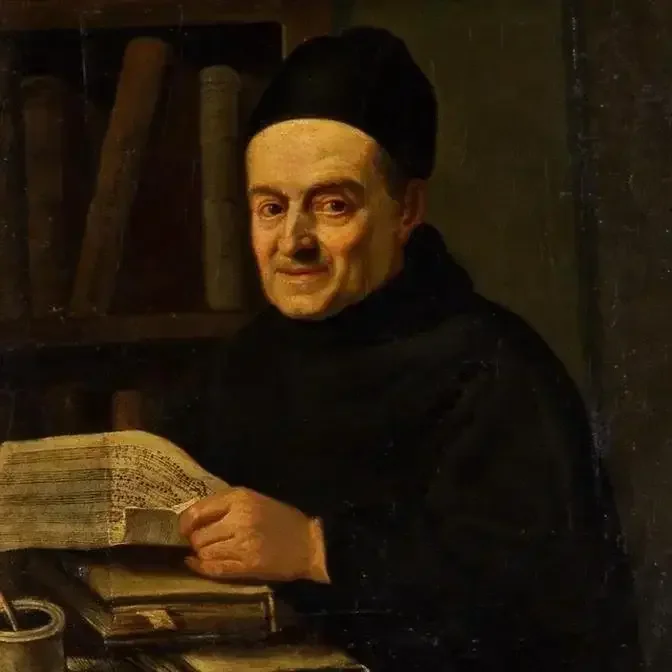
© Thanks to Institut für Tiroler Musikforschung/Vorstand: @musiklandtirol
https://www.musikland-tirol.at/
https://klangraumtirol.musikland-tirol.at/
https://portraits.musikland-tirol.at/ebook_Meditationsbuechlein
Composer: Leopold Strach (1699-1755)
Work: Missa Solemnis (c.1730)
Performers: Mieke van der Sluis (sopran) https://tinyurl.com/3rne8m8w
Bernhard Landauer (alt) https://tinyurl.com/5n9yc9yd
Wilfried Jochens (tenor) https://tinyurl.com/3f9mt3ba
Wolf Matthias Friedrich (bass) https://tinyurl.com/3tzkdx9x
Kammerchor des Ferdinandeums
Concerto Armonico Budapest https://tinyurl.com/bdzbc8ze
Josef Wetzinger (conductor)
Missa Solemnis (c.1730)
1. Kyrie 0:00
2. Gloria 2:56
3. Credo 12:01
4. Sanctus 25:20
Painting: Johann Michael Rottmayr (1656-1730) - Triumf lasky
HD image: https://flic.kr/p/2sg1zsz
Map: Matthaeus Seutter (1678-1757) - Tirolis (1729)
HD image: https://flic.kr/p/29rFoiT
Further info: https://shop.tiroler-landesmuseen.at/products/stiftstams21
Listen free: https://youtu.be/24ERZFxVfBE
---
Leopold Strach [Strach von Treyenfeld, Stroch]
(Kolin, 11 November 1699 - Brixen, 28 June 1755)
Bohemian composer and church musician. His early life and training remain unknown. Born in Kolín, his documented career began in 1727 when he was employed as a bassist and court composer under the Prince-Bishop of Brixen. By 1728, he provisionally assumed the duties of Vice-Kapellmeister for Prince-Bishop Kaspar Ignaz von Künigl, a leadership position over the court and cathedral choir (Hof- und Domkapellmeister) that he officially secured in 1730 and held for the rest of his life. Strach was a prolific creator of sacred music, much of which was performed at the Stams Abbey (Abbatia B. M. V. et Sancti Ioannis Baptistae), but he also composed secular theatrical music for the Brixen Gymnasium, including Conradinus (1737) and Genovefa (1739). Following his death in Brixen in June 1755, he left behind an extensive library of roughly 3,000 sheets of usable musical material, which the cathedral chapter purchased from his widow for 100 florins on the advice of his successor, Simon Judas Thaddäus Mayr.