
Antoine Mahaut (1719-c.1785) - Sinfonia a piu stromenti (1755)
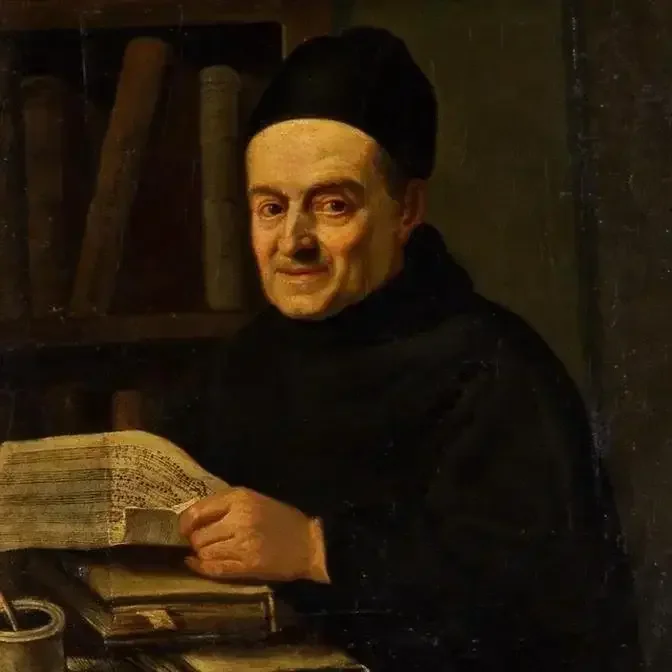
Joyeux anniversaire Antoine Mahaut! 🎻🥂
Composer: Antoine Mahaut (1719-c.1785)
Work: Sinfonia (IV, C-Dur) des 'VI Sinfonie a piu stromenti, tre a duoi violini, alto viola, violoncello o basso continuo e duoi corni da caccia ad libitum, e tre a duoi violini, alto viola, violoncello o basso continuo... opera II' (1755)
Performers: Camerata Lеodiеnsis; Hubert Schoonbroodt (1941-1992, conductor)
Sinfonia a piu stromenti (1755)
1. Allegro 0:00
2. Adagio 6:28
3. Presto 11:37
Engraving: Jacques Rigaud (1659-1743) - Gezicht op de voorzijde van het Grand Trianon in de Tuin van Versailles Vüe de Trianon dans le Parc de Versailles du côté de l'avenüe
HD image: https://flic.kr/p/2s9ejKS
Further info: https://www.amazon.com/dp/B000006KKL
Listen free: No available
---
Antoine [Anton, Antonio] Mahaut [Mahault, Mahoti, Mahout]
(Namur, bap. 4 May 1719 - Namur?, c.1785)
Walloon flautist and composer. Born into a family of musicians, he probably studied with his father, a flautist, before entering the service of the Bishop of Strickland in London at the age of 15. By 1737 he had returned to Namur, but two years later he moved to Amsterdam, where he performed frequently and toured Germany. On 20 July 1751 he obtained a privilege permitting him to publish his own works. He visited Dresden, Augsburg and Paris as well as returning regularly to Namur. His acquaintance with the flautist Pierre-Gabriel Buffardin in Dresden resulted in the dedication of six trio sonatas and possibly two concertos. About 1760 he settled in Paris. He probably returned to his hometown to retire. As a composer, his music consists of 31 flute concertos, 20 symphonies, 26 trios, 29 flute sonatas, and around 50 Lieder, mostly in Dutch. Mahaut's compositions were published extensively during his lifetime. He also wrote one of the first treatises on flute performance in Dutch. It marked a considerable advance on the methods of Jacques Hotteterre, Michel Corrette and Johann Quantz, particularly with regard to technique; it was the only work of its time to distinguish between the French and Italian ways of executing the trill and appoggiatura.